
The Sunmeadow Blend: Calendula Oil and Sweet Orange
The Sunmeadow Blend is named for a 3:1 ratio, but a literal 3:1 would be 25% essential oil. The real working dilution, drops per bottle, and the limonene risk.
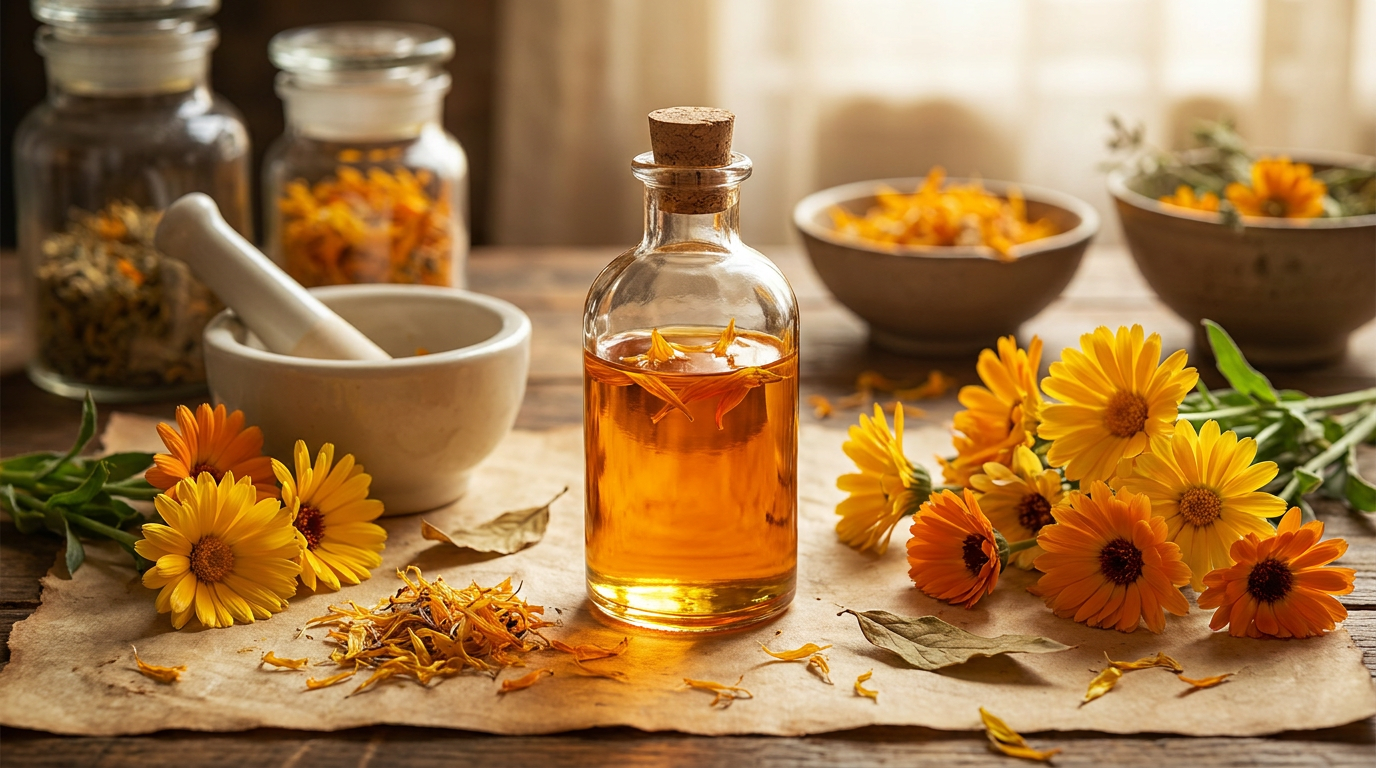
Calendula for Hemorrhoids: Does It Actually Help?
No published trial tests calendula on hemorrhoids. why bleeding needs a doctor, and the narrow case where an external skin oil is a fair question.
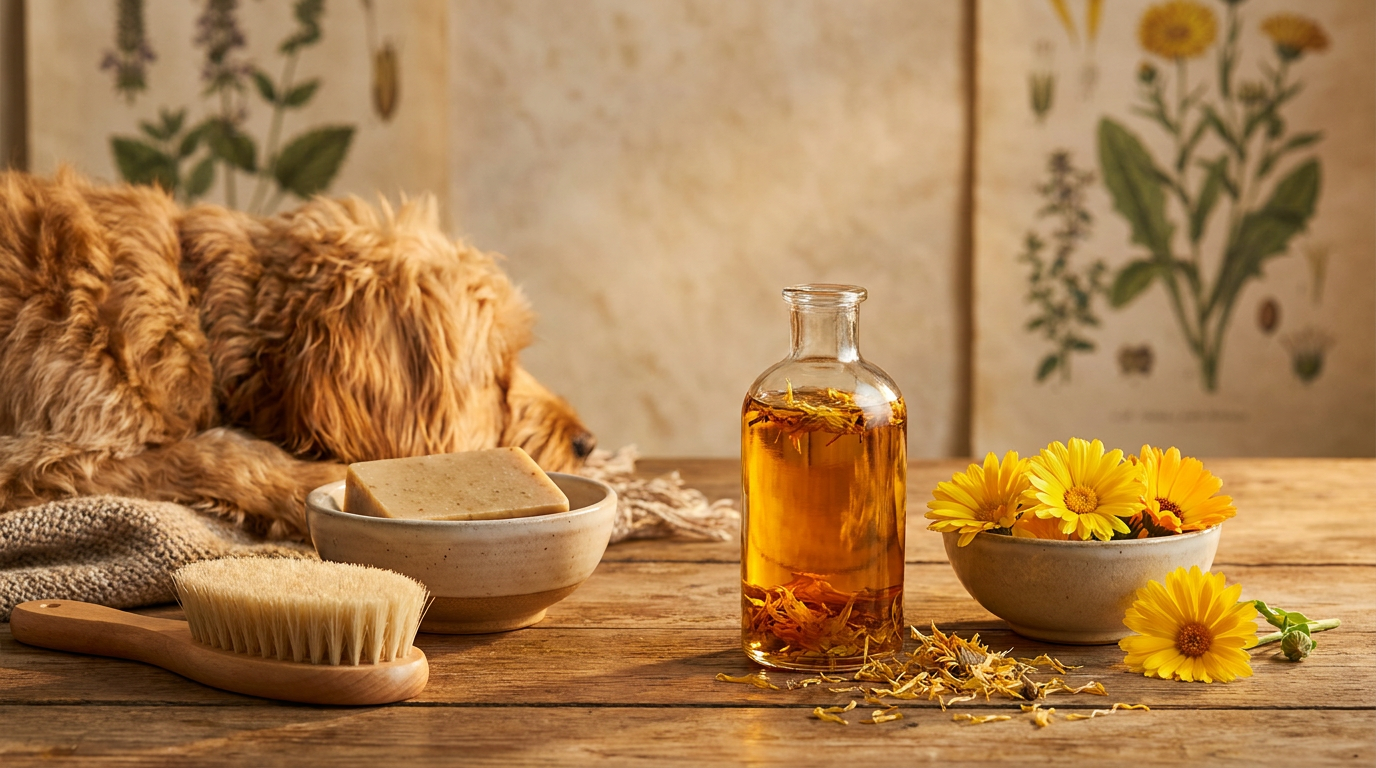
Calendula Oil and Cats: Licking, Carriers and Limits
The ASPCA rates the calendula plant non-toxic to cats, but no source tests the oil on cats. What licking changes, what to check on a label, and when to call a vet.
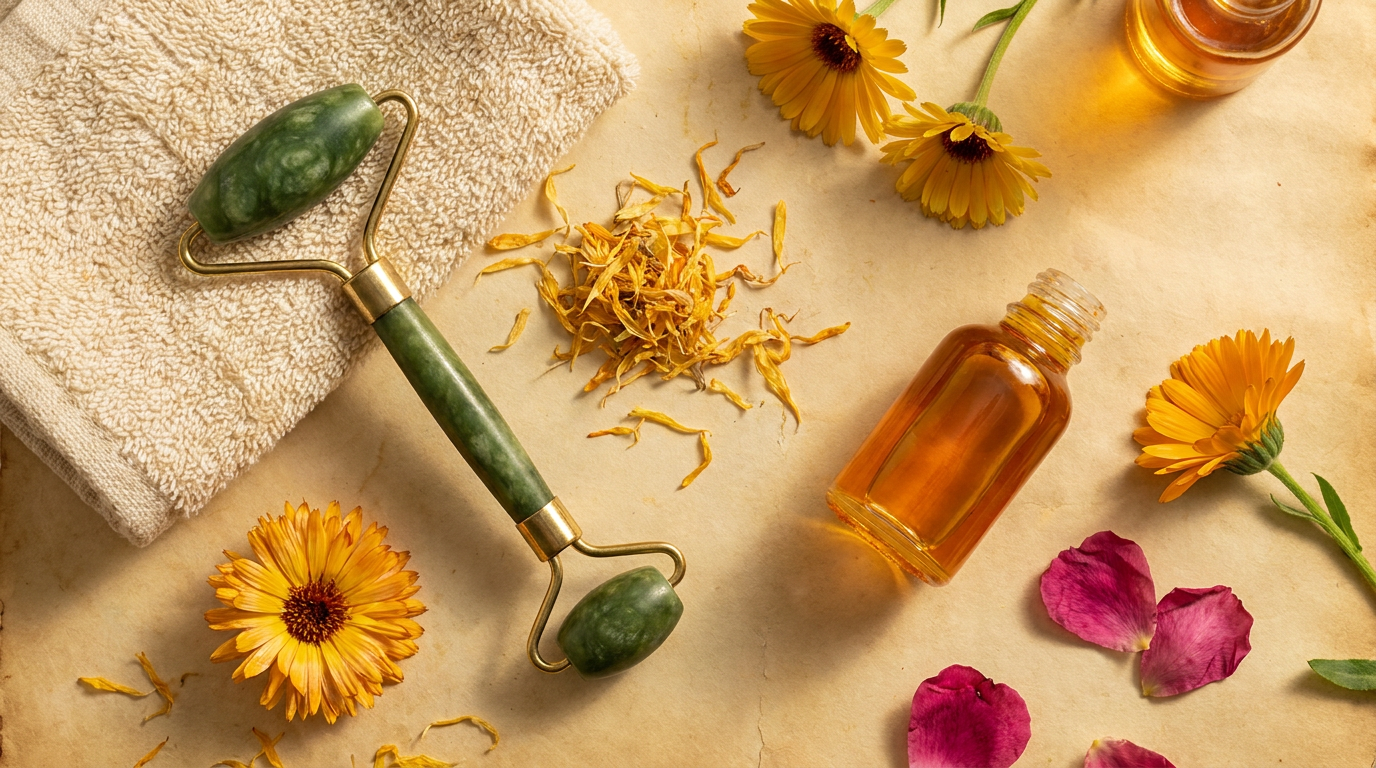
Calendula Oil in a Summer Routine: Where It Fits
A summer routine built sunscreen-first: where calendula oil fits in the evening, what the SPF numbers really measure, why the carrier sets the feel, and heat storage.
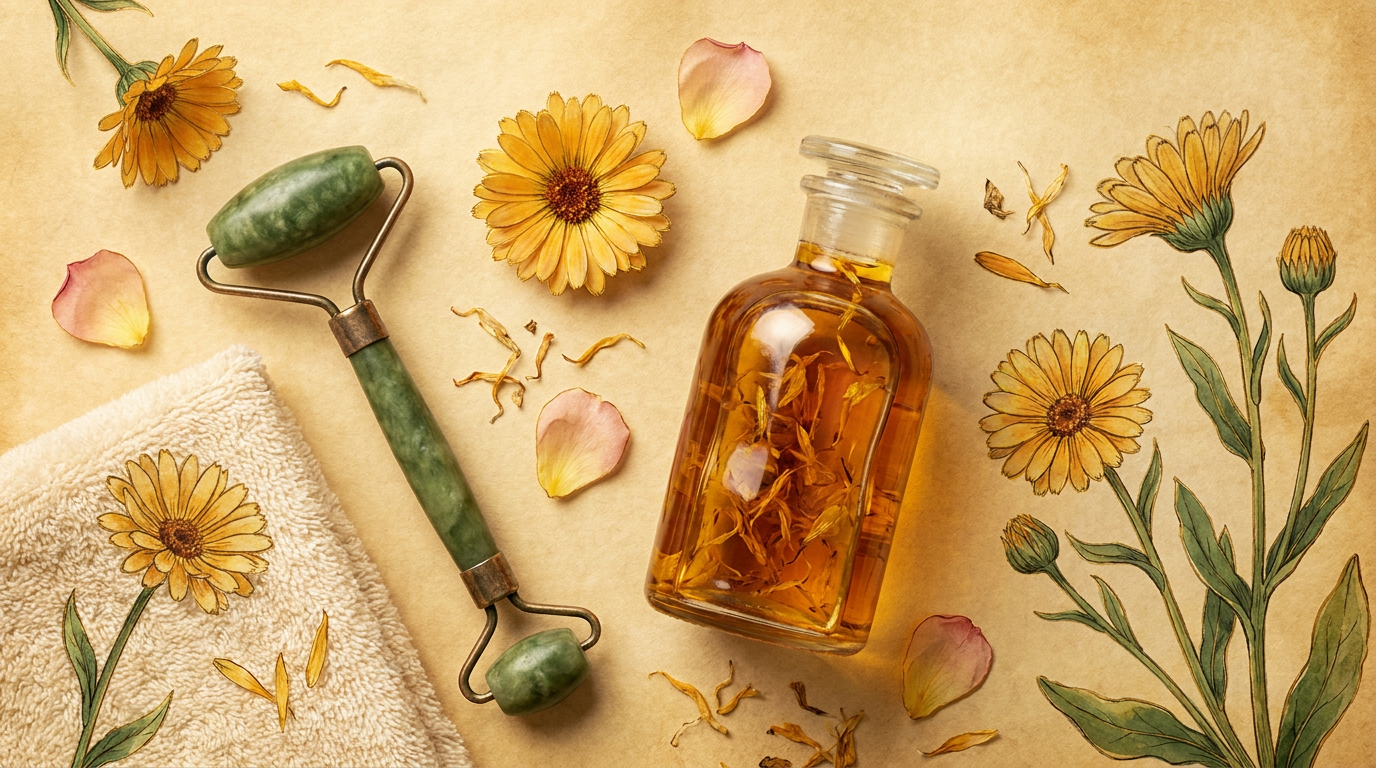
Calendula vs Witch Hazel for Acne and Irritation
Calendula oil and witch hazel are not interchangeable. A decision tree: what the acne guideline names, what each ingredient's studies tested, and when to see a dermatologist.
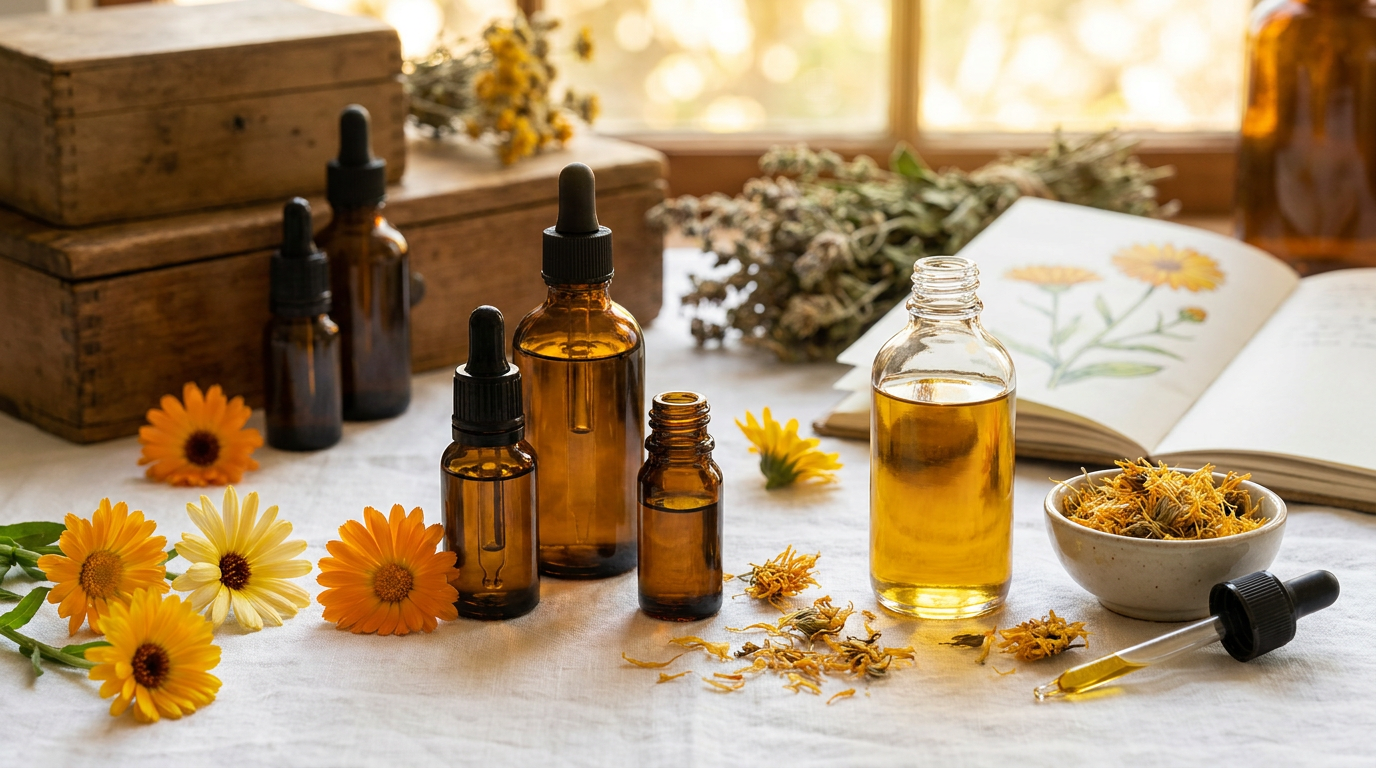
Calendula Oil for Dermatitis: Contact and Atopic Treatment Options
Calendula can cause contact allergy and has been trialled for radiation, diaper and atopic dermatitis with mixed results. What the studies show and who to see first.
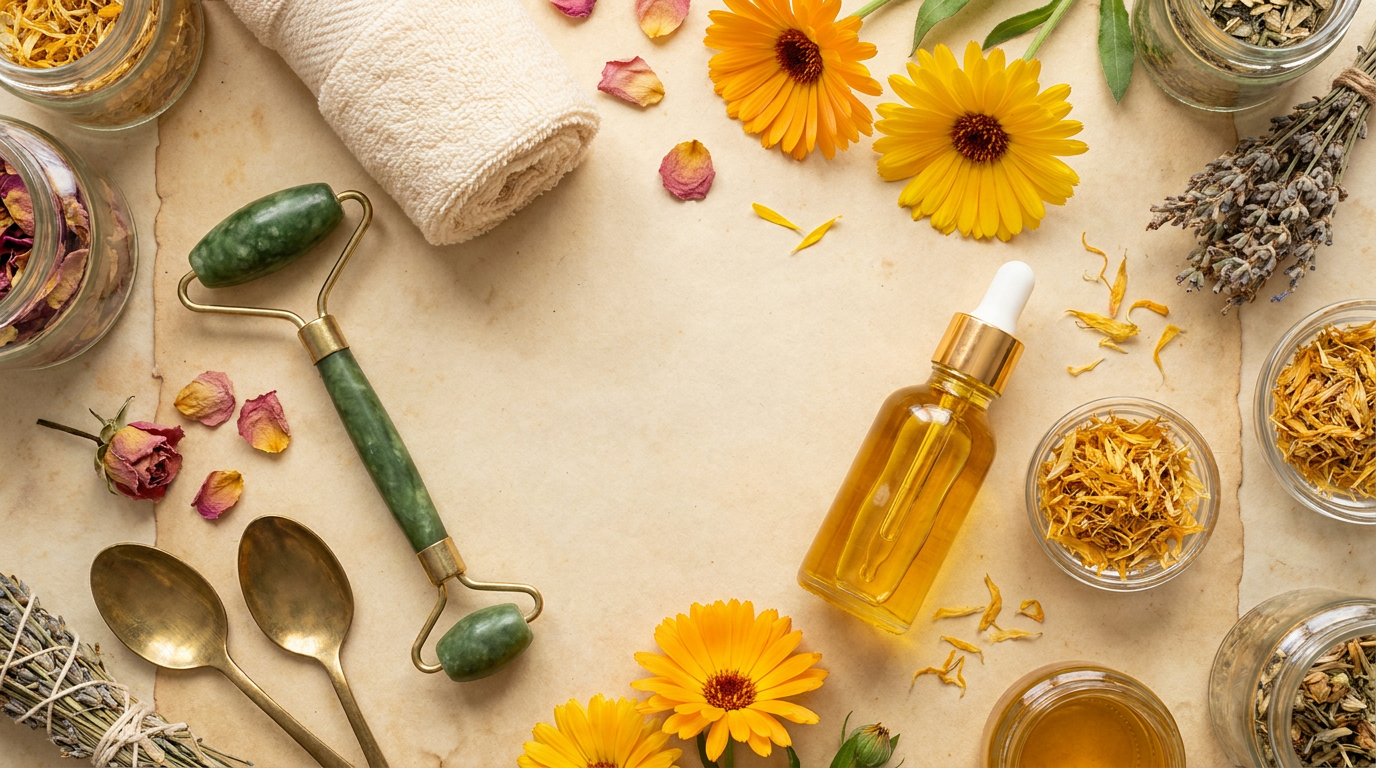
Acne Marks vs Acne Scars: Where Calendula Oil Fits
Most post-acne marks are flat discoloration, not scars. What research says about calendula and scarring, what it leaves out, and when to see a dermatologist.
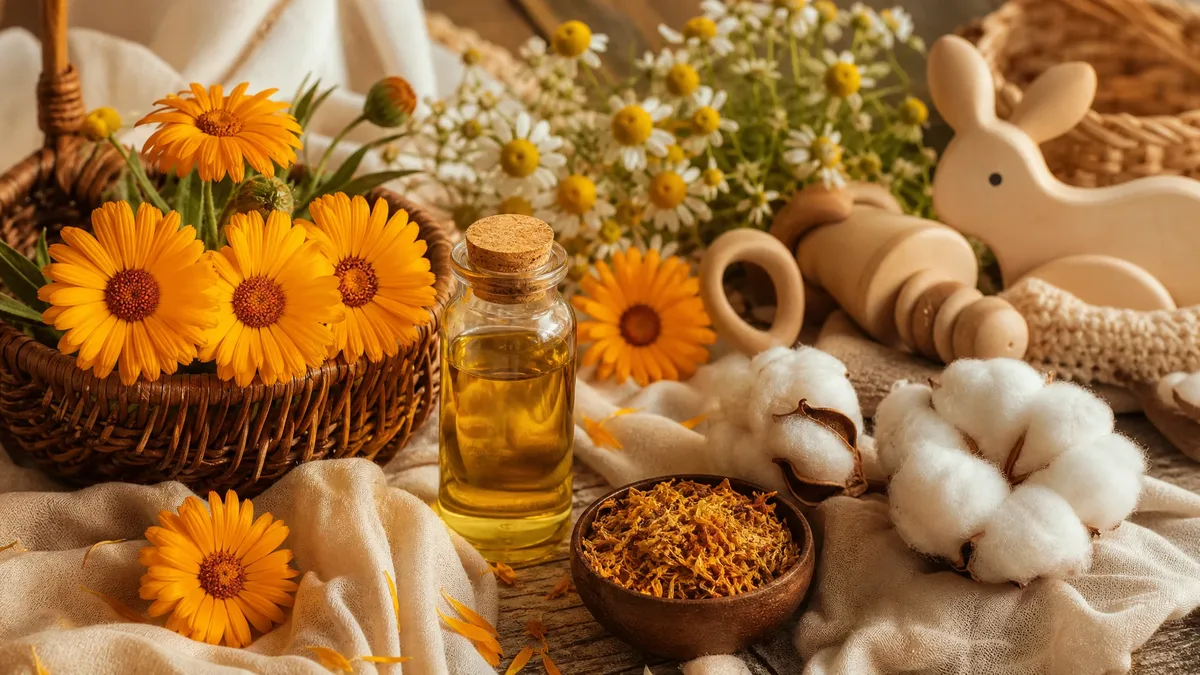
Calendula for Eczema in Children: A Parent's Evidence-Based Guide
No trial tests calendula alone in children with eczema. What the AAD, the EU regulator and the trials say, and how to raise the question with your child's doctor.
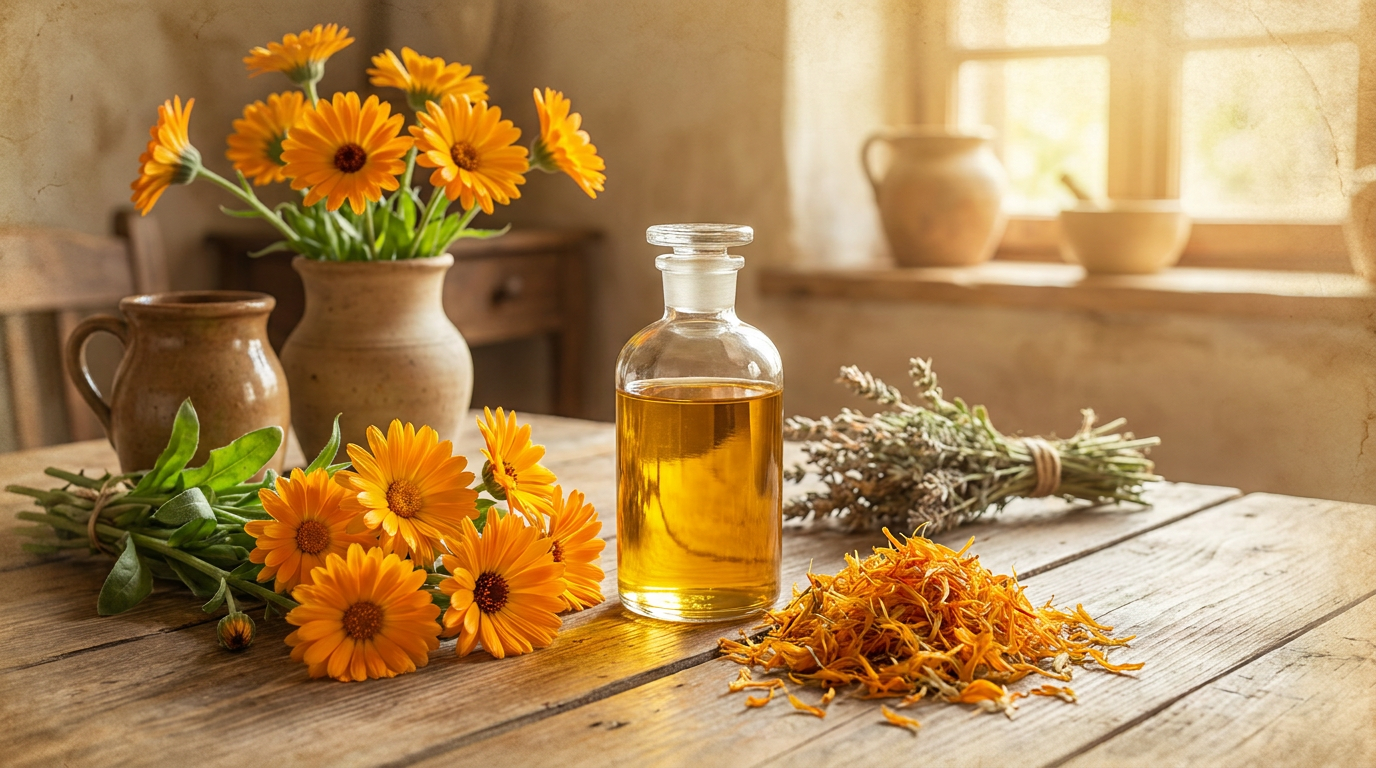
Calendula and Wounds: What the Clinical Studies Actually Show
Calendula wound studies are small and mixed, mostly on extracts and ointments under clinical care, none on infused oil. What each trial found and who should skip it.
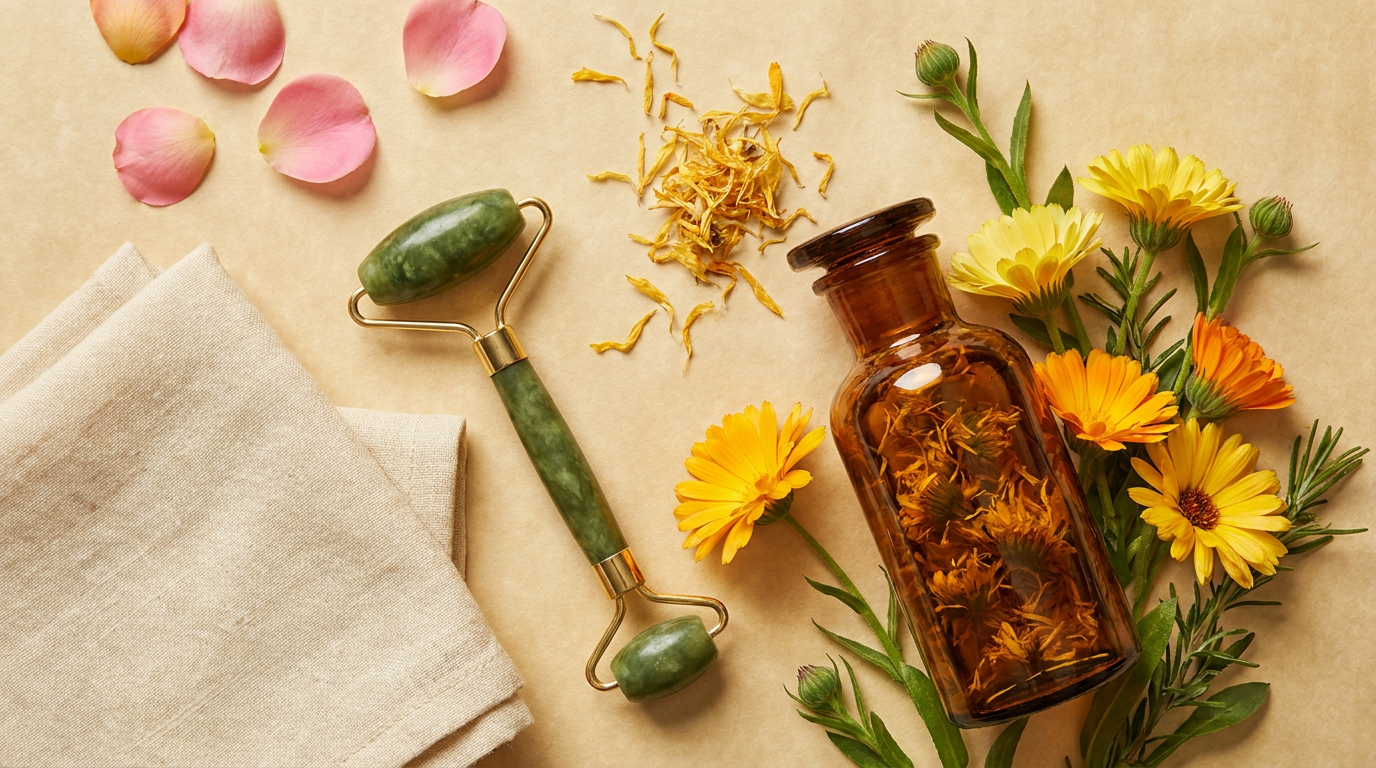
Calendula in Korean Skincare: K-Beauty Ingredient Spotlight
How to read 'calendula flower extract' on a Korean skincare label: extract versus infused oil, what trials tested, who should skip it, and what we could not verify.

Calendula Toners and Mists: What Is Actually in the Bottle
A calendula toner is a water product and calendula oil is an oil. What that means for the label, the evidence on hydration, preservation, skin pH and allergy.

Calendula Skincare on a Budget: Read the Label First
How to read a calendula skincare label: what the ingredient name does and does not tell you, three brand labels read plainly, and who should skip calendula.

Where to Buy Calendula Oil Near You: Retail and Online Sources
No article can say which shop near you stocks calendula oil. Here is how to tell an infused oil from an ointment or cream, read the label, and find the maker.

Calendula Body Butter: How to Judge One Before You Buy
How to judge a calendula body butter before buying: base, water and preservation, ingredient order, a worked label example, and what certifications do and do not mean.

How to Make Calendula Body Butter: Luxurious Whipped Recipe
Whipped calendula body butter by weight: a sourced 3:2 butter-to-oil starting ratio, cooling for smooth crystals, fixes for grainy or soft results, and keeping-time limits.

Calendula Tea vs Chamomile Tea: What Is Documented, and What Is Not
Calendula and chamomile are both daisy-family flowers with limited tea evidence. Allergy, pregnancy, sourcing and why tea and oil are not interchangeable.
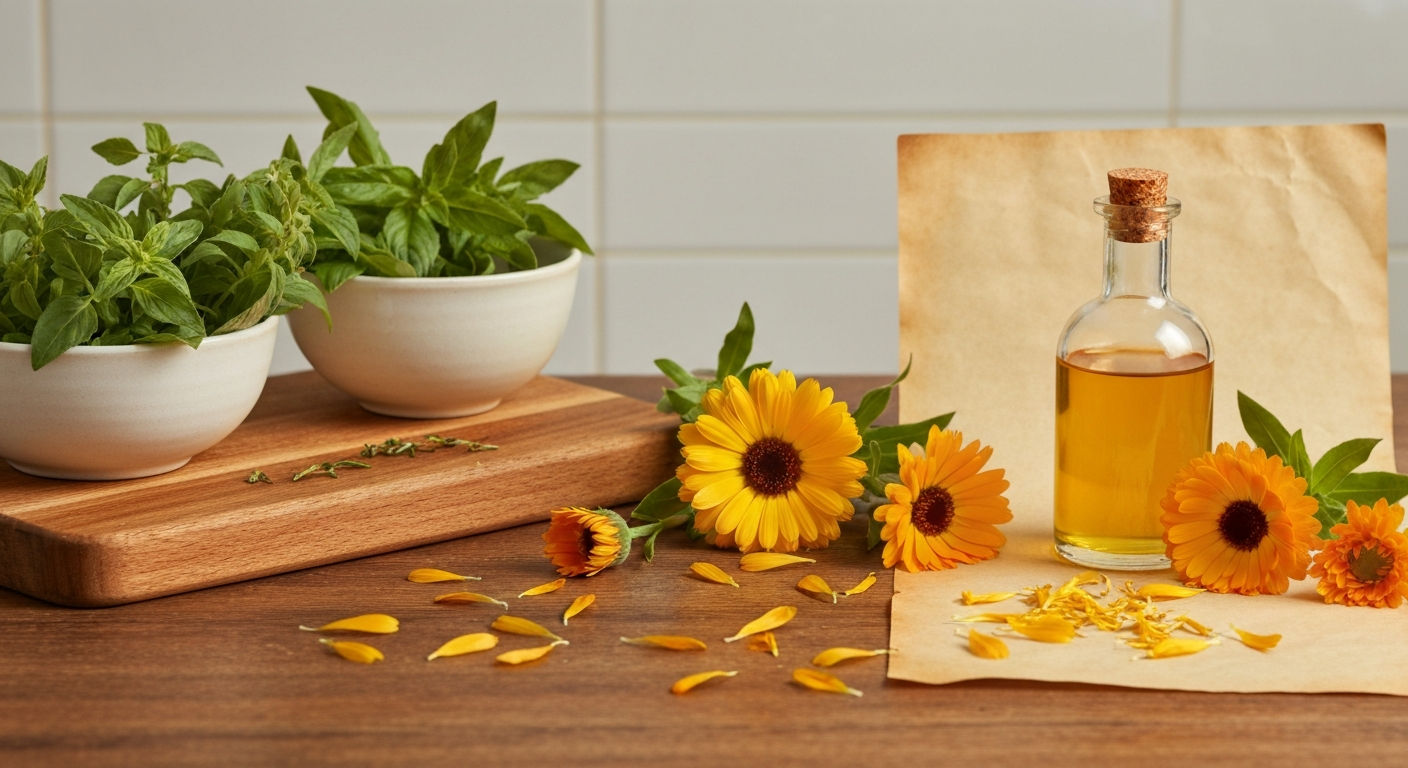
Calendula Shaving Oil and Razor Bumps: Where Oil Fits
Razor bumps come mostly from how hair is cut and shaved. What dermatology sources say, where a calendula shaving oil plausibly fits, and who should skip it.

Calendula Aftershave Balms: How to Judge One Before Buying
How to read a calendula aftershave balm label: where calendula sits, what the base and fragrance do, what evidence exists, and when razor bumps need a dermatologist.

Calendula Face Wash: What Actually Decides How It Feels
Why the cleansing base and pH matter more than the calendula in a face wash, how to read a cleanser label, and where a calendula oil does and does not fit.
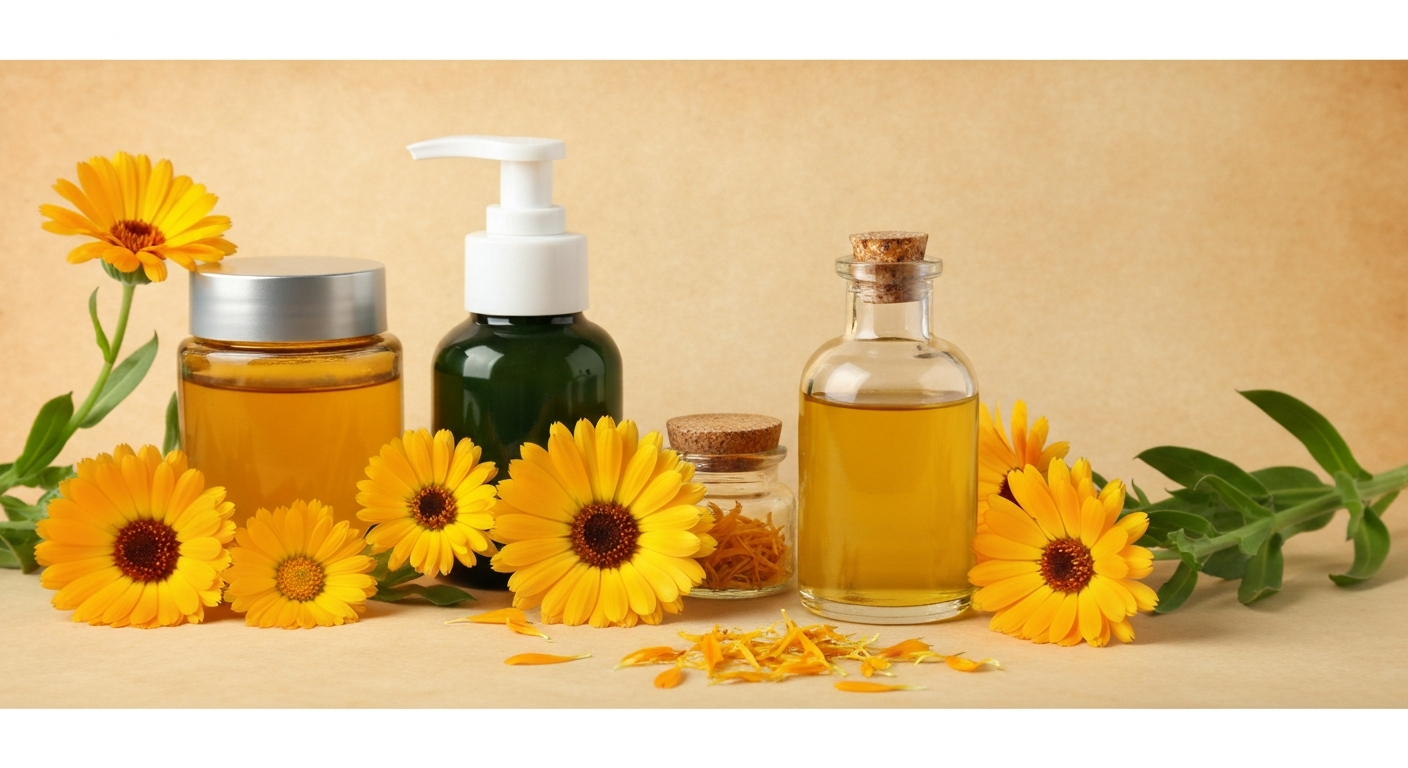
Calendula Oil and Dogs: What the Sources Say, and What They Don't
The ASPCA rates pot marigold non-toxic to dogs, but no source gives a dog dose. What the pet-safety sources say about oils, licking and hot spots, and when to call a vet.

Weleda, Boiron and Kiehl's Calendula Products: What the Labels Say
Weleda, Boiron and Kiehl's calendula products are different categories. What each brand's own page says, what is unverified, and how to choose by need.

How to Judge a Calendula Face Wash, Kiehl's Included
We could not read Kiehl's own page, so this is not a review. Five label checks for any calendula face wash: ingredient order, cleanser type, preservatives, claims.

Boiron Calendula Cream: What the Label and Research Cover
Boiron's calendula cream is sold as homeopathic, and its page gives no potency or inactive list. What the famous trial used instead, what the cream can and cannot claim.

Weleda Calendula Baby Oil Review: Is It Worth the Hype?
A fair read of Weleda Calendula Baby Oil from its own pages: ingredients, claims, what evidence says about calendula for babies, and who it suits. We have not tested it.
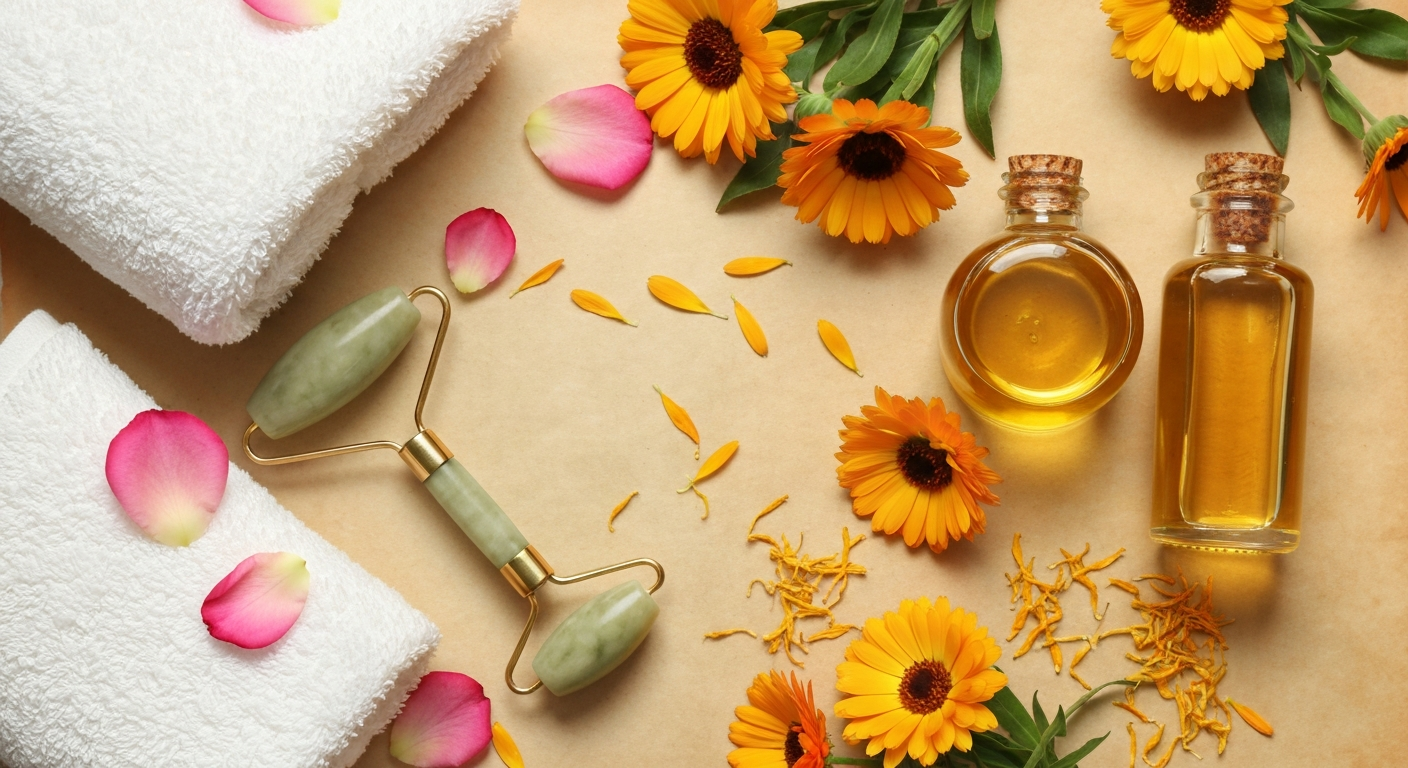
Calendula vs Chamomile for Skin: What Is Actually Documented
No study compares calendula and chamomile head to head. What EU regulators, allergy research and trials show for each, and how to sort the decision.

Best Calendula Face Creams for Everyday Hydration
What published studies of calendula creams actually measured for skin hydration, how to shop with that evidence, and where a calendula oil does and does not fit.

Calendula Oil in Your Daily Skincare Routine: A Complete Guide
Whether calendula oil belongs in your daily routine: which slot it could fill, who should skip it, a week-long forearm test, and what the studies lead you to expect.
Calendula and Ragweed Allergy: The Cross-Reactivity Risk Explained
Ragweed hay fever and calendula skin reactions are different allergies. What the sources document, what no source quantifies, and how to decide with an allergist.

Calendula Oil for Men: The Complete Grooming and Skincare Guide
Where calendula oil fits a man's routine and where it does not: razor bumps, beard breakouts, dry skin, one-step routines, with AAD guidance and what the studies cover.

Calendula Allergy: Symptoms, Cross-Reactions, and What to Do
Calendula allergy in order: what to do when a rash appears, how reactions are reported, which daisy-family plants matter, and how dermatologists test, with sources.

Calendula Oil on Puppy Skin: What Is Known and Who to Ask
No trial tests calendula oil on puppy skin. What common puppy skin problems look like, why diagnosis comes first, and questions to bring to a veterinarian.

Calendula Oil and Acne-Prone Skin: What Routine Stories Miss
How to read any clear-skin story, what the one calendula acne trial tested, why comedogenic ratings are shaky, and how to test an oil for yourself.

Calendula in History: What the Records Actually Show
From garland flower to 16th-century herbals to EU traditional-use status: what the dated sources on calendula say, and which popular history claims have no source.

Does Calendula Oil Have a pH? What Skin Compatibility Means
A plain oil has no water, so it has no pH in the usual sense. Where pH does matter: washes, creams and skin itself, with the measured values and sources.

Valentine's Day Calendula Oil Massage Ritual for Couples
A calendula oil massage for two, planned in order: patch tests first, why plant oils and latex condoms do not mix, candle and eye safety, then the evening.

Wedding Season: Calendula Oil for Bridal Skincare Prep
A countdown for bridal skin prep with calendula oil: decide, patch test, freeze the routine, rehearse, with what the studies tested and when to see a dermatologist.

Calendula Oil Explained: What It Is, What Studies Cover
What calendula oil is, what is in it, what the studies actually tested, who should skip it, and how to check a bottle, written from how we make one infused oil.

Where to Buy Calendula Oil: Shopping FAQ & Recommendations
A shopping FAQ built on documents, not store lists: price comparison, bottle size, colour, organic wording, preservatives, pregnancy and pets, and what to do after a reaction.

Calendula Oil Composition: What Is Measured, What Is Assumed
Lists of calendula constituents describe the flower, not the bottle. What is measured in the flower, what is known about oil, and why the carrier dominates by weight.

Calendula Volatile Compounds: Aroma Chemistry, Honestly
Calendula's volatile oil is a tiny, sesquiterpene-rich fraction. What it contains, how yields differ by method, and why an infused oil is not an essential oil.

The Ultimate Calendula Oil Buying Guide: What to Look For in 2026
How to buy calendula oil: ask what kind of product it is, which carrier oil, whether the lot is traceable, and what the lab paperwork actually tested.

Where to Buy Calendula Seeds for Oil Production
Where to buy calendula seed for oil-making: check the Latin name first, what three organic seed sellers state, resin claims, sowing timing, and when not to grow at all.

Organic Calendula Oil: What It Means, Why It Matters & How to Choose
What 'organic' on a calendula oil label does and does not tell you: farming claim versus USDA certification, what it misses, and questions to ask any supplier.

Saponins in Calendula: Understanding Their Cleansing & Healing Power
Calendula flowers contain oleanolic-acid saponins, natural detergent-like compounds. What is known, what is not, and why an infused oil is not a saponin product.

Calendula Polysaccharides: What the Lab Studies Tested
Calendula flowers hold water-soluble polysaccharides studied in immune-cell assays. What was extracted, what was tested, and why that does not transfer to an oil.

Mother's Day Calendula Oil Gift Box: DIY Assembly Guide
A calendula oil gift box guide that starts with who it is safe to give to, what to include and leave out, the label card to add, and how to pack it.

Is All Calendula Oil the Same? Quality Myths Exposed
Colour, an organic label, a certificate and a shelf-life figure each say less about a calendula oil than they seem to. What the sources show, and what to ask instead.

Is Calendula Essential Oil the Same as Calendula Infused Oil?
Calendula infused oil and calendula essential oil are different materials. Four checks (process, colour, yield, label) and why dilution makes the difference on skin.

Launching a Calendula Skincare Line: What FDA Expects
Planning a calendula skincare brand? The decisions in order: water or no water, claims, safety substantiation and labels, small-business rules, and supplier questions.

Calendula Oil in Summer: Heat, Storage and Sun Safety
Calendula oil is not sun protection, and summer heat is hard on any oil. Sources on sunscreen, sunburn, phototoxicity and keeping the bottle from going off.

Spring Garden Guide: Growing Calendula for Oil Making
Growing calendula for oil: when to sow by climate, where sources disagree, picking at full bloom, drying before infusion, and what a home crop cannot give you.

Calendula Oil and Under-Eye Dark Circles: Sort the Cause First
No study tests calendula on dark circles. The five types of periorbital darkening, what has been studied, eyelid allergy risks, and how to run an honest test.

How to Use Calendula Oil in Oil Cleansing Method
How to try calendula oil as an oil cleansing step: a sourced method, why wet fingers and washcloths are the weak points, and who should use a regular cleanser instead.

From Dried Flower to Sealed Bottle: How Our Oil Is Made
What we can state about our organically grown calendula and in-house process, what agronomy sources say about growing and drying it, and what a provenance story cannot show.

A 30-Day Calendula Oil Trial: One Change, Tracked
A 30-day plan for trying calendula oil: who should skip it, a 7-day forearm test, one change at a time, a notes log, and what a month can and cannot show.

How to Store Calendula Oil: Shelf Life, Freshness & Preservation Tips
How to store calendula oil: what degrades an infused oil, a storage routine from supplier and review sources, how to check freshness, and why we publish no months figure.

Diaper Rash and Calendula Oil: What Trials and Regulators Say
What the AAP advises for diaper rash, what three small calendula trials found, and why the EU monograph does not recommend calendula skin products under age 6.

How to Use Calendula Oil for Varicose Veins & Spider Veins
Calendula oil does not act on veins. What the evidence covers (leg ulcer studies, not varicose veins), the NHS red flags, and how to use an oil on dry leg skin safely.

Calendula Oil on Babies: What the Evidence Does and Doesn't Say
Is calendula oil safe for babies? The EU under-6 position, allergy data for daisy-family plants, essential-oil limits by age, and what to ask your pediatrician.

Calendula Oil and Dog Hot Spots: Call the Vet First
Why a dog hot spot needs a vet before any oil, what a 2019 canine dermatology review says about calendula, and the pet-safety points if your vet approves an oil.

How to Make Calendula Oil Soap: Process, Safety and Limits
Why a calendula soap recipe must be calculated for your carrier oil, the cold-process order of work with lye safety, a melt-and-pour method, and labeling limits.

How to Use Calendula Oil as a Makeup Remover
How to use calendula oil to remove makeup: the eye-area caveat, a step-by-step routine, keeping water out of the bottle, breakout limits and who should patch test first.

Calendula Oil and Rosacea: Why We Would Hold Back
No trial tests calendula on rosacea. What AAD says about triggers and products, rosacea patch-test data, and how to test an oil if your dermatologist agrees.

Calendula Tincture vs Calendula Oil: What You Can Make
Calendula tincture and calendula oil are different extracts. What the EU monograph defines for each, what a home maker can source, and where internal use is unsupported.

Is Calendula Oil Comedogenic? The Pore-Clogging Truth
Why no reliable comedogenic rating exists for calendula oil: where rabbit-ear scores come from, why the carrier matters, and how to test an oil on breakout-prone skin.

How to Make Calendula-Infused Carrier Oil in 3 Methods
Three ways to infuse calendula into a carrier oil, compared on time, heat and risk, using the ratios and times published sources give, and noting what none of them state.

How to Make a Calendula Oil Hair Mask for Damaged Hair
Why a calendula oil hair mask depends on the carrier oil, what the Rele and Mohile hair study tested, a one-ingredient method, and why food-based masks need care.

How to Dry Calendula Flowers for Oil Infusion
How to dry calendula flowers before oil infusion: when to pick, 1-5 day air drying or low-heat dehydrating, the crumble test, storage, and why fresh flowers are the risk.

How to Incorporate Calendula Oil into Your Baby's Bath Routine
Why we would not pour calendula oil into baby bath water, the age and pediatrician checks to make first, and what infant studies on calendula ointments did and did not test.

How to Make a Calendula Oil Salve: Ratio, Steps and Limits
A calendula salve ratio from a published recipe (about 1 part beeswax to 4 parts oil), step by step, why it is not a first-aid product, and shelf-life limits.

How to Make Calendula Oil Candles for Aromatherapy
A calendula candle is a craft project, not an aroma source: what the infused oil does in wax, a test-batch method, fire-safety limits and what to leave off the label.

Calendula Oil and Psoriasis: What Is Known and What Is Not
No human study tests calendula on psoriasis. What AAD and the AAD-NPF guideline say, what a mouse study did and did not show, and what to ask a dermatologist.

How to Make Calendula Oil Lotion Bars for Travel
A calendula lotion bar recipe by weight from published sources, how to firm it for heat, why a waterless bar needs no preservative, and who should patch test first.

How to Use Calendula Oil for Face: Morning & Night Routine
A practical morning and night face routine with calendula oil: why we start at night, where the oil sits among cleanser, moisturizer and sunscreen, and when to stop.

How to Use Calendula Oil for Cracked Heels & Rough Feet
The AAD's six-step routine for dry, cracked heels, where a plain calendula oil could sit in it, what has and has not been studied, and who should see a clinician first.

How to Choose Between Calendula Oil and Calendula Extract
Calendula oil or calendula extract? 'Extract' on a label can mean an oil infusion, a tincture or a CO2 extract. How to choose by the base your product is made in.

How to Make Calendula Oil at Home: Complete Infusion Guide
Step-by-step calendula oil at home with sourced ratios: dried flowers only, 1:5 to 1:10 by weight, solar or warm infusion, straining, storage, and safety limits.

Growing & Harvesting Calendula for Oil: Gardener's Complete Handbook
Growing calendula for oil: what makes a flower good for infusing, harvest frequency, drying, realistic yields from extension and field-trial data, and where advice stops.

How to Create a Calendula Oil Serum for Glowing Skin
Build a calendula oil face serum with no water, a small test batch and sourced dilutions. What the research on radiance covers, and what it does not.

How to Make a Calendula Oil Beard Conditioning Treatment
How to use calendula oil as a beard oil or balm: one sourced 1:4 wax-to-oil ratio, patch-test steps, and what the evidence does and does not show for beards.

Calendula Oil and Stretch Marks: An Evidence Check
What a stretch mark is, what a Cochrane review of 800 pregnant women found for topical products, what dermatologists offer, and how to use a plain oil safely.

Blending Calendula Oil With Essential Oils: A Dilution Guide
How to blend essential oils into calendula oil safely: published dilution ranges in mL, children's limits, citrus phototoxicity, patch testing, and why we list no combos.

How to Make Calendula Oil Body Butter: Luxurious DIY Recipe
Calendula oil body butter by weight, with the dose arithmetic (how much calendula is in the jar), when a salve or lotion is better, and what changes if you sell it.

Calendula Oil and Sore Joints: What Has Been Tested
No trial has tested topical calendula on arthritis. What guidelines and a Cochrane review of topical herbs do show, where an oil fits, and when to see a clinician.

How to Add Calendula Oil to Your Existing Skincare Products
Whether to mix calendula oil into a skincare product you already own: a decision by product type, a layering method, and what the sources do and do not say about amounts.

How to Do a Calendula Oil Patch Test: Allergy & Sensitivity Check
A one-dab, 24-hour patch test can miss delayed reactions. Here is a repeated-application home method based on dermatology practice, plus who should skip it.

Adding Calendula Oil to Facials: Intake, Claims, Sourcing
What an esthetician should settle before adding calendula oil to a facial: client intake, what you may say about it, and which batch documents to request from a supplier.

Fall Harvest: Making Your Annual Batch of Calendula Oil
Calendula is picked many times a season, not once. How to dry flowers, why only dried flower belongs in infused oil, how methods differ, and how to store a home batch.

Faradiol in Calendula: What the Research Does and Doesn't Show
Faradiol esters are documented in calendula petals and in mouse studies, but we found no measurement of faradiol in infused oil. The evidence, step by step.

DIY Calendula Oil Face Serum for Anti-Aging
A calendula oil face serum is a moisturiser. What ranks above it for aging skin, what calendula data exist, and how to blend a small, plain batch with fewer risks.

Can You Use Calendula Oil on Your Face? All Your Questions Answered
Eleven sourced answers on using calendula oil on your face: safety, who should skip it, patch testing, pores, eyes, sunscreen, mixing, rosacea and spoilage.

DIY Calendula Diaper Balm: What to Make and What to Skip
A water-free calendula balm recipe with the one sourced ratio, why zinc strength cannot be sourced for home recipes, and AAP signs that a rash needs a pediatrician.

Calendula Oil Lip Balm: Plain Base, Allergy Risks, Sun Care
A plain calendula lip balm, and why we skip flavored variations: lip-balm allergy case reports, the sun question, who should skip it, and how to test before you commit.

DIY Beard Oil With Calendula Oil: A Formulation Walkthrough
How to build a calendula beard oil: scent dilution limits, which carrier to blend, storage without water, and when a beard problem needs a dermatologist.

DIY Calendula Oil Dog Paw Balm for Cracked Pads
A two-ingredient calendula paw balm with the one sourced wax-to-oil ratio, what to leave out because dogs lick, and when cracked pads need a veterinarian first.

Calendula Oil and Intimate Care: Why Oil Is Not a Wash
Oil has no pH, so a calendula oil wash cannot be pH-balanced. What the vulvar-hygiene and preservation sources say, and when to see a gynecologist instead.

Calendula Oil as a Perfume Base: What It Adds and Lacks
Calendula oil works as a perfume base but adds little scent. Essential oil dilution limits, citrus phototoxicity, oxidation and who should skip a DIY scent blend.

Calendula Oil as a Signature Massage Oil: What to Check First
Making calendula oil your practice's signature oil? Client exclusions, claim limits, supply risk and warming and storage habits, with sources and no invented case.

What Sustainable and Ethical Mean on Calendula Oil Labels
Sustainable and ethical are unregulated label words. What organic, Fairtrade and COSMOS actually verify, what we can document about our sourcing, and questions to ask.

Does Calendula Oil Expire? Storage & Shelf Life FAQ
Calendula oil oxidizes rather than hitting a hard expiry. What shelf-life figures really mean, how to spot rancidity, and how to store and date a bottle.

DIY Calendula Oil Cuticle Treatment for Strong Nails
A plain calendula cuticle oil and a 1:4 beeswax balm, with dermatologist-sourced nail habits, hygiene, storage limits and when nail changes need a doctor.

Calendula Oil Stretch Mark Blends: What the Trials Found
No trial shows calendula oil stops stretch marks. What the Cochrane review and oil trials found, what EU guidance says about calendula in pregnancy, and who to ask first.

Calendula Oil Room Spray: Why Oil and Water Make a Poor Mist
Why we would not put calendula oil in a room spray: oil and water separate, water needs preservation, and EPA advice on air fresheners points to ventilation first.

Calendula Oil vs Rosehip Oil: What Each One Actually Is
Rosehip is a pressed seed oil and calendula oil is a flower infusion. What differs in composition, oxidation and evidence, and who should pick which.

Calendula Oil on a Label: Infused, Pressed, or Something Else?
Calendula petals are infused, not pressed. How to tell infused oil, seed oil, essential oil and CO2 extract apart, and what to check on a label before you buy.

Calendula Oil vs Other Oils: Which Should I Choose? FAQ
Which oil should you choose? A practical FAQ sorting calendula infused oil from base oils, essential oil and seed oil, with the evidence and the limits.

DIY Calendula Oil Eye Cream for Puffiness & Dark Circles
Why we do not give an eye cream recipe: what causes dark circles and puffiness, why water-based DIY creams are the risky part, and how to use a plain oil near the eyes.

Making Hand Balm With Calendula Oil: What a Home Cream Needs
Why a water-free calendula balm is safer to make at home than a hand cream, what dermatologists say hand products need, and when cracked hands need a doctor.

Zinc Oxide and Calendula Oil: Can You Make Your Own SPF?
Why no sourced calendula and zinc oxide sunscreen recipe exists, what FDA and dermatology sources say about SPF, and where calendula oil fits around sun days.

Can Calendula Oil Replace Prescription Medications? What Doctors Say
Calendula oil does not replace prescribed medicine. What EU regulators, radiation trials and wound reviews show, why cosmetics cannot claim it, and how to add it safely.

Can You Be Allergic to Calendula Oil? The Ragweed Connection
Can you be allergic to calendula oil? What the ragweed link does and does not mean, patch-test figures with their settings, and who should skip calendula.

Calendula Oil vs Jojoba Oil: Choosing by the Job
Calendula oil is an infused oil, jojoba is a possible base. How to choose by use: plain blending base, adding calendula, or sensitive skin, with the evidence.

Calendula Oil vs Lavender Oil: Healing & Relaxation Compared
Calendula oil is an infused base oil; lavender oil is usually an essential oil. What the anxiety trials cover, skin and child-safety cautions, and how to combine them.

DIY Calendula Oil Hair Rinse for Shine & Softness
Why a calendula oil hair rinse is a category error: oil and water do not stay mixed, water-based rinses need preservation, and two honest ways to use calendula on hair.

Calendula Oil vs Tea Tree Oil: Skin Treatment Comparison
Calendula infused oil and tea tree essential oil are different products with different risks. What the acne trial, allergy data and dilution ranges say, and who to ask.

Can You Eat Calendula Oil? Internal Use FAQ
Can you eat calendula oil? Why we do not recommend swallowing it, what regulators and studies say about oral calendula, and what the sources say about home infusions.

Calendula Oil vs Chamomile Oil: What the Labels Mean
Chamomile oil can mean three different products, and calendula oil is an infusion. How they differ, what regulators and trials say, and why allergy is the real test.

Calendula Oil vs Hemp Seed Oil for Inflammation
Neither calendula oil nor hemp seed oil has human evidence for skin inflammation. Compares composition, freshness and what the studies cover, with who should skip each.

Calendula Oil in an Oatmeal Bath: What Belongs in the Tub
What dermatology and eczema-association advice says about oatmeal baths, what is known about calendula for eczema, and why oil in the tub raises questions.

Can Calendula Oil Regrow Hair? The Baldness Claim Examined
No human study of calendula oil for hair regrowth turned up. What the evidence for plant oils looks like, what is approved, and why a hair-regrowth claim is a drug claim.

Calendula Oil in a Winter Routine: Where an Oil Fits
What dermatologists advise for cold-weather dry skin, where an infused calendula oil fits, the one barrier study, a sourced balm ratio and when to see a doctor.

Calendula Oil vs Vitamin E Oil for Scars: What Works Better?
Calendula oil and vitamin E oil for scars, by stage: what the vitamin E trials found, what calendula studies exist, and what has better evidence than either.

Calendula Oil vs Aloe Vera After Sun: Where the Evidence Is
Aloe gel and calendula oil compared for sunburn: what human trials exist for each, where the aloe studies disagree, and why neither is sunscreen.

Calendula Oil vs Shea Butter for Dry Skin: Moisturizer Comparison
Calendula oil and shea butter do different jobs on dry skin. What shea butter is, what calendula trials actually tested, and when neither is the answer.

Calendula Oil Pregnancy FAQ: What Expecting Mothers Need to Know
Calendula oil in pregnancy and breastfeeding: EU, NIH and Memorial Sloan Kettering all cite missing safety data. What each source says, what is unknown, and what to ask.

Botanical Skincare Labels in 2026: What They Tell You
What 'natural', 'organic', 'certified' and 'clinically proven' commit a botanical skincare seller to in 2026, with calendula oil as the worked example and sources.

Calendula Oil for Tattoo Aftercare: Healing, Moisturizing & Color Protection
Whether calendula oil fits dermatology advice for tattooed skin, what fades ink, why oil is not sun protection, and where we would and would not use it.

Calendula Oil vs Arnica: Different Jobs, Different Rules
Calendula and arnica are both daisy-family plants with different traditional uses. What trials show on bruising, what regulators say, and who must avoid both.

Calendula Oil Healing Salve Recipe: Beeswax & Herb Blend
A calendula oil and beeswax salve: a starting ratio, low-heat method, why it must stay water-free, who should skip it, and why a balm is not a wound dressing.

Calendula Oil on Repeat: Subscribe, Stockpile or Reorder?
Should calendula oil come on a monthly delivery? How to work out your use rate, what stockpiling does to an oil with nothing added, and what to ask any subscription.

Calendula Oil vs Coconut Oil for Baby Skin: Pediatric Comparison
Calendula oil and coconut oil on baby skin: what pediatric trials of oils and diaper ointments actually show, the allergy question, and who to ask first.

Calendula Oil Muscle Rub Recipe for Post-Workout Soreness
A calendula oil rub for after exercise: what massage evidence supports, oil or balm options, essential-oil cautions, who should skip it and when soreness needs a clinician.

Calendula Oil Sugar Scrub Recipe for Exfoliation
A calendula oil and sugar scrub, with a decision list on who should not scrub, a method without invented ratios, and the water-in-the-jar and slippery-floor hazards.

Calendula Oil for Skin: What Studies Cover and What They Skip
A goal-by-goal look at what trials of calendula on skin actually tested, in which forms, what regulators concluded, who should avoid it, and how to decide.

Calendula Oil in Aromatherapy: Base Oil, Not Diffuser Oil
Calendula infused oil is a fixed carrier oil, not an essential oil. What that means for diffusers, blending math, pets, children and pregnancy, with sources.

Using Calendula Oil in Massage: Blending, Dilution, Limits
How a massage therapist should think about calendula oil: what the evidence covers, carrier and storage questions, essential-oil dilution math, and clients to screen out.

Calendula Oil for Sunburn & Sun Damage: After-Sun Care Guide
What dermatologists advise for sunburn, what is and is not known about calendula oil after sun, why it is not sunscreen, and when a burn needs a doctor.

Calendula Oil for Lip Care: Healing Chapped Lips & DIY Lip Balm Recipes
What a dermatology group advises for chapped lips, what calendula has and has not been tested for, and the decisions that matter if you make a calendula lip balm.

Calendula Oil and Shea Butter: Body Butter, Not Cream
Shea and calendula oil make a body butter, not a cream. Why water is the line for safety, how to find your own ratio, how long it keeps, and who should skip it.

Calendula Oil for Tattoo Healing: 4 Artists Share Their Experience
No trial tests calendula oil on fresh tattoos. What dermatologist aftercare advice, calendula studies and allergy data say, and when to skip it.

Calendula Oil in the Clean Beauty Trend: What You Need to Know
Clean beauty has no legal definition. How to check calendula oil claims instead: organic schemes, the trade-offs of nothing added, batch paperwork, and a label checklist.

Calendula Oil for Hair: What Is and Is Not Known
No trial supports calendula oil for hair growth or scalp health. What dermatologists say about hair loss, where a plain oil fits, and the risks to check.

Calendula Oil in the Treatment Room: Notes for Estheticians
Notes for licensed estheticians on calendula oil: client allergy screening, how patch testing is described, supplier questions, storage, and what claims you can make.

Calendula Oil for Dogs: Common Questions from Pet Owners
The ASPCA rates calendula non-toxic to dogs, but no source tests the oil on dogs. Marigold mix-ups, hot spots, licking, and what to ask before using any product.

Calendula Oil Holiday Gift Guide: DIY & Store-Bought Ideas
Who should not get calendula oil as a gift, then three routes: give a bottle, make a 1:4 beeswax salve, or infuse dried flowers, with sourced methods and honest gaps.

Calendula Oil for Dry Winter Lips: What Dermatologists Advise
Dermatologists rank ointments above oils for very dry lips. What the AAD advises, where a plain calendula oil fits, and why lips need a patch-test caution first.

Calendula Oil for Dry Skin: Winter Skincare Strategy & Product Routine
Winter dry skin is a water-loss problem. Where an infused calendula oil fits in a routine, why the carrier oil matters, and when dryness needs a dermatologist.

Calendula Oil for Pets: What to Buy & What to Avoid
Six label checks before buying calendula for a pet: essential oils, the right marigold genus, carrier, claims, batch paperwork and storage, with sources and limits.

Calendula Oil and Surgical Scars: What the Evidence Covers
What dermatology sources and calendula studies say about surgical scars, why an open wound is off limits, and what to check with your surgeon before trying an oil.

Calendula Oil in Allergy Season: Check Ragweed First
Calendula is in the ragweed family. What weed-pollen allergy reviews, one irritation trial and the EU assessment say, and why to patch test before pollen season peaks.

Calendula Oil and Pets: What Is and Isn't Known
ASPCA rates calendula non-toxic to dogs and cats, lists nothing for horses, and no source gives a dose for the oil. A species-by-species map and who to ask.

Calendula Oil for Acne: Natural Treatment Protocol & Product Picks
One trial tested a calendula combination serum on mask-related acne. Here is what it showed, why comedogenic ratings are shaky, and how to check for allergy first.

Calendula Oil Extraction Methods: Cold-Pressed vs Infused vs CO2
No one cold-presses calendula petals. What infused oil, CO2 extract, distilled oil and seed oil really are, and which label questions tell them apart.

Calendula Oil for Nail & Cuticle Care: Strengthening & Healing Guide
What dermatology advice supports for dry cuticles and splitting nails, where a calendula infused oil fits, what is untested, and when to see a dermatologist instead.

Why DIY Calendula Oil Facial Mists Are Harder Than They Look
Why we do not give a water-and-oil calendula facial mist recipe: separation, microbial risk, FDA and review sources, and safer ways to use calendula oil on the face.

Calendula Oil for Cracked Heels: Why a Soak Is Not the Fix
The AAD advises limiting baths to 5-10 minutes, so a long foot soak works against dry heels. What it recommends instead and the narrow role calendula oil can play.

Calendula Oil for Sensitive Skin: Why We Skip 'Hypoallergenic'
FDA does not define hypoallergenic, and calendula can sensitize. What a short ingredient list does and doesn't mean, a week-long ROAT-style test, and who should skip it.

Calendula Oil and Babies: What to Ask Before You Use It
EU regulators say calendula use under age 6 is not established. What infant diaper rash trials show, what baby products list, and questions to bring to your pediatrician.

Calendula Oil for Eczema & Sensitive Skin: Evidence-Based Treatment Guide
No trial tests calendula alone on eczema, and atopic skin has a higher rate of daisy-family patch-test reactions. What the evidence shows and who should skip this oil.

Calendula Oil Dosage & Safety: Side Effects, Allergies & Contraindications
No cosmetic calendula oil has a dose. The frequency, concentration and duration figures that exist, what they apply to, side effects, and who should ask a professional first.

Calendula Oil Fatty Acids: Seed Oil vs Infused Oil
Calendic acid is a calendula seed-oil fact, not a petal-infusion fact. What the published fatty acid data show, and why the carrier oil sets an infused oil's profile.

Calendula Oil Carotenoids: Why It's Golden & Why That Matters
Calendula's golden colour comes from carotenoids that vary several-fold by variety. Why colour is a weak quality test, how storage matters, and what to check instead.

A Calendula Oil Aromatic Chest Balm: Recipe and Its Limits
A calendula oil and beeswax chest balm for adults, with essential oil limits, what the one vapor-rub trial found, who should not use it and when a cold needs a doctor.

Calendula Oil for Hair: Product Buyer's Guide & Recommendations
How to choose a calendula oil for hair: why the carrier and freshness matter more than the flower, what labels and paperwork should show, and who should skip it.

Calendula Oil for Massage: Professional Buyer's Guide
Stocking calendula oil for a massage practice: the allergy question for your intake form, knowing the carrier, sizing stock against oxidation, and menu wording.

Calendula Oil Certifications Explained: Organic, Fair Trade & More
What USDA Organic, COSMOS, NATRUE, Demeter and Fairtrade actually certify on a calendula oil label, why a COA matters more, and what we do and do not claim.

Calendula Oil After Sun: Why a Spray Recipe Is the Wrong Idea
A spray bottle sounds easy, but water-based sprays need preservation and calendula has no sunburn trial. What dermatologists advise, and where our oil fits.

Calendula Oil in Pregnancy and Postpartum: What the Sources Say
EU, NIH and Memorial Sloan Kettering sources advise avoiding calendula in pregnancy and nursing for lack of data. What was tested after birth, and what was not.

Calendula Oil Questions Answered, With Sources
Calendula oil questions in the order you meet them: what it is, allergy and patch testing, pregnancy and children, SPF, shelf life and storage, with sources.

Calendic Acid: What It Is and Why Seed Oil Is Not Our Oil
Calendic acid is 51-58% of calendula seed oil in one study. What is known about petals, why the carrier dominates an infused oil, and what to ask a seller.

Calendula Oil and Clay Mask: A Make-It-Fresh Method
A usable calendula oil and clay face mask: pre-checks, a patch test dermatologists describe, starting amounts, why not to store it, and what the evidence on pores lacks.

Best Calendula Oil Gift Sets for 2026
What to check before giving calendula oil as a gift: whether the recipient can use it, how to read a set's label, and what to put on the card. We sell one oil, not sets.

Calendula Infused Oil vs Essential Oil: What's the Difference?
Calendula infused oil, distilled essential oil, CO2 extract and seed oil are four different materials. How each is made, what is in it, dilution, SPF claims and labels.

What to Ask Before Buying Calendula Oil for DIY Skincare
Six questions to put to any calendula oil supplier before you formulate: what is in the bottle, the carrier, batch paperwork, moisture, shelf life and labeling rules.

Calendula Oil and SPF: Does It Really Protect Against UV Rays?
Calendula SPF figures of 8 to 18 come from lab tests on distilled essential oil, not infused oil or human skin. What the studies show and what to use in the sun.

Back-to-School Skincare: Calendula Oil for Teen Acne
A week-by-week plan for a teenager considering calendula oil before school: when to see a dermatologist, what the evidence says, how to patch test, and how to read the result.

Calendula Oil in an Anti-Aging Routine: What the Evidence Covers
Dermatologists put sunscreen and moisturizer first. Where calendula oil fits in an anti-aging routine, what the small research base covers, and what it does not.

8 Signs You're Using Low-Quality Calendula Oil (And What to Buy Instead)
Eight checks for a poor calendula oil, in the order we would run them: label, carrier, batch paperwork, certificate, smell, colour and moisture, with sources.

How to Judge a Calendula Soap Bar Before You Buy
No product list here: five questions for any calendula soap bar covering soap pH, base oils, where calendula sits on the label, claims and allergy.

Calendula Oil in the Bath: Bath Bombs vs Simpler Options
Why a bath bomb is a poor fit for sensitive skin, what dermatologists and the AAD advise about baths, and where calendula oil fits instead, with limits.

Budget vs Premium Calendula Oil: Is Expensive Worth It?
Price alone says little about calendula oil. Which differences are checkable on paper (carrier, additions, extraction, tests) and which, like deep colour, can mislead.

Calendula Oil Allergy FAQ: Reactions, Testing & Safety
Calendula is in the daisy family. What EMA reports, patch-test data, ragweed cross-reactivity and testing methods say about allergy risk, and what to do if you react.

Best Calendula Oil for Face: Skincare Buyer's Guide
Four checks before buying calendula oil for your face: allergy risk, what trials tested, what comedogenic ratings are worth, and which batch papers to ask for.

Calendula Oil Brands Compared: What Labels Say
Calendula oil brands compared by their own published labels and data sheets: carrier, added vitamin E, organic claims, and what a batch certificate can show.

Calendula Oil for Men's Shaving and Beard Skin: A Fact Check
A fact check of calendula oil claims for shaving, beards, dry skin and aging skin: what the literature shows, what it lacks, and when to see a dermatologist.

Calendula Oil and Eczema-Prone Skin: Checks Before You Buy
No calendula oil has trial evidence for eczema, ours included. Three gates to pass before buying: see a dermatologist, check allergy risk, and check the carrier and lot.

Calendula Oil in Aromatherapy: What to Buy, What to Skip
Calendula oil is an infused base oil, not a distilled aromatic. What 'therapeutic grade' does and does not mean, what to ask a seller, and how to dilute blends.

30-Day Calendula Oil Face Challenge: Before & After Results
How to run an honest 30-day test of a face oil: allergy check, a split-face control, fixed photos, and what published calendula studies did and did not measure.

Calendula Oil: Surprising Facts and What It Can't Do
What is true of calendula oil and what belongs to seed oil, essential oil or lab extracts: pigments, petals, calendic acid, SPF figures and the human studies. Sourced.

Blending Calendula Oil With Other Oils: What Changes
What to know before blending calendula oil with another oil: why no ratio is sourced, how shelf life follows the least stable oil, and what common partner oils are.

Calendula Baby Products: How to Read the Label
No ranking of baby calendula brands: what the diaper rash trials found, how to read three brands' own labels, and a checklist to take to your pediatrician.

Essential Oils in Calendula Oil: Dilution Limits and Risks
Published dilution ranges for essential oils in a calendula oil base, drop-count arithmetic, who should not blend, and which oils need extra care. Sourced.

8 Calendula Oil Mistakes Worth Avoiding, Most Serious First
Eight calendula oil mistakes ranked by consequence: allergy checks, broken skin, sunscreen myths, mislabeled products, homemade infusions, storage and blending.

How to Read a Calendula Face Serum Label Before You Buy
Seven questions to ask of any calendula face serum label: which form of calendula, ingredient order, water, oxidation, claims, and who should skip it.

Giving Calendula Oil as a Gift: What Works and What to Skip
Gift ideas sorted by recipient: who should not receive calendula, giving the bottle with its lot number, a salve, seeds, and homemade gifts we would skip.

Calendula Oil Uses: Which Hold Up and Which Do Not
Which uses of calendula oil match what the product is, where human evidence is missing, and which uses we would not try, with sources and safety limits.

10 Calendula Oil Skincare Products Dermatologists Actually Recommend
Ten checks before buying calendula oil: allergy and age gates, what kind of oil it is, carrier and additives, batch paperwork, patch testing, dilution and storage.

Calendula Oil for Hair: Nine Claims Checked Against Evidence
Nine claims about calendula oil and hair, from shine to growth to dandruff, checked against what the research shows. No human hair study exists; here is what does.

Organic Calendula Oils Compared: How to Read the Labels
What Mountain Rose Herbs, Herb Pharm and a supplier data sheet publish about organic calendula oil, what organic does and does not show, and how ours compares.

Calendula Oil in First Aid: Where It Fits, Where It Doesn't
Where calendula oil does and does not belong in first aid: dermatologist steps first, what the wound studies show, and four cases to skip. Sourced, no claims.

Choosing a Calendula Oil Size: Match the Bottle to the Job
How to choose among ten calendula oil sizes: patch test small first, size to your pace of use, what makers should test, and what batch paperwork to ask for.

Making Things With Calendula Oil: What Holds Up, What Does Not
Home projects with calendula oil sorted by what can go wrong: water, lye, flame and sun. Which to make, which to leave to professionals, and why we skip a dozen recipes.

Calendula Oil Home Remedies: What the Record Actually Shows
Calendula's old household uses checked against the historical record and published trials: cuts, burns, diaper rash, sunburn and more, plus what dermatologists advise.

Calendula Studies Ranked by Distance From an Infused Oil
Ten calendula studies ordered by how close they sit to an infused oil, with what each tested, what it found and what it cannot tell you about skin.

Calendula Oil Supplements: What to Check Before Swallowing
There is no ranked list: what human evidence exists for oral calendula, why supplement labels are hard to compare, and a label checklist, from a maker of one skin oil.

Calendula Oil Myths Checked Against the Evidence
Ten calendula oil myths sorted by consequence, from allergy and pregnancy to colour, calendic acid and shelf life, each checked against named sources.
