
Calendula Oil for Cats: Is It Safe? Vet Guidance and Cautions
Calendula has earned a loyal following in human skin care for generations, prized for its soft golden color and gentle reputation among botanical oils. So it's no surprise that cat owners who already keep a bottle in the medicine cabinet start wondering whether the same flower might have a place in their cat's grooming routine. The honest answer is more nuanced than a simple yes or no. Cats are not small dogs, and they are certainly not small humans, so any botanical product deserves a closer look before it touches their fur.
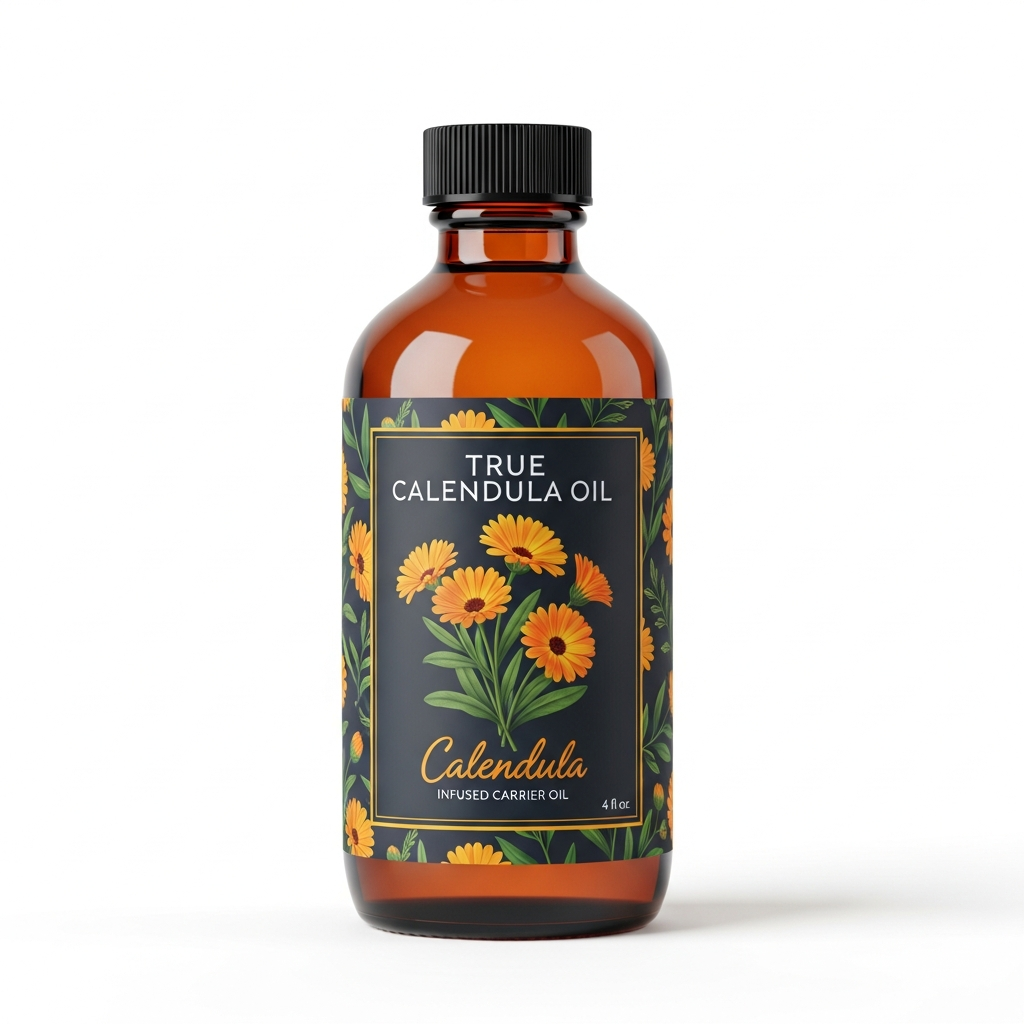 Calendula Oil
Our own small-batch calendula oil, in sizes from 0.5 oz to bulk. From $11.99.
Shop Calendula Oil →
Calendula Oil
Our own small-batch calendula oil, in sizes from 0.5 oz to bulk. From $11.99.
Shop Calendula Oil →
This guide walks through what calendula oil actually is, why feline physiology changes the safety conversation, and what cautious, informed use might look like if you and your veterinarian decide it's worth exploring.
What Exactly Is Calendula Oil?
Calendula oil, sometimes labeled calendula-infused oil, is made by steeping the golden petals of Calendula officinalis (also called pot marigold) in a carrier oil such as sunflower, olive, or jojoba oil. The petals slowly release their color and plant compounds into the carrier over days or weeks, and the spent flowers are then strained out. What remains is a mild, amber-hued infused oil rather than a concentrated distillate.
This is an important distinction to hold onto, because it separates calendula oil from calendula essential oil in a meaningful way, and that difference matters a great deal when cats are involved.
Why Cat Safety Questions Are Different From Dogs and Humans
Cats process certain plant compounds differently than dogs or people do. Their livers carry lower levels of specific enzymes involved in breaking down some plant-derived molecules, which is part of why many essential oils marketed for human aromatherapy are widely flagged as risky to have around cats. This isn't a quirk unique to calendula. It's a broader feline metabolic characteristic that shapes how any concentrated plant extract should be approached in a household with cats.
Add to that the fact that cats are exceptionally fastidious groomers. Anything applied to their coat is very likely to end up in their mouth within the hour, simply because grooming is instinctual and near constant. That single behavioral trait turns almost every topical product into a potential oral exposure, which is a very different risk profile than applying the same product to human skin.
Is Calendula Oil Safe for Cats?
Many holistic-minded pet owners, and some integrative veterinarians, consider calendula-infused oil to sit toward the gentler end of the botanical spectrum, largely because the infusion process yields a much lower concentration of volatile plant compounds than a steam-distilled essential oil would. Anecdotal evidence from pet owners often points to calendula-infused oil being tolerated reasonably well in small, diluted amounts, though this is observational rather than established fact.
That said, gentler is not the same as risk-free, and no single ingredient is universally appropriate for every cat. Individual sensitivities vary, and a cat with a known sensitivity to plants in the daisy family (which includes calendula) may react differently than others. Because cats will likely groom off whatever is applied to their coat, even a mild infused oil should be treated as something to introduce carefully and in consultation with a veterinarian, not as an automatic addition to a grooming routine.
It's also worth repeating: calendula essential oil is a different, far more concentrated product than calendula-infused oil, and the general caution around essential oils and cats applies to it. If a product label simply says "calendula oil" without clarifying whether it's an infusion or a distilled essential oil, that ambiguity alone is a reason to check with a vet before use.
Calendula Cream for Cats: Why the Full Ingredient List Matters
A calendula cream formulated for cats sold on its own may look reassuring on the shelf, especially if the front label leads with the flower's name. But most calendula creams, especially those made for human skin care, are built from a longer ingredient list than the name suggests. Fragrance additives, essential oil blends, preservatives, and other active ingredients are common in commercial creams, and any of these can be a bigger concern for a cat than the calendula itself.
Before considering a calendula cream for a cat, it helps to read the full ingredient panel, not just the front-of-package claim. Products marketed broadly for skin care are not automatically appropriate for feline use just because calendula appears near the top of the list. A simple, short ingredient list is generally easier to evaluate than a long one, and a veterinarian can help interpret what's actually in the jar.
How Some Cat Owners Approach Calendula Oil at Home
Owners who choose to explore calendula-infused oil with their cat, after speaking with a veterinarian, often follow a fairly consistent set of habits:
- Using only a properly diluted, pet-appropriate infused oil, never an undiluted essential oil product
- Applying a very small amount to a limited area, away from the eyes, ears, nose, and mouth
- Choosing a spot the cat is less likely to groom immediately, such as along the back rather than the paws or belly
- Keeping the first few sessions brief and watching the cat's general demeanor closely afterward
- Stopping right away if the cat seems bothered by the scent, texture, or sensation, or shows excessive scratching, drooling, or restlessness
None of this replaces a veterinarian's input. It simply reflects the general caution that experienced, safety-minded owners tend to apply anytime they introduce something new to a cat's routine.
Patch Testing and Dilution Basics
If a veterinarian gives the go-ahead to try a calendula-infused oil, a patch test is the standard first step. Choose a small, easily visible area, apply a small amount of the properly diluted oil, and then wait. Most guidance suggests observing the area and the cat's overall behavior for 24 to 48 hours before considering any broader use.
During that window, watch for:
- Increased scratching or licking directed at the area
- Redness, swelling, or a change in how the skin looks
- Changes in appetite, energy, or general behavior
- Excessive drooling or pawing at the mouth, which can suggest an unwanted taste from grooming
Dilution ratios should follow product labeling or, ideally, direct guidance from a veterinarian familiar with the cat's health history. Because concentration is such a central factor in feline safety with plant-derived products, guessing at a dilution is not a good substitute for professional direction.
A cat's grooming habits mean that almost anything applied topically becomes an oral exposure too. That single fact should shape every decision about botanical products in a multi-cat or cat-owning household.
When to Loop In a Veterinarian
A veterinarian should be part of the conversation before calendula oil or calendula cream is introduced to a cat's routine, and especially in the following situations:
- The cat is a kitten, a senior, pregnant, or nursing
- The cat has a known sensitivity to plants in the daisy or ragweed family
- The cat is currently taking any prescribed medication, since interactions can be hard to predict
- The cat has ongoing skin sensitivities that a vet is already managing
- Any reaction, however mild, appears after a patch test or first use
If a cat shows signs of real distress after exposure, such as difficulty breathing, repeated vomiting, or collapse, contact an emergency veterinary line immediately rather than waiting to see if symptoms pass on their own.
The Bigger Picture
Calendula's gentle reputation in human skin care doesn't automatically transfer to cats, whose bodies handle plant compounds in their own particular way. The distinction between a mild infused oil and a concentrated essential oil is one of the most important things a cat owner can understand before bringing either into the house. Anecdotal reports from other cat owners can be a useful starting point for questions to bring to a vet visit, but they aren't a substitute for professional guidance tailored to an individual cat's health, age, and history.
If you're curious about calendula oil for your cat, the safest first step isn't a shopping trip. It's a conversation with your veterinarian about whether it makes sense for your particular cat, and if so, how to introduce it slowly and watchfully.