
Calendula for Dogs: Vet-Approved Uses, Safety, and Dosage
As pet parents increasingly seek natural approaches to support their dogs' wellbeing, calendula has emerged as one of the most discussed botanical ingredients in veterinary circles. This comprehensive guide explores what veterinarians and pet care professionals have shared about calendula use in canine care, helping you make informed decisions about this time-honored botanical.
Key Takeaways
- Calendula may support various aspects of canine skin comfort when used appropriately
- Quality sourcing and proper preparation are essential for pet-safe products
- Veterinary consultation is recommended before introducing any new botanical to your dog's routine
- Proper dilution and application methods vary significantly by intended use
- Some dogs may experience sensitivities; patch testing is always advisable
Table of Contents
- What is Calendula and Why Consider It for Dogs?
- Safety Considerations and Precautions
- Vet-Approved Applications and Uses
- Dosage and Application Guidelines
- Choosing Quality Calendula Products for Dogs
- DIY Preparation Methods
- When to Consult Your Veterinarian
- Frequently Asked Questions
What is Calendula and Why Consider It for Dogs?
Calendula officinalis, commonly known as pot marigold, has been valued in traditional herbalism for centuries. This vibrant orange flower contains various naturally occurring compounds, including triterpenes, flavonoids, and carotenoids, which have attracted attention from both traditional herbalists and modern researchers.
In veterinary contexts, some practitioners have reported observing calendula's potential to support skin comfort and general wellness routines when incorporated thoughtfully into canine care protocols. The botanical's gentle nature has made it a subject of interest for pet owners seeking complementary approaches to support their dogs' comfort.
Historical Context in Animal Care
Traditional veterinary herbalism has long included calendula in various forms. Historical texts describe its use for supporting skin comfort and general wellness in livestock and companion animals. While these traditional applications don't constitute medical claims, they provide context for understanding why modern pet owners and some veterinarians continue to explore calendula's potential role in canine care.
Current Veterinary Perspectives
Many veterinarians approach calendula with measured interest, recognizing its traditional use while emphasizing the importance of proper application and realistic expectations. Some practitioners report incorporating calendula-based products into comprehensive care plans, always as complementary support rather than primary intervention.
Safety Considerations and Precautions

Before exploring any application of calendula for dogs, understanding safety parameters is essential. While calendula is generally considered gentle, several important considerations must guide its use with our canine companions.
Potential Sensitivities and Allergic Reactions
Dogs, like humans, can develop sensitivities to botanical ingredients. Signs that may suggest sensitivity to calendula include:
- Increased scratching or licking at application sites
- Redness or irritation where product was applied
- Unusual behavioral changes after exposure
- Digestive upset if ingested inappropriately
Patch Testing Protocol: Before any widespread application, apply a small amount of diluted calendula preparation to a small area of your dog's skin. Monitor for 24-48 hours for any signs of irritation or unusual reaction.
Contraindications and Cautions
Certain situations warrant extra caution or complete avoidance of calendula use:
- Pregnancy and nursing: Limited research exists on calendula's effects during canine pregnancy or lactation
- Pre-existing allergies: Dogs with known plant allergies may be more susceptible to calendula sensitivities
- Open wounds: Deep or severely infected wounds require veterinary attention; calendula should not delay appropriate medical care
- Upcoming surgeries: Some veterinarians prefer to avoid all botanical preparations before surgical procedures
Quality and Purity Concerns
Not all calendula products are created equal. For canine use, consider:
- Organic certification to minimize pesticide exposure
- Third-party testing for contaminants
- Clear labeling of all ingredients
- Appropriate packaging that preserves potency
- Reputable manufacturers with transparent sourcing
Vet-Approved Applications and Uses
Veterinary professionals who incorporate calendula into their practice typically focus on external applications where the botanical's traditional properties may offer supportive benefits. Understanding these applications helps pet owners make informed decisions about when calendula might be appropriate for their dogs.
Topical Skin Support
Many veterinarians report positive observations when calendula preparations are used to support general skin comfort in dogs. Common applications include:
- Dry skin areas: Calendula-infused balms may help support skin moisture when applied to dry patches
- Minor skin irritations: Some practitioners observe that calendula applications may support comfort in areas of minor skin irritation
- Post-grooming care: Gentle calendula preparations may support skin comfort after grooming sessions
Paw Care Applications
Dog paws face constant environmental challenges, and some veterinarians suggest calendula-based balms may support paw pad comfort:
- Supporting moisture balance in dry or cracked paw pads
- Providing a protective barrier against environmental irritants
- Supporting comfort after walks on rough surfaces
Ear Care Considerations
Some holistic veterinarians explore calendula's role in supporting ear comfort, though this application requires particular caution:
- Only external ear applications should be considered
- Proper dilution is absolutely essential
- Any ear concerns warrant immediate veterinary evaluation
- Never use calendula preparations in ears without specific veterinary guidance
Important Note: All applications should complement, never replace, appropriate veterinary care for any health concerns.
Dosage and Application Guidelines

Proper dosage and application methods are crucial for both effectiveness and safety when using calendula for dogs. These guidelines reflect input from veterinary professionals experienced with botanical applications in canine care.
Topical Application Guidelines
| Dog Size | Calendula Oil Dilution | Application Amount | Frequency |
|---|---|---|---|
| Small (under 25 lbs) | 2-3% in carrier oil | Few drops | 1-2 times daily |
| Medium (25-60 lbs) | 3-5% in carrier oil | 1/4 teaspoon | 1-2 times daily |
| Large (60+ lbs) | 5% in carrier oil | 1/2 teaspoon | 1-2 times daily |
Application Techniques
Proper application technique maximizes potential benefits while ensuring safety:
- Clean the area: Gently clean the application site with warm water and pat dry
- Test first: Apply a small amount to check for any immediate reaction
- Gentle massage: Work the preparation into the skin with gentle, circular motions
- Monitor absorption: Allow time for absorption before allowing the dog to lick the area
- Consistent routine: Maintain regular application schedules for best results
Duration and Frequency Considerations
Most veterinarians suggest starting with conservative approaches:
- Initial period: Begin with once-daily applications for the first week
- Adjustment phase: Increase to twice daily if well-tolerated
- Evaluation period: Assess results after 2-3 weeks of consistent use
- Breaks: Consider periodic breaks to prevent potential sensitization
Choosing Quality Calendula Products for Dogs
The market offers numerous calendula products, but not all are suitable for canine use. Understanding quality indicators helps ensure you select safe, potentially effective options for your dog.
Product Forms and Their Applications
Calendula Oil
Pure calendula oil or calendula-infused carrier oils offer versatility and concentrated potency. Look for products that clearly state the extraction method and carrier oil type. Cold-pressed or CO2-extracted calendula oils generally retain more of the plant's naturally occurring compounds.
Calendula Creams and Balms
Pre-formulated calendula creams for dogs provide convenience and often include complementary ingredients. Quality products should list all ingredients clearly and avoid potentially harmful additives like artificial fragrances or colors.
Calendula Salves
Thicker salve preparations may provide longer-lasting protection, particularly for paw care applications. These products typically combine calendula with natural waxes and oils.
Quality Assessment Criteria
- Organic certification: Reduces exposure to agricultural chemicals
- Third-party testing: Ensures purity and potency
- Clear ingredient listing: Enables identification of potential allergens
- Proper packaging: Dark glass or opaque containers protect from light degradation
- Reasonable pricing: Extremely cheap products may indicate quality compromises
Reading Labels Effectively
Understanding product labels helps identify suitable options:
- Ingredient order: Ingredients are listed by concentration; calendula should appear early for meaningful potency
- Concentration information: Look for specific percentages when available
- Carrier oils: Identify carrier oils to ensure they're appropriate for your dog
- Preservative systems: Natural preservatives are generally preferable for sensitive dogs
DIY Preparation Methods
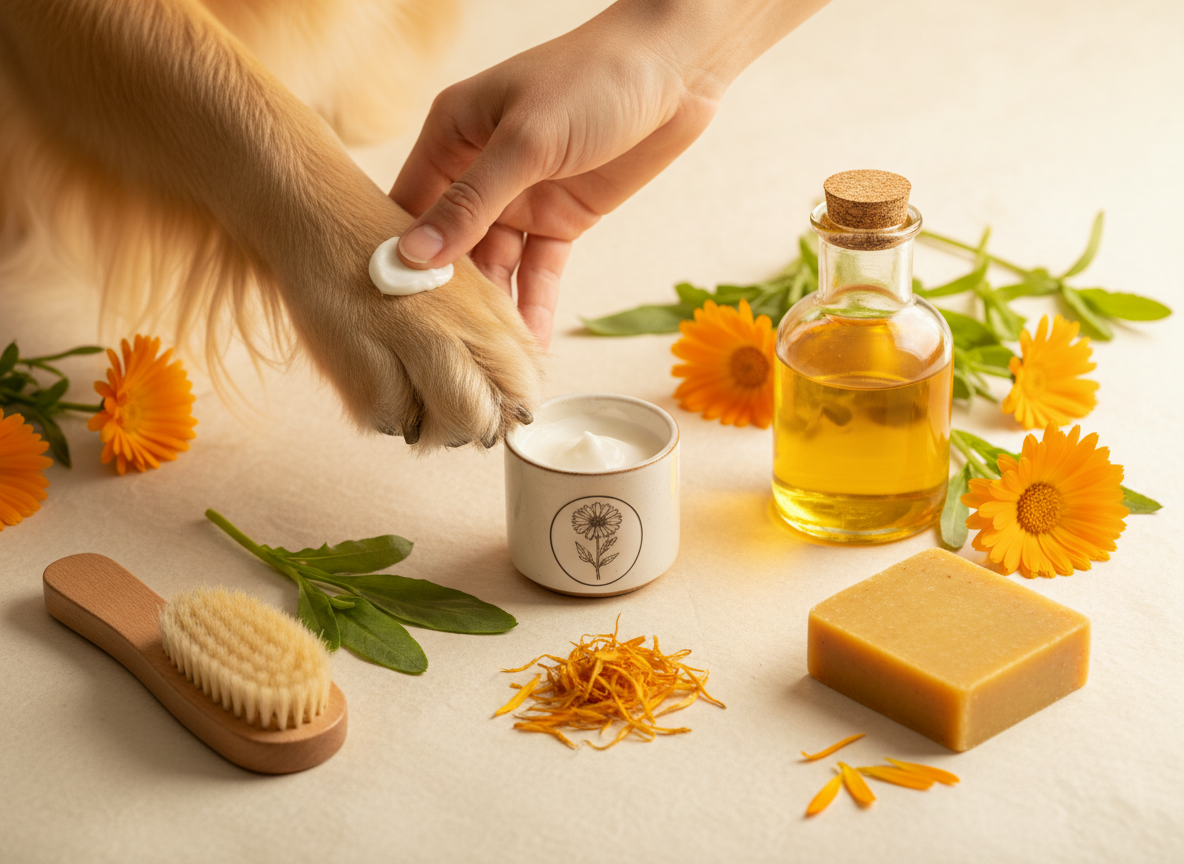
Some pet owners prefer preparing their own calendula products, allowing complete control over ingredients and quality. These methods require careful attention to safety and proper preparation techniques.
Calendula Oil Infusion
Solar Infusion Method
This gentle method preserves delicate compounds while creating a potent infusion:
- Fill a clean glass jar with dried calendula petals
- Cover completely with high-quality carrier oil (sweet almond, jojoba, or fractionated coconut oil)
- Seal jar and place in sunny location for 2-4 weeks
- Strain through fine cheesecloth or coffee filter
- Store in dark glass container in cool location
Safety Notes:
- Use only completely dry plant material to prevent mold
- Ensure all equipment is thoroughly sanitized
- Label with preparation date and ingredients
- Discard if any signs of spoilage appear
Simple Calendula Balm Recipe
Ingredients:
- 1/4 cup calendula-infused oil
- 2 tablespoons coconut oil
- 1 tablespoon beeswax pellets
Instructions:
- Combine all ingredients in double boiler
- Heat gently until beeswax melts completely
- Remove from heat and stir until smooth
- Pour into small containers while warm
- Allow to cool completely before use
Storage and Shelf Life: Properly prepared calendula products typically maintain quality for 6-12 months when stored in cool, dark conditions.
When to Consult Your Veterinarian
While calendula is generally considered gentle, certain situations warrant immediate veterinary consultation. Understanding these guidelines helps ensure your dog's safety and wellbeing.
Before Starting Calendula Use
Consider veterinary consultation before beginning calendula use if your dog has:
- Ongoing skin conditions or concerns
- History of allergic reactions to plants or topical products
- Current medications that might interact with topical applications
- Compromised immune system
- Chronic health conditions requiring ongoing management
During Use: Warning Signs
Discontinue calendula use and contact your veterinarian if you observe:
- Increased irritation or redness at application sites
- Excessive scratching, licking, or chewing at treated areas
- Signs of systemic allergic reaction (facial swelling, difficulty breathing)
- Unusual behavioral changes
- Worsening of the condition you're trying to support
Integrating with Conventional Care
Veterinarians experienced with integrative approaches often appreciate when pet owners communicate openly about botanical use. This transparency enables:
- Better coordination of care approaches
- Identification of potential interactions
- Monitoring for cumulative effects
- Adjustment of conventional treatments as needed
Frequently Asked Questions
Is calendula oil safe for dogs to lick?
While calendula is generally considered safe in small amounts, it's best to prevent excessive licking of treated areas. Allow adequate absorption time, and consider using an Elizabethan collar if your dog persistently licks treated areas.
Can I use human calendula products on my dog?
Products formulated specifically for dogs are generally preferable, as they avoid potentially problematic ingredients common in human formulations. If using human products, carefully review all ingredients and consult your veterinarian first.
How long does calendula take to show results?
Individual responses vary significantly. Some pet owners report observing changes within days, while others note gradual improvements over several weeks. Consistent application and realistic expectations are important.
Can calendula be used with other topical treatments?
Combining topical treatments requires careful consideration and veterinary guidance. Some combinations may enhance benefits, while others could cause irritation or reduce effectiveness.
What's the difference between calendula and marigold?
Calendula officinalis (pot marigold) differs from common garden marigolds (Tagetes species). Only Calendula officinalis has the traditional properties associated with calendula preparations. Always verify you're using the correct botanical species.
Should I stop using calendula before veterinary visits?
Inform your veterinarian about all topical treatments, including calendula use. Most practitioners appreciate this information and may advise temporary discontinuation for certain procedures or examinations.
Final Reminder: This guide provides educational information about calendula use with dogs based on traditional applications and veterinary observations. Individual dogs may respond differently, and professional veterinary guidance remains essential for addressing specific health concerns. Always prioritize your dog's safety and wellbeing, using calendula as a supportive addition to comprehensive veterinary care rather than a replacement for professional medical attention.