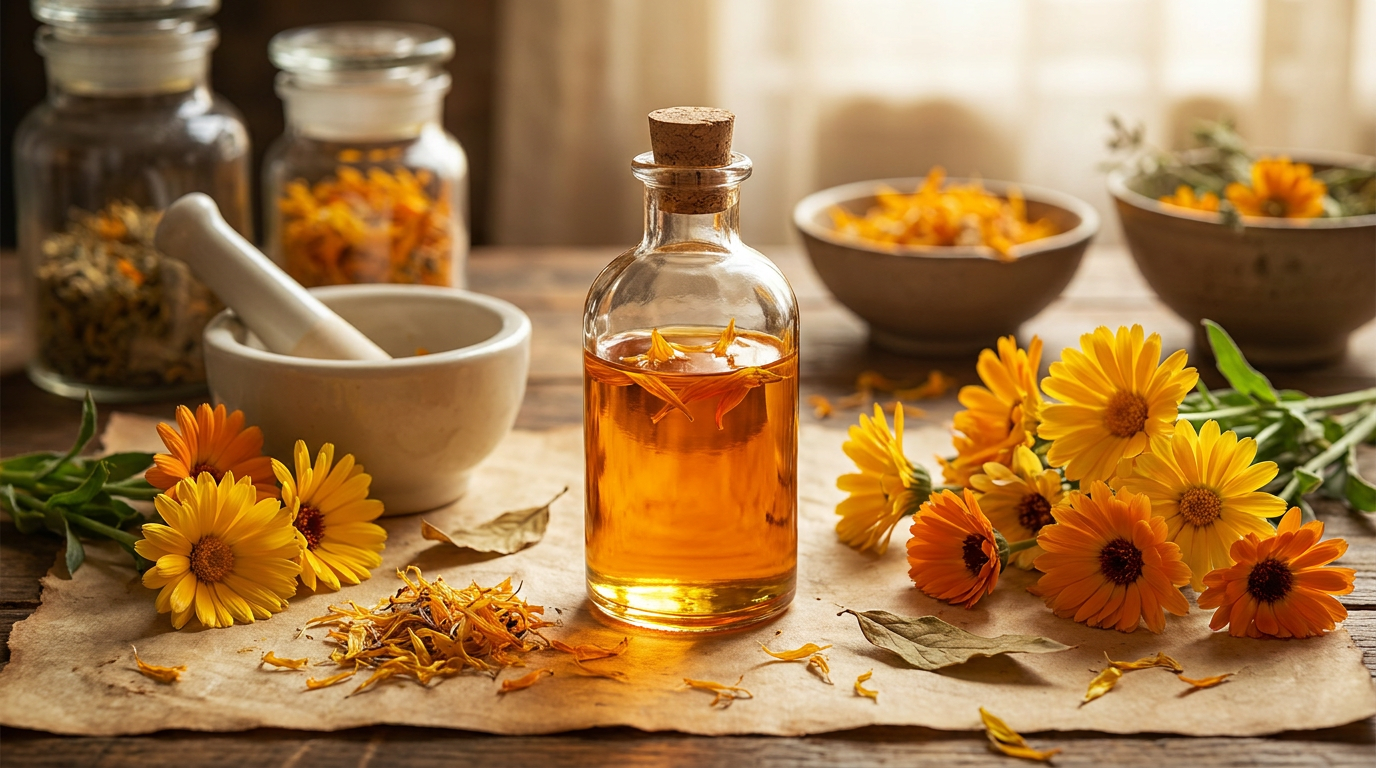
Calendula for Hemorrhoids: Does It Actually Help?
No published trial tests calendula on hemorrhoids. why bleeding needs a doctor, and the narrow case where an external skin oil is a fair question.
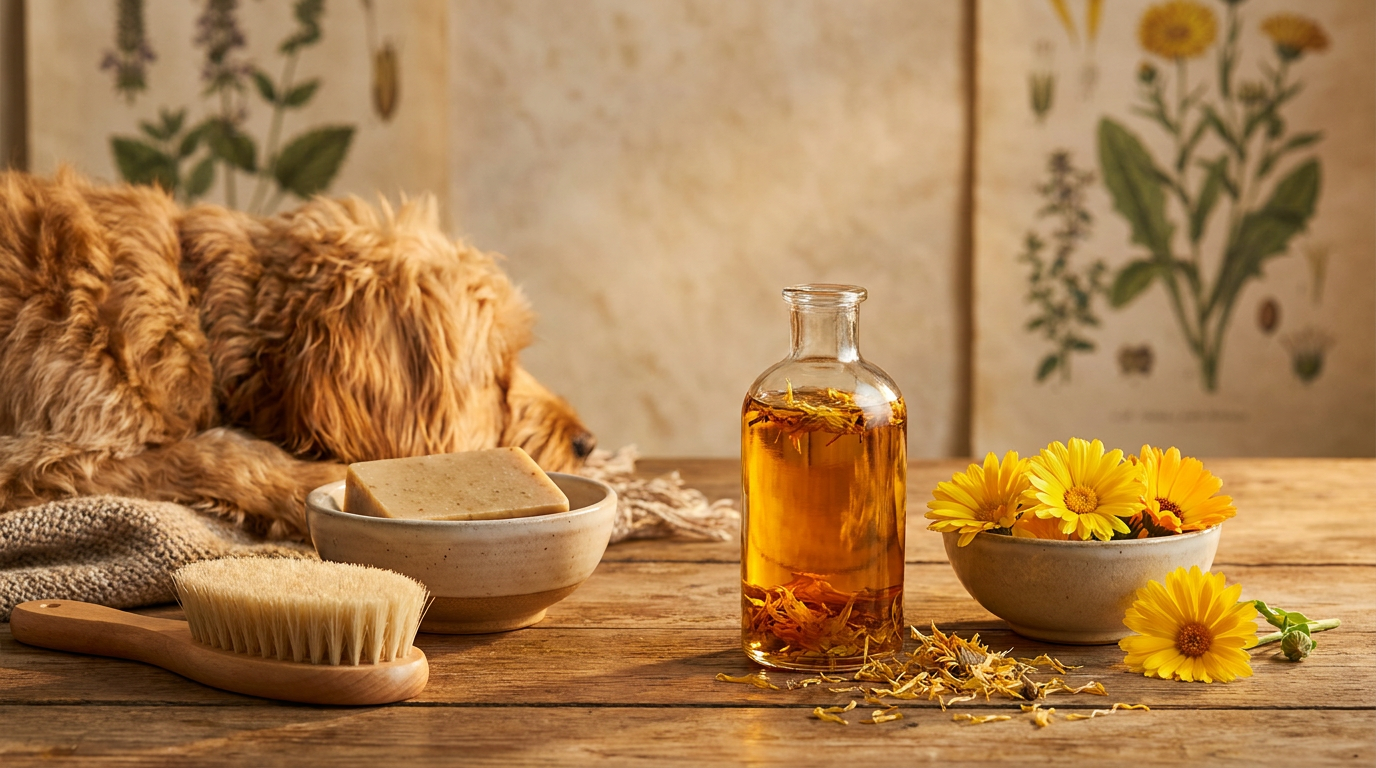
Calendula Oil and Cats: Licking, Carriers and Limits
The ASPCA rates the calendula plant non-toxic to cats, but no source tests the oil on cats. What licking changes, what to check on a label, and when to call a vet.
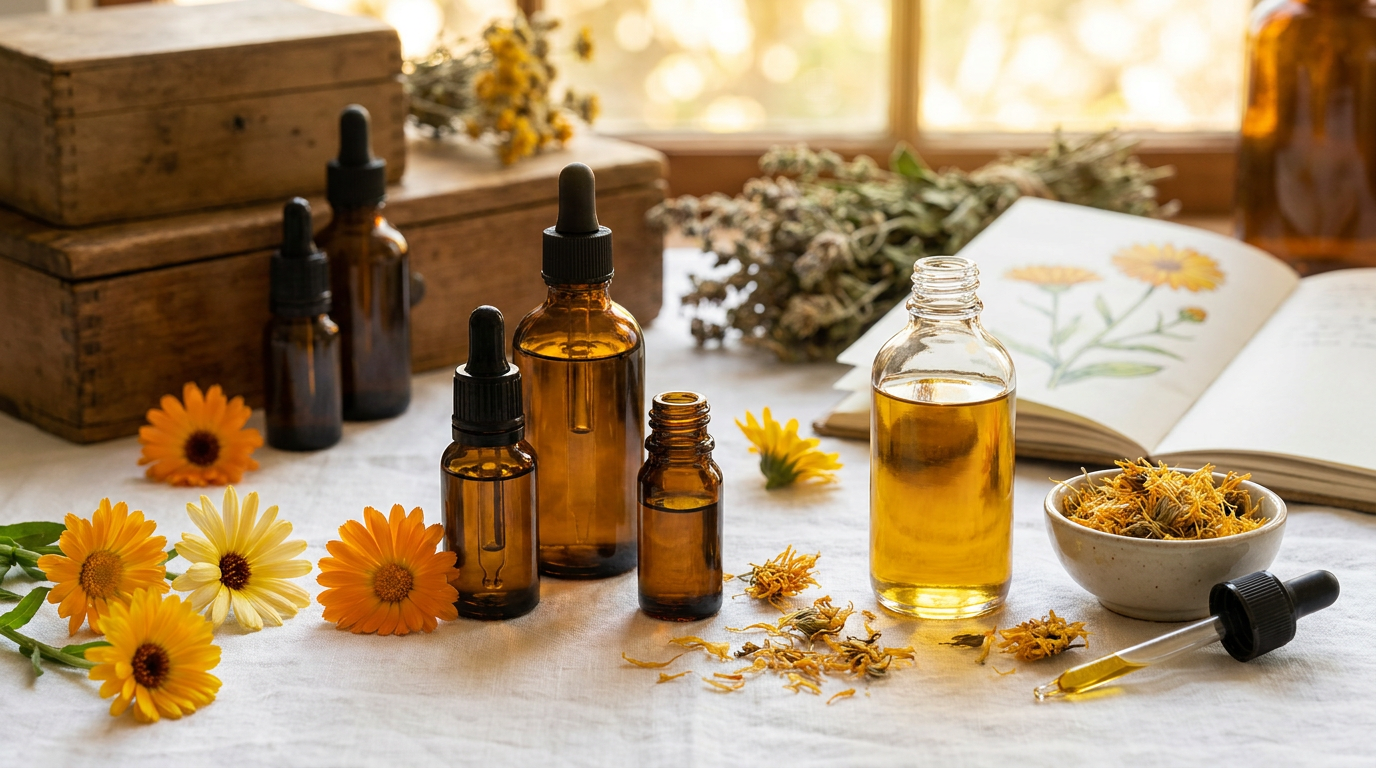
Calendula Oil for Dermatitis: Contact and Atopic Treatment Options
Calendula can cause contact allergy and has been trialled for radiation, diaper and atopic dermatitis with mixed results. What the studies show and who to see first.

Acne Marks vs Acne Scars: Where Calendula Oil Fits
Most post-acne marks are flat discoloration, not scars. What research says about calendula and scarring, what it leaves out, and when to see a dermatologist.
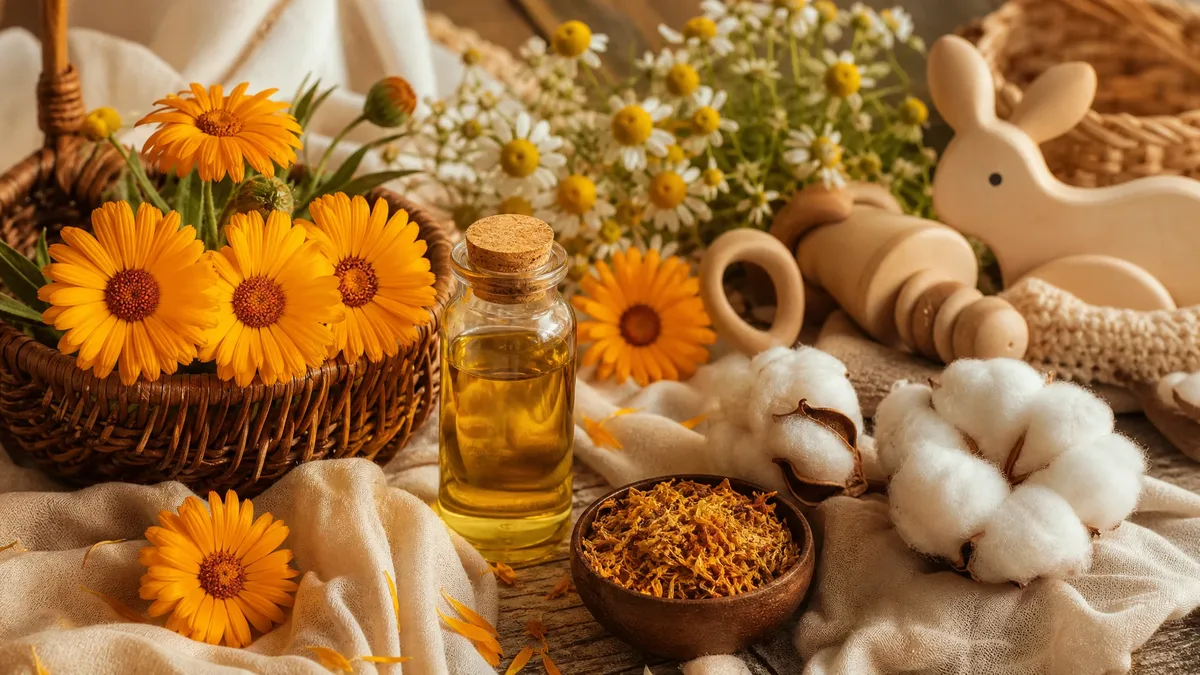
Calendula for Eczema in Children: A Parent's Evidence-Based Guide
No trial tests calendula alone in children with eczema. What the AAD, the EU regulator and the trials say, and how to raise the question with your child's doctor.
Calendula and Wounds: What the Clinical Studies Actually Show
Calendula wound studies are small and mixed, mostly on extracts and ointments under clinical care, none on infused oil. What each trial found and who should skip it.
Calendula and Ragweed Allergy: The Cross-Reactivity Risk Explained
Ragweed hay fever and calendula skin reactions are different allergies. What the sources document, what no source quantifies, and how to decide with an allergist.
Calendula Allergy: Symptoms, Cross-Reactions, and What to Do
Calendula allergy in order: what to do when a rash appears, how reactions are reported, which daisy-family plants matter, and how dermatologists test, with sources.

Does Calendula Oil Have a pH? What Skin Compatibility Means
A plain oil has no water, so it has no pH in the usual sense. Where pH does matter: washes, creams and skin itself, with the measured values and sources.

Calendula Volatile Compounds: Aroma Chemistry, Honestly
Calendula's volatile oil is a tiny, sesquiterpene-rich fraction. What it contains, how yields differ by method, and why an infused oil is not an essential oil.

Saponins in Calendula: Understanding Their Cleansing & Healing Power
Calendula flowers contain oleanolic-acid saponins, natural detergent-like compounds. What is known, what is not, and why an infused oil is not a saponin product.

Calendula Polysaccharides: What the Lab Studies Tested
Calendula flowers hold water-soluble polysaccharides studied in immune-cell assays. What was extracted, what was tested, and why that does not transfer to an oil.

Faradiol in Calendula: What the Research Does and Doesn't Show
Faradiol esters are documented in calendula petals and in mouse studies, but we found no measurement of faradiol in infused oil. The evidence, step by step.

Calendula Oil Fatty Acids: Seed Oil vs Infused Oil
Calendic acid is a calendula seed-oil fact, not a petal-infusion fact. What the published fatty acid data show, and why the carrier oil sets an infused oil's profile.

Calendula Oil Carotenoids: Why It's Golden & Why That Matters
Calendula's golden colour comes from carotenoids that vary several-fold by variety. Why colour is a weak quality test, how storage matters, and what to check instead.

Calendic Acid: What It Is and Why Seed Oil Is Not Our Oil
Calendic acid is 51-58% of calendula seed oil in one study. What is known about petals, why the carrier dominates an infused oil, and what to ask a seller.
