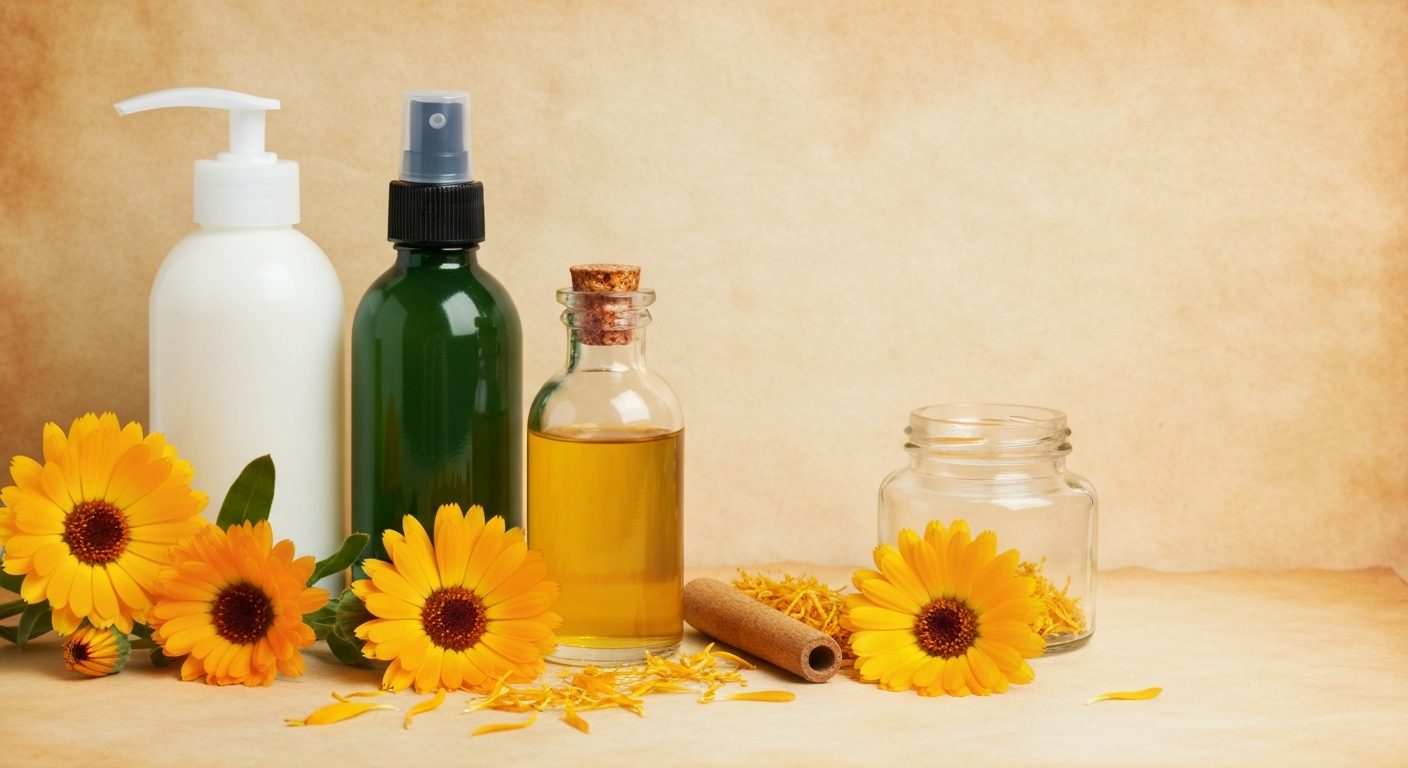
DIY Calendula Oil Dog Paw Balm for Cracked Pads
A dog paw balm is a wax-and-oil barrier, and the calendula in it is the least important decision you will make. What matters more is why the pads are cracked, what else is in the tin (many popular recipes add things dogs should not lick off), and whether a veterinarian should look first. Below is a short, sourced recipe for a calendula balm with only two ingredients, followed by the cases where we would skip it and call the vet instead.

Calendula Oil
Our own small-batch calendula oil, in sizes from 0.5 oz to bulk.
From $13.99
Shop Calendula Oil →Before you make anything: why are the pads cracked?
Cracked pads have ordinary causes and serious ones. A veterinarian-authored PetMD article lists wear from concrete or rough trails, heat or cold and de-icing salt, irritants such as ice melt, floor cleaners and yard fertilizers, and underlying conditions including allergies, autoimmune disease, hypothyroidism, Cushing's disease, liver disease and zinc deficiency (PetMD, Morrison, 2024). It says to see the veterinarian as soon as possible for bleeding, swelling, limping, behavior changes, or excessive licking, chewing or biting of the paws, and also the first time cracks or dryness appear, so serious causes can be ruled out.
That second point shapes how we would use any balm. If this is the first time you have seen cracks, a balm is not the first step; an appointment is. If the cracks recur with every winter or every hike, you probably know the cause, and a barrier is a sensible thing to want. We make calendula oil; we have no veterinary training, and nothing we say replaces your vet's judgment.
The licking problem decides the ingredient list
Whatever you put on a paw, assume it will be licked. PetMD advises using products made for dogs, says petroleum jelly is not recommended because licking it off can cause serious stomach upset, and says coconut oil should not be applied to cracked paws because ingestion can cause stomach upset or pancreatitis and it can cause an allergic reaction (PetMD, 2024). That is a direct disagreement with the recipe that used to be on this page, which included coconut oil, shea butter, vitamin E and optional essential oils, and we have removed all four.
Essential oils deserve a separate warning. A pet poison service reports that skin application of concentrated tea tree oil is a common cause of poisoning in dogs, and notes the oil is "equally absorbed with both dermal or oral administration" (Pet Poison Helpline). Calendula-infused oil is not an essential oil, but the lesson transfers: a dog's paws are an oral exposure route, so every ingredient has to be one you would accept being swallowed in small amounts.
What about calendula itself? The ASPCA lists Calendula officinalis (pot marigold) as non-toxic to dogs and cats (ASPCA). That rates the plant, not an oil, and the ASPCA warns that eating any plant material can cause vomiting and stomach upset. Be careful not to confuse it with French or African marigold (Tagetes), a different genus that Pet Poison Helpline rates as mildly irritating (Pet Poison Helpline, Marigold). Our oil is made from Calendula officinalis flowers.
The remaining unknown is the carrier. We make our oil in two stages, extracting calendula alone and then bringing it into a carrier oil, and the batch paperwork names the carrier (email the lot number to [email protected]). Because dogs lick, read that name and, if you are unsure about it for your dog, ask your vet. We have not tested the oil on dogs and make no claim about it.
A two-ingredient balm
With coconut oil, shea and vitamin E removed, what remains is the one salve ratio we can source: 1 oz of beeswax to 4 oz of infused oil, melted together in a double boiler on low heat, with less wax for a softer balm and more for a firmer one (Mountain Rose Herbs). That source is written for human salves and mixes wax weight with oil volume under "oz," so treat it as a starting point rather than a veterinary formula.
- Measure 4 oz of calendula oil and 1 oz of beeswax. A 4 oz bottle of ours supplies the oil; halve both for a trial batch.
- Melt the beeswax first in a heat-safe bowl over a pan of barely simmering water, then add the oil, stir, and take it off the heat. Do not let water into the mixture.
- Pour into a clean, dry tin or push-up tube, let it set, then cap and date it.
- Test a little first. Calendula is in the daisy family, and allergy is a recognized reaction in people (EMA/HMPC, 2018); we found no veterinary source on calendula allergy in dogs, so we cannot say how common it is. Apply a small amount to one paw, watch for redness, swelling, or increased licking, and stop if any appears.
Why no water: a 1995 cosmetic-science review notes that products without liquid water need little preservation (Brannan, 1995), so an oil-and-wax balm avoids the water problem. It is still not sterile, so scoop it out with a clean spatula rather than a finger that has been on the floor.
How we would apply it, and when not to
Apply a thin layer to clean paws, work it between the toes and across the pad, and then occupy the dog: PetMD notes that a veterinarian may send a dog home with a recovery cone so it cannot lick off medication, and that waterproof booties can protect vulnerable pads. The same article says a balm can substitute for booties by creating a barrier against ice, salt, dirt and rough terrain. Use less than you think you need; thicker products protect longer, but a heavy coat is more to lick.
Skip the balm and call the vet if any of these apply: bleeding, deepening or swollen cracks; limping; the dog licking or chewing the paws persistently; or cracks that keep coming back, which is a reason to ask about the underlying causes listed above. A UK veterinary charity says that a suspected hot spot, an area of inflamed, infected skin often starting from a bite or graze that gets licked or chewed, warrants contacting a vet promptly and keeping the dog from licking it (PDSA). Do not use the balm on open wounds or on skin that looks infected. For hot spots specifically, see our page on dogs and hot spots, and for a wider view calendula oil and dogs. This balm is not a recipe for cats: cats groom constantly and veterinary toxicologists advise against concentrated essential oils on them (see our cat page).
Shelf life
Mountain Rose says its salves keep 1 to 3 years in a cool place, which is a seller's statement about its own product; University of Maine advises using homemade infused oils within three months (UMaine, Bulletin 4385). We do not choose between them. Make a small batch, date the tin, keep it cool, and discard it if the smell changes. See our shelf-life page for why.
If your dog's pads are cracked for the first time, the useful step is the vet appointment. If you already know the cause and want a plain balm, two ingredients is where we would stop, and our 4 oz bottle is the right size for a first batch.
Calendula Oil
Nature's Golden Botanical, bottled: small-batch calendula oil in sizes from 0.5 oz to bulk.
From $13.99
Shop Calendula Oil →Sources & Further Reading
- Morrison BJ, DVM, 2024. Cracked dog paws? Common causes and how to care for them. PetMD. petmd.com
- Pet Poison Helpline. Essential oils are toxic to dogs. petpoisonhelpline.com
- Pet Poison Helpline. Marigold. petpoisonhelpline.com/marigold
- ASPCA. Pot Marigold (Calendula officinalis). aspca.org
- PDSA. Hot spots (acute moist dermatitis) in dogs, 2020. pdsa.org.uk
- Mountain Rose Herbs. How to make herbal salves. blog.mountainroseherbs.com
- EMA/HMPC, 2018. EU herbal monograph on Calendula officinalis L., flos. ema.europa.eu
- Brannan DK, 1995. Cosmetic preservation. J Soc Cosmet Chem 46:199-220. library.scconline.org
- University of Maine Cooperative Extension. Bulletin 4385, Safe homemade flavored and infused oils. extension.umaine.edu