
Calendula Allergy: Symptoms, Cross-Reactions, and What to Do
While calendula (Calendula officinalis) is traditionally celebrated for its gentle nature, some individuals may experience sensitivity or allergic reactions to this beloved botanical. Understanding how to identify potential reactions, recognize cross-sensitivities, and navigate alternatives can help you make informed decisions about incorporating calendula into your skincare routine.
This comprehensive guide will walk you through the essential steps of identifying calendula sensitivity, understanding related plant reactions, and finding suitable alternatives when needed.
Understanding Calendula Allergies and Sensitivities
Calendula belongs to the Asteraceae (Compositae) family, which includes daisies, sunflowers, and ragweed. While true allergic reactions to calendula are relatively uncommon, they can occur, particularly in individuals who have existing sensitivities to plants in this botanical family.
It's important to distinguish between different types of reactions:
- True allergic reactions: Involve the immune system and may include symptoms like hives, swelling, or respiratory issues
- Contact sensitivity: Localized skin irritation that may develop with repeated exposure
- Phototoxic reactions: Skin reactions that occur when certain plant compounds interact with sunlight
How to Identify Calendula Allergy Symptoms
Recognizing potential calendula sensitivity requires careful observation of your body's responses. Here's a systematic approach to identifying possible reactions:
Materials Needed for Self-Assessment:
- Journal or notebook for tracking symptoms
- Camera or phone for documenting skin changes
- Timer for monitoring reaction timing
- Mild, unscented soap for cleansing if reaction occurs
- Cool water for rinsing
Step 1: Document Your Exposure
Before using any calendula product, record the following information:
- Date and time of application
- Product type and brand
- Amount used
- Application area
- Other products used simultaneously
Step 2: Monitor for Immediate Reactions (0-2 hours)
Watch for these potential immediate symptoms:
- Redness or flushing at the application site
- Itching or burning sensations
- Swelling or puffiness
- Hives or raised bumps
- Stinging or tingling feelings
Step 3: Observe Delayed Reactions (2-48 hours)
Some sensitivities may not appear immediately. Continue monitoring for:
- Persistent redness or inflammation
- Dry, flaky, or peeling skin
- Small bumps or rash development
- Increased sensitivity to touch
- Darkening or discoloration of skin
Understanding Cross-Reactions with Related Plants
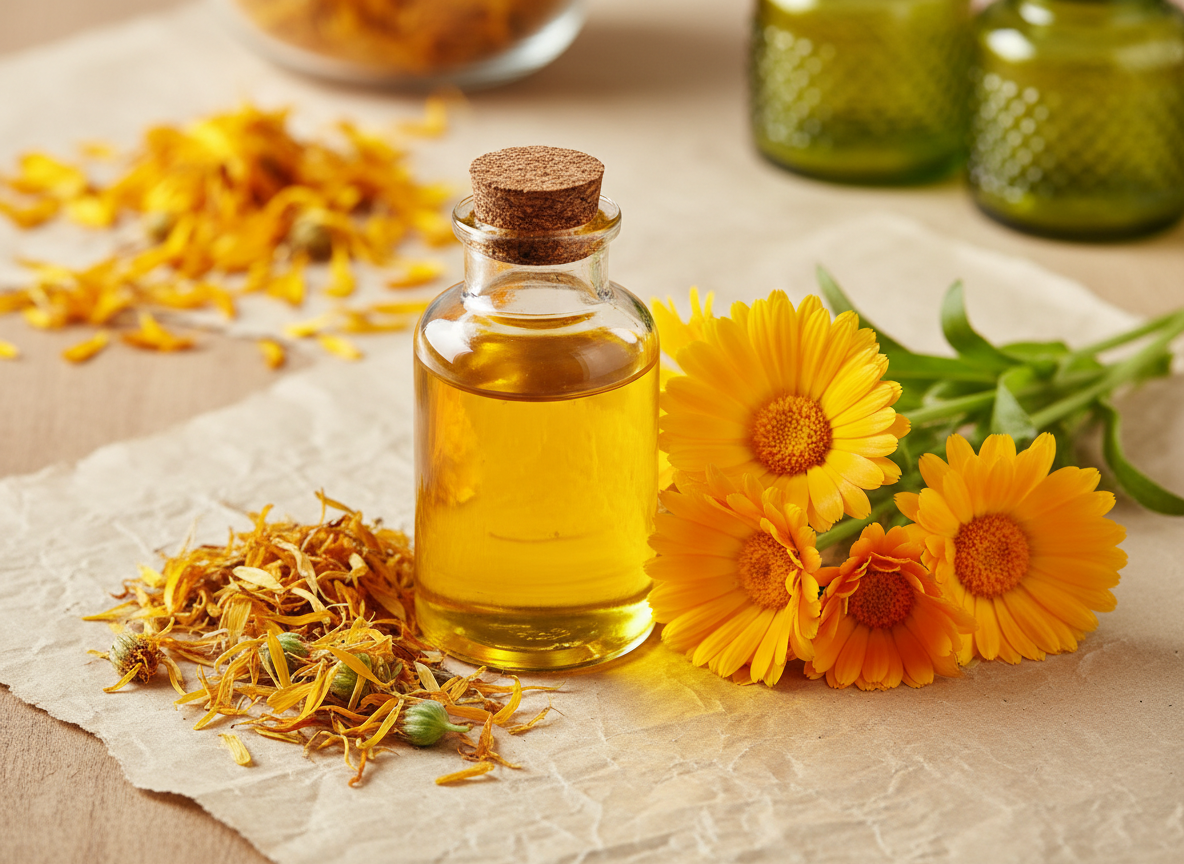
If you experience sensitivity to calendula, you may also react to other members of the Asteraceae family. This phenomenon, known as cross-reactivity, occurs because related plants often share similar allergenic compounds.
Step 4: Identify Potentially Cross-Reactive Plants
Be aware of these botanical relatives that may cause similar reactions:
- Chamomile (Matricaria chamomilla): Often used in skincare and teas
- Arnica (Arnica montana): Popular in topical preparations
- Echinacea (Echinacea species): Common in immune support products
- Dandelion (Taraxacum officinale): Found in herbal preparations
- Yarrow (Achillea millefolium): Used in traditional skincare
- Sunflower (Helianthus annuus): Present in many cosmetic products
Step 5: Review Your Product Ingredients
Systematically check all your skincare and cosmetic products for Asteraceae family ingredients. Look for these botanical names on labels:
- Any ingredient ending in "-anthemum" (like chrysanthemum)
- Botanical names containing "Calendula," "Matricaria," "Arnica," or "Chamomilla"
- Essential oils from daisy family plants
- Herbal extracts from related botanicals
What to Do If You Suspect a Calendula Allergy
If you identify potential calendula sensitivity, taking prompt and appropriate action can help minimize discomfort and prevent future reactions.
Step 6: Immediate Response Protocol
Follow these steps if you suspect a reaction:
- Stop use immediately: Discontinue the calendula product right away
- Cleanse gently: Rinse the affected area with cool water and mild, fragrance-free soap
- Pat dry: Avoid rubbing or scrubbing the sensitive area
- Apply cool compress: Use a clean, damp cloth for 10-15 minutes to soothe irritation
- Avoid further irritants: Skip other active skincare ingredients for 24-48 hours
Step 7: Document the Reaction
Create a detailed record of your experience:
- Take photos of any visible skin changes
- Note the severity and duration of symptoms
- Record which specific product caused the reaction
- List any other factors that might have contributed
- Track how long recovery takes
Safe Patch Testing Procedures

Before using any calendula product extensively, performing a patch test can help identify potential sensitivities safely.
Materials Needed for Patch Testing:
- Small amount of the calendula product
- Clean cotton swab or small brush for application
- Adhesive bandage or patch
- Permanent marker for marking the test site
- Timer or alarm for monitoring periods
Step 8: Conduct a Proper Patch Test
- Choose your test site: Select an area on your inner forearm or behind your ear
- Clean the area: Use mild soap and water, then pat completely dry
- Apply a small amount: Use just a tiny drop of the calendula product
- Cover if needed: Some prefer to cover with a bandage, others leave exposed
- Mark the spot: Draw a small circle around the test area with washable marker
- Wait and observe: Check at 24 and 48 hours for any reactions
- Record results: Document any changes, even minor ones
Step 9: Interpret Patch Test Results
Understanding your patch test results helps guide future product choices:
- No reaction: Clear skin with no changes suggests good tolerance
- Mild irritation: Slight redness may indicate sensitivity; proceed with caution
- Moderate reaction: Noticeable redness, itching, or bumps suggest avoiding the product
- Severe reaction: Intense symptoms warrant complete avoidance and possible consultation with a healthcare provider
Finding Suitable Alternatives to Calendula
If you discover calendula sensitivity, numerous gentle alternatives may provide similar benefits for your skincare routine.
Step 10: Explore Botanically Unrelated Options
Consider these alternatives from different plant families:
- Aloe vera (Asphodelaceae family): Traditionally used for soothing skin
- Rose hip oil (Rosaceae family): Rich in beneficial fatty acids
- Jojoba oil (Simmondsiaceae family): Technically a liquid wax, well-tolerated by most
- Centella asiatica (Apiaceae family): Popular in Korean skincare traditions
- Oat extracts (Poaceae family): Known for gentle, soothing properties
Step 11: Research Product Formulations
When seeking alternatives, apply the same careful approach:
- Read ingredient lists thoroughly
- Research the botanical family of new ingredients
- Start with single-ingredient products when possible
- Perform patch tests on all new products
- Introduce one new ingredient at a time
Common Mistakes to Avoid

Learning from common errors can help you navigate calendula sensitivity more effectively:
Testing and Usage Mistakes:
- Skipping patch tests: Always test new products, even if you've used similar ones before
- Testing multiple products simultaneously: This makes it impossible to identify the specific trigger
- Using too much product during testing: A tiny amount is sufficient for assessment
- Ignoring mild reactions: Small sensitivities can worsen with continued exposure
- Not considering cross-reactions: Assuming other Asteraceae plants are safe
Documentation Mistakes:
- Poor record keeping: Failing to track products, timing, and reactions thoroughly
- Not photographing reactions: Visual records can be helpful for healthcare providers
- Forgetting environmental factors: Weather, stress, and other products can influence reactions
When to Consult Healthcare Professionals
While most calendula sensitivities are mild, certain situations warrant professional consultation:
Step 12: Recognize When to Seek Help
Consult a qualified healthcare provider if you experience:
- Severe reactions with widespread inflammation
- Respiratory symptoms like wheezing or difficulty breathing
- Reactions that don't improve within 72 hours
- Signs of secondary infection in irritated areas
- Multiple severe reactions to different botanical products
Preparing for Your Appointment
When consulting a healthcare provider about calendula sensitivity:
- Bring your reaction documentation and photos
- List all products used and their complete ingredient lists
- Mention any family history of plant allergies
- Describe your typical skincare routine
- Ask about allergy testing options if appropriate
Long-term Management Strategies
Successfully managing calendula sensitivity involves developing sustainable, long-term approaches to skincare and product selection.
Step 13: Develop a Personal Sensitivity Profile
Create a comprehensive record of your skin's responses:
- List all known plant sensitivities
- Note which botanical families to avoid
- Identify well-tolerated alternatives
- Track seasonal variations in sensitivity
- Monitor how stress and health changes affect reactions
Building a Sensitivity-Conscious Routine
Develop sustainable practices for ongoing skincare success:
- Maintain a simple routine: Fewer ingredients mean fewer potential triggers
- Introduce changes gradually: Add only one new product every few weeks
- Keep successful products consistent: Avoid unnecessary changes to working formulas
- Stay informed: Read labels carefully and research unfamiliar ingredients
- Plan for travel: Bring familiar products when traveling to avoid emergency substitutions
Expected Outcomes and Recovery
Understanding typical recovery patterns can help set realistic expectations for managing calendula sensitivity.
Most people who experience mild calendula reactions may find that symptoms typically resolve within 24-72 hours after discontinuing use. The affected skin may initially appear red or irritated, but this often gradually fades as the body's natural healing processes work to restore balance.
With proper identification and avoidance of triggering ingredients, many individuals successfully maintain healthy skincare routines using alternative botanicals. Some people report that their skin becomes less reactive over time when they consistently avoid known triggers and maintain gentle care practices.
Recovery time can vary based on factors such as the severity of the initial reaction, individual skin type, overall health status, and environmental conditions. Patience during the healing process often yields the best long-term outcomes.
Prevention and Future Skincare Success
Armed with knowledge about your skin's specific sensitivities, you can confidently navigate the world of botanical skincare while avoiding potential triggers.
Remember that calendula sensitivity doesn't mean you must avoid all natural skincare products. Many gentle, effective alternatives exist across different plant families, and with careful selection and testing, you can build a routine that supports your skin's unique needs.
The key lies in approaching new products methodically, maintaining detailed records, and listening to your skin's responses. This systematic approach not only helps prevent uncomfortable reactions but also builds confidence in your skincare choices.
Most importantly, if you have any concerns about skin reactions or allergies, consult with a qualified healthcare provider who can offer personalized guidance based on your individual situation and medical history.