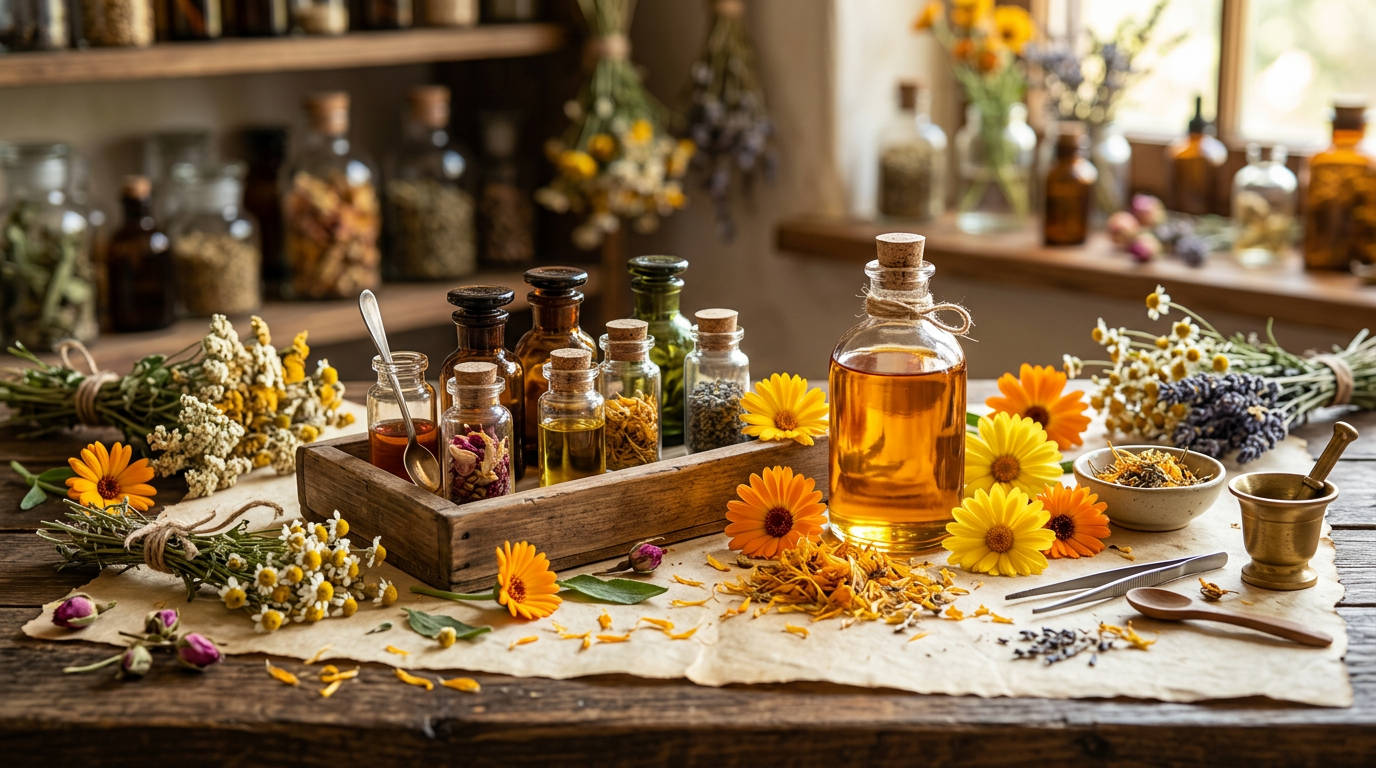
The Sunmeadow Blend: A 3:1 Calendula and Sweet Orange Ratio
Every so often a pairing comes along that feels obvious once you've smelled it. Calendula oil and sweet orange are one of those pairings. One is soft, golden, and a little honeyed. The other is bright, sunlit, and impossible to feel gloomy around. Put them together in the right proportion and you get something that smells like a meadow at nine in the morning: warm ground, open sky, citrus on the breeze. That's the idea behind the Sunmeadow Blend, our signature calendula oil recipe built around a simple 3:1 ratio that keeps calendula oil as the quiet, grounding base and lets sweet orange do its work as a lifted, cheerful top note.
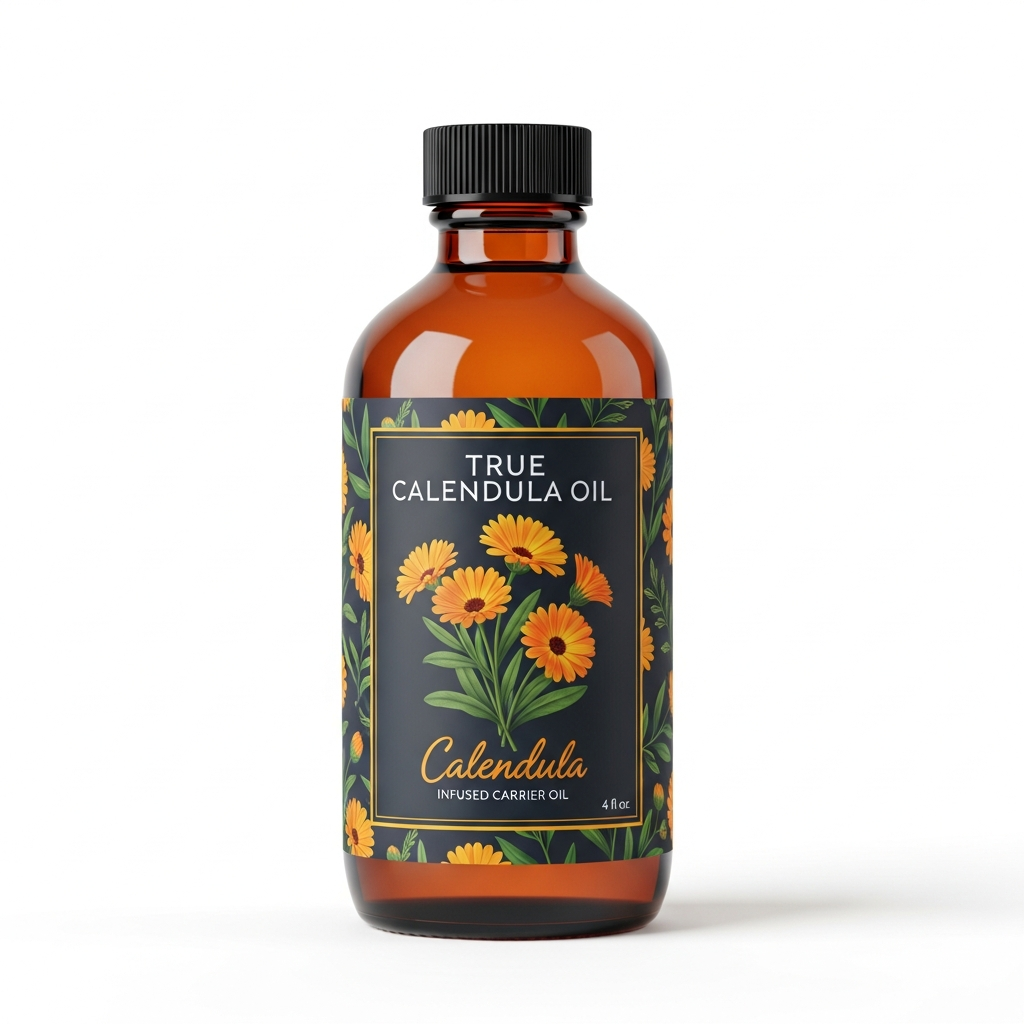
Calendula Oil
Our own small-batch calendula oil, in sizes from 0.5 oz to bulk.
From $11.99
Shop Calendula Oil →This is a calendula morning facial oil blend first and foremost, the kind of thing you'd reach for while the coffee is still brewing. But the ratio scales easily, and we'll walk through a couple of variations toward the end for people who want the same pairing in a different form.
Why Calendula and Sweet Orange Work Together
Calendula oil, made by infusing calendula petals into a carrier like sunflower or jojoba, has a character that's easy to underestimate on its own. It's soft, faintly herbaceous, and carries a warm, honeyed undertone that reads more like late summer hay than flower. It doesn't shout. It settles in and lets other things stand out around it, which is exactly why it works so well as the base of a signature calendula oil recipe rather than the star of the show.
Sweet orange essential oil is the opposite kind of ingredient. It's a top note through and through, expressed from the peel rather than distilled, which gives it a rounder, juicier profile than sharper citrus oils like lemon or bergamot. It smells like orange peel snapped open in your hands, cheerful and immediate, and it fades faster than a base note like calendula, which is part of why the proportions matter so much here.
At a 3:1 calendula oil essential oil ratio, calendula oil makes up the bulk of the blend by volume, doing what a good carrier oil does: carrying scent, feeling pleasant on skin, and giving the orange something warm to rest on top of. The sweet orange is there in a much smaller, carefully measured amount, just enough to lift the whole blend without turning it into a straightforward citrus oil. The name "3:1" describes that felt balance: three generous, grounding parts calendula to one bright, assertive part orange. Because sweet orange is a concentrated essential oil and calendula oil is a gentle carrier, the actual measured amounts below are adjusted so the finished blend stays comfortable on facial skin while keeping that same 3:1 character in the way it smells and feels.
What You'll Need
This recipe makes a 1 ounce (30 ml) bottle of finished calendula oil sweet orange blend, enough to last several weeks with daily morning use. A smaller 10 ml version is included further down if you'd rather test it first.
| Ingredient | Amount (drops) | Amount (ml) |
|---|---|---|
| Calendula oil (carrier) | approx. 580 drops (fill to line) | 29 ml |
| Sweet orange essential oil | 6 drops | approx. 0.3 ml |
You'll also want a clean 1 oz amber glass dropper bottle (amber or cobalt glass helps protect the blend from light), a small glass mixing beaker or a second empty bottle for combining, and a funnel if you're pouring calendula oil from a larger bottle. A label and the date you made the blend are worth adding too, since it makes tracking shelf life much easier later.
How to Make the Sunmeadow Blend
- Start with clean, dry tools. Any water left in your bottle or dropper can shorten the blend's shelf life, so rinse with alcohol if needed and let everything air dry fully before you begin.
- Pour the calendula oil first. Fill your 1 oz bottle with calendula oil, leaving a small amount of headspace at the top so the bottle doesn't overflow once the orange is added.
- Add the sweet orange essential oil. Count 6 drops directly into the bottle. Counting drops rather than eyeballing keeps the ratio consistent and keeps the essential oil concentration at a level that's comfortable for facial skin.
- Cap and roll, don't shake. Cap the bottle tightly and gently roll it between your palms for about thirty seconds. Rolling combines the oils without introducing air bubbles the way vigorous shaking can.
- Let it rest overnight. This isn't strictly necessary, but giving the blend eight to twelve hours before first use lets the two scents settle together, so what you smell the next morning is closer to the blend's true character than the first sharp whiff right after mixing.
- Patch test before your first full application. See the safety section below before using this on your face for the first time.
For everyday use, a few drops of the finished blend warmed between the palms and pressed gently over clean skin makes for a simple morning routine. If you want more detail on incorporating a blend like this into a broader ritual, our calendula DIY recipe collection has additional ideas for working calendula oil into a daily routine.
Dilution, Patch Testing, and Safety Notes
At 6 drops of sweet orange essential oil in a 1 oz (30 ml) bottle, this blend sits at roughly a 1% dilution, a level generally considered appropriate for facial application by aromatherapy educators, though everyone's skin responds differently. If you have particularly reactive or sensitive skin, you may want to start even lower, at 3 to 4 drops per ounce, and adjust from there.
Always patch test a new blend before applying it more broadly. Apply a small amount of the finished blend to the inside of your forearm, cover loosely if you like, and wait 24 to 48 hours. If you notice redness, itching, or any discomfort at the site, do not use the blend and consider trying a different ratio or a different carrier oil entirely.
A few additional notes worth keeping in mind:
- Sweet orange, like other citrus oils, carries some risk of sun sensitivity in cold-pressed form. Sweet orange's risk is considered low compared to oils like bergamot or lemon, but as a general practice it's wise to apply citrus-containing facial oils in the evening or to use sun protection during the day.
- Keep essential oils away from the eyes, and avoid ingesting this blend. It's formulated for topical use only.
- If you're pregnant, nursing, or managing any ongoing health condition, or if you're currently taking any medication, check with a qualified healthcare provider before adding a new essential oil blend to your routine.
- Keep all essential oil blends out of reach of children and pets.
Storage and Shelf Life
Store the Sunmeadow Blend in a cool, dark place, a bathroom cabinet or bedroom drawer works better than a sunny windowsill. Heat and light are the two biggest factors that shorten an oil blend's life, so the amber or cobalt glass bottle mentioned above earns its keep here.
Calendula oil itself typically holds up well for 6 to 12 months once opened, depending on the carrier oil it was infused into and how it's stored. Sweet orange essential oil has a shorter natural shelf life than many other essential oils, generally around 1 to 2 years unopened, and it can oxidize a bit faster once a bottle has been opened repeatedly. As a practical guideline, plan to use a finished batch of this blend within about 6 months for the freshest scent and feel, and give it a smell test before each use. If it starts to smell flat, sharp, or noticeably different from when you made it, it's time for a fresh batch.
Variations on the Sunmeadow Ratio
Once you've made the base blend a time or two, it's easy to shift it for different moods or seasons while keeping the same calendula oil sweet orange blend at its core.
Sunmeadow Evening
Swap 2 of the 6 sweet orange drops for lavender essential oil, keeping the total essential oil count at 6 drops per ounce. This shifts the blend from a bright morning feel toward something softer and more suited to a wind-down evening routine, while still keeping that same honeyed calendula base underneath.
Sunmeadow Garden
Add 1 drop of geranium essential oil alongside the standard 6 drops of sweet orange (keeping the same 1 oz calendula oil base). Geranium brings a rosy, slightly green facet that pairs surprisingly well with citrus and gives the blend a more layered, garden-like quality.
Sunmeadow Travel Size
For a 10 ml bottle you can carry along, use approximately 9.7 ml calendula oil (about 194 drops, or simply fill to the line) with 2 drops sweet orange essential oil, keeping the same roughly 1% dilution in a more portable size.
However you scale it, the underlying idea stays the same: let calendula oil do the grounding work, and let sweet orange do the lifting. Our own cold-pressed True Calendula Oil is a good starting point if you're building this blend from scratch, since its consistency and scent were part of what shaped this ratio in the first place.