Calendula Oil for Hair: A Finishing Oil for Dry Ends
Anyone who has ever run a little oil over dry, frayed ends knows the quick change: the hair looks smoother, catches the light, and stops snagging on your sweater. That small finishing step is the honest, appealing place for a calendula-infused oil in a hair routine, and it is the one we are happy to talk about.

Calendula Oil
Our own small-batch calendula oil, in sizes from 0.5 oz to bulk.
From $13.99
Shop Calendula Oil →How does a finishing oil work on dry hair?
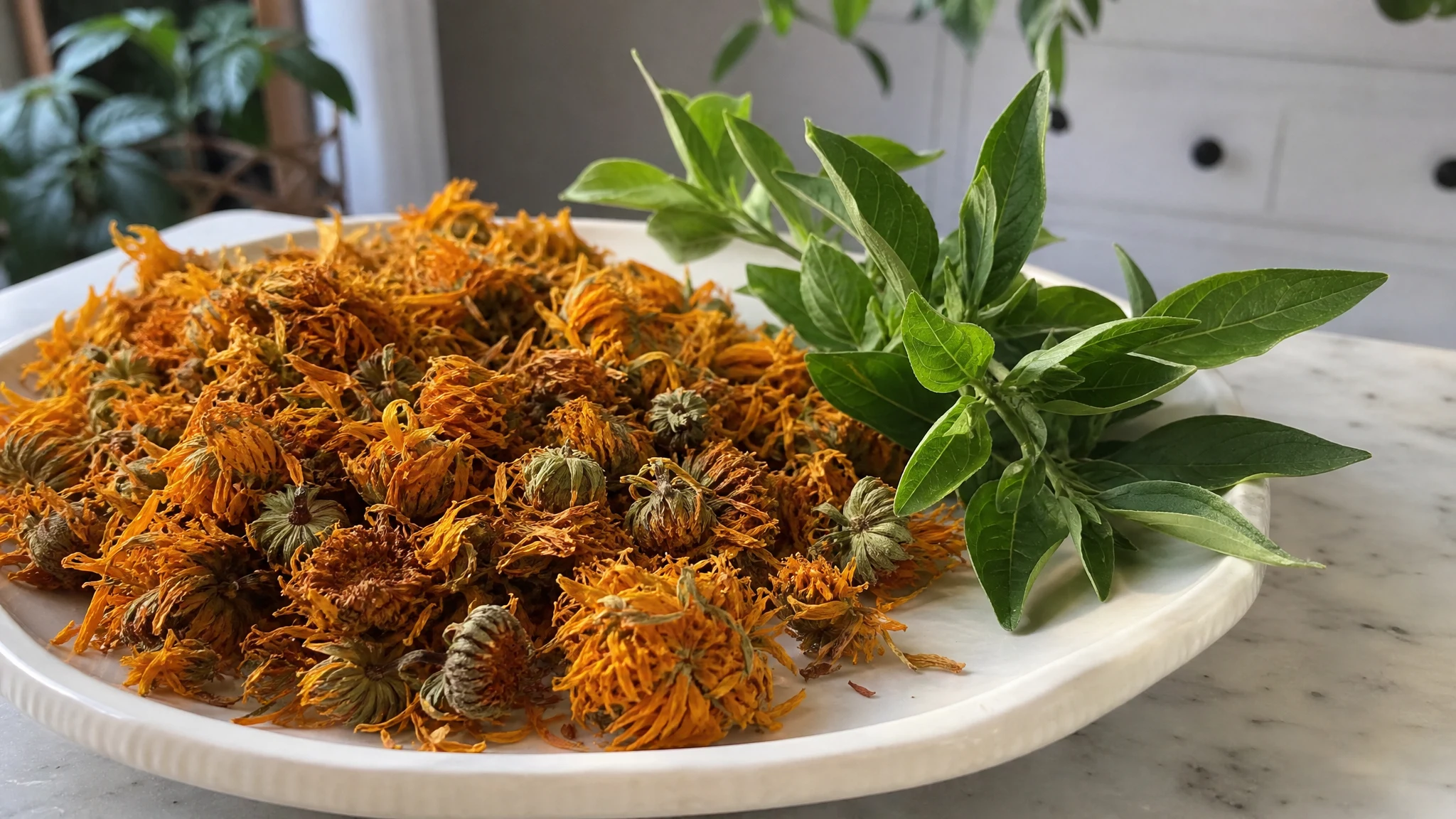
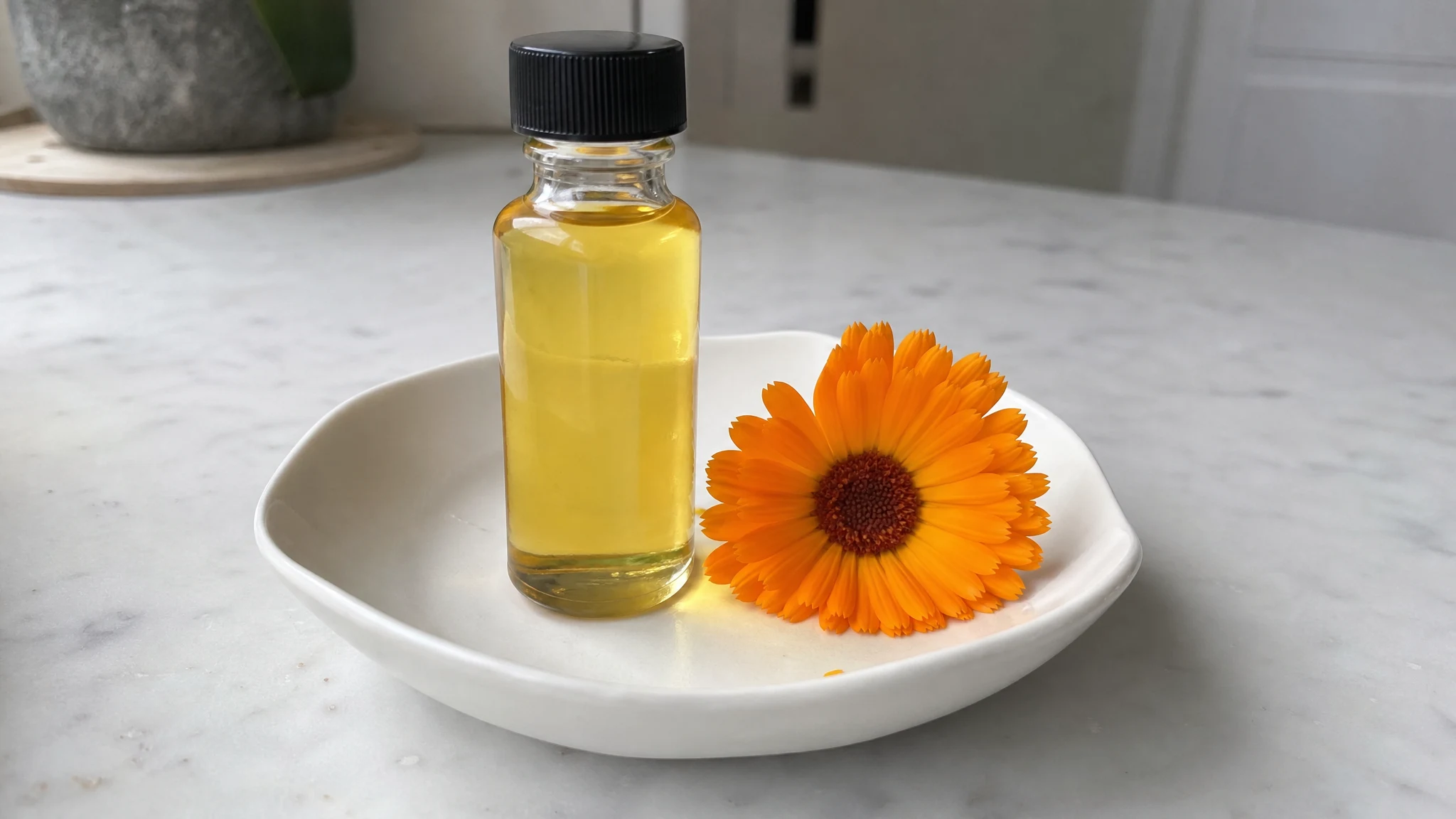
An oil on hair is a coating. It fills in the rough surface of dry lengths, adds a little weight and slip, and leaves the hair feeling soft and smooth. Nearly all of that comes from the carrier, because a calendula-infused oil is calendula extract brought into a carrier oil, and the carrier makes up most of what is in the bottle. We make ours in two stages: calendula is extracted on its own from dried, organically grown flowers, and that extract goes into the carrier. We add nothing else, no preservatives, no added tocopherol, no stabilizers.
So if hair feel is your main interest, the question to ask is which carrier is in the bottle. We keep it on the batch paperwork, and you can have it by emailing us the lot number printed on your bottle. Then you can judge it the way you would any carrier oil: is it light enough for fine hair, or does thick, dry hair want something richer?
Using calendula oil on dry hair ends
This is our suggestion, based on how oils behave on hair rather than on a calendula study, so treat it as a starting point and adjust to your own hair.
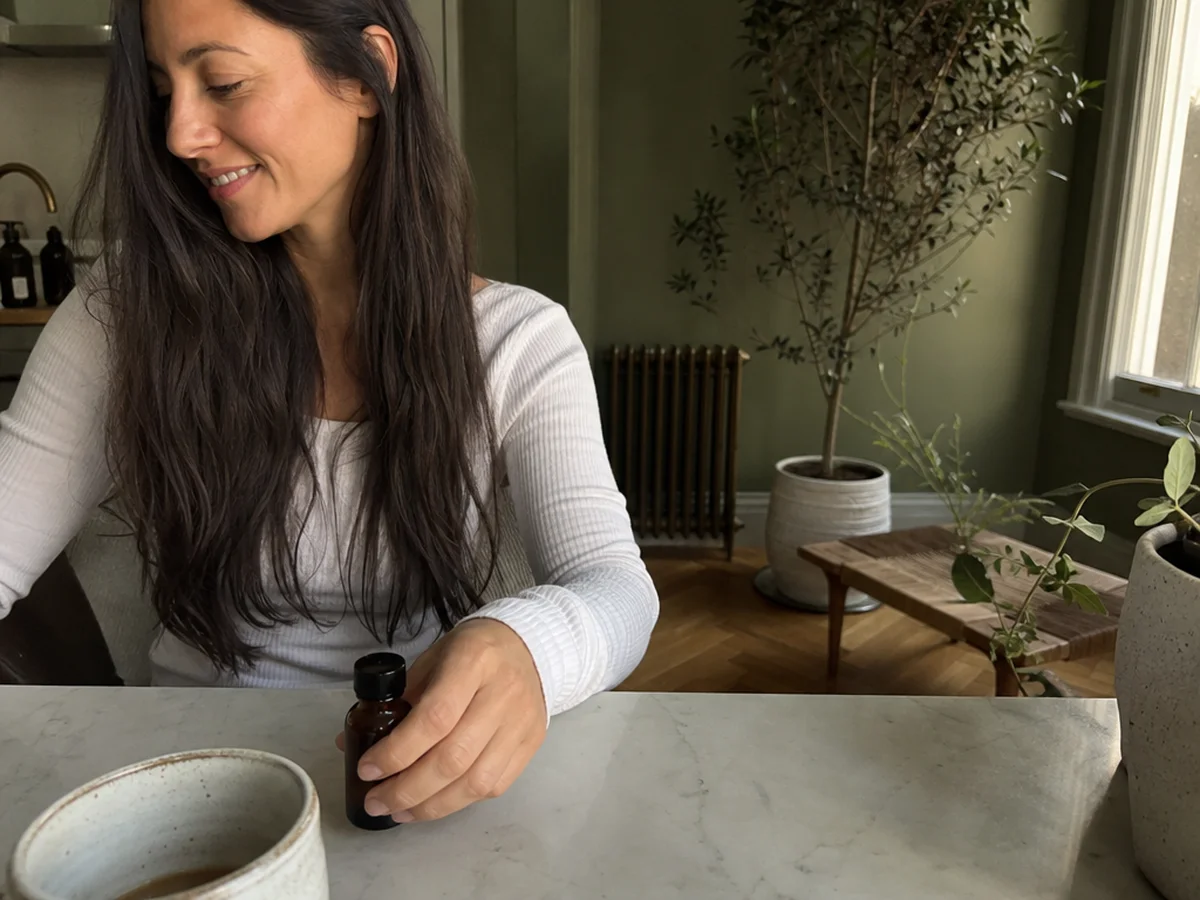
- Start with the ends. Warm a few drops between your palms, then smooth them over the lower few inches of dry hair. The ends are the oldest, driest part, and they show the difference first.
- Go lightly. You can always add a drop, but it is harder to take one away. Fine hair needs less than coarse hair.
- Pre-shampoo works too. Some people comb a little through the lengths before washing and rinse it out. It is a gentle way to try an oil without leaving it in all day. If you want more ideas, our hair rinse and hair mask articles walk through how people fold calendula into hair care.
Because we add no stabilizers, keep the bottle closed and out of heat and sunlight, and if the smell ever turns sharp or stale, replace it. Our storage guide covers how to keep it fresh.
How much hair oil is the right amount?
Look at your hair in daylight after smoothing the oil over the ends. Healthy-looking ends catch the light and look glossy, not wet. If the ends look clumped or damp, you used too much. Comb through with a wide-tooth comb to spread it, and use about half next time. Fine hair often wants just one or two drops. Thick, dry hair may happily take more.
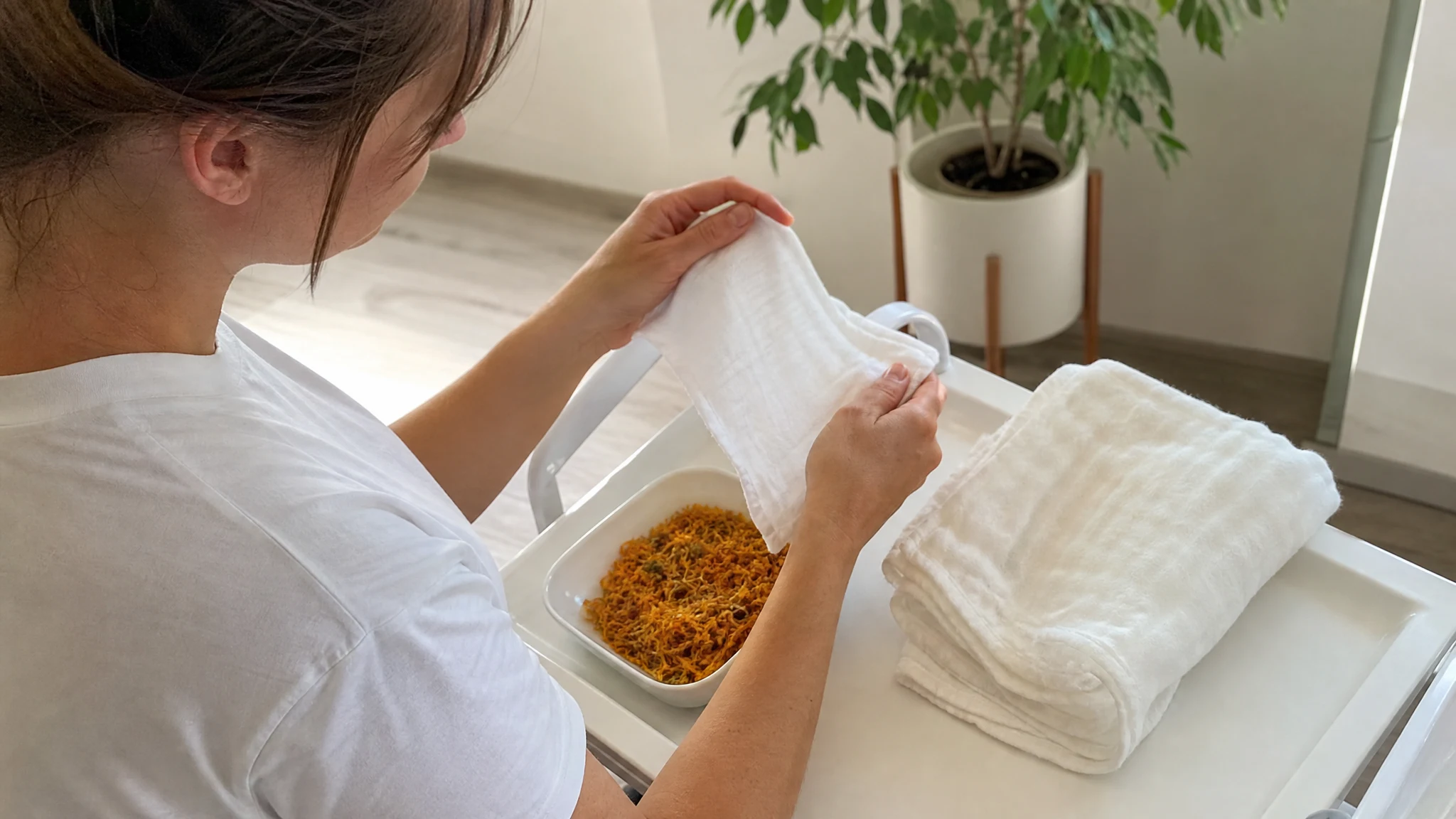
Keep a towel you do not mind marking, because the oil is golden and can leave a tint on pale fabric. A quick test of a drop on a cloth tells you what to expect.
Calendula studies and hair: skin research only
You will see plenty of oils sold on promises about thicker hair or a calmer scalp. We do not make those promises about ours, and neither does the research we know of: the calendula studies that exist are about skin, mostly extracts and creams, and the European Medicines Agency's herbal committee, which lists calendula flower for minor skin irritation and minor wounds, does not mention hair or scalp. We also keep to the cosmetic side of the line, which is how U.S. law sees it: the FDA decides whether a product is a cosmetic or a drug by what it is intended to do, and a claim to change how the body works makes it a drug.

If what you really want to understand is shedding, thinning, or an itchy, flaky scalp, a board-certified dermatologist is the right person. The American Academy of Dermatology points out that the cause is what matters, and that finding it starts with questions about timing, a close look at the scalp, and sometimes tests. It also notes that hair can regrow by itself after events such as having a baby or recovering from surgery, which is a good reason to find out what is going on before crediting any product.
Patch testing calendula oil for daisy-family allergy
Calendula belongs to the daisy family, Asteraceae, and the EU monograph lists a known allergy to daisy-family plants as a reason not to use it. The same document says skin sensitization has been reported, and in one Austrian series of 443 people being patch-tested, 9 reacted to marigold. That is a clinic group, not the general public, so it does not tell you how likely you are to react. It does tell you that the test is worth two minutes.
Put a small amount on your inner forearm and give it a few days. A quick dab before you walk out the door is not much of a test, because a reaction can take a while to appear. Our patch test guide shows a simple method. Keep it away from your eyes, and if you are pregnant or breastfeeding, or you are thinking of using it on a child under 6, check with your doctor first, since the monograph says safety data in those groups are not yet there.
Calendula oil as a finishing oil for flyaways
Think of it as a soft finishing oil for ends and flyaways, made from flowers grown on family farms in Egypt, Hungary, the Balkans and Turkey and infused in-house. We can tell you everything about the flowers, the infusion and the batch records. If you would like the paperwork for your bottle, email us the lot number through our contact page and we will send it over.
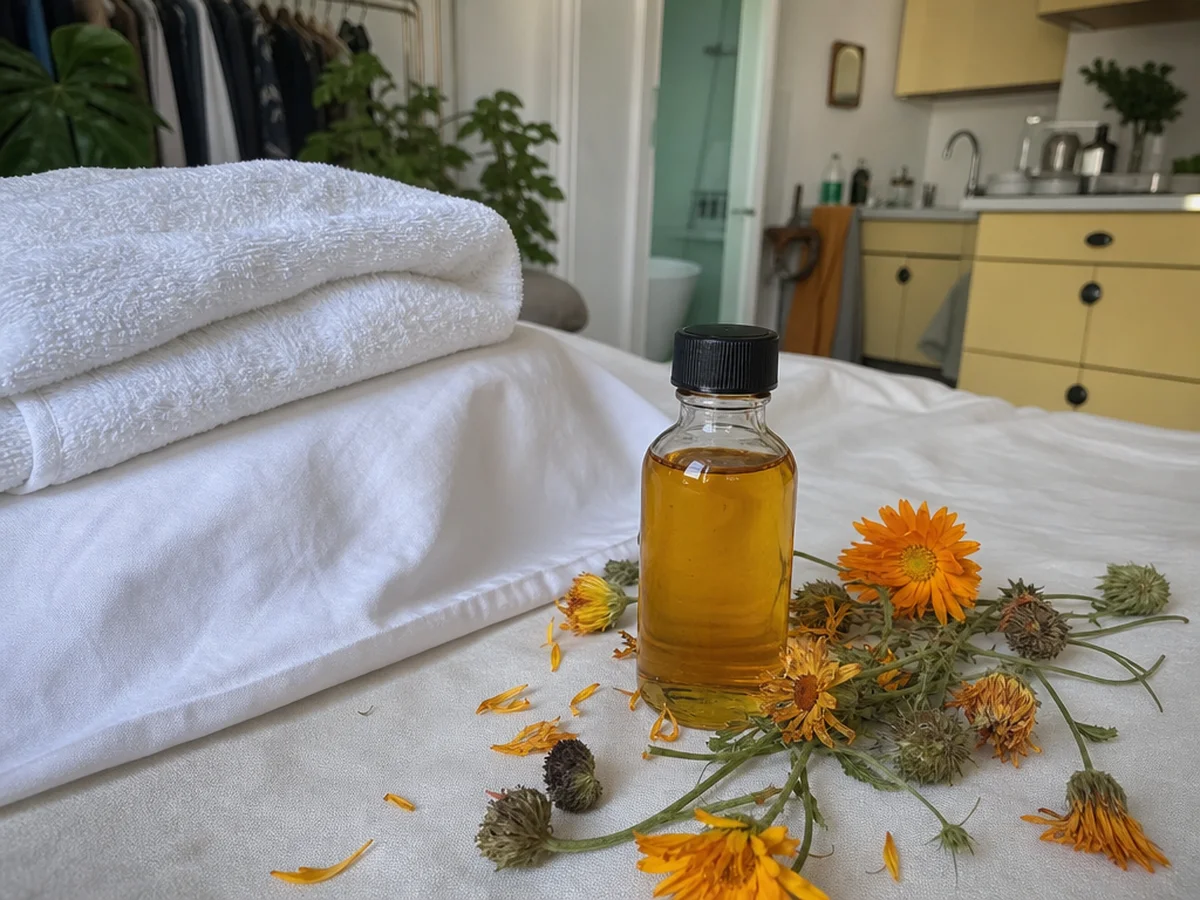
Calendula Oil
Nature's Golden Botanical, bottled: small-batch calendula oil in sizes from 0.5 oz to bulk.
From $13.99
Shop Calendula Oil →Sources & Further Reading
- American Academy of Dermatology, "Hair loss: Diagnosis and treatment." aad.org
- European Medicines Agency, "European Union herbal monograph on Calendula officinalis L., flos" (EMA/HMPC/437450/2017). ema.europa.eu
- FDA, "Is It a Cosmetic, a Drug, or Both? (Or Is It Soap?)". fda.gov
- Reider N et al., 2001. "The seamy side of natural medicines: contact sensitization to arnica (Arnica montana L.) and marigold (Calendula officinalis L.)." Contact Dermatitis. PubMed 11722485