Calendula Oil for Babies: What to Ask Your Pediatrician
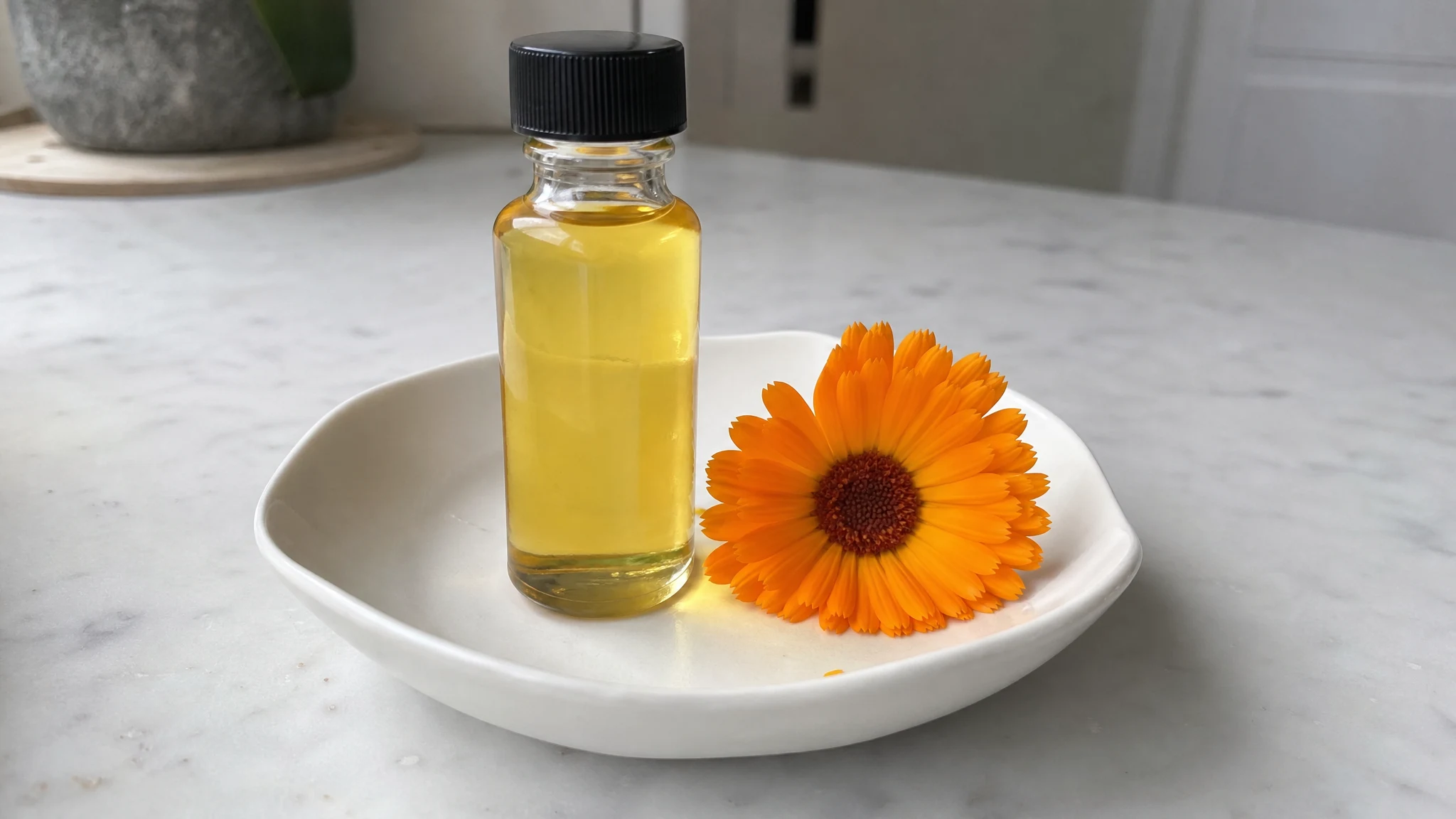
Calendula has a reputation as a gentle flower, and it turns up on plenty of baby product labels. That makes it natural to wonder about the oil in your hand. We make a calendula oil, and we do not sell it as a baby product or call it baby safe. Nothing we can cite supports that phrase for any calendula oil, and your pediatrician is the right person to decide what goes on your child's skin.

Calendula Oil
Our own small-batch calendula oil, in sizes from 0.5 oz to bulk.
From $13.99
Shop Calendula Oil →What EU herbal guidance says about children's skin use
The European herbal committee states that skin use of calendula preparations in children under six is not recommended and has not been established because of a lack of adequate data (European Union herbal monograph on Calendula officinalis L., flos). That reflects missing studies rather than documented harm, and it applies to licensed herbal medicines. The American Academy of Pediatrics makes a gentler but related point: therapies are not safe just because they are natural, and parents should check with their child's doctor before adding or changing one (Natural Therapies and Children: FAQs).

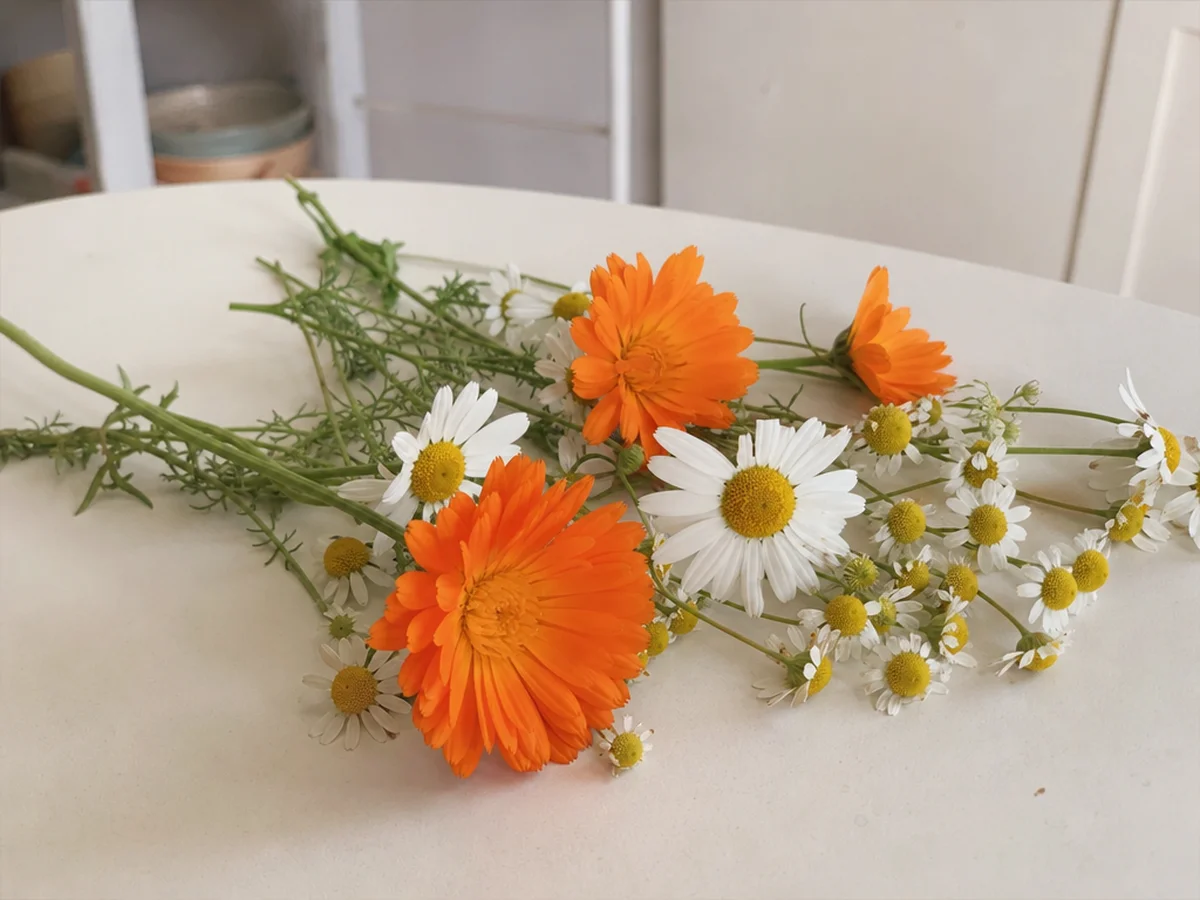
Calendula is also in the daisy family, and the EU monograph lists allergy to that family as a contraindication. If anyone in your household reacts to ragweed or chamomile, mention that to the pediatrician too.
What did the diaper rash trials actually test?
Calendula's baby reputation largely rests on diaper rash trials, and they are worth reading with a clear eye. All three below tested creams or ointments, not infused oils:
- In a randomized trial of 66 infants under three, a calendula ointment was compared with an aloe vera cream for ten days. Both groups improved, and the calendula group had significantly fewer rash sites (A randomized comparative trial on the therapeutic efficacy of topical aloe vera and Calendula officinalis on diaper dermatitis in children).
- In a trial of 100 infants, a bentonite cream was compared with a calendula cream. After three days, lesions had completely improved in 86 percent of the bentonite group and 52 percent of the calendula group (Comparing the effects of Bentonite & Calendula on the improvement of infantile diaper dermatitis: A randomized controlled trial).
- In a triple-blind trial of 73 children under two, a 1.5% olive ointment and a 1.5% calendula ointment showed no significant difference in severity over seven days (Comparison the effects of topical application of olive and calendula ointments on Children's diaper dermatitis: A triple-blind randomized clinical trial).
Our read is that calendula looked good against aloe, less good against a clay cream, and about the same as olive ointment. None of the trials had an untreated or placebo group, and diaper rash often clears by itself, so improvement alone does not show the ointment was responsible. It also suggests the ointment base may be doing a good share of the work, which is reasoning rather than a finding. If your goal is diaper rash, our diaper rash guide covers it, and the best first move is still to ask your pediatrician which product they prefer.
Why is infused oil different from barrier cream?
A plain infused oil contains no water and is not the same as a barrier cream, which is why we would not substitute one for the other. Babies also have a smaller surface area, less history of use, and cannot tell you when something stings. The carrier oil matters as well. Our calendula is extracted on its own and then brought into a carrier oil, and the carrier is not named on the bottle front, so email the lot number to [email protected] and we will tell you. If your baby has a food or skin allergy, your pediatrician or allergist should see that name before you decide.
Our oil has nothing else added, no preservatives, tocopherol, stabilizers or essential oils. We would suggest keeping it that way rather than blending in anything aromatic for a baby.
Calendula oil for babies: reasons for caution
Parents tend to be the most careful shoppers there are, and we respect that. A baby's skin is small, new, and in constant contact with clothes, blankets and hands, so any new product deserves a second look. We would rather tell you honestly what we cannot say than give you a reassuring word that nothing supports. Our job is to describe the oil, which is a simple infusion of calendula flowers with nothing added, and to leave the choice about your child to the person who has examined them.
Five pediatrician questions about calendula oil
- Given my baby's age and any eczema or allergy history, is there any reason a plant oil should stay off their skin?
- For this particular concern, whether dry patches, a rash or cradle cap, is there a product you already prefer?
- Here is the carrier oil and ingredient list. Does anything on it concern you?
- If we try it, where, how often, and what should make us stop?
- Would you like us to start with a small test area?
If the answer is no, that settles it for us too. If it is a yes with conditions, follow those rather than anything you read on a website, ours included. A rash that is raw, blistering, weeping or comes with a fever belongs with the pediatrician. For babies with eczema, our children's eczema article goes further, and you may like our comparison of calendula and coconut oil for baby skin.

It may help to write down your questions beforehand, since appointments move quickly. Bring the bottle or a photo of the label, along with the lot number, and keep a note of anything your baby has reacted to before, such as a new detergent or a particular food. A pediatrician can do far more with specifics than with a general worry.
What we can offer is transparency: we can tell you what is in the bottle and how it was made. Whether it suits your baby is a decision to make together with the person who knows them best.
Calendula Oil
Nature's Golden Botanical, bottled: small-batch calendula oil in sizes from 0.5 oz to bulk.
From $13.99
Shop Calendula Oil →Sources & Further Reading
- European Union herbal monograph on Calendula officinalis L., flos (EMA/HMPC/437450/2017)
- Natural Therapies and Children: FAQs (American Academy of Pediatrics, HealthyChildren.org)
- A randomized comparative trial on the therapeutic efficacy of topical aloe vera and Calendula officinalis on diaper dermatitis in children (Panahi et al., 2012)
- Comparing the effects of Bentonite & Calendula on the improvement of infantile diaper dermatitis: A randomized controlled trial (Mahmoudi et al., 2015)
- Comparison the effects of topical application of olive and calendula ointments on Children's diaper dermatitis: A triple-blind randomized clinical trial (Sharifi-Heris et al., 2018)