Calendula Tea Rinse or Oil for Hair Ends: Which One?
Hair rinses and oils are different tools, and it helps to say so up front. A rinse is a thin liquid poured over wet hair; calendula oil is an oil. Stir the two together and they separate in seconds. The good news is that you have two good options, each doing what it does best: a fresh flower tea if you want a rinse, and the oil on dry ends if you want that soft, finished feel.

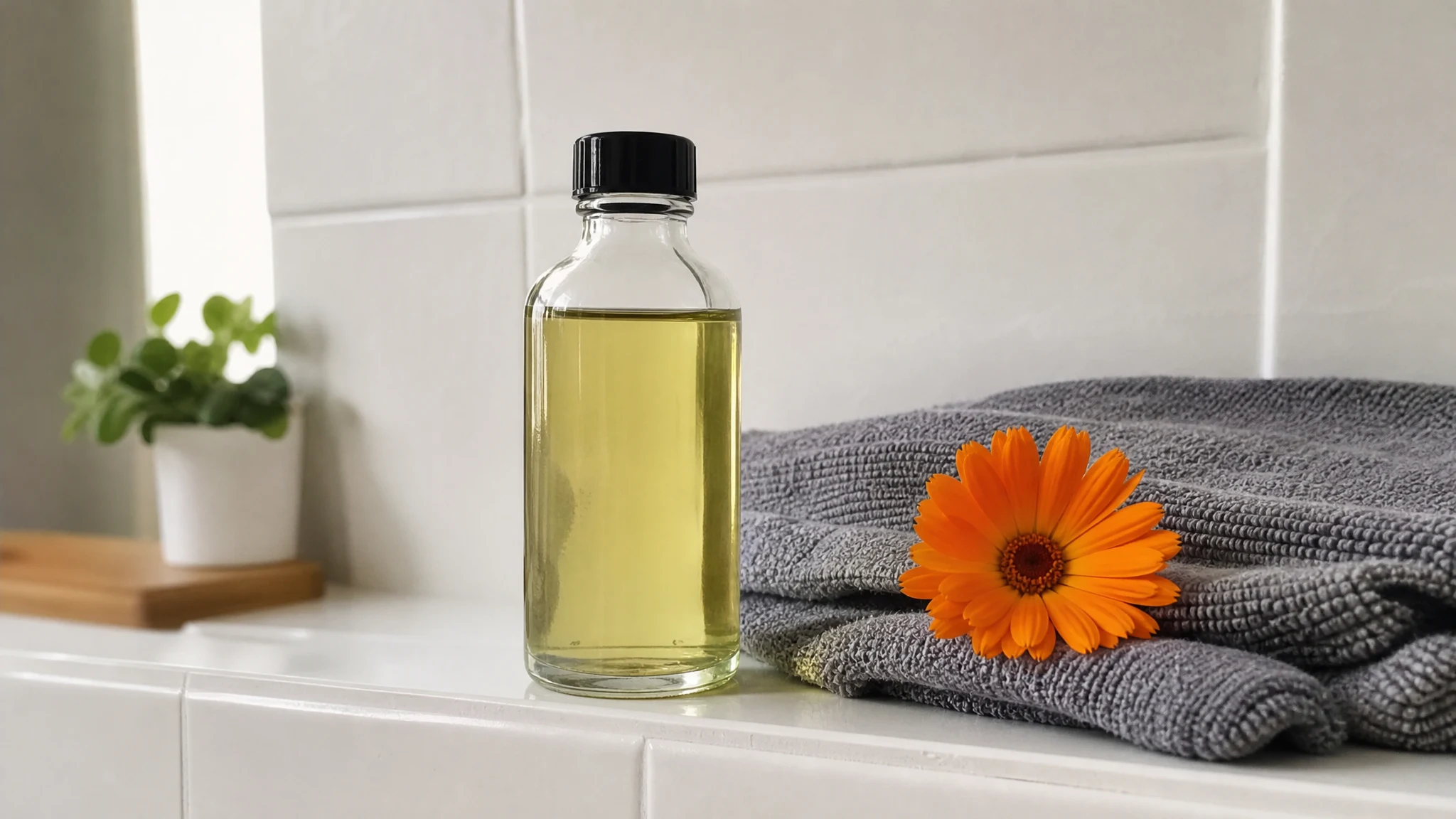
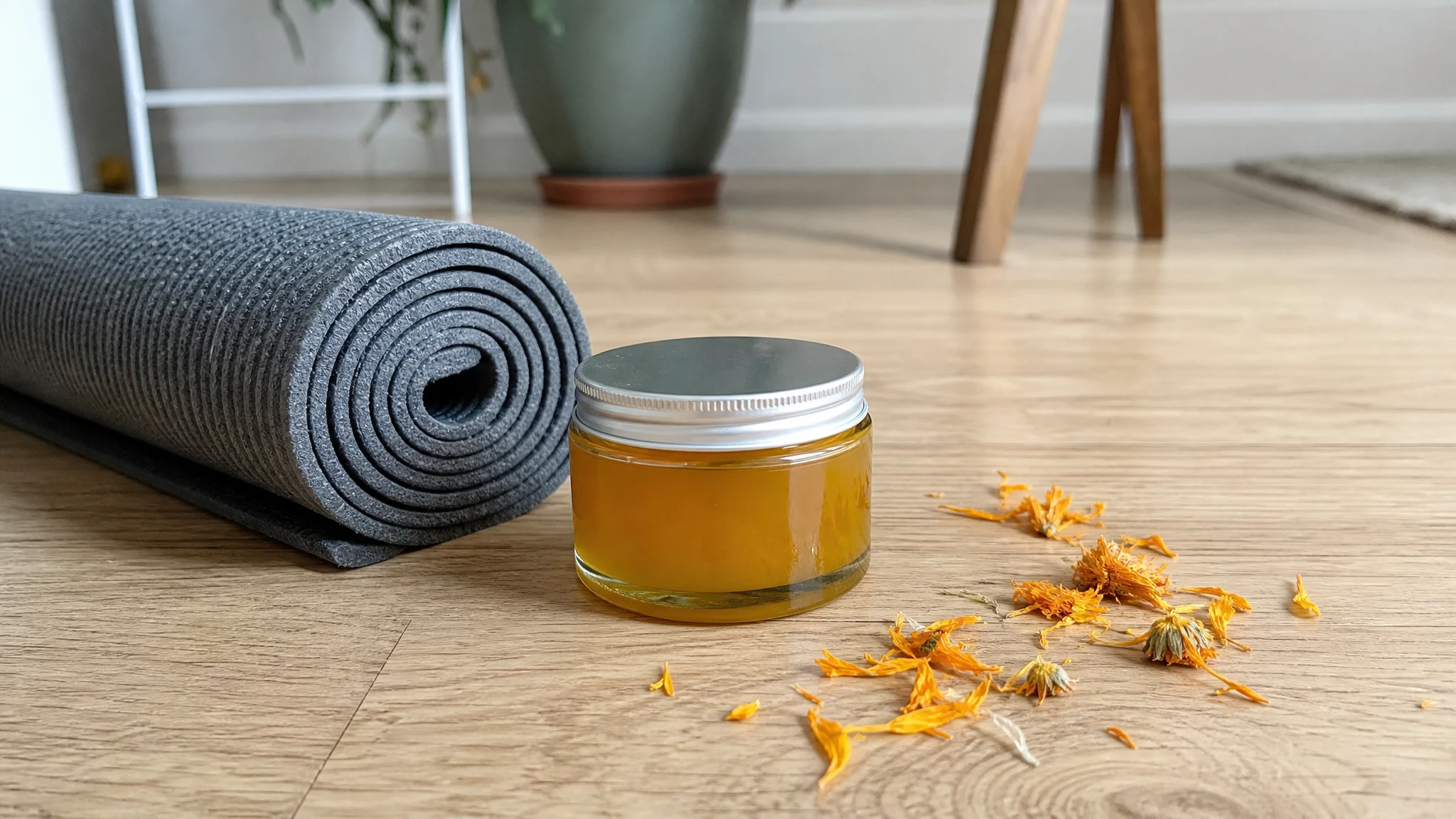
Calendula Oil
Our own small-batch calendula oil, in sizes from 0.5 oz to bulk.
From $13.99
Shop Calendula Oil →Calendula hair studies: none found to cite
We looked for studies of calendula alongside hair, scalp and dandruff and found none to cite. We therefore do not promise shine or softness from calendula itself. What we can say is plain and practical: how hair feels depends heavily on what is left on it, which is true of any oil or rinse. A little oil on the ends tends to leave hair feeling smooth, and that is a good reason to enjoy it.
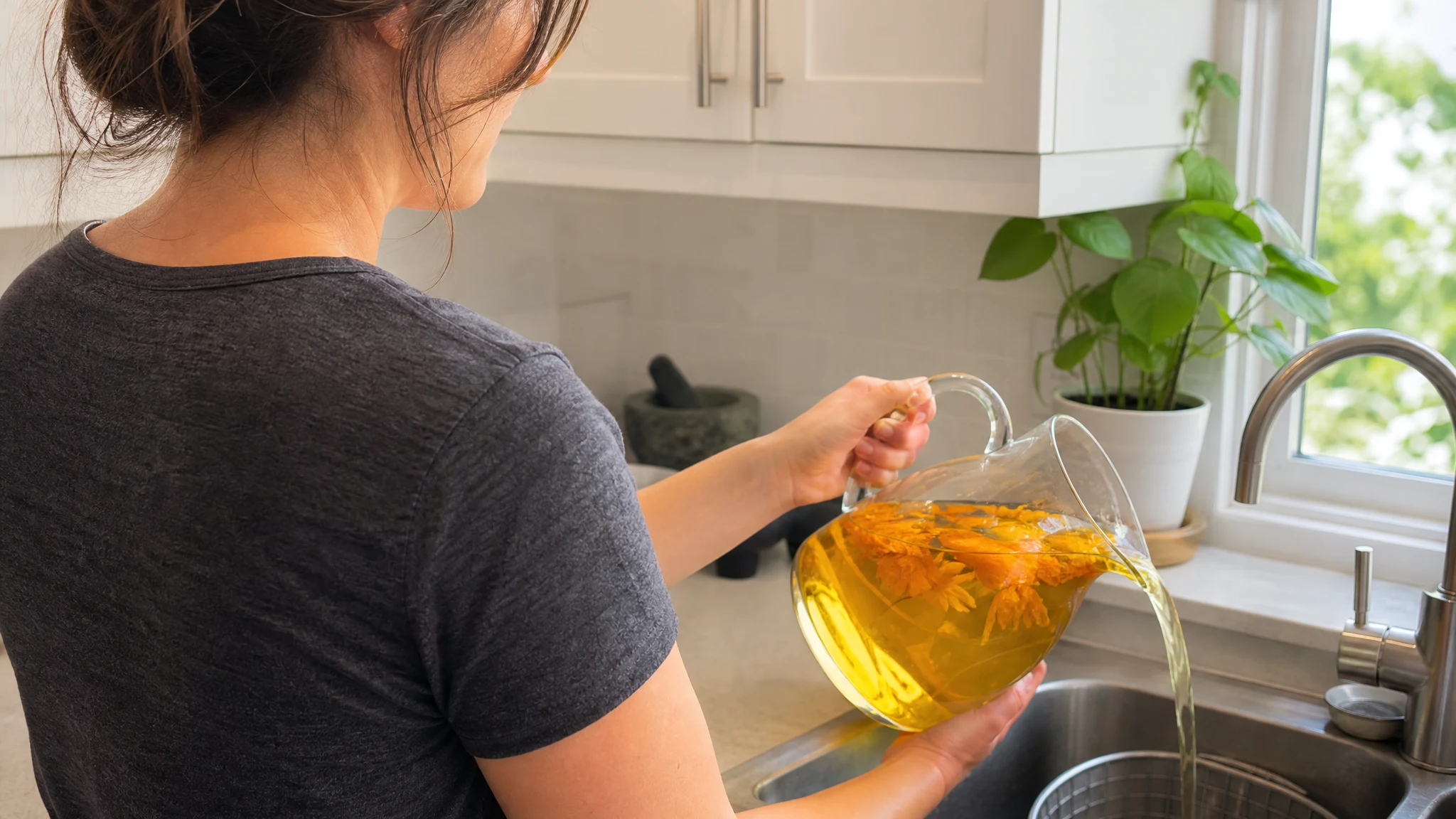
Making a fresh calendula flower tea rinse
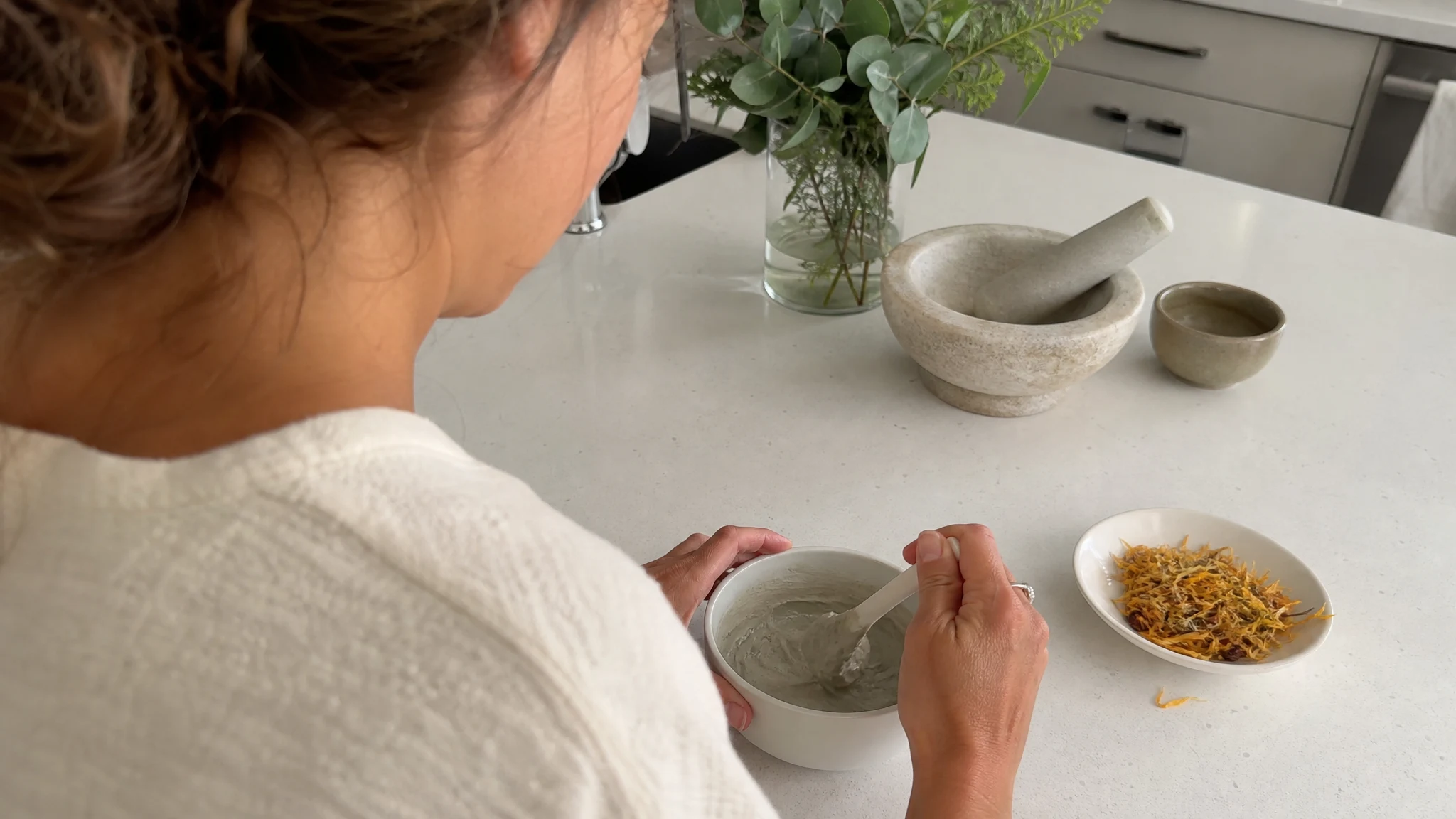
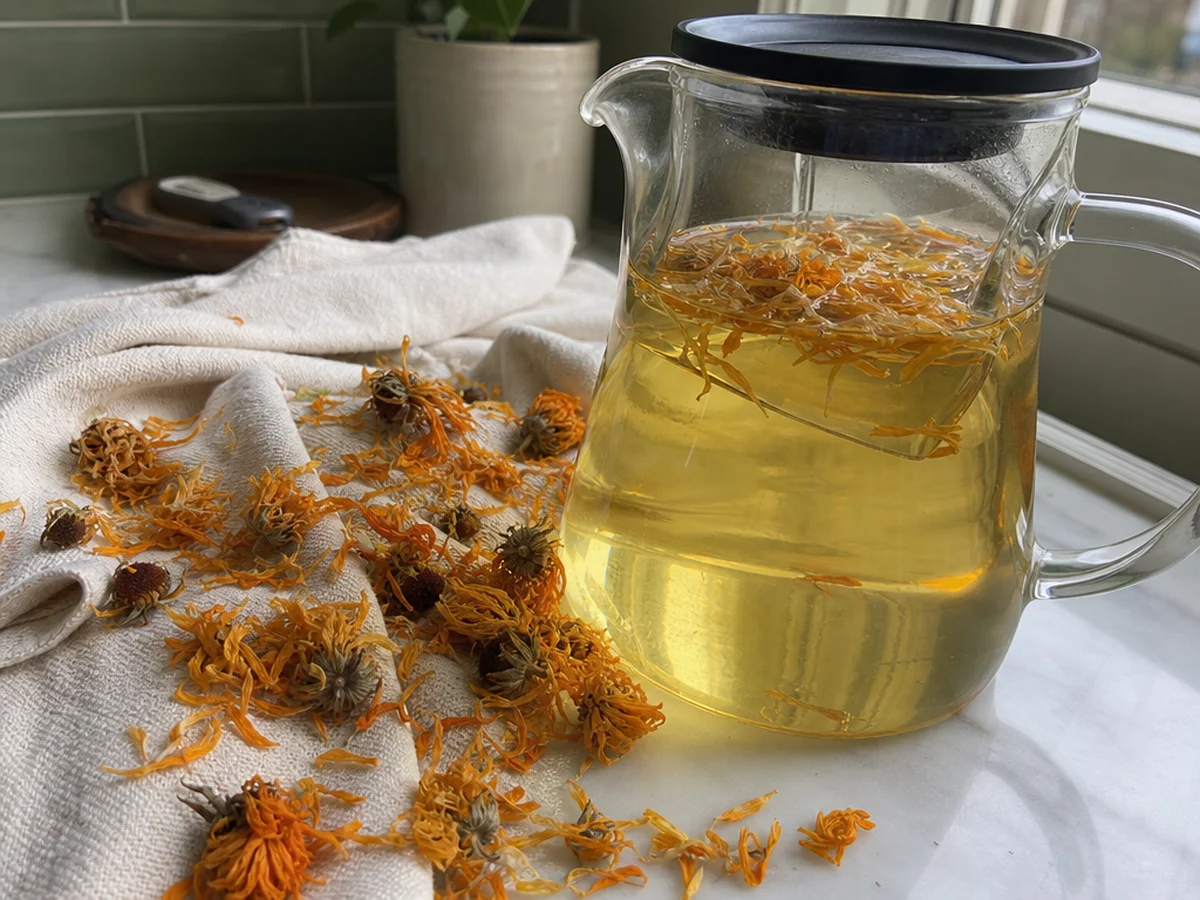
If you want a true rinse, you want water, and water means flowers rather than our oil. The European herbal monograph for calendula describes a traditional preparation of 1 to 2 grams of dried flower in 150 ml of water, used while the infusion is still warm. That entry is for skin dressings and rests on long-standing use rather than on trials, so it is a reference for the method rather than a hair finding.
The one rule that matters is to make only what you will use in that shower and to pour away the rest. A review of cosmetics preservation states that cosmetics containing water require preservation against microbial contamination, and FDA lists water and ineffective preservation among the ways products become contaminated. A tea in a bottle on the bathroom shelf is a water-based product nobody has preserved, so we would never bottle it.
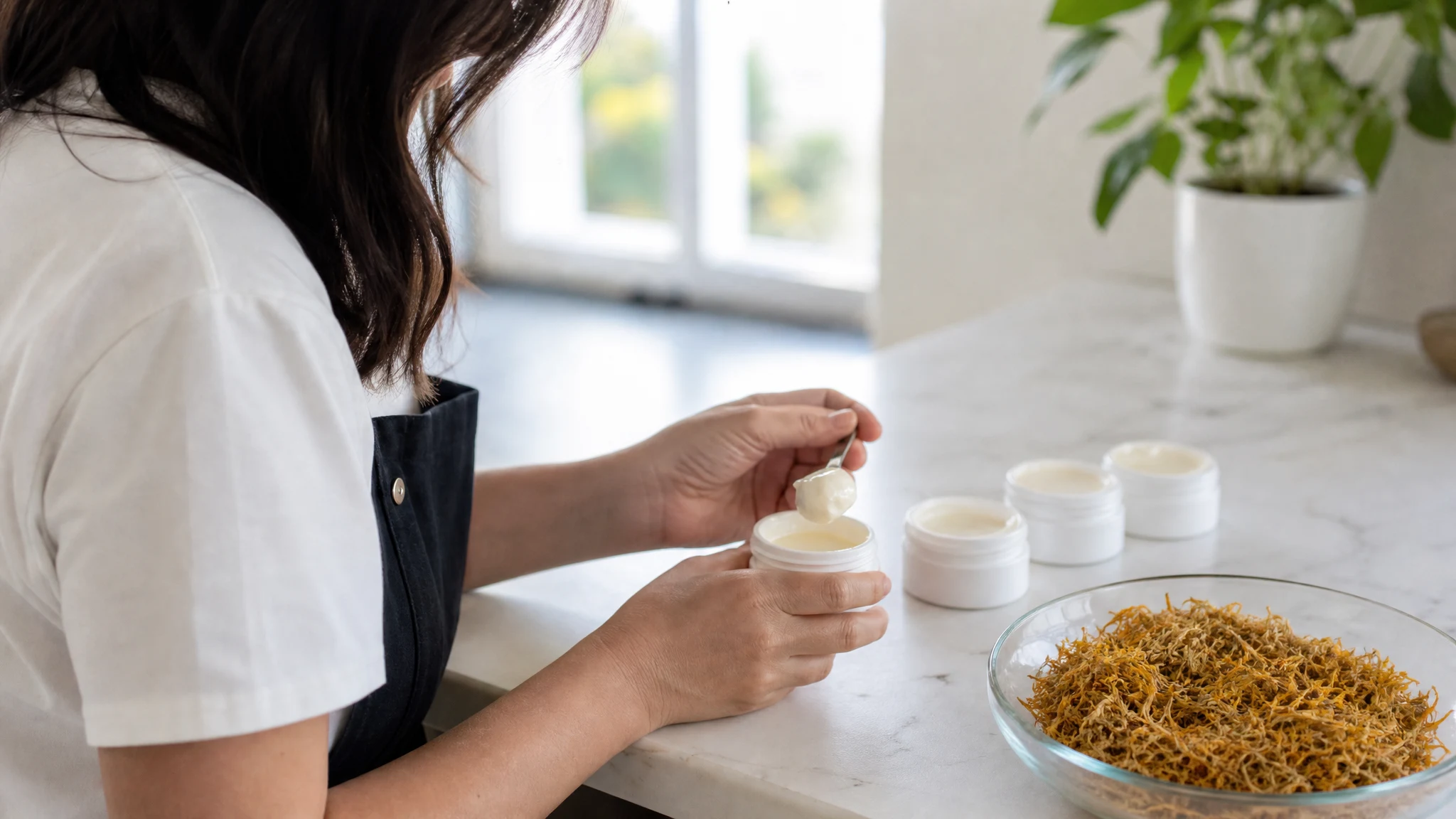
We do not sell dried flowers, since we buy them to make our oil, so for a tea rinse buy a dried herb from a source you trust. If it helps, here is what we look for when we choose ours: petals separated by hand from sound, whole dried flower heads rather than broken florets, dried naturally without industrial heat. That is our process, and a useful checklist for any supplier you consider.
Applying infused oil to dry hair ends
This is the version that suits our oil. It is a finished infused oil with nothing added, so it behaves like any other hair oil, and we suggest a few simple habits, flagged as reasoning rather than trial results:
- Start with a few drops. Warm them between your palms and smooth them over the ends. You can add more next time, but a heavy hand is hard to undo.
- Use it before the wash. Water alone does not rinse oil out. Put it on dry ends before you shampoo and let the shampoo take away what you do not need.
- Keep it off the scalp at first. Calendula is in the daisy family. The European monograph lists hypersensitivity to that family as a contraindication, and in an Austrian clinic series of 443 patients with contact dermatitis, about 2% reacted to marigold. Those were patients already under investigation, so it is not a general rate. A patch test on the inner forearm comes first; our patch test guide explains how.
- Mind the eyes. The Cosmetic Ingredient Review panel concluded that calendula ingredients are safe as used in cosmetics, while noting they may be mild ocular irritants. If you rinse, keep your eyes closed.
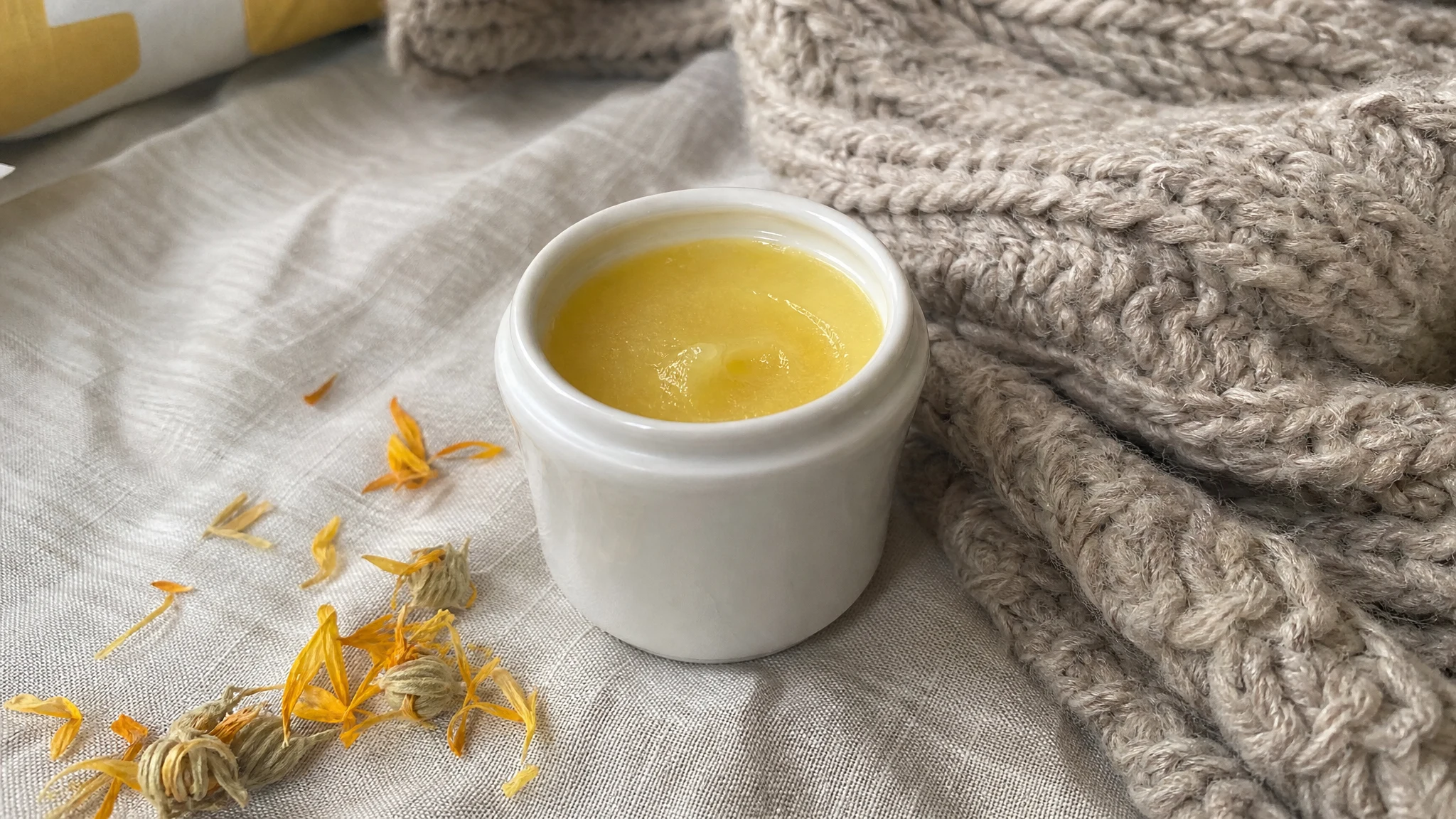
The golden tint is another thing to know. A small amount on light fabric before you commit takes the guesswork out of it.
Wash-day order for oil and tea rinse
If you would like to use both, the order matters. About an hour before you wash, warm a few drops of oil between your palms and smooth them over dry ends. Make a small cup of tea first so it can cool while you shampoo. Test it on your wrist, because warm is lovely and hot is not. Use it as the last rinse, with your eyes closed, then pour away whatever is left.
How can you tell if hair ends got enough oil?
Hold a strand up to window light once your hair is dry. Ends that look smooth and glossy are doing well; ends that look dull and feel rough may want a little more oil next time, and ends that look limp may want less. Keep a towel and pillowcase you do not mind marking while you experiment, since the oil is golden and can leave a tint on pale fabric.
Tea rinse or oil: which suits your hair ends?
If you love the ritual of a warm flower rinse, make a small cup, use it and finish. If you want an easy, shelf-stable finish for the ends, the oil is the simpler route. They also work together: oil on dry ends before the wash, tea in the final rinse, nothing saved. For other ways to use the oil, our hair mask guide and massage guide show other ways to use it.
Either path is simple, and neither needs a long ingredient list.
Calendula Oil
Nature's Golden Botanical, bottled: small-batch calendula oil in sizes from 0.5 oz to bulk.
From $13.99
Shop Calendula Oil →Sources & Further Reading
- European Union herbal monograph on Calendula officinalis L., flos, European Medicines Agency
- Cosmetics Preservation: A Review on Present Strategies, Molecules, 2018
- Microbiological Safety and Cosmetics, FDA
- The seamy side of natural medicines: contact sensitization to arnica (Arnica montana L.) and marigold (Calendula officinalis L.), Contact Dermatitis, 2001
- Final report of the Cosmetic Ingredient Review Expert Panel amended safety assessment of Calendula officinalis-derived cosmetic ingredients, Int J Toxicol, 2010