Calendula Oil for Massage: Glide, Feel and Fit
Ask a massage therapist what makes a good massage oil and the answer is usually about hands, not botany: it should glide, it should not grab, and it should not leave a client feeling slick for the rest of the day. Calendula-infused oil is a lovely choice on those terms, and it is a single-ingredient oil you can trace back to a flower, a farm region and a dated bottle.

Calendula Oil
Our own small-batch calendula oil, in sizes from 0.5 oz to bulk.
From $13.99
Shop Calendula Oil →Massage research: technique matters more than oil
There is good research on massage itself. A 2018 systematic review and meta-analysis that pooled 99 studies on recovery after exercise found massage to be the most effective of the recovery methods compared for soreness and perceived fatigue. Notice what that study is about: the technique, the pressure, the hands. It compared techniques, not oils. That is worth saying plainly to clients, because the picture is clear: the therapist's skill is the valuable part, and the oil is what lets the strokes flow.
It also keeps your wording on the right side of the line. The FDA says a product's intended use decides whether it is a cosmetic or a drug, and it lists claims such as relaxing muscles or easing pain as drug claims, even for a plant-based oil. So on a menu or a website, describe the oil by what it is (a calendula-infused massage oil) and let the session be the star.
What does calendula infused oil bring to massage?
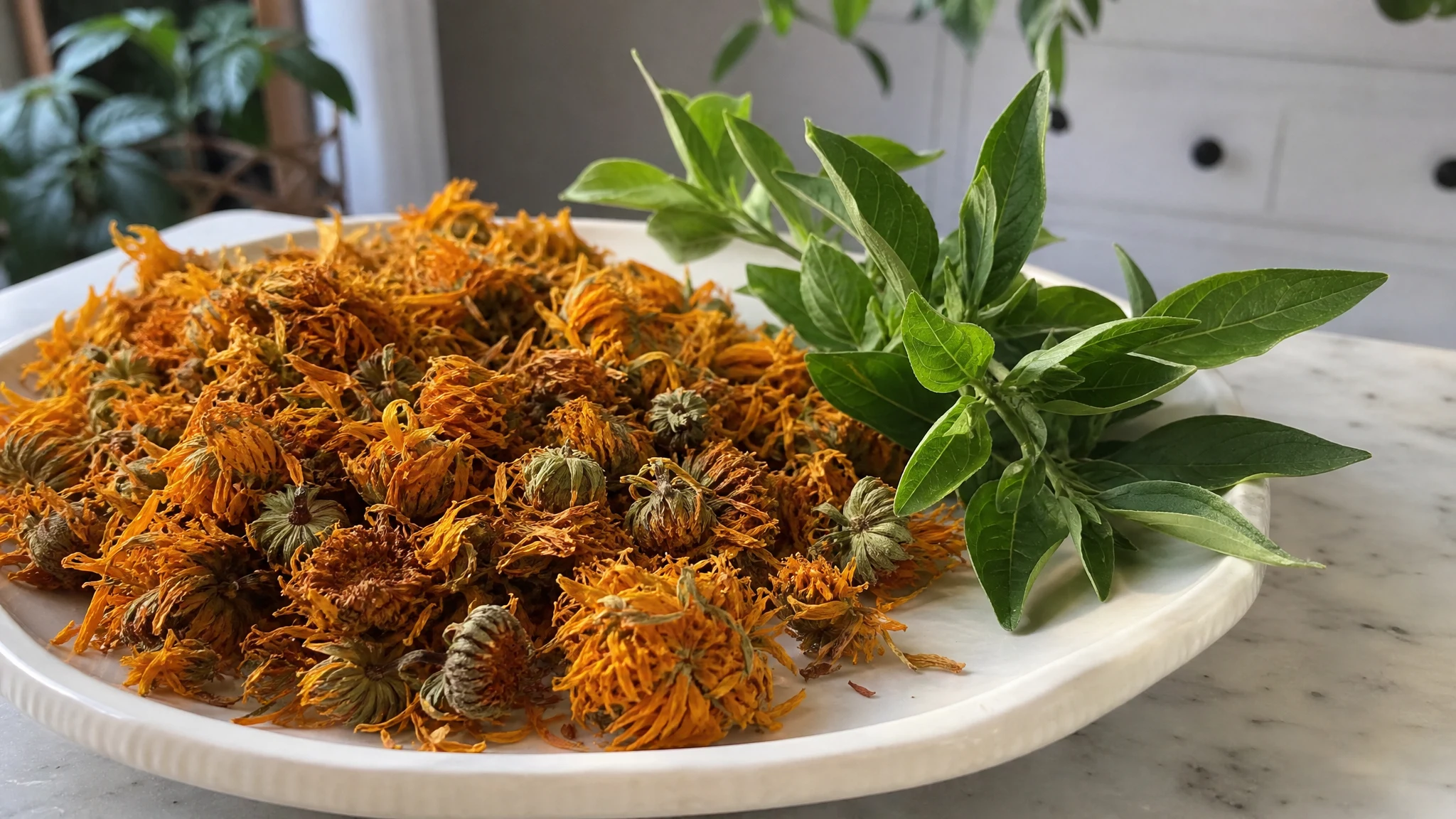
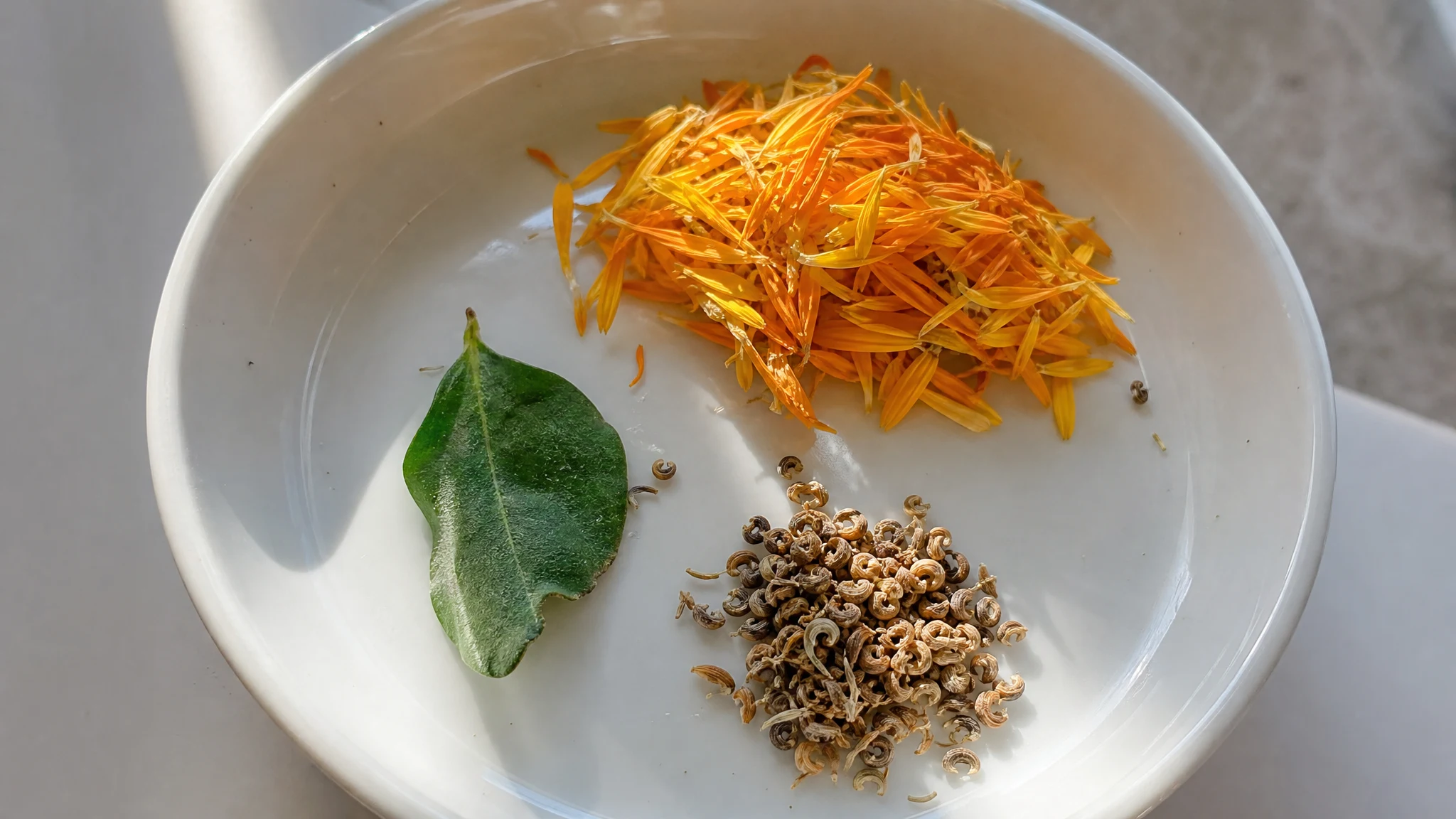
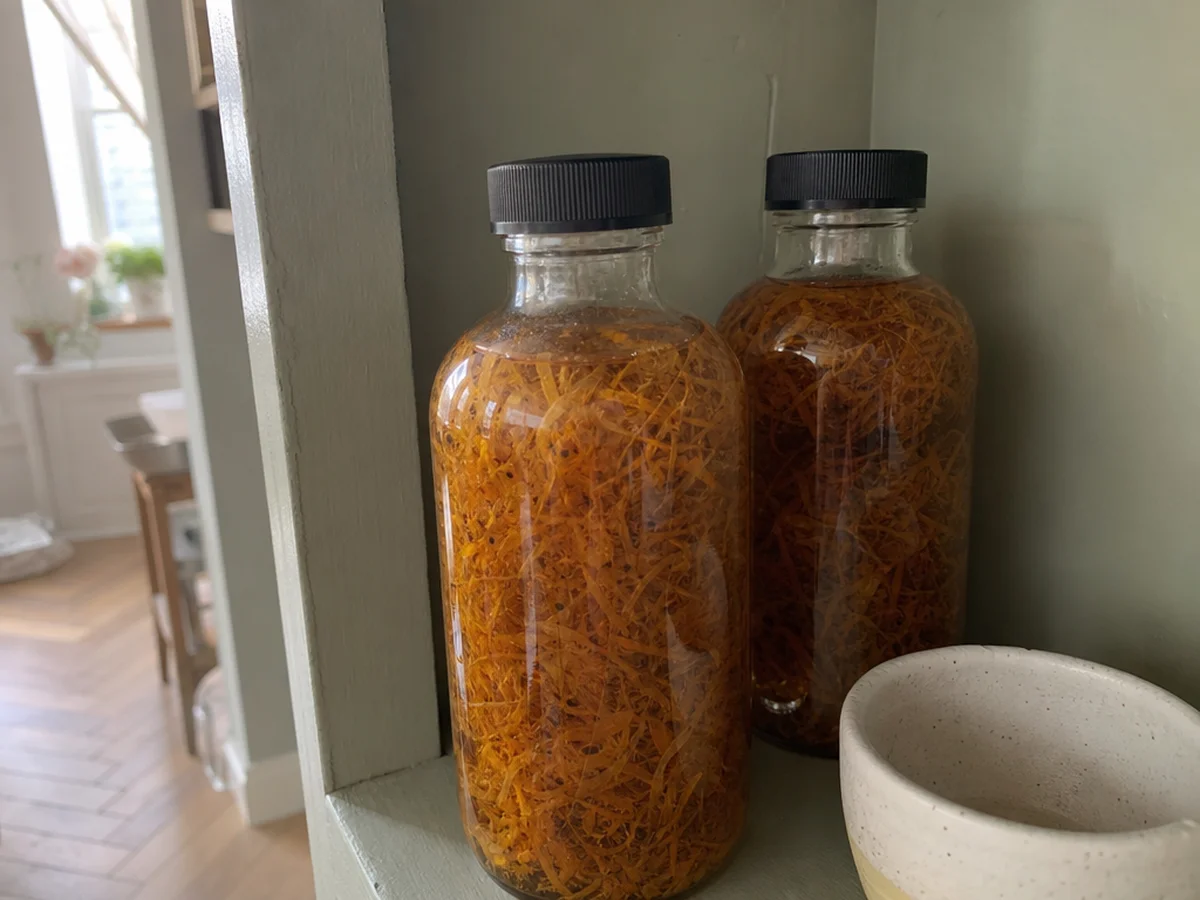
Our oil starts with whole calendula flowers, organically grown on family farms in Egypt, Hungary, the Balkans and Turkey, which we buy dried and process in-house. We extract calendula on its own, bring the extract into a carrier oil, and add nothing else. That makes it a clean, simple medium: no fragrance, no added preservatives, no stabilizers.
Since the carrier is most of the bottle, it sets the glide and how the oil feels on the skin. We list it on the batch paperwork rather than in articles, so if you want to know before you buy, or you work with clients who have nut or seed allergies, email us the lot number through the contact page. Asking any supplier for the carrier is good practice, and we are glad to answer.
Every bottle is dated and lot-numbered, and our batches are tested by independent third-party labs, with documentation available on request. For a practice, that traceability is handy: you can note which lot went into which week of sessions.
Testing massage oil glide on your palms
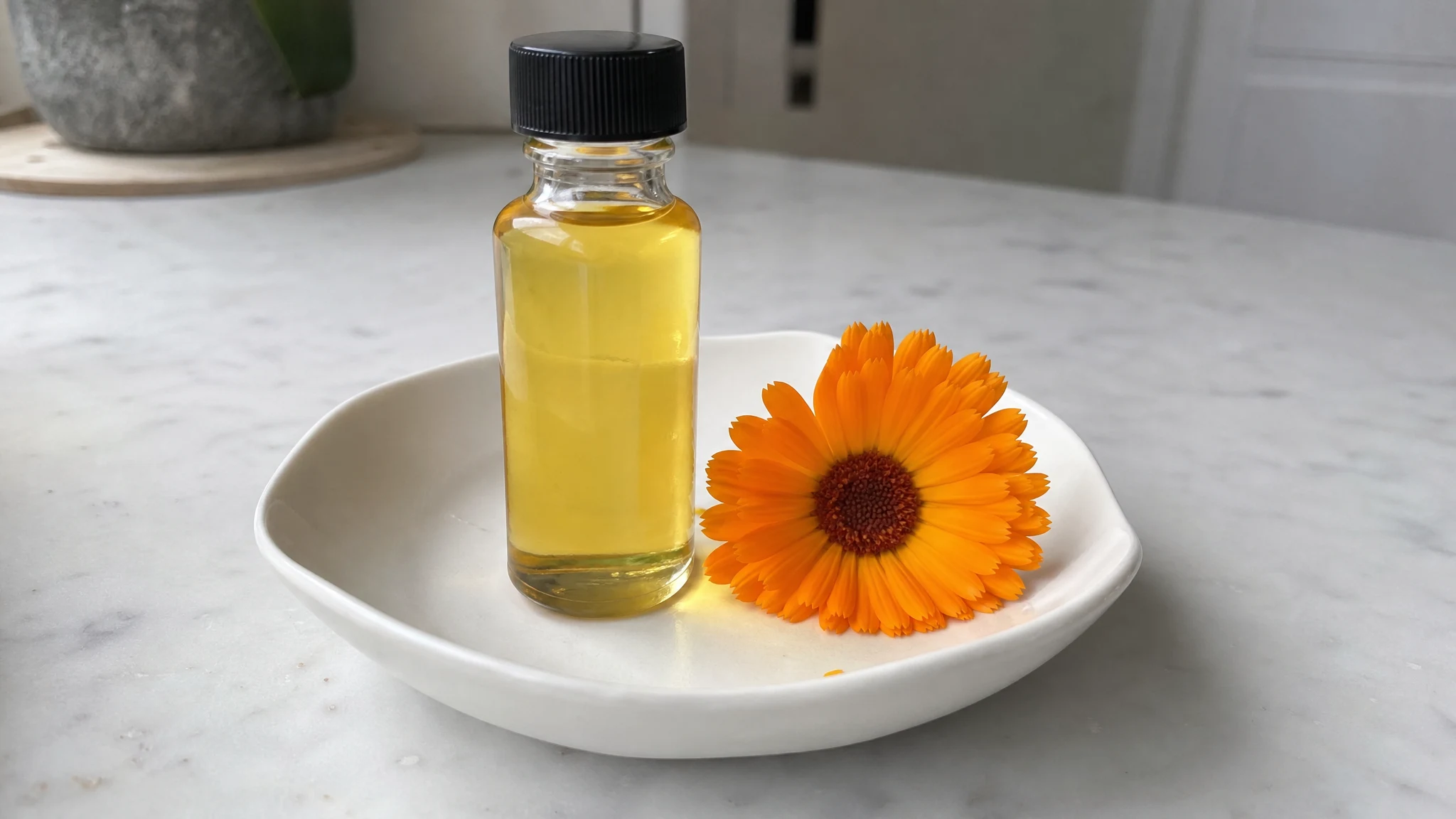
Before you bring any oil into a session, put a few drops on your own palms and work it in for a minute. Pay attention to how quickly it spreads, whether it stays put on the skin or travels, and how your hands feel a few minutes later. A golden color and a faint, warm, floral-herbal scent are what you can expect from a calendula infusion; the exact glide depends on the carrier it sits in. This is the simplest test there is, and it takes less time than reading a spec sheet. If you work with several clients in a day, do the same check each time you open a new bottle, since a fresh lot is worth a quick feel.
Blending essential oils into calendula oil
Calendula oil is already an oil, so there is nothing to dilute in it. Dilution only comes in if you add essential oils, and then the arithmetic is simple: in a 30 mL bottle, every 1% of essential oil is 0.3 mL. Pick a percentage from a published aromatherapy dilution guide for the oil you are adding and the client in front of you, write it in your intake notes, and measure with a pipette rather than counting drops. We make a signature blend of our own, the Sunmeadow Blend, which is a 3:1 ratio of calendula oil to sweet orange.
Who should be screened before a calendula massage?
Calendula is a daisy-family (Asteraceae) plant, and the EU herbal monograph lists a known allergy to daisy-family plants as a reason not to use it. A client who reacts to ragweed or chrysanthemum is a client to ask first. The same monograph says safety during pregnancy and breastfeeding has not been established because data are lacking, so that decision belongs with her OB/GYN or midwife, and it does not recommend skin use for children under 6. Our patch test article describes a forearm test a client can do at home before a first session, and our pregnancy article goes through that question. Broken or irritated skin is a job for a clinician, not a massage oil.
Setting up a massage station with pump bottles
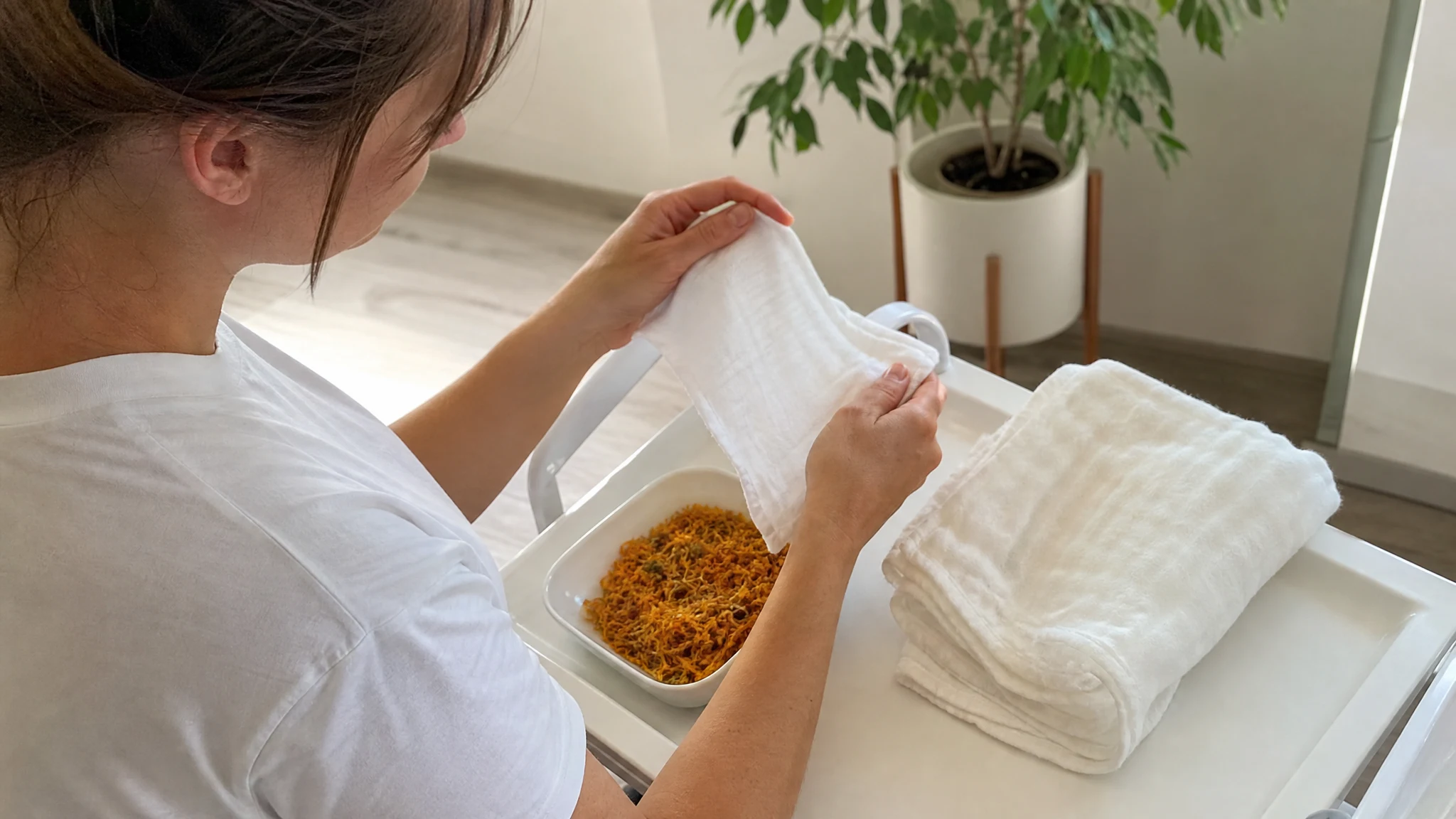
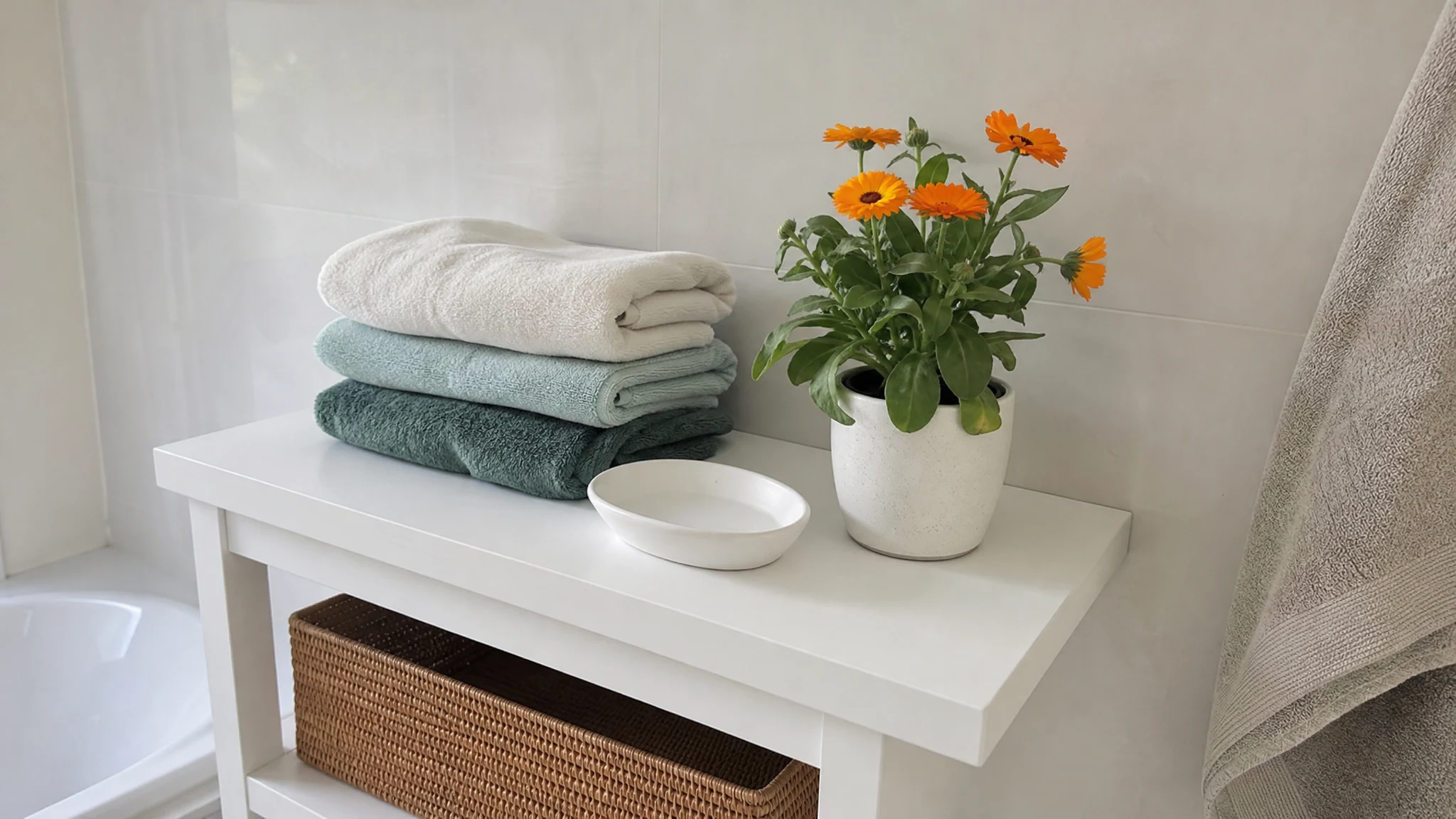
A tidy station makes the oil easier to enjoy. Keep a small pump or dropper bottle at the head of the table, a stack of towels within reach, and a covered bin for used linens. Pour only what you need into the dispenser, cap the main bottle, and put it back on a shelf away from the heater and window. Warm the oil in your hands for a moment before it touches a client, because cold oil can make anyone flinch. Little habits like these are the quiet difference between a session that feels cared for and one that feels rushed.

How should massage oil be stored?
Because we add no stabilizers, treat it like any fresh oil. Keep the cap on, keep it out of warm rooms and direct sun, and pour a working amount into a smaller dispenser rather than opening the whole bottle again and again. A heated shelf above the table is the one place not to keep it. Oil left on linens can turn stale too, so wash cloths promptly. Our storage guide has more.
If you are curious how the oil feels in your own hands, our bulk buying guide explains how we suggest testing before you scale up, since glide is a feel only your hands can judge. What happens on the table, the strokes, pressure and sequence, is your training, and nothing about a calendula flower changes it.
Calendula Oil
Nature's Golden Botanical, bottled: small-batch calendula oil in sizes from 0.5 oz to bulk.
From $13.99
Shop Calendula Oil →Sources & Further Reading
- Dupuy O et al., 2018. "An Evidence-Based Approach for Choosing Post-exercise Recovery Techniques to Reduce Markers of Muscle Damage, Soreness, Fatigue, and Inflammation: A Systematic Review With Meta-Analysis." Frontiers in Physiology. PubMed 29755363
- FDA, "Aromatherapy." fda.gov
- European Medicines Agency, "European Union herbal monograph on Calendula officinalis L., flos" (EMA/HMPC/437450/2017). ema.europa.eu