Is Calendula Oil Okay for Acne-Prone Skin?
If you have breakout-prone skin, adding an oil to your face can feel like a leap. We make a calendula oil, so we get this question a lot, and the most useful answer we can give is a straight one: no study we know of tests calendula on its own for acne, so we do not sell our oil as an acne product. We can, though, walk you through how to think about a facial oil and how to try one without muddying the picture.

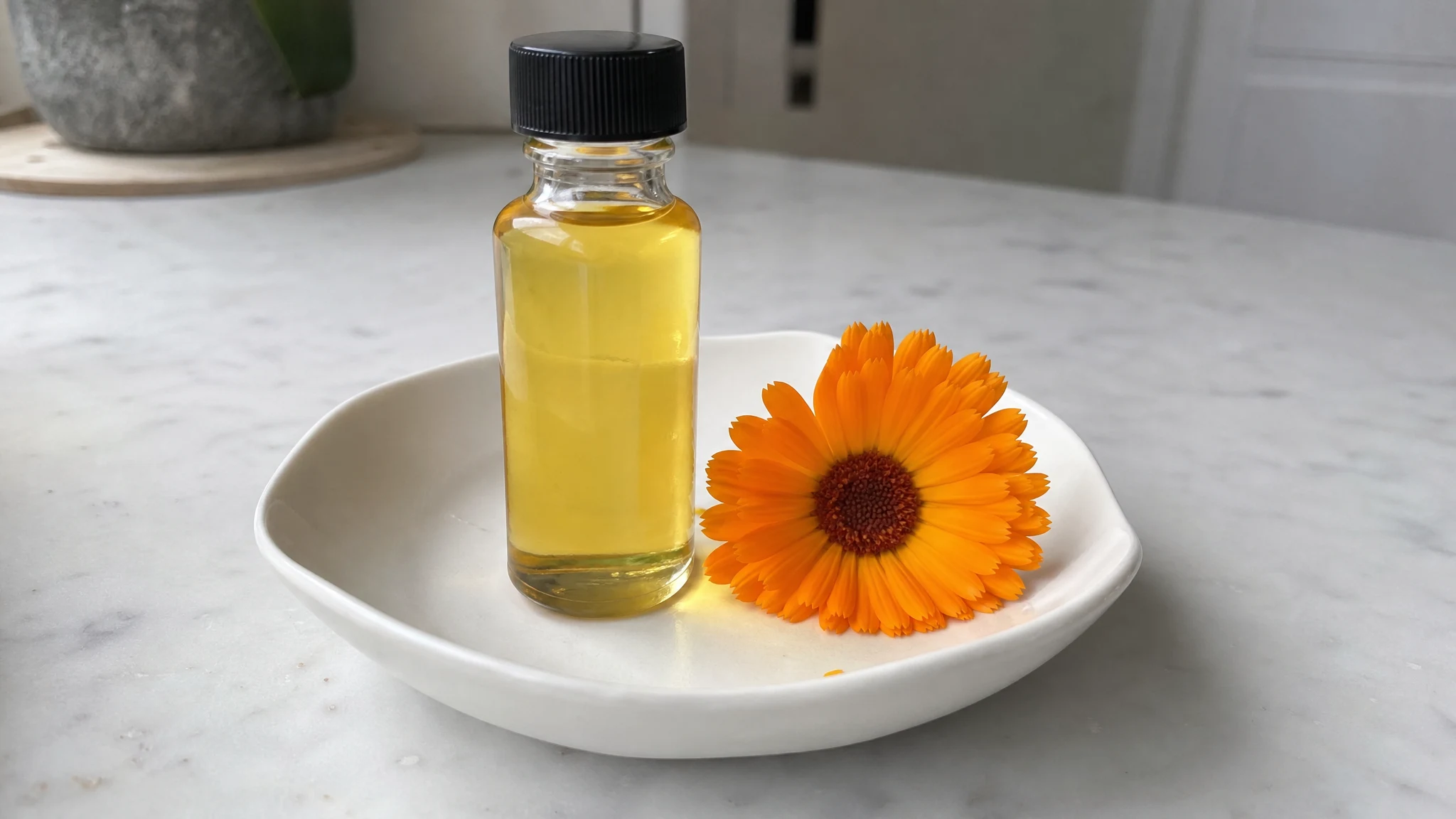
Calendula Oil
Our own small-batch calendula oil, in sizes from 0.5 oz to bulk.
From $13.99
Shop Calendula Oil →When should acne go to a dermatologist?
Not every bump is acne, and the right care depends on the cause. Persistent, painful or deep breakouts belong with a dermatologist, who can tell acne from look-alikes and has proven options. The American Academy of Dermatology guideline gives its strongest recommendations to benzoyl peroxide, topical retinoids, topical antibiotics and oral doxycycline (Guidelines of care for the management of acne vulgaris). A botanical oil is not on that list, and we would not want you to swap it in for care that is.
Calendula acne research: one mask-breakout trial
The closest study is a 12-week, placebo-controlled trial of 66 people with mild-to-moderate mask-related breakouts. Participants used a serum that combined snail secretion filtrate, calendula and licorice root extract. Inflammatory spots fell more than with placebo in the covered area, while blackheads, whiteheads and skin measurements did not differ between the groups (Efficacy and safety of a facial serum containing snail secretion filtrate, Calendula officinalis, and Glycyrrhiza glaba root extract in the treatment of maskne: A randomized placebo-controlled study).
It is an encouraging line of inquiry. It also involved three ingredients in one serum, so calendula's share cannot be separated, and an infused oil is a different product. We would not use it as a reason to say our oil clears breakouts, and neither should a label you read online.
Is calendula oil comedogenic? Ask about the carrier
Ask whether calendula oil is comedogenic and you will find confident answers in both directions. Our view is that the question is better asked of the carrier. Our oil is made in two steps: calendula is extracted on its own, then brought into a carrier oil to make the finished oil, so the carrier shapes much of how the oil feels and behaves. Which carrier it is lives on the batch paperwork. Email us the lot number from your bottle and we will tell you.
It also helps to know where comedogenic scores come from. Many trace back to the rabbit ear assay, which one of the original researchers described as not an ideal animal model, though the best they had (Comedogenicity of current therapeutic products, cosmetics, and ingredients in the rabbit ear). A small human patch study with six volunteers later found that finished products containing ingredients rated comedogenic in animals are not necessarily comedogenic themselves (A re-evaluation of the comedogenicity concept). A number on a chart is a starting point, not a verdict. Our comedogenicity article goes deeper, and our jojoba comparison shows how a base oil changes the picture.
Daisy-family allergy risk from ragweed to chamomile
Calendula is in the daisy family, with ragweed, chamomile and chrysanthemums. The EU herbal monograph lists allergy to that family as a contraindication and notes that skin sensitization has been reported, frequency unknown (European Union herbal monograph on Calendula officinalis L., flos). A dermatology review lists marigold among at least fifteen plants suspected of causing Compositae dermatitis, while noting that most of the evidence is anecdotal (Contact sensitization from Compositae-containing herbal remedies and cosmetics).

That matters on breakout-prone skin because a contact reaction can look like a flare. If you are allergic to daisy-family plants, we would skip our oil entirely, and our ragweed article explains why.
Keeping a skin log when trying a new oil
Skin changes slowly, which makes it hard to judge any new product. A spot that appears two days after you start something may have nothing to do with it, and a calm week may just be a calm week. If you do decide to try an oil, a simple habit helps: write down the date, what you used and where, and a quick note about how your skin looks. A tiny notebook or a phone memo is plenty. That record is far more useful to you, and to a dermatologist, than a memory of a vague good stretch or bad stretch.
How do you patch test a new facial oil?
This is reasoning rather than a protocol, and if a dermatologist has you on a plan, ask them before adding anything.
- Patch test on the inner forearm first. Dermatologists who run this test most often apply a leave-on product twice a day for one to two weeks, and no standard method exists (Clinical Utilization of Repeated Open Application Test Among American Contact Dermatitis Society Members). Our patch test guide shows the steps.
- Change one thing at a time, so you can tell what your skin is responding to.
- Use a small amount, pressed onto skin at the end of your routine, rather than in place of anything a clinician recommended.
- Watch where new spots appear. If they gather where you apply the oil, stop.
It is also worth thinking about what else touches your face. Pillowcases, phone screens, hats and makeup brushes all come into contact with your skin, and so do your hands. Before you blame a new oil for a change, it is fair to ask whether anything else in your day has shifted.
Calendula oil with nothing added and no acne claims
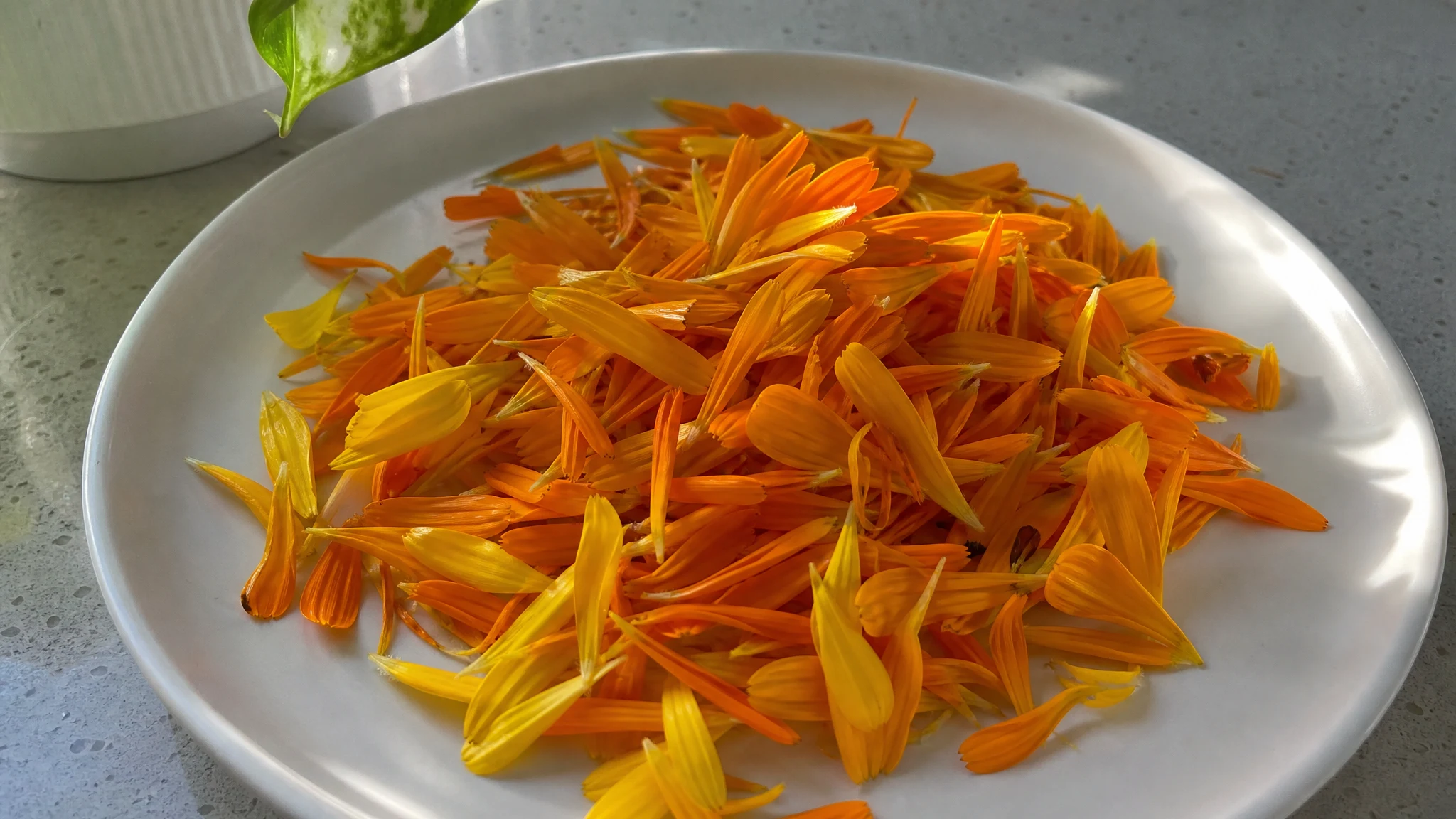
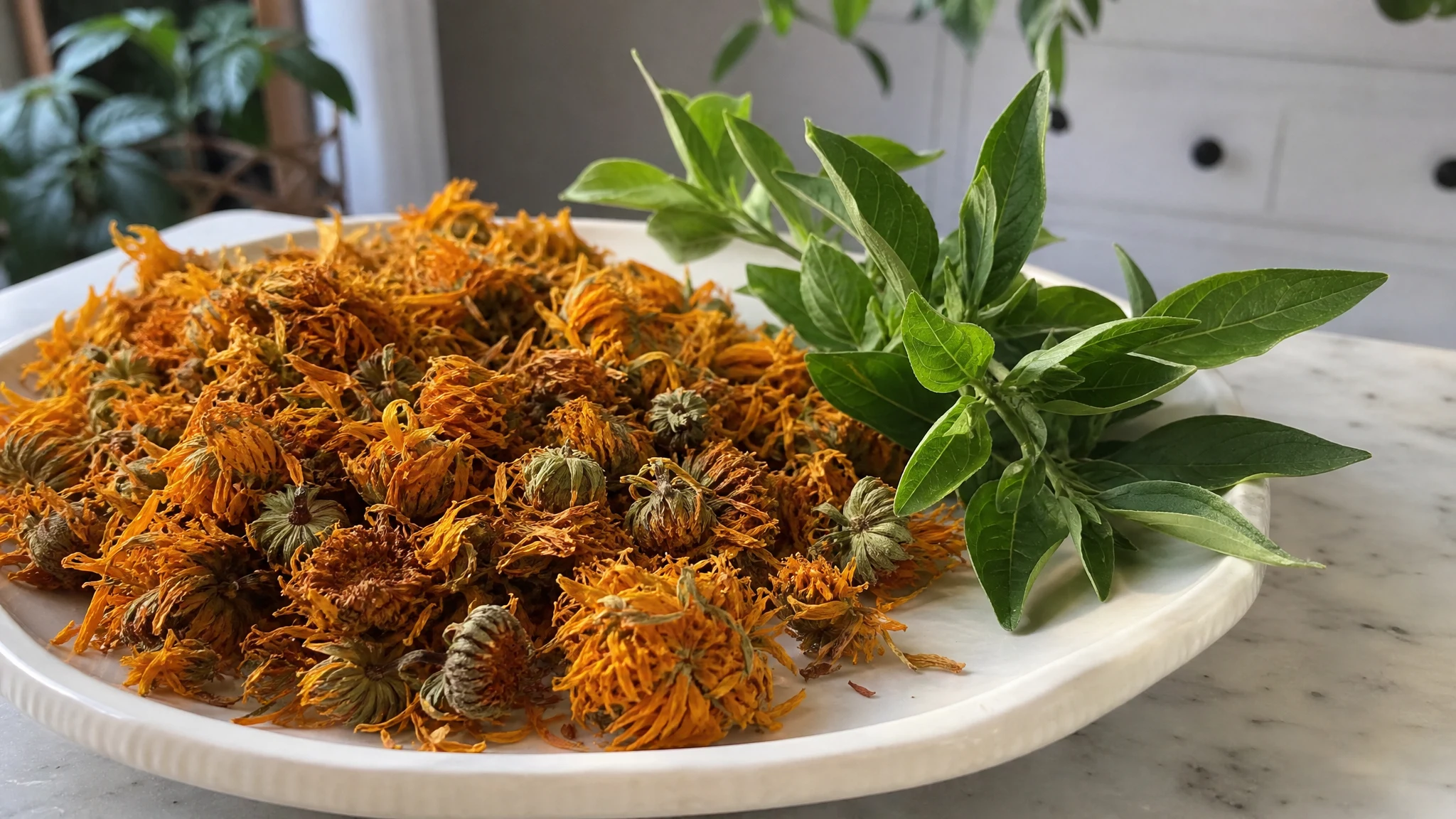
We buy dried organically grown flowers, make the oil ourselves, and add nothing to it: no preservatives, tocopherol or stabilizers. Bottles are dated and lot-numbered, and you can ask for the batch paperwork. We stop short of claims about acne, because the evidence is not there yet. We also compare it with another botanical people reach for in our witch hazel piece.
If your skin is calm and you are simply curious about a facial oil, a careful trial can be a low-stakes experiment. If it is not calm, a dermatologist is the better next stop.
Calendula Oil
Nature's Golden Botanical, bottled: small-batch calendula oil in sizes from 0.5 oz to bulk.
From $13.99
Shop Calendula Oil →Sources & Further Reading
- Guidelines of care for the management of acne vulgaris (Reynolds et al., 2024)
- Efficacy and safety of a facial serum containing snail secretion filtrate, Calendula officinalis, and Glycyrrhiza glaba root extract in the treatment of maskne: A randomized placebo-controlled study (Puaratanaarunkon et al., 2022)
- Comedogenicity of current therapeutic products, cosmetics, and ingredients in the rabbit ear (Fulton et al., 1984)
- A re-evaluation of the comedogenicity concept (Draelos and DiNardo, 2006)
- Contact sensitization from Compositae-containing herbal remedies and cosmetics (Paulsen, 2002)
- Clinical Utilization of Repeated Open Application Test Among American Contact Dermatitis Society Members (Brown et al., 2015)
- European Union herbal monograph on Calendula officinalis L., flos (EMA/HMPC/437450/2017)