Is Calendula Oil Cold-Pressed? How It's Really Made
"Cold-pressed calendula oil" sounds lovely, and it raises a fair question: what, exactly, was pressed? Calendula petals are delicate and hold very little oil of their own, so there is nothing to squeeze. The golden oil people buy for their skin is made another way, by letting flowers give up their color and oil-soluble goodness to a carrier oil. Once you know that, four different products that share the name start to make sense.

Calendula Oil
Our own small-batch calendula oil, in sizes from 0.5 oz to bulk.
From $13.99
Shop Calendula Oil →Infused oil: soaking calendula flowers in carrier oil
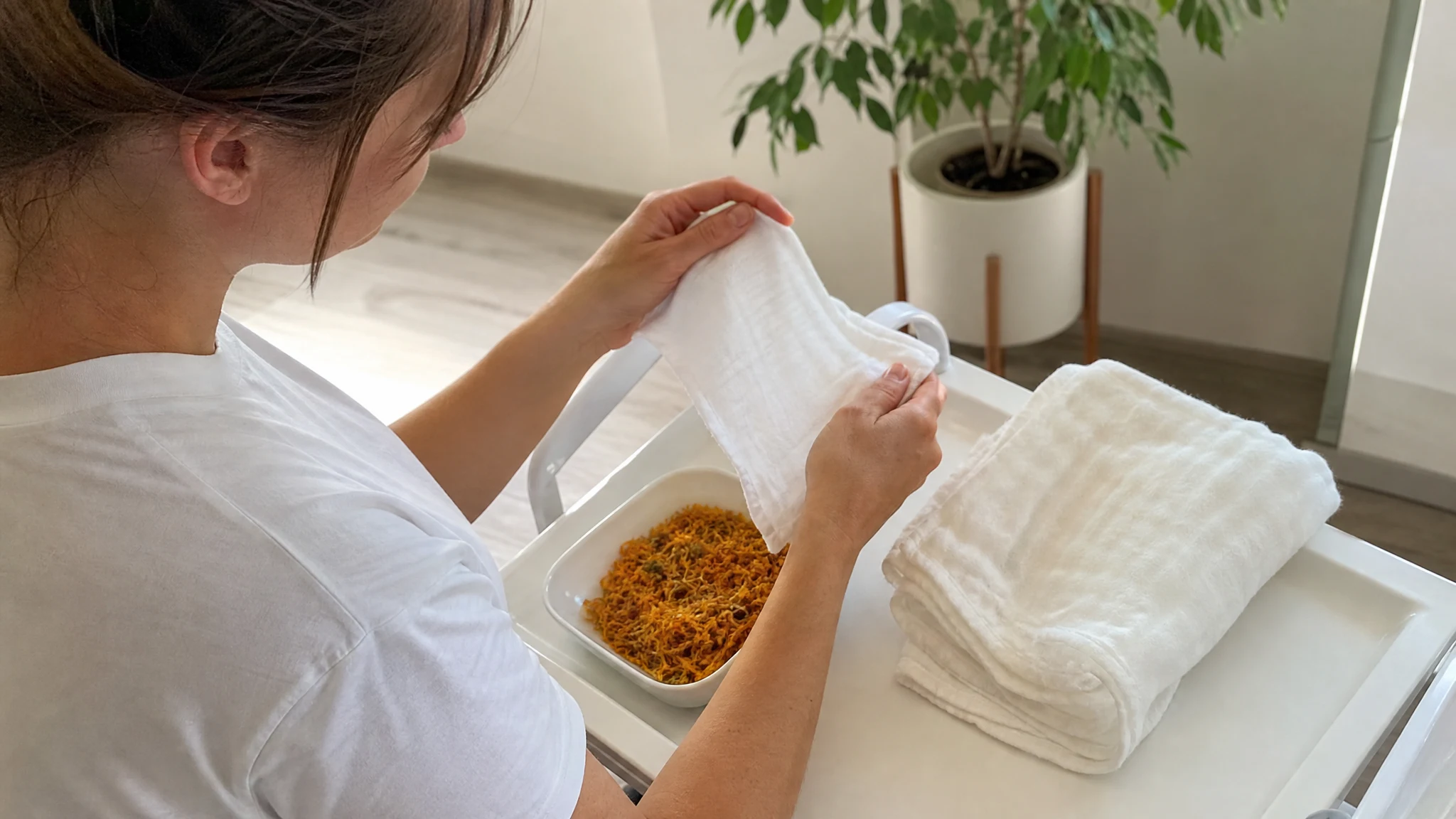
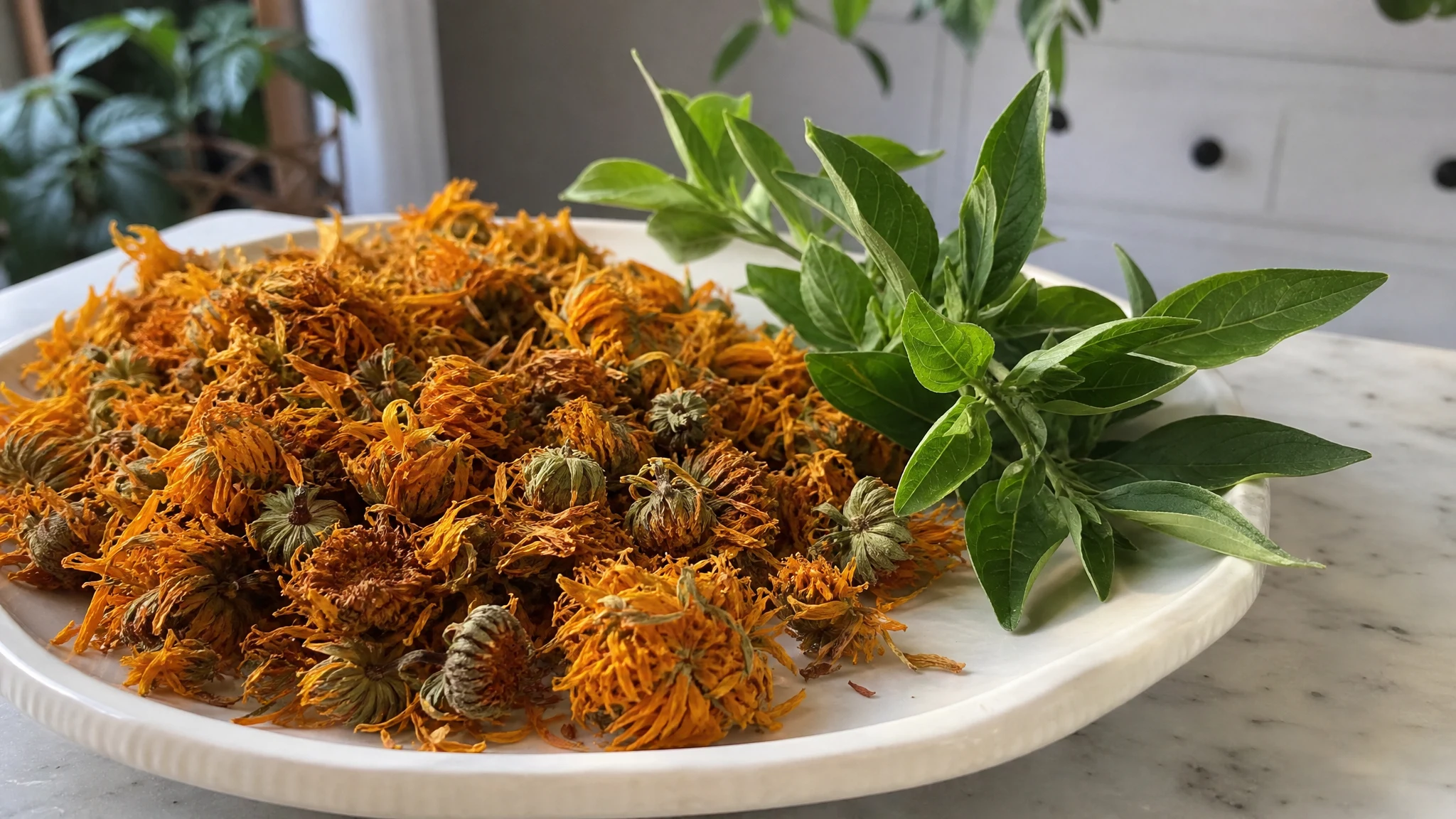
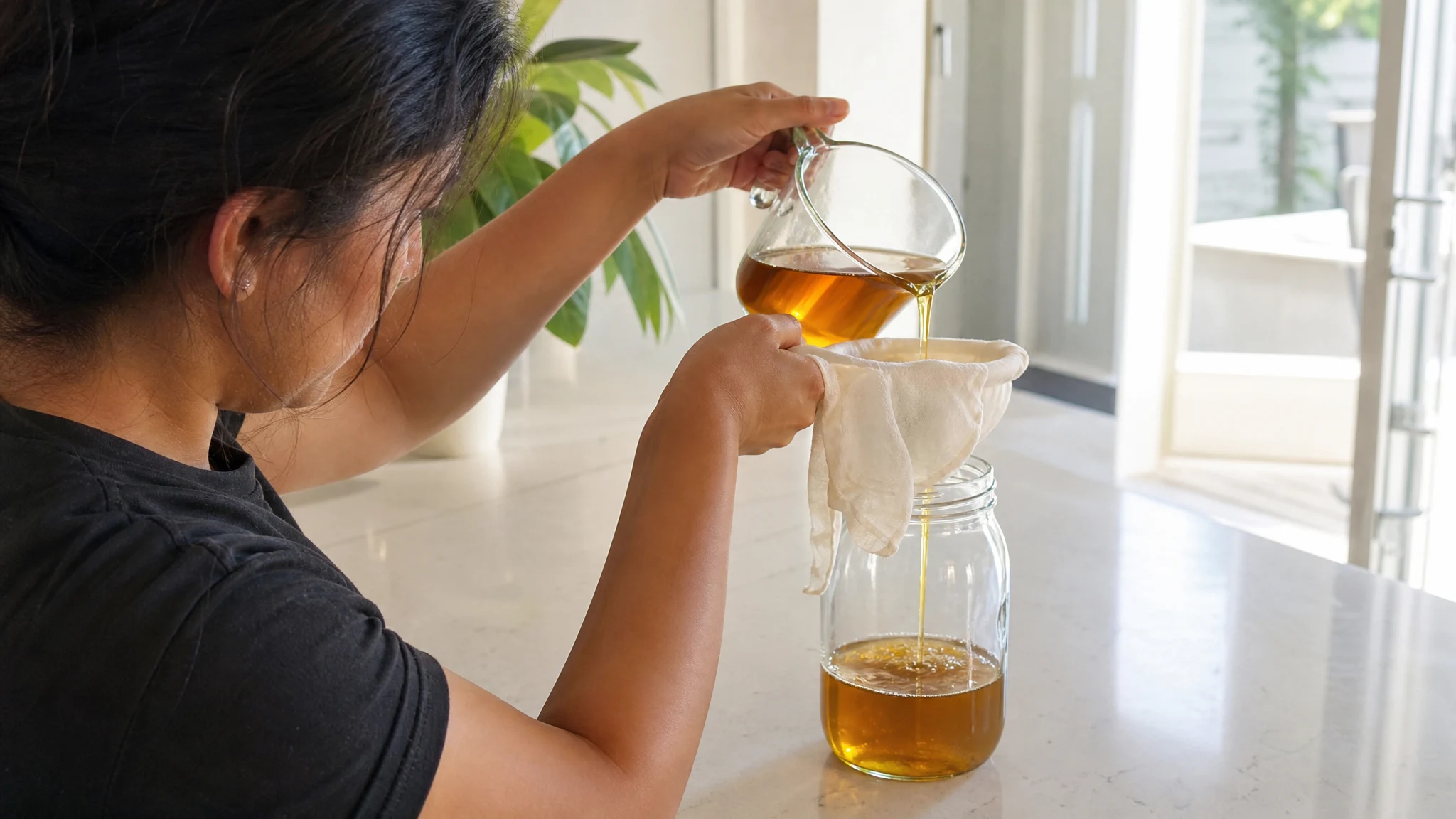
Infusing means soaking plant material in a fatty oil so that the oil-soluble parts move across. The EU herbal monograph describes the traditional version as a 1:10 liquid extract with a fatty vegetable oil such as olive oil as the solvent (European Union herbal monograph on Calendula officinalis L., flos). We work this way, with our own steps. We buy dried flowers, separate the petals by hand from sound, whole-dried flower heads, and extract the calendula on its own first. That extract is then brought into a carrier oil to make the finished oil, with nothing else added. The carrier is on the batch paperwork rather than the front label, so email the lot number from your bottle to [email protected] and we will tell you.
This is the point behind the "cold-pressed" label. Sometimes it describes the carrier, an oil that was pressed from olives or seeds before the flowers ever met it. The flowers themselves were infused, not pressed. That is a perfectly good way to make the oil, and worth knowing when you compare labels.
CO2 extract of calendula: a concentrated ingredient
Here supercritical carbon dioxide acts as the solvent, and the result is a concentrated extract rather than a ready-to-use skin oil. Researchers have tuned the process to pull out particular compound families from calendula flowers, for example the triterpene esters, using a two-step approach (Exploring the Sequential-Selective Supercritical Fluid Extraction (S3FE) of Flavonoids and Esterified Triterpenoids from Calendula officinalis L. Flowers). That level of control suits a formulator who needs a standardized ingredient at a very small dose. We think of it as a raw material for a lab bench, not a bottle for the bathroom shelf, and it is not something we make.
Is calendula essential oil steam distilled?
Steam distillation produces a volatile, aromatic oil, a fragrance material rather than the golden oil you see in a shop. This is the biggest source of confusion online, so we wrote it up separately in calendula infused oil versus essential oil. If a product is described as an essential oil, you can reasonably expect something light and aromatic rather than golden.
Calendula seed oil: the one that is pressed
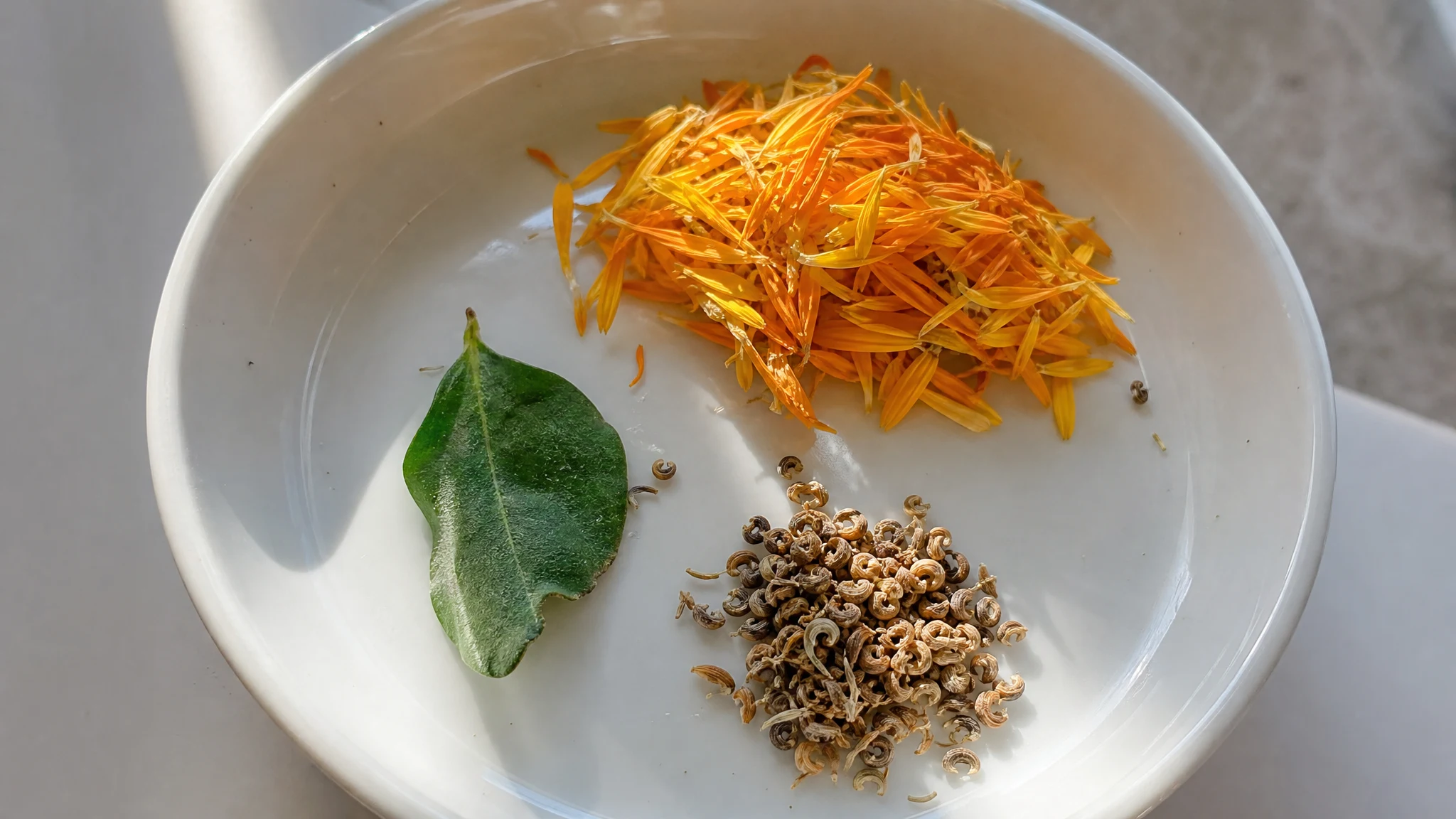
Calendula seeds do hold oil. An analysis of seeds from eleven pot marigold varieties found oil contents of 13.6 to 21.7 grams per 100 grams of seed, with calendic acid, an unusual fatty acid, making up more than half of the total fatty acids (Fatty acid composition of lipids in pot marigold (Calendula officinalis L.) seed genotypes). A seed oil can truly be cold-pressed. It is a different ingredient from a petal infusion, with its own character. You can read about the fatty acids in our fatty acid profile article.
What can you see and smell in calendula oil?
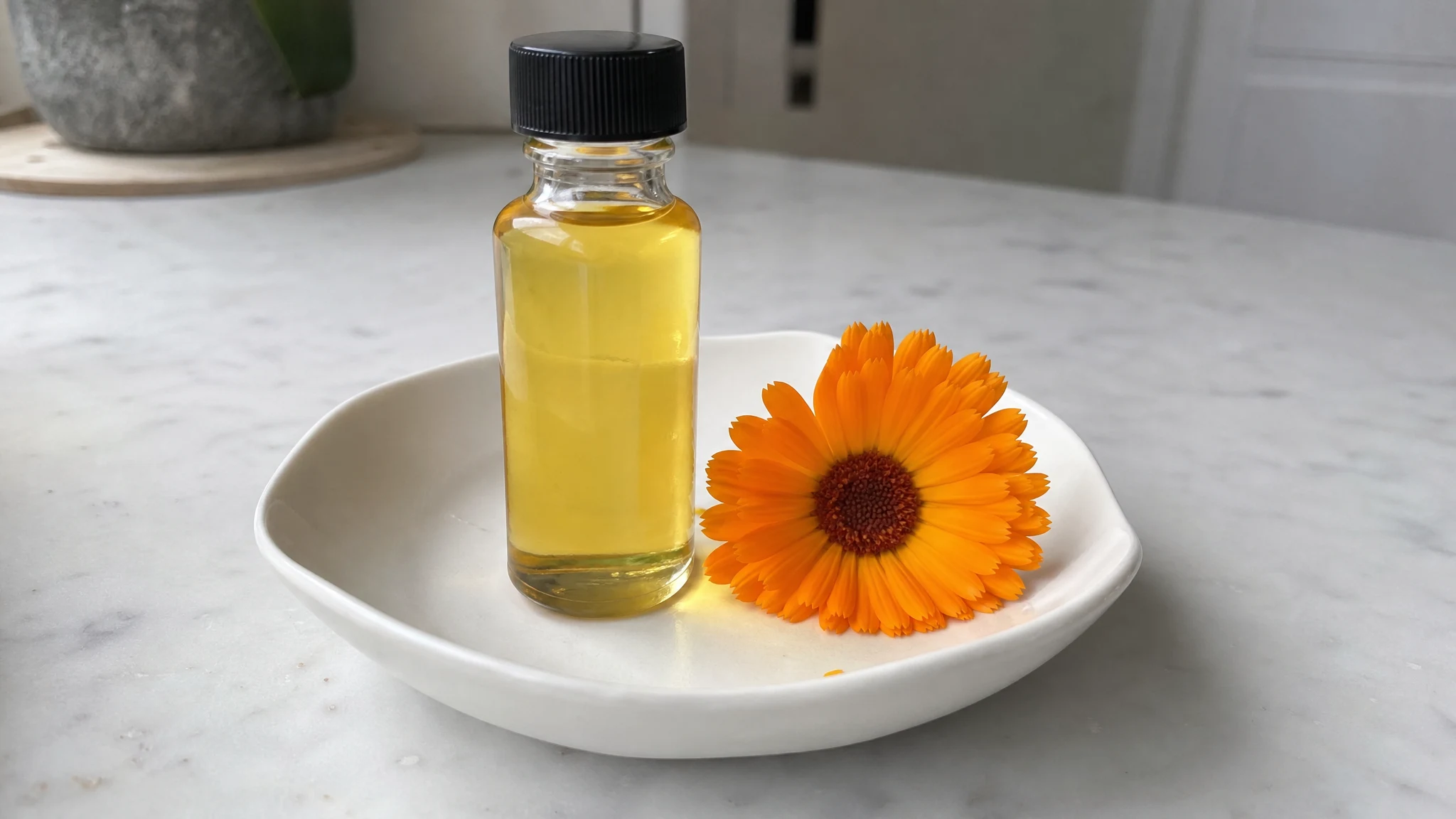
You can learn a surprising amount from the bottle in your hand. Hold it to the light. A well-made infused oil is generally a clear, colored liquid, anywhere from pale gold to deep amber depending on the flowers and the carrier. If you see cloudiness or floating particles, it is worth asking the maker why. Put a drop on your fingertip and smell it. A fresh oil smells gentle and a little herbal. One that smells sharp, paint-like or stale has gone past its best, whatever the label says.
Which questions reveal how calendula oil is made?
A label tells you the name and perhaps the carrier, and it cannot tell you the flower-to-oil ratio, the temperature or the time. Those details come from the maker, so a few questions go a long way:
- Which carrier oil is it made in, and is that named on the paperwork?
- Is anything added, such as a preservative, tocopherol or stabilizer? Nothing is added to ours.
- Were the flowers dried before infusing? We use dried flowers, dried naturally by traditional methods without industrial heat or forced air.
- What documentation is available for the batch? We can send ours when you email the lot number.
CO2 extract versus infused oil for your formula
If you formulate products and need a concentrated, standardized ingredient, CO2 extract is the tool built for that. If you want an oil-phase ingredient to use in balms, massage blends or a simple body oil, an infused oil is the right category, and you will find more on how it behaves in our buying guide. If you want fragrance, distilled oil is what you are after,. And if a product promises petals that were cold-pressed, ask what was pressed.
Our recommendation is to treat words like cold-pressed, handmade or small batch as the opening of a conversation rather than the end of one. Ask the maker to say, in a sentence or two, what happened to the flowers between the field and the bottle. For ours it is short: grown on family farms, dried naturally, petals separated by hand, infused in-house. If a seller cannot tell you theirs in the same plain way, keep asking.
Whatever you choose, it pays to match the method to your purpose rather than to the most impressive-sounding label. A good oil is one whose maker can tell you how it was made, and we are always happy to answer that for ours.
Calendula Oil
Nature's Golden Botanical, bottled: small-batch calendula oil in sizes from 0.5 oz to bulk.
From $13.99
Shop Calendula Oil →Sources & Further Reading
- European Union herbal monograph on Calendula officinalis L., flos (EMA/HMPC/437450/2017)
- Exploring the Sequential-Selective Supercritical Fluid Extraction (S3FE) of Flavonoids and Esterified Triterpenoids from Calendula officinalis L. Flowers (Atwi-Ghaddar et al., 2023)
- Fatty acid composition of lipids in pot marigold (Calendula officinalis L.) seed genotypes (Dulf et al., 2013)