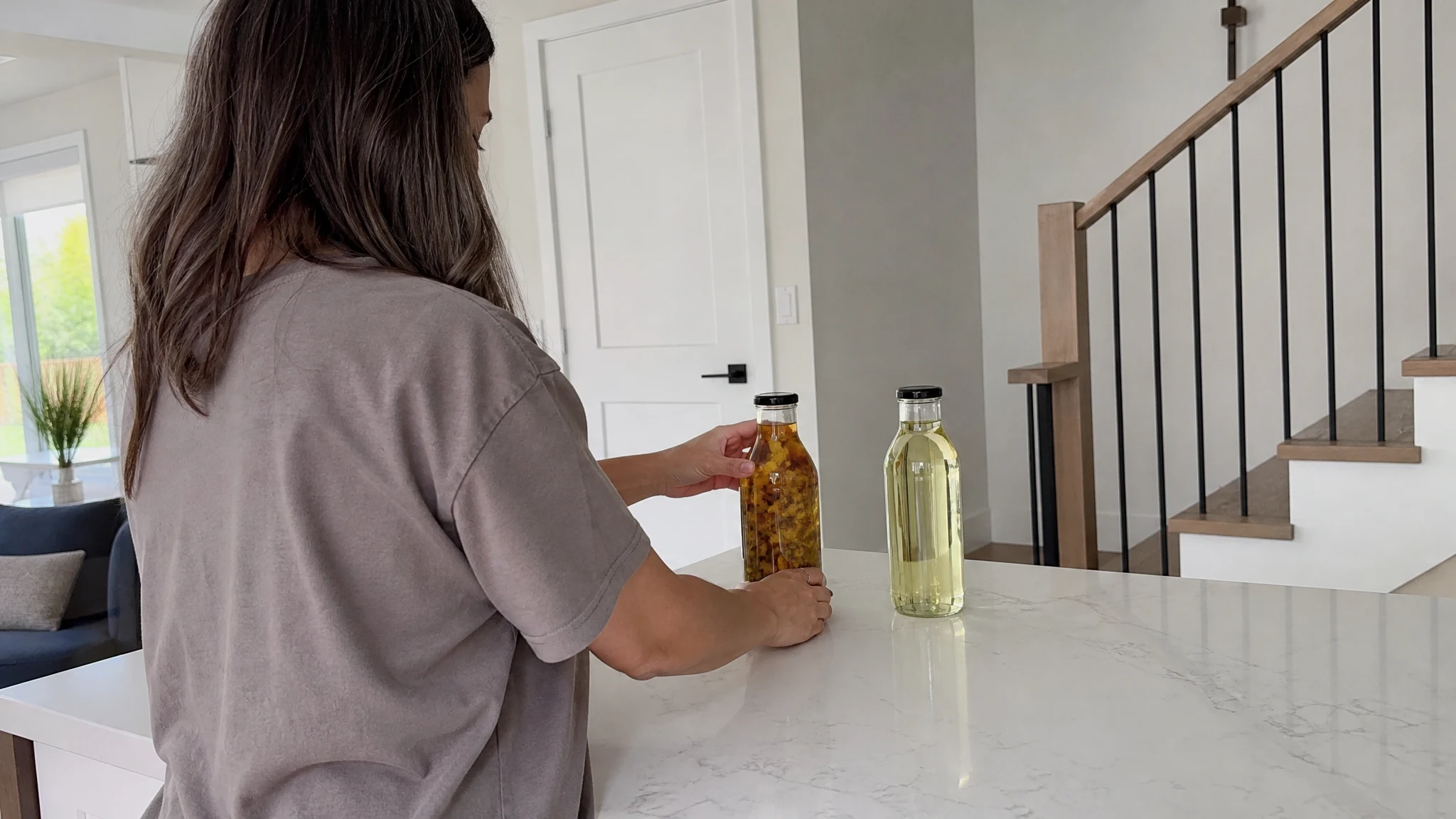
Calendula Infused Oil vs Essential Oil: The Difference
Ask for calendula essential oil in most shops and you will be handed an infused oil, because that is what nearly every bottle labeled "calendula oil" actually is. The two are made differently, behave differently on skin and in a recipe, and are easy to confuse. Ours is an infusion: calendula flowers extracted, with the extract brought into a carrier oil. Here is how to tell the difference in about a minute.

Calendula Oil
Our own small-batch calendula oil, in sizes from 0.5 oz to bulk.
From $13.99
Shop Calendula Oil →Calendula infused oil and essential oil: how they differ
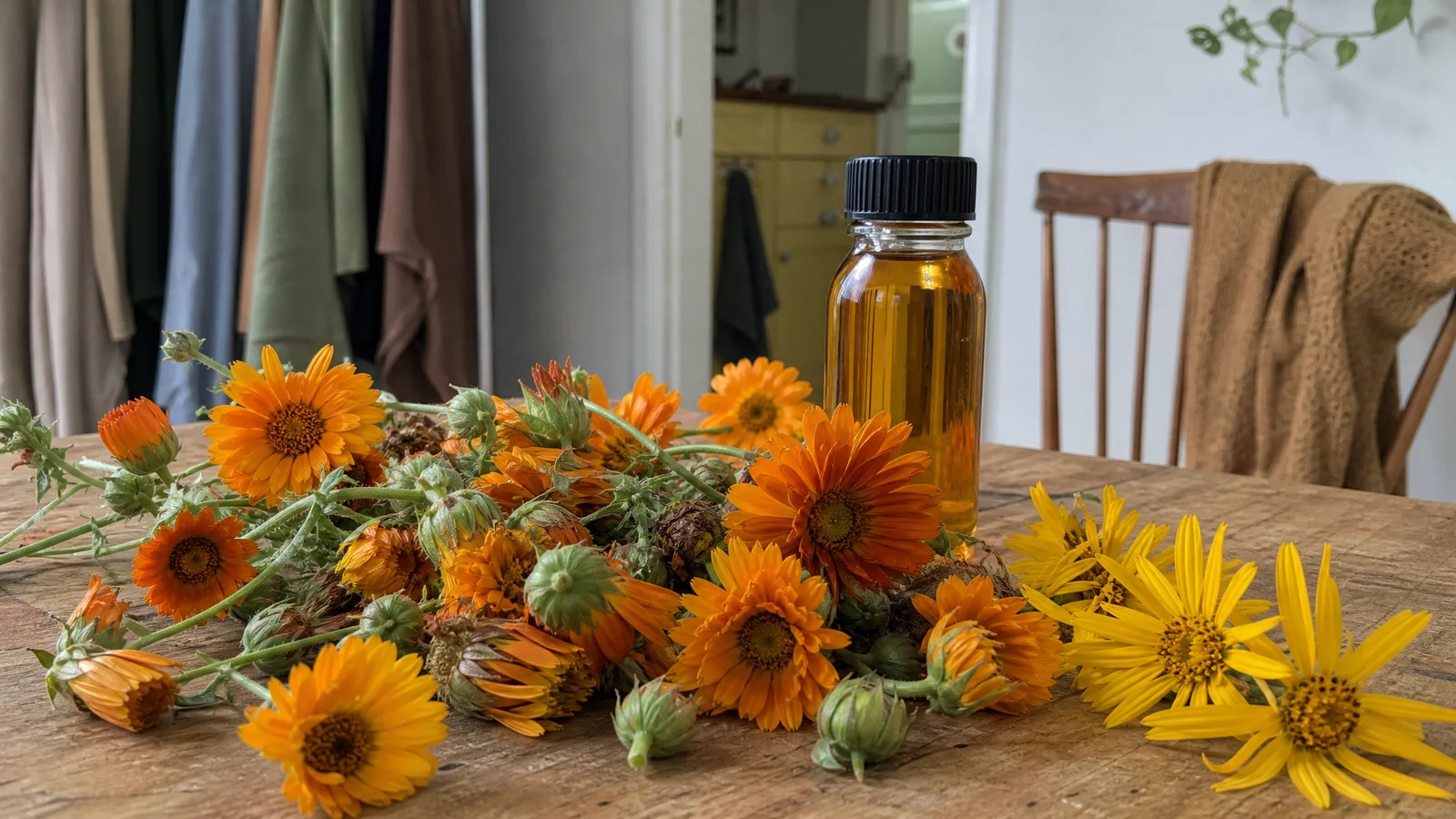
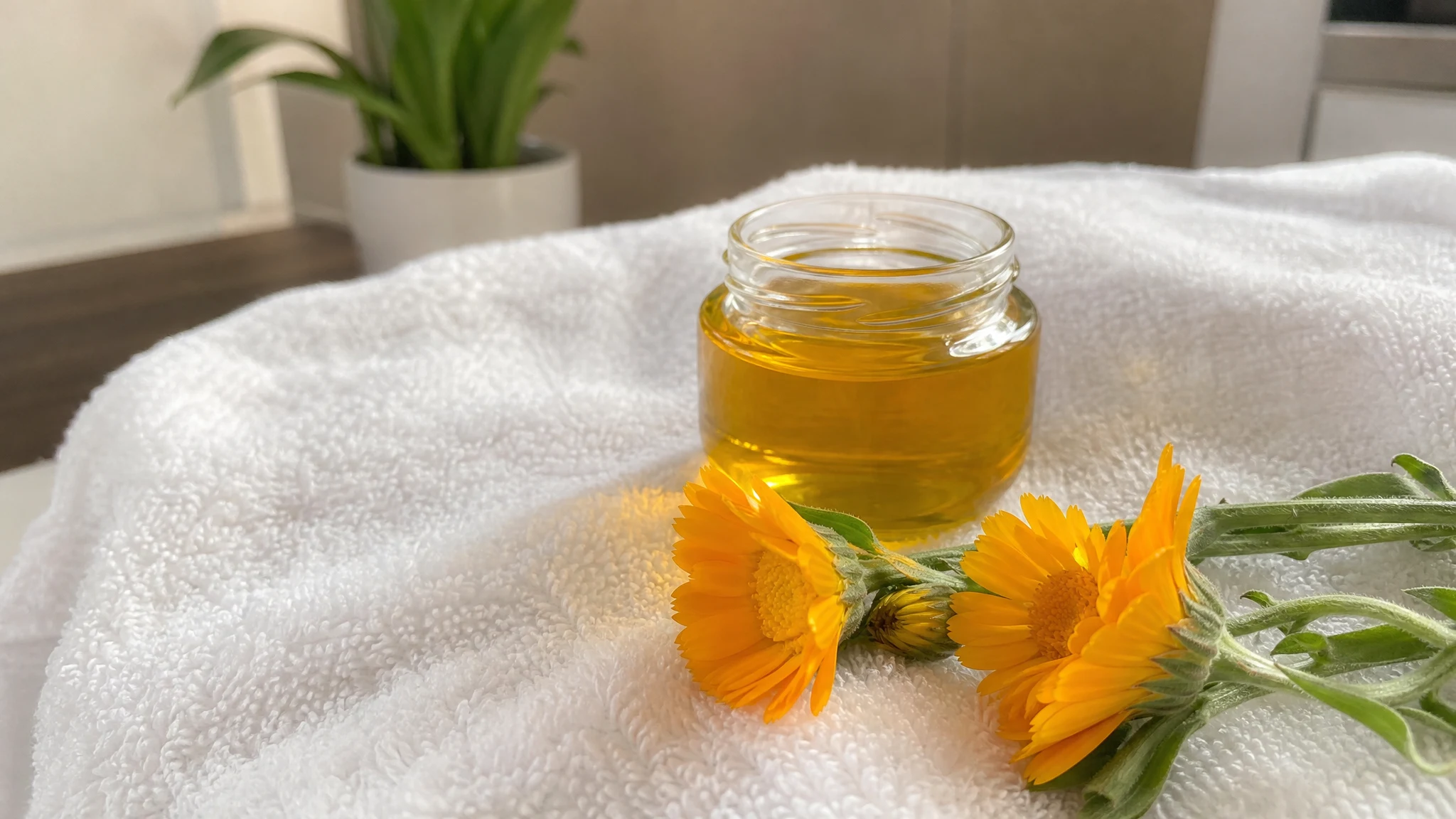
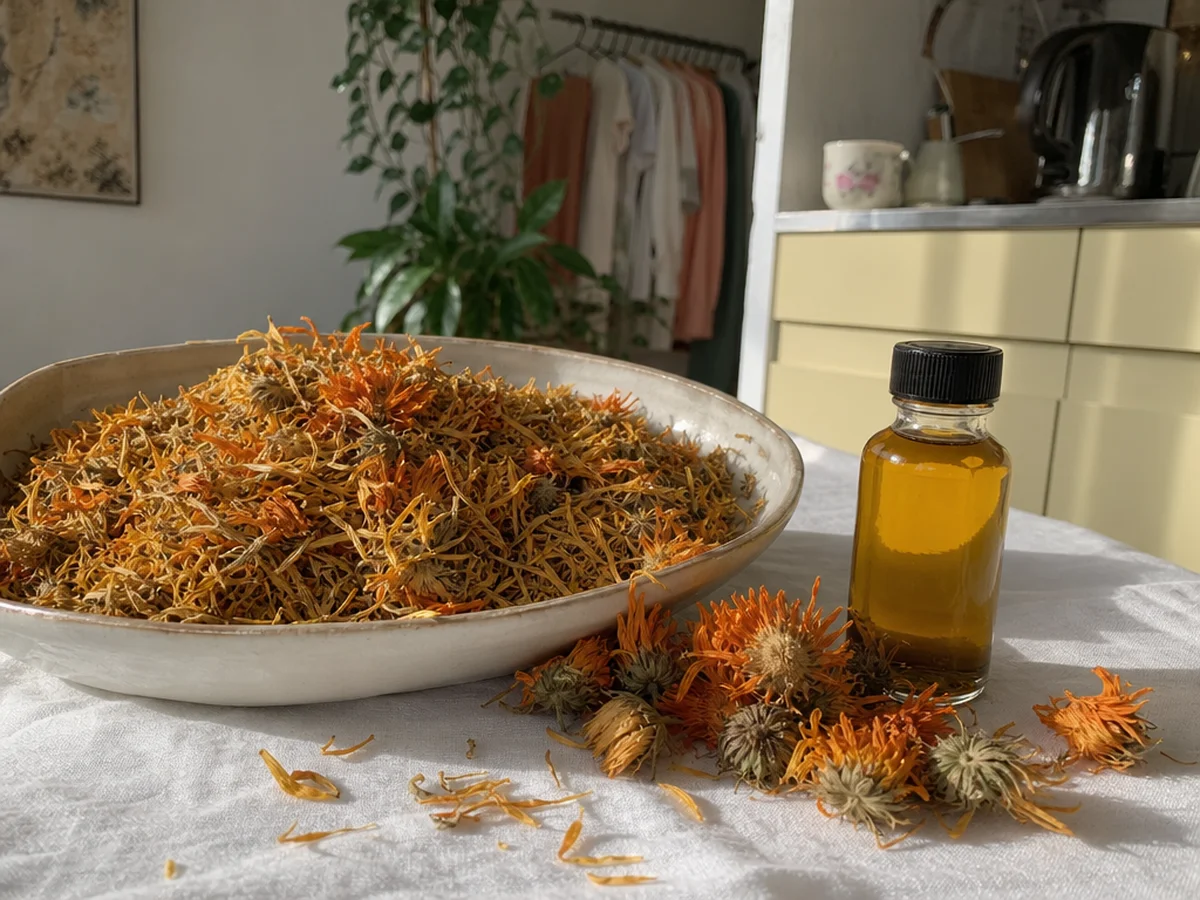
An infused oil (sometimes called a macerate) starts with the flower steeped in a fixed carrier oil, so the oil-loving parts of the petals move into the carrier. The EU herbal monograph for calendula describes this traditional preparation as a 1:10 extract in a fatty vegetable oil such as olive oil. That is where the warm orange color comes from: the pigments travel along with the extract.
An essential oil is a different story. It is captured by distilling the flowers, which collects only the small, aromatic, volatile fraction of the plant. A laboratory study in Mexico compared three methods on dried calendula flowers. Hydrodistillation gave about 0.9 grams of oil per 100 grams of flowers, and the authors described it as the highest-quality oil, free of pigments. Solvent extraction and enfleurage gave roughly 7 grams per 100 grams but produced oils carrying pigments. So a calendula essential oil is a light, aromatic material produced in small amounts, and it has none of the orange color people associate with calendula.
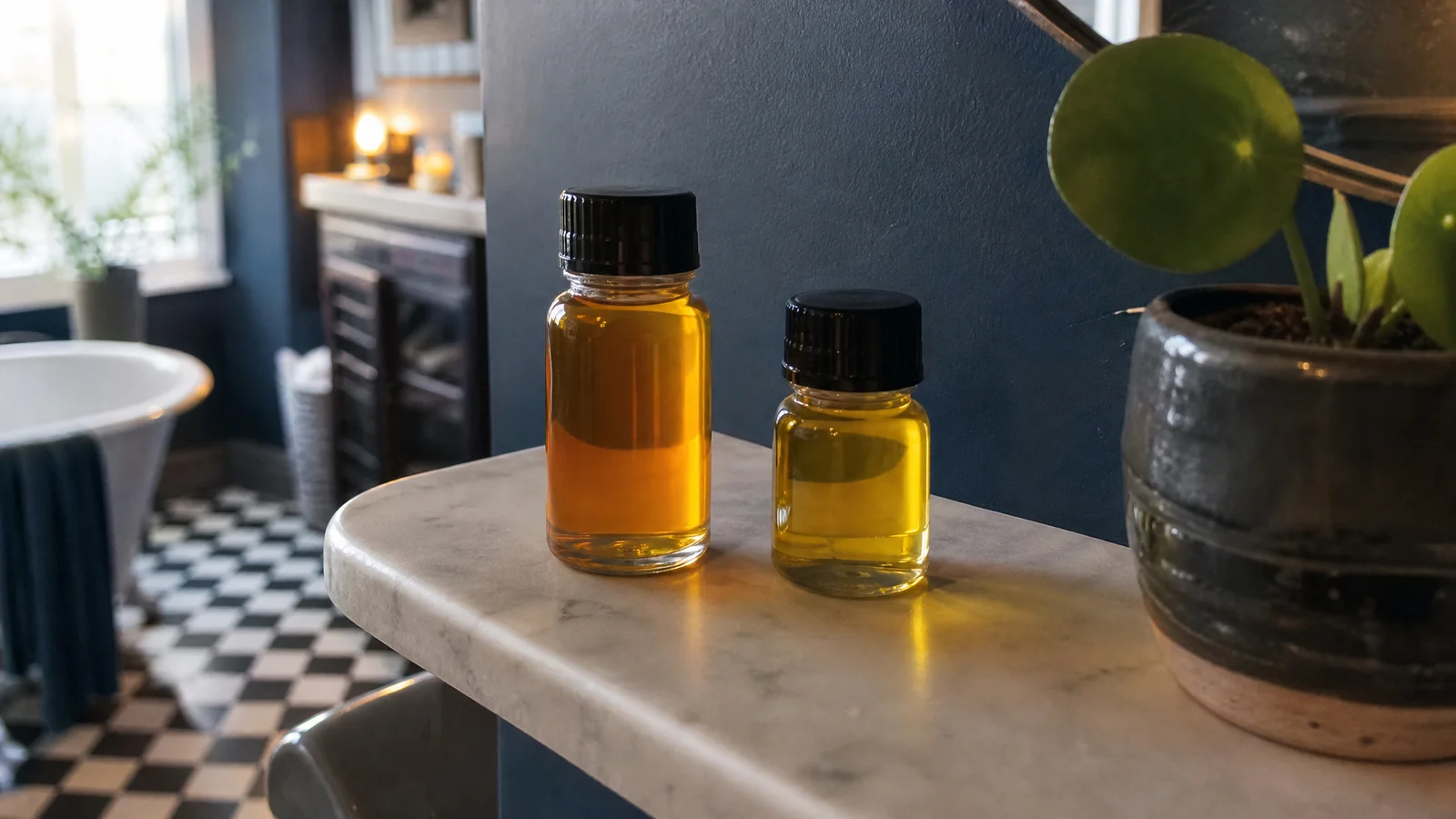
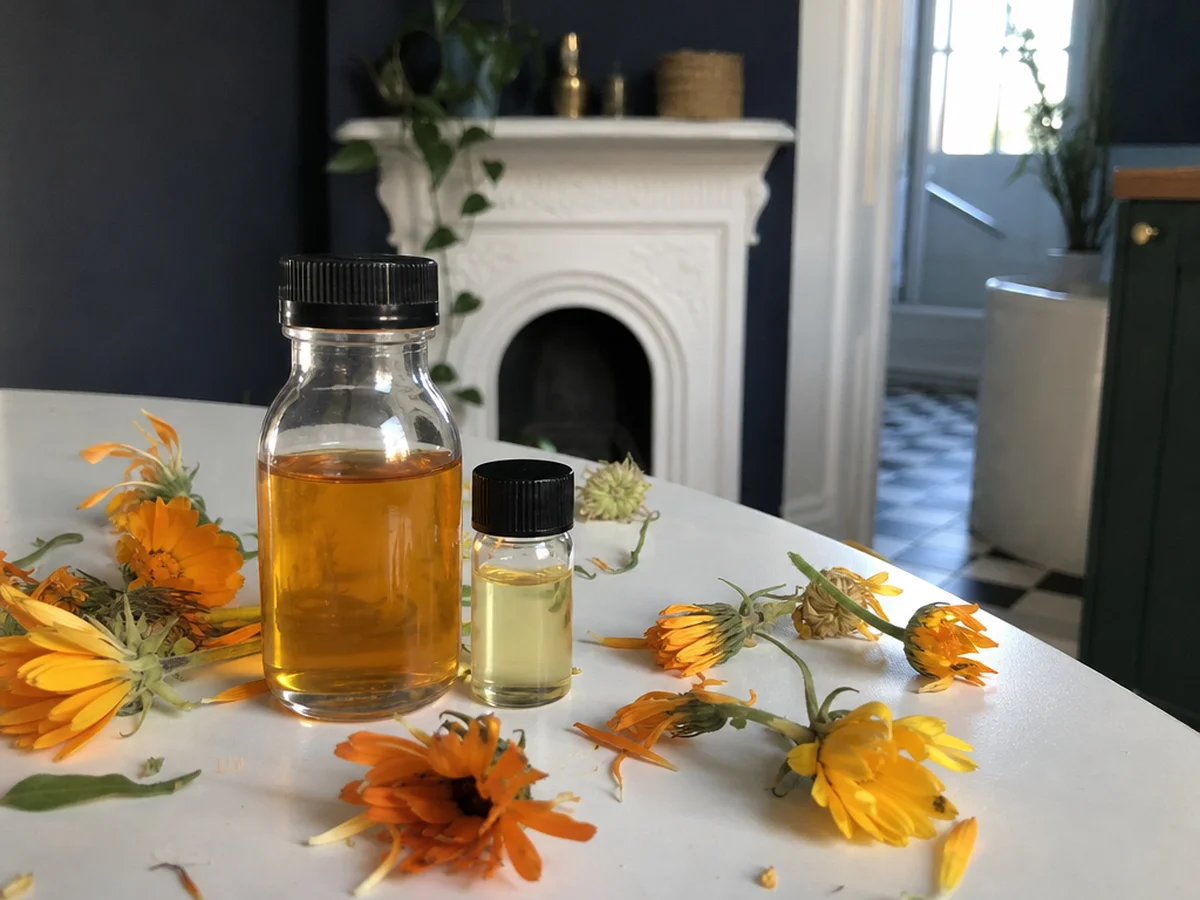
A simple way to remember it: infused oil is a flower steeped in oil, a bit like making tea, only with oil in place of water. Essential oil is the flower's aroma, caught as vapor and collected drop by drop. One is golden and soft in the hand; the other is a tiny, potent bottle. When you hold them side by side, the difference is obvious without any reading at all.
How do infused and essential oils differ in use?
This is where our own reasoning comes in, drawn from how each is made. An infused oil is mostly carrier oil with the flower's contribution folded in, so it is already diluted and goes on as it is. A distilled essential oil is the opposite: concentrated, with no carrier at all, and meant to be diluted into something before it touches skin. Because they behave so differently, a recipe written for one cannot simply borrow the other.
For balms, salves and body oils, an infused oil is the natural base, since it melts smoothly with beeswax and butters. Our salve article shows how that base works. If you also want to add scent, that is a separate step with its own dilution guidance, and a reference such as the Tisserand Institute is the place to go for it. We make the infused oil, and that is where our knowledge sits.
Reading a calendula oil ingredient list
- Look at the ingredient list. An infused oil usually names a carrier oil plus a calendula flower extract. A name on the list tells you the ingredient is present but not how much, so it helps to know the process behind it.
- Notice the color. A bright orange bottle sold as an "essential oil" deserves a question, since the distilled oil in the Mexican study was pigment-free.
- Ask for lot paperwork. Our bottles are dated and lot-numbered, and you can email the lot number to [email protected] for the batch documentation. A Certificate of Analysis is linked on the shop page as well.
If you are standing in a shop with two bottles in your hands, turn each one over and read the back before you read the front. Look at what is listed first. For an infused oil, the first ingredient is normally the carrier, since that is most of what is in the bottle. Then hold the bottle to the light. A clear, warm gold is what an infused oil should look like, and it should not look muddy.
How is calendula infused oil made from dried flowers?
We buy dried Calendula officinalis flowers, grown organically on family farms in Egypt, Hungary, the Balkans and Turkey, and make the oil in-house, from dried flower to sealed bottle. The first stage extracts calendula on its own; the second brings that extract into the carrier oil. Nothing else goes in: no synthetic preservatives, no added tocopherol, no stabilizers. You can read more on our sourcing page, and our extraction methods article compares more techniques.
Keep infused oil and any essential oil on separate shelves, too. Essential oils like a cool, dark spot with the cap tight, and an infused oil is happiest in the same kind of place. Labeling each bottle with the date you opened it takes a few seconds, and it makes your shelf much easier to trust.
Daisy-family sensitivity applies to either form
Whichever form you choose, calendula is a daisy-family plant, and the EU monograph lists hypersensitivity to that family as a contraindication. A quick patch test before first use is a good habit with either one, and if you react, skipping calendula is the right call.
Once you know what to look for, a label stops being a puzzle: infused oil for the golden, nourishing-feeling base, distilled oil for a rare aromatic. Most of the time, the base is what a recipe needs.
Calendula Oil
Nature's Golden Botanical, bottled: small-batch calendula oil in sizes from 0.5 oz to bulk.
From $13.99
Shop Calendula Oil →Sources & Further Reading
- Chemical composition of scented extracts obtained from Calendula officinalis by three extraction methods (Salomé-Abarca et al., Botanical Sciences, 2015)
- European Union herbal monograph on Calendula officinalis L., flos (EMA/HMPC, 2018)