Calendic Acid in Calendula: Seeds, Not Petal Oil
If you read enough about calendula oil, you will meet calendic acid, usually described as the fatty acid that makes the plant special. It is an interesting molecule. It is also a fact about calendula seeds, and the golden oil made by steeping petals tells a different story. Sorting the two out saves a lot of confusion on labels.

Calendula Oil
Our own small-batch calendula oil, in sizes from 0.5 oz to bulk.
From $13.99
Shop Calendula Oil →Calendic acid sits in calendula seeds, not petals
Calendula seeds hold around 20% oil, and about 60% of that oil is calendic acid. A study of eleven seed genotypes measured calendic acid at 51.4% to 57.6% of the fatty acids in total lipid, with linoleic acid next at 28.5% to 31.9% (Dulf et al., 2013). That is the profile of calendula seed oil, which is pressed from seeds and is largely a research and industrial material. The petals of the flower, the part we use, are a different matter.
What is calendula infused oil made from?
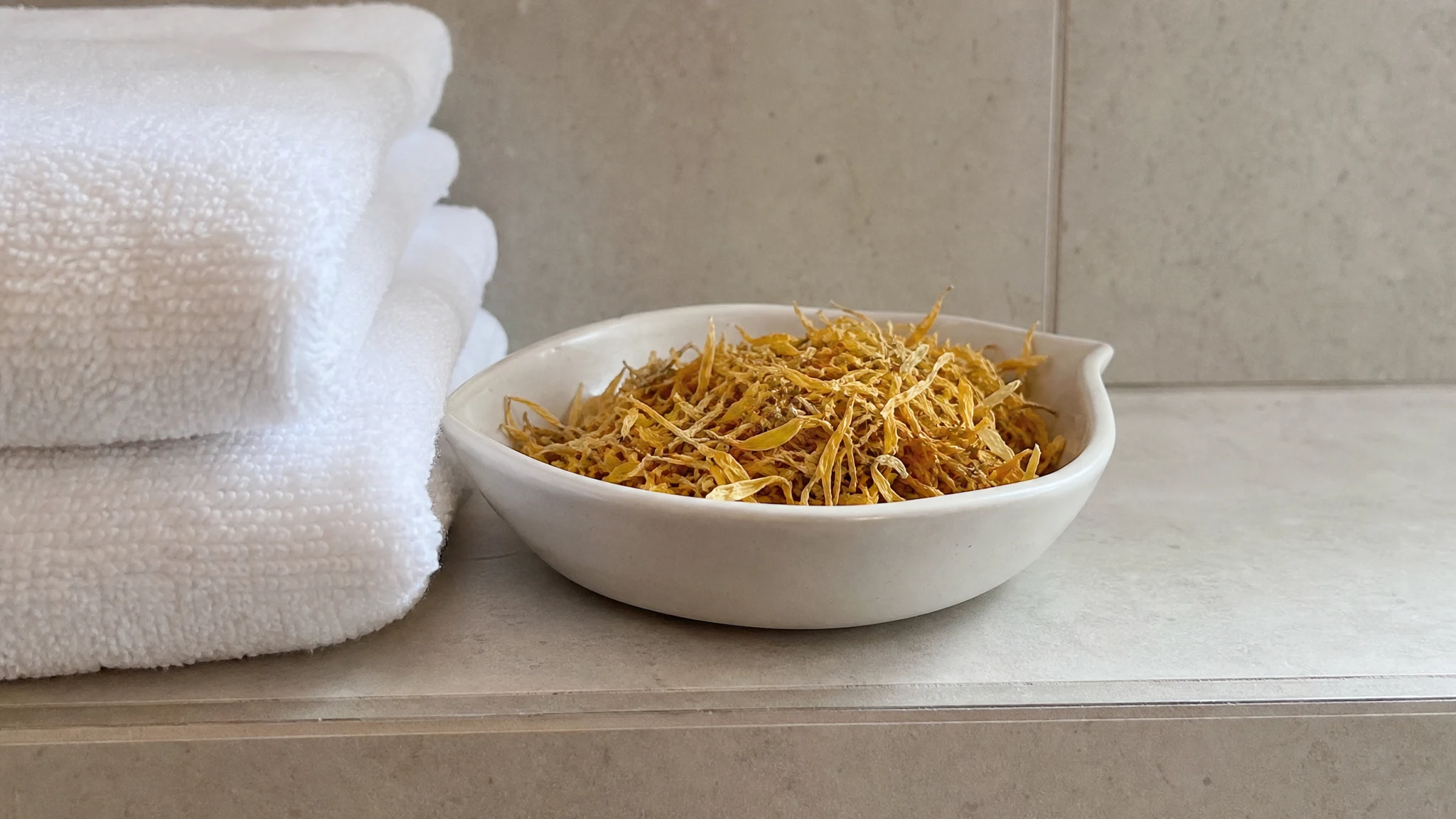
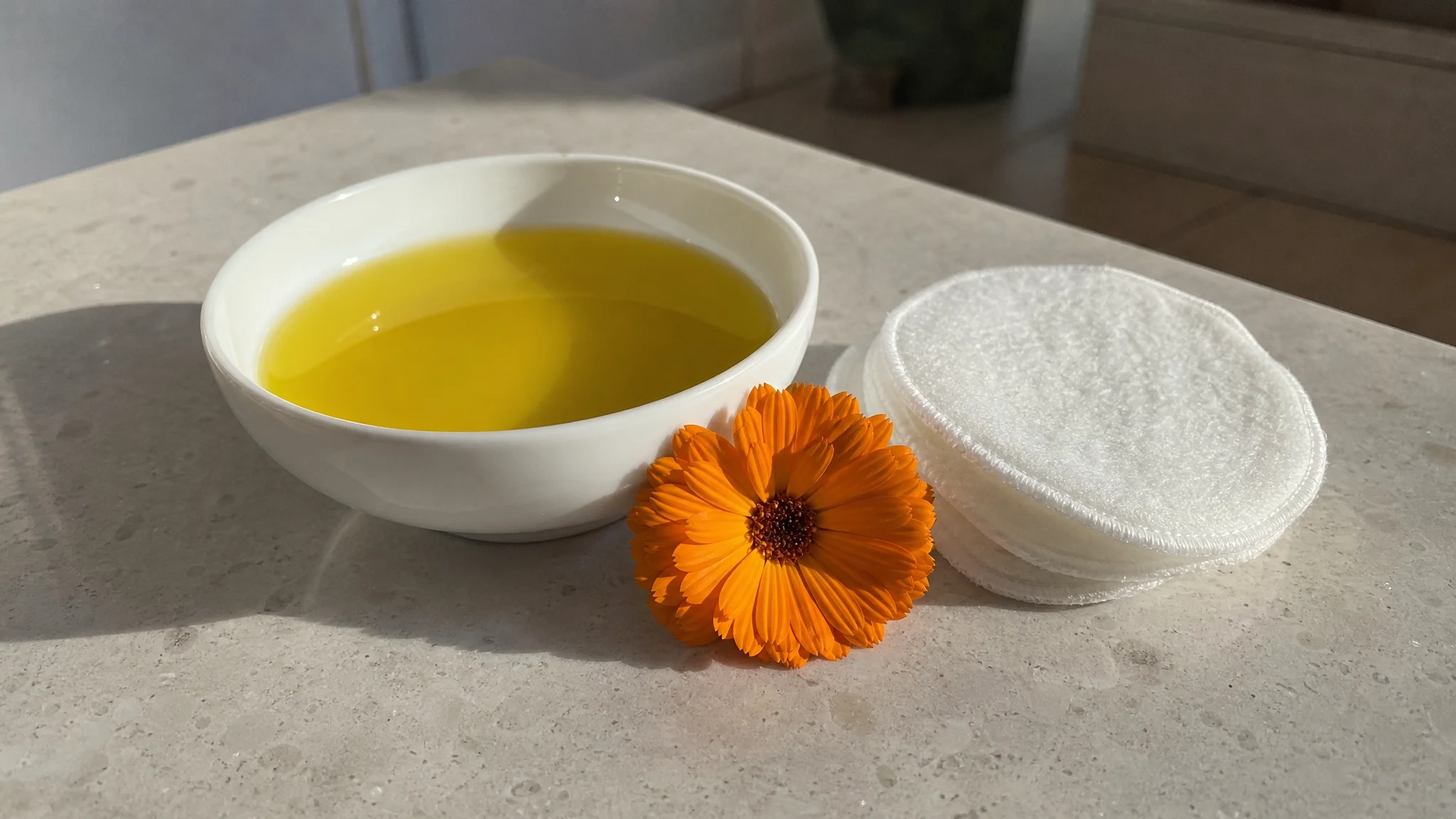
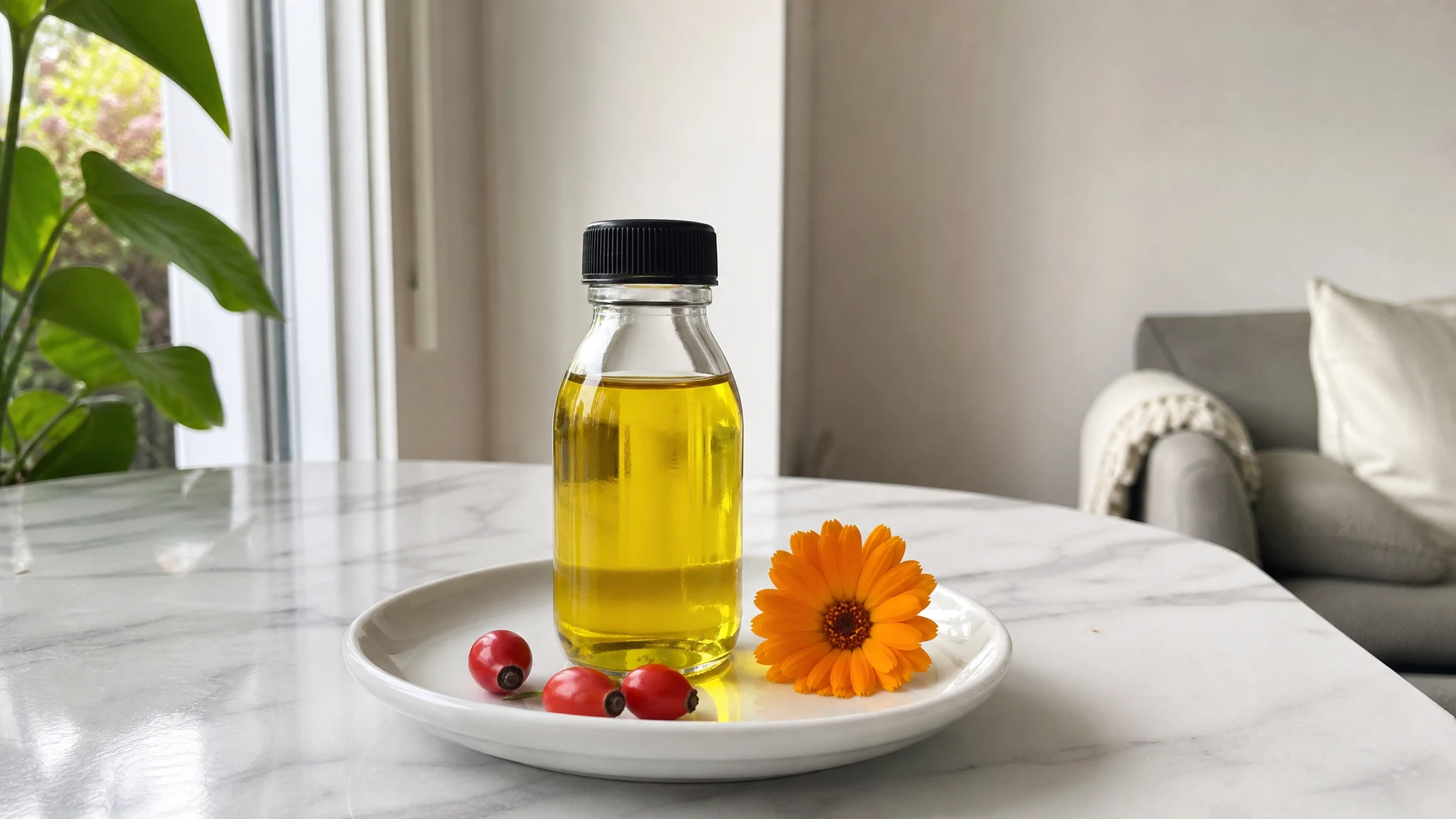
We make an infused oil. We buy dried, organically grown flowers, separate the petals by hand from sound whole flower heads, extract the calendula on its own, and bring that extract into a carrier oil. The EU herbal monograph describes the traditional version of this as a liquid extract at 1:10 in a fatty vegetable oil (EMA/HMPC monograph, 2018), which works out to roughly one part flower to ten parts oil. Reasoning from that ratio, the finished oil is mostly carrier by volume, so its fatty acid profile will mostly follow the carrier's, with the petals adding color and fat-soluble plant compounds on top. That is an inference from how the oil is made, not a lab measurement.
It also means we do not quote a fatty acid breakdown for our oil, and we do not borrow the seed oil numbers above. If you are formulating and want to see the carrier, email the lot number from your bottle to [email protected] and the batch paperwork will show it. Each batch is dated and lot-numbered, and the independent lab work behind it is available the same way.
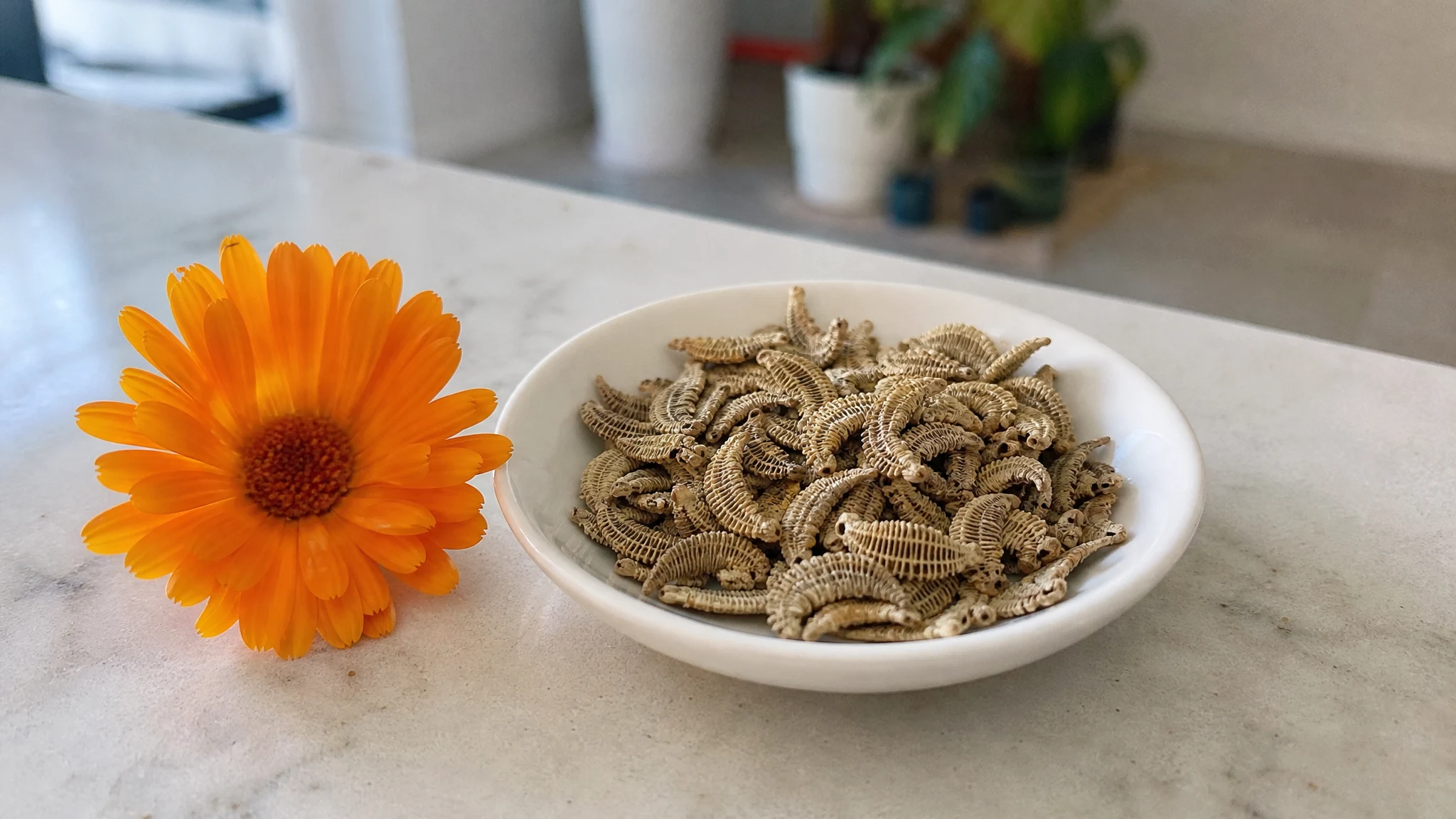
A small, friendly way to picture it: a calendula flower head is a ring of bright petals around a center that eventually becomes seed. When we separate petals by hand from sound, whole dried flower heads, we are working with the showy part, the golden outer ring, and not the seeds that form later. That is a simple difference you can see with your own eyes if you ever grow the plant, and it explains why a seed number does not belong on a petal oil.
Petal color and fat-soluble compounds in oil
Color is the obvious one: the deep gold is the flower talking, and it is part of why people reach for calendula in the first place. The petals also carry fat-soluble compounds that move into an oil more readily than into water, which is the whole reason a petal infusion in oil makes sense. If you are curious about the best-known of them, our faradiol article looks at what has been measured in the flower, and our composition article covers the wider chemistry.
Why does the carrier oil matter for freshness?
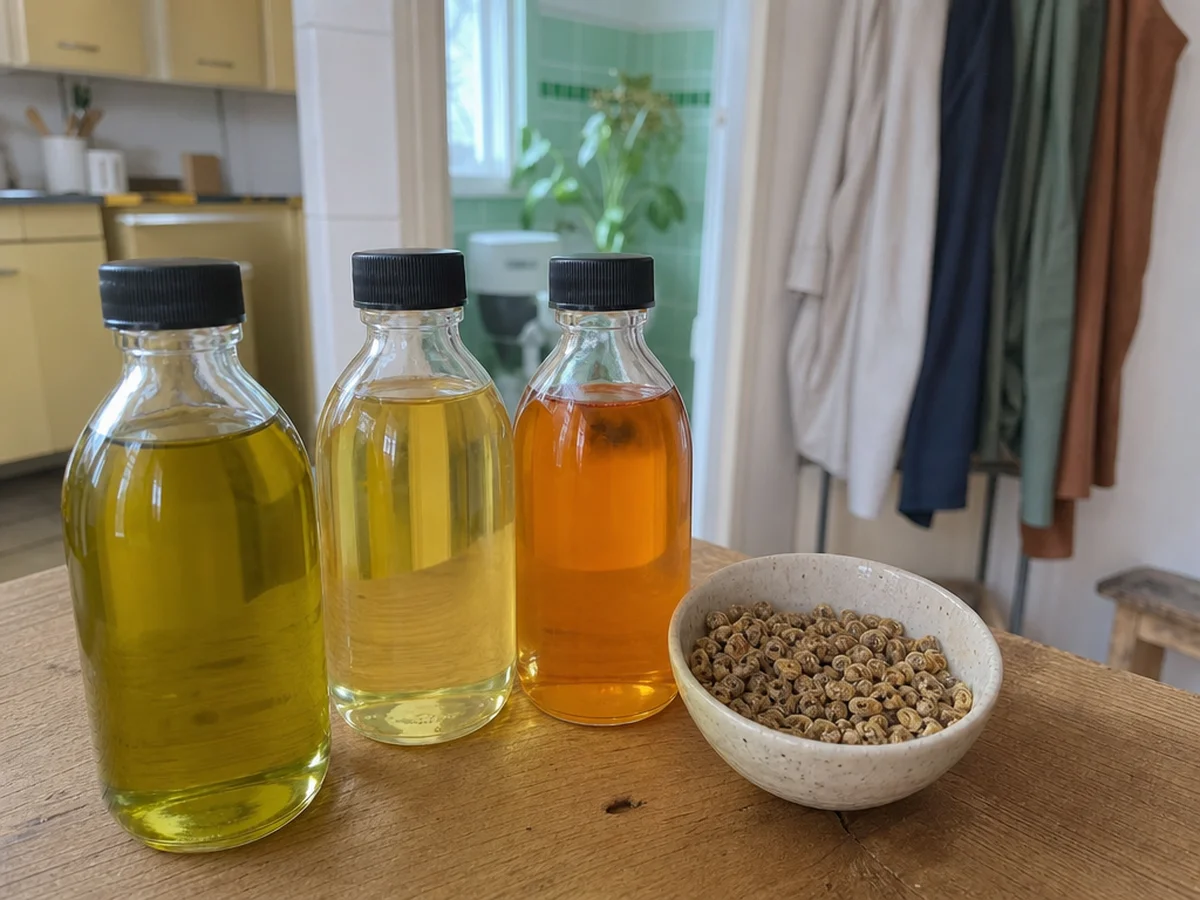
Oils differ in how readily they go stale. Oxidation is a chain reaction that begins with hydrogen being pulled off unsaturated fatty acids, particularly linoleic and linolenic acids (Gharby et al., 2025). So, reasoning from that, an infused oil built on a carrier rich in those fatty acids will care more about heat, light and air than one built on a steadier carrier. We add no preservatives, tocopherol or stabilizers to ours, so we suggest a cool, dark cupboard and a tightly closed cap; our storage article has the practical detail.
If you grow calendula in a garden or a pot, you can watch this play out over a season. The petals are gone in a few days once the flower fades, and the seed heads that follow look nothing like the blooms: curled, ridged and a dull tan. It is hard to imagine the two as the same ingredient, and that picture is a handy one to keep in mind when a label gets vague.
Reading a calendula oil label: seed, petal or blend
- Which material is it? "Calendula oil" can mean a petal infusion, a seed oil or a blend, and the name alone will not tell you.
- Is the carrier named? It is the largest ingredient by far, so it deserves a straight answer.
- Is an antioxidant added? Added tocopherol is a legitimate way to extend shelf life. Ours has none, which is a choice about keeping the ingredient list short.
- Does an infused oil quote calendic acid? The measured figures we know of come from seeds, so a seed number printed on a petal infusion is a mismatch worth a question.
If calendic acid is what you are after, you are shopping for the seed oil. If you want an oil with a golden color and a short ingredient list, a petal infusion is a lovely thing to have on the shelf, and the carrier is the only thing left to ask about.
Next time a label throws a big word at you, take a moment to ask which part of the plant it belongs to. Most of the confusion in this corner of the shelf clears up with that one question.
Calendula Oil
Nature's Golden Botanical, bottled: small-batch calendula oil in sizes from 0.5 oz to bulk.
From $13.99
Shop Calendula Oil →Sources & Further Reading
- Dulf FV et al., 2013. Fatty acid composition of lipids in pot marigold (Calendula officinalis L.) seed genotypes. PMC3560196
- European Medicines Agency, HMPC, 2018. European Union herbal monograph on Calendula officinalis L., flos. ema.europa.eu
- Gharby S et al., 2025. Vegetable oil oxidation: Mechanisms, impacts on quality, and approaches to enhance shelf life. PMC12146556