Calendula Oil for Eczema-Prone Skin: Ask Before You Try
"Gentle plant, gentle on sensitive skin" is a tidy assumption, and it is the one we would gently question first. Calendula is a lovely flower and we make our oil from it, yet it belongs to the daisy family, and that family is worth a second thought if your skin is eczema-prone. We would put a dermatologist and a plain, fragrance-free moisturizer ahead of any botanical oil, ours included, and here is why.

Calendula Oil
Our own small-batch calendula oil, in sizes from 0.5 oz to bulk.
From $13.99
Shop Calendula Oil →Asteraceae plants, atopic dermatitis and contact allergy
Calendula sits in the Asteraceae family, also called Compositae, alongside ragweed, chamomile and chrysanthemums. An updated 2026 meta-analysis of studies on atopic dermatitis and contact allergy found no overall association between the two. It did find positive associations with the screening mixes dermatologists use for this plant family, the Compositae mix and sesquiterpene lactone mix (Association Between Atopic Dermatitis and Contact Sensitization: An Updated Systematic Review and Meta-Analysis). Those mixes are not specific to calendula, so this does not say that people with eczema are more likely to react to our oil. It does say the family is one where eczema-prone skin deserves care.
Other sources point the same way without agreeing on size. The EU herbal monograph lists allergy to Asteraceae plants as a contraindication and says skin sensitization has been reported, frequency unknown (European Union herbal monograph on Calendula officinalis L., flos). In an Austrian patch-test series of 443 dermatitis patients, 9 reacted to marigold, though these were clinic patients rather than the general public (The seamy side of natural medicines: contact sensitization to arnica (Arnica montana L.) and marigold (Calendula officinalis L.)).
Dermatologist-recommended eczema self-care: thick creams first
The American Academy of Dermatology's self-care advice for atopic dermatitis is refreshingly simple. Choose a thick cream or ointment, with petroleum jelly as an inexpensive option, and apply moisturizer at least twice a day. Keep baths to five or ten minutes in warm water, use a mild fragrance-free cleanser only when needed, and pat skin partly dry before applying anything (Atopic dermatitis: Self-care). The theme is vehicle and routine: thick, fragrance-free and consistent. A thin botanical oil is a different kind of product from the ointment that page describes, which is why we see an oil as at most an optional extra, after your dermatologist agrees.
Have calendula studies tested eczema skin?
Calendula features in a few eczema-adjacent studies, but not as a single ingredient. A study of an emulgel combining hyaluronic acid, glycerol, calendula, aloe vera, polyphenols and a growth factor, used by patients over 14 with atopic dermatitis, reported improvements in barrier measurements (Development of an Emulgel for the Effective Treatment of Atopic Dermatitis: Biocompatibility and Clinical Investigation). With that many active ingredients, calendula's own contribution cannot be separated out.
A separate trial used healthy volunteers whose forearms were irritated with a chemical. A cream containing 1% calendula CO2 extract was followed by greater skin hydration than the plain cream or untreated skin (Double-blind randomised controlled trial of an emollient cream with and without 1 % supercritical CO2 extract of Calendula officinalis in contact dermatitis). That is healthy skin and a cream, not an infused oil on eczema.
No trial of calendula alone on eczema, favorable or otherwise, turns up in the literature, and we sell our oil as a cosmetic for external use rather than as something for eczema. That is a cosmetic-versus-medical line we take seriously, and it is why you will not see us promise outcomes for any skin condition.
Keeping an eczema skin routine plain and tracked
When skin is touchy, the most useful habit is a dull one. Keep a short list on your phone of what touched your skin this week: soap, laundry detergent, a new scarf, anything new. If something flares, a list is far easier to read than memory. And when a new product does come in, let it come in alone, so that if skin objects you can say with some confidence what caused what.
Can you try calendula oil with your dermatologist?
- Choose a calm moment. Avoid starting on inflamed, weeping or cracked skin, where a reaction is hard to tell from a flare.
- Patch test on the inner forearm first. Dermatologists who use this test most often apply a leave-on product twice a day for one or two weeks (Clinical Utilization of Repeated Open Application Test Among American Contact Dermatitis Society Members). Our patch test guide shows how, and anyone with a known contact allergy should ask an allergist about clinic testing.
- Add one thing at a time, after the basics above are in place.
- Stop and call your clinician at any new redness, itching or rash.
Daisy-family allergy and children: skip calendula oil
If you react to ragweed, chamomile or other daisy-family plants, we would skip our oil and speak to an allergist. For children, the EU monograph does not recommend skin use under six, so a baby's eczema is a question for a pediatrician; our children's eczema article goes further. In pregnancy and breastfeeding, safety is not established, so ask your midwife or OB/GYN. Our ragweed article covers the allergy side, and we also discuss can calendula oil replace prescription medications.
As the people who make this oil, we are comfortable being the last thing you add to a routine rather than the first. That is a recommendation, not modesty: the steady basics do the heavy lifting, and an oil is a pleasant extra once they are in place.
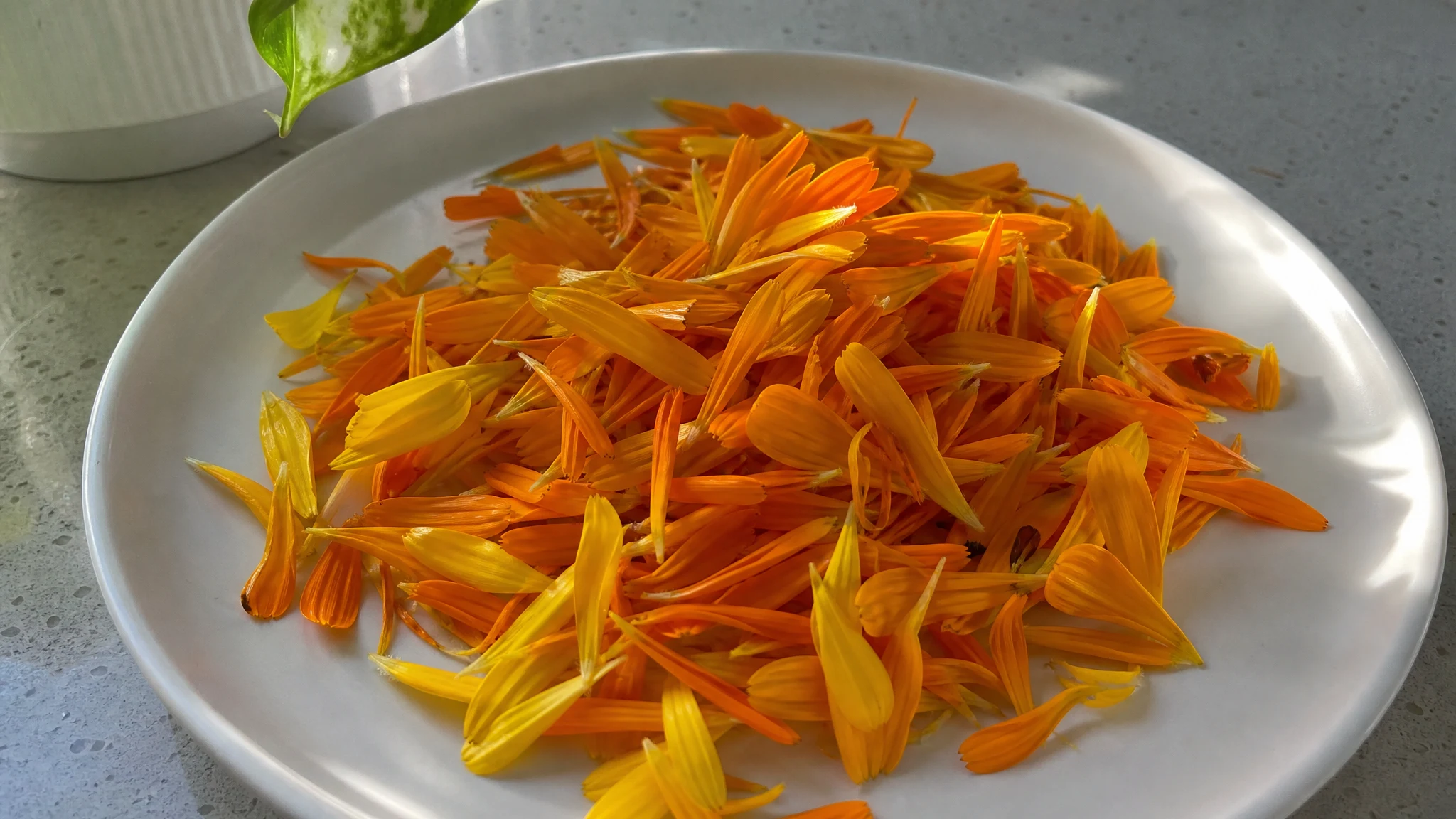
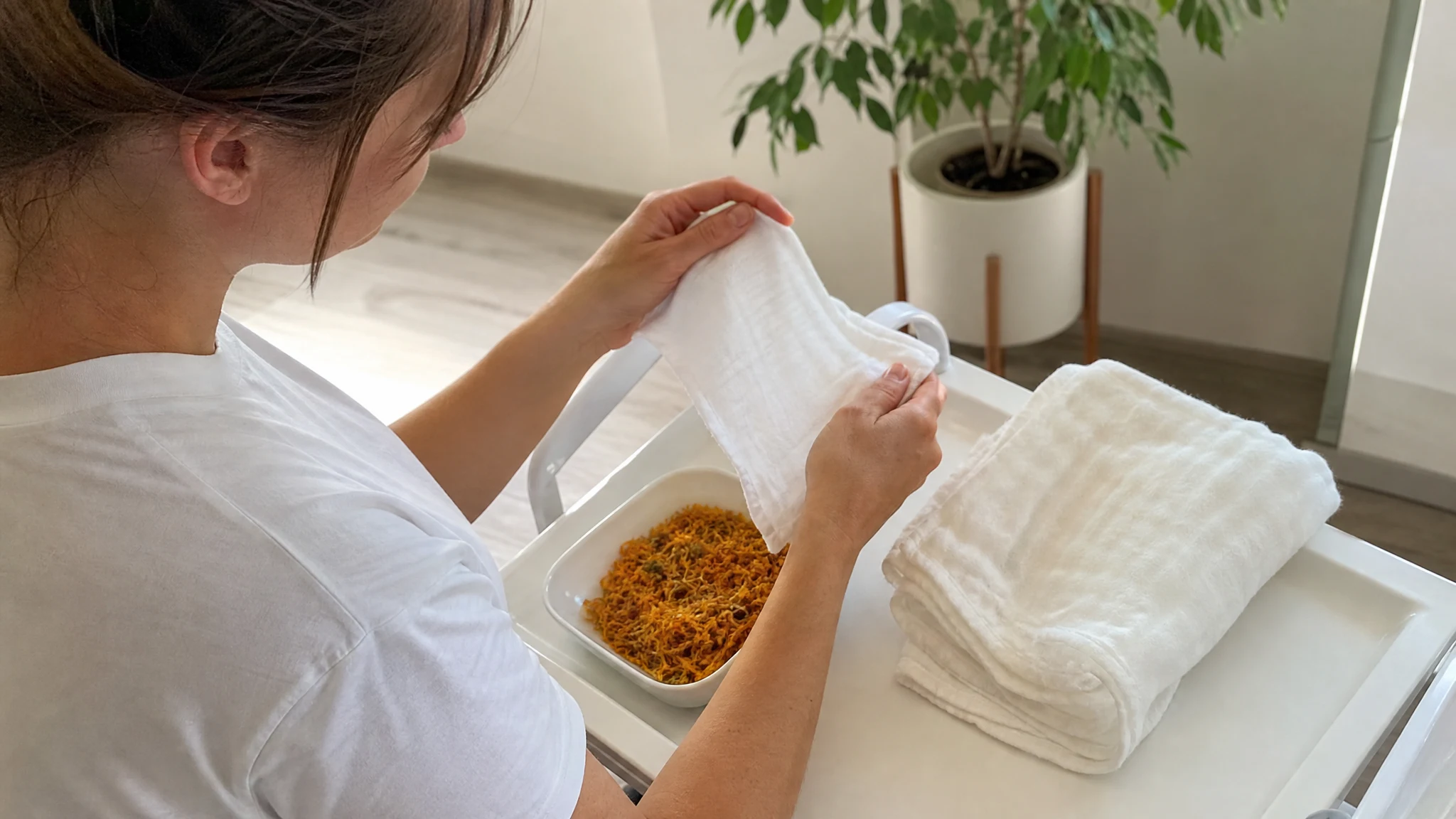
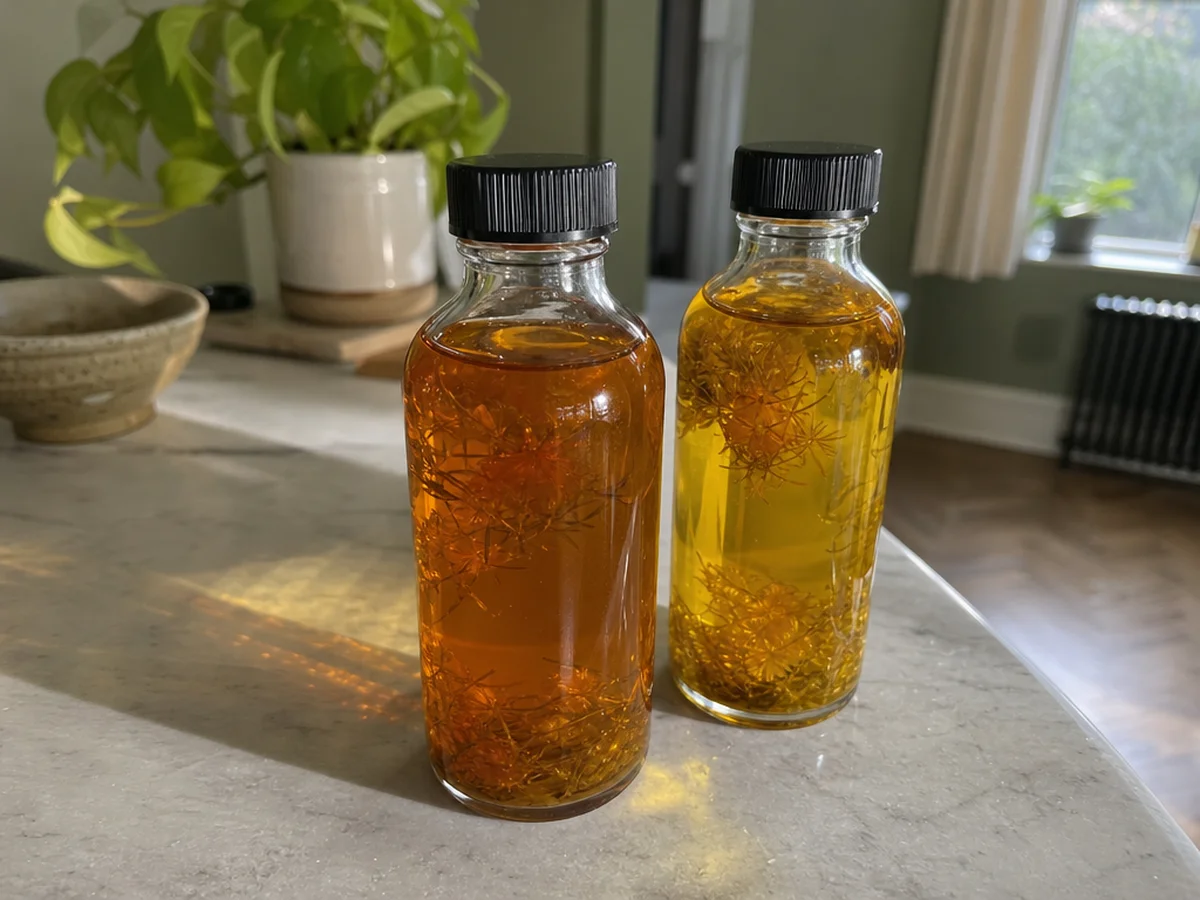
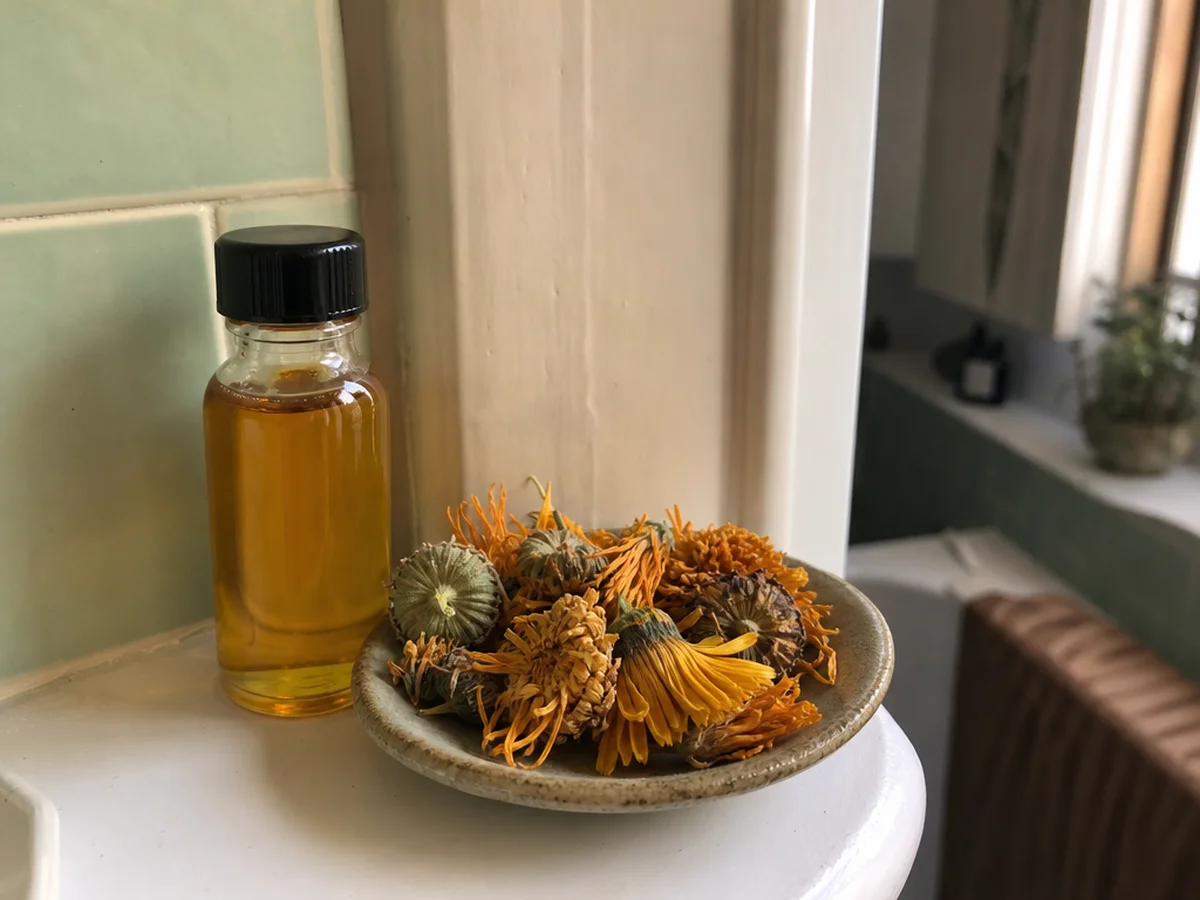
What we can tell you about our oil is what we do: we buy dried organically grown flowers, extract the calendula on its own, and bring it into a carrier oil with nothing else added. The carrier is on the batch paperwork, so email us the lot number from your bottle and we will share it with you or your dermatologist.
Whatever you decide, go slowly and keep your clinician in the loop. Skin that is already working hard deserves a routine that is easy to read.
Calendula Oil
Nature's Golden Botanical, bottled: small-batch calendula oil in sizes from 0.5 oz to bulk.
From $13.99
Shop Calendula Oil →Sources & Further Reading
- Association Between Atopic Dermatitis and Contact Sensitization: An Updated Systematic Review and Meta-Analysis (Jensen et al., 2026)
- European Union herbal monograph on Calendula officinalis L., flos (EMA/HMPC/437450/2017)
- The seamy side of natural medicines: contact sensitization to arnica (Arnica montana L.) and marigold (Calendula officinalis L.) (Reider et al., 2001)
- Atopic dermatitis: Self-care (American Academy of Dermatology)
- Development of an Emulgel for the Effective Treatment of Atopic Dermatitis: Biocompatibility and Clinical Investigation (Gómez-Farto et al., 2024)
- Double-blind randomised controlled trial of an emollient cream with and without 1 % supercritical CO2 extract of Calendula officinalis in contact dermatitis (Crnčević et al., 2025)
- Clinical Utilization of Repeated Open Application Test Among American Contact Dermatitis Society Members (Brown et al., 2015)