Calendula Oil and Your Medications: Where It Fits
It is a fair question, and a very human one: if a plant has been used on skin for centuries, could it stand in for what the doctor prescribed? We love calendula, and we still say no. Calendula oil is a cosmetic oil for external use, and a prescription is something to keep taking until the person who prescribed it says otherwise.

Calendula Oil
Our own small-batch calendula oil, in sizes from 0.5 oz to bulk.
From $13.99
Shop Calendula Oil →Where does the calendula medicine idea come from?
The belief has a genuine root. European regulators list calendula flower preparations as traditional herbal medicines for minor skin inflammation and for helping minor wounds recover. The monograph bases this on long-standing use, and it advises seeing a doctor or qualified health care practitioner if symptoms persist longer than a week (European Union herbal monograph on Calendula officinalis L., flos). The words that matter there are "traditional" and "minor." They describe a gentle everyday remedy, not a replacement for treatment of a diagnosed condition.
Why does calendula oil make no medical claims?
FDA classifies a product by its intended use, and claims can turn a cosmetic into an unapproved drug. Its examples include products said to restore hair growth or treat varicose veins (Cosmetics & U.S. Law). That is why you will not find us promising medical outcomes from our oil. We describe how it is made, how to look after it and how it feels on skin. It is a quick test you can apply to any calendula seller: a page that talks about replacing medication is claiming something a cosmetic cannot claim.
Routine log for tracking a new skin oil
If you take regular medication, you probably already know how easy it is to lose track of small changes. A short note on your phone can help: the date you started a new oil, where you put it, and anything you noticed. Keep it boring and factual. When you next see your doctor or pharmacist, you can read it out in thirty seconds, and they will thank you for it. It also helps you notice if a new product and a change in your skin ever seem to line up.
Using calendula oil alongside a doctor's plan
Plenty of people enjoy calendula oil as part of an ordinary skin routine while following their doctor's plan. That works best when a few habits are in place:
- Keep your prescription exactly as directed. Never stop or lower a dose because of something you read about a plant.
- Tell your prescriber or pharmacist what you apply. It takes a few seconds and gives them the whole picture.
- Patch test first. Calendula belongs to the daisy family, and the monograph lists hypersensitivity to that family as a contraindication and notes that skin sensitization has been reported. In one Austrian series of 443 patients, 9 (about 2%) reacted to marigold on patch testing (The seamy side of natural medicines: contact sensitization to arnica (Arnica montana L.) and marigold (Calendula officinalis L.)), so it is worth the small effort. Our patch test guide has the steps.
- Watch for changes. A new rash can look like a flare of the condition you are treating, which is a good reason to mention a new product early.
The monograph reports no known interactions with other medicines for calendula. That statement concerns herbal preparations as the committee reviewed them, and it is not a promise about every product, so your pharmacist remains the best person to ask about your own medicines.
Appointment tip: show pharmacists the oil label
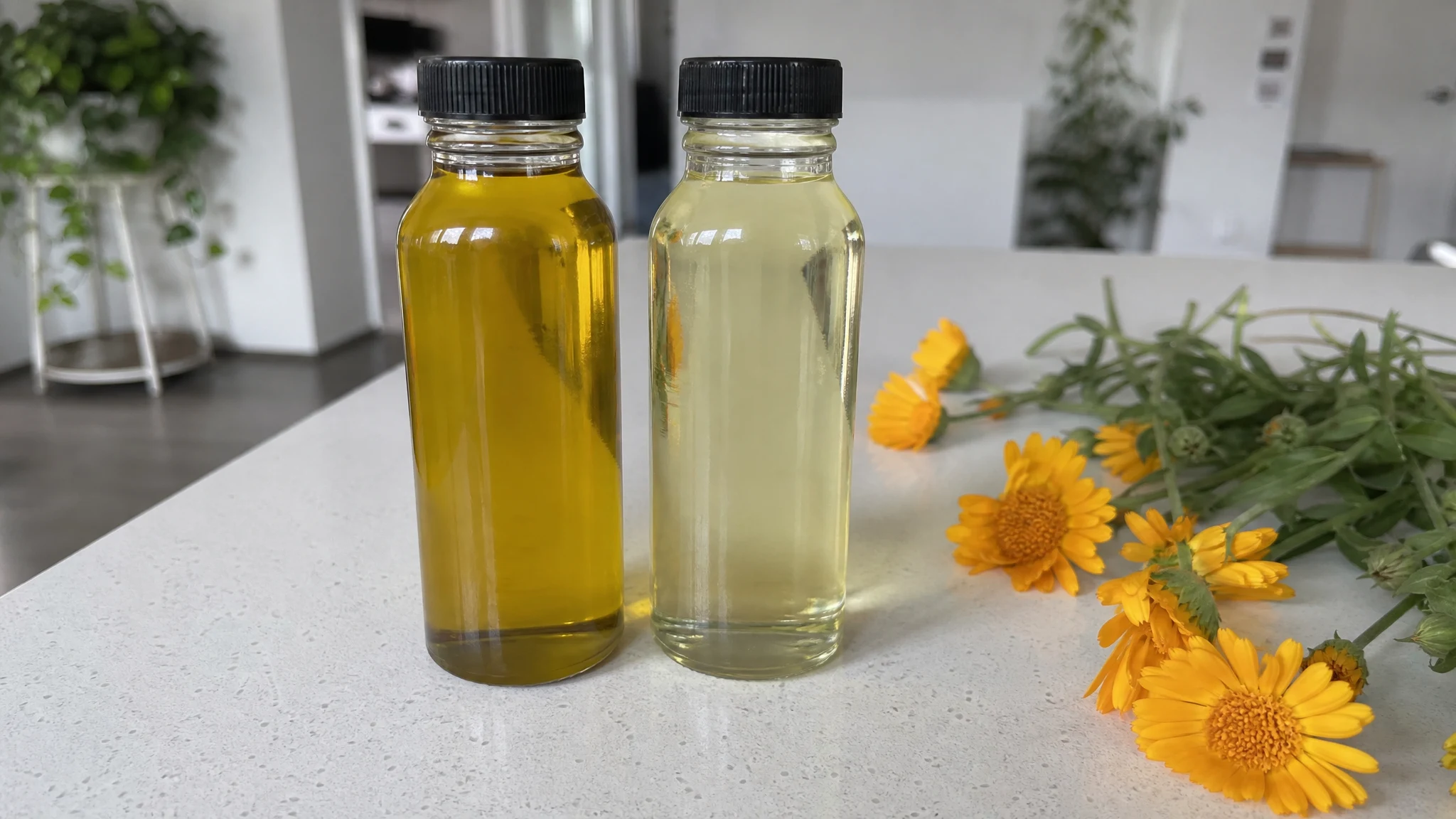
If you do decide to add a new oil, a practical habit is to bring the bottle itself to your next visit, or at least take a photo of the label. A pharmacist or doctor can read the name, the lot number and the ingredients far more quickly than they can interpret a description. We make our oil with nothing added, which keeps that conversation short, but the same habit helps with any product you use. It also saves you from trying to remember the details when you are sitting in a waiting room.
Is a natural skin oil interchangeable with prescriptions?
Plant-based and gentle are not the same as equivalent to a medicine. A prescription has a dose, a purpose and someone monitoring how it works for you. A skin oil has a different job: it moisturizes, it feels good, and it smells of warm flowers. Both can sit in the same routine, but they are answering different questions, and that is the simplest way we know to explain why one cannot replace the other.
If you are curious about adding calendula to your routine, a short list of questions makes the conversation with your doctor or pharmacist easy: Is there anything about my skin or my condition that should make me avoid it? Is there anything I should keep away from the treated area? What changes should I report right away? Clinicians appreciate these questions, and the answers give you confidence.
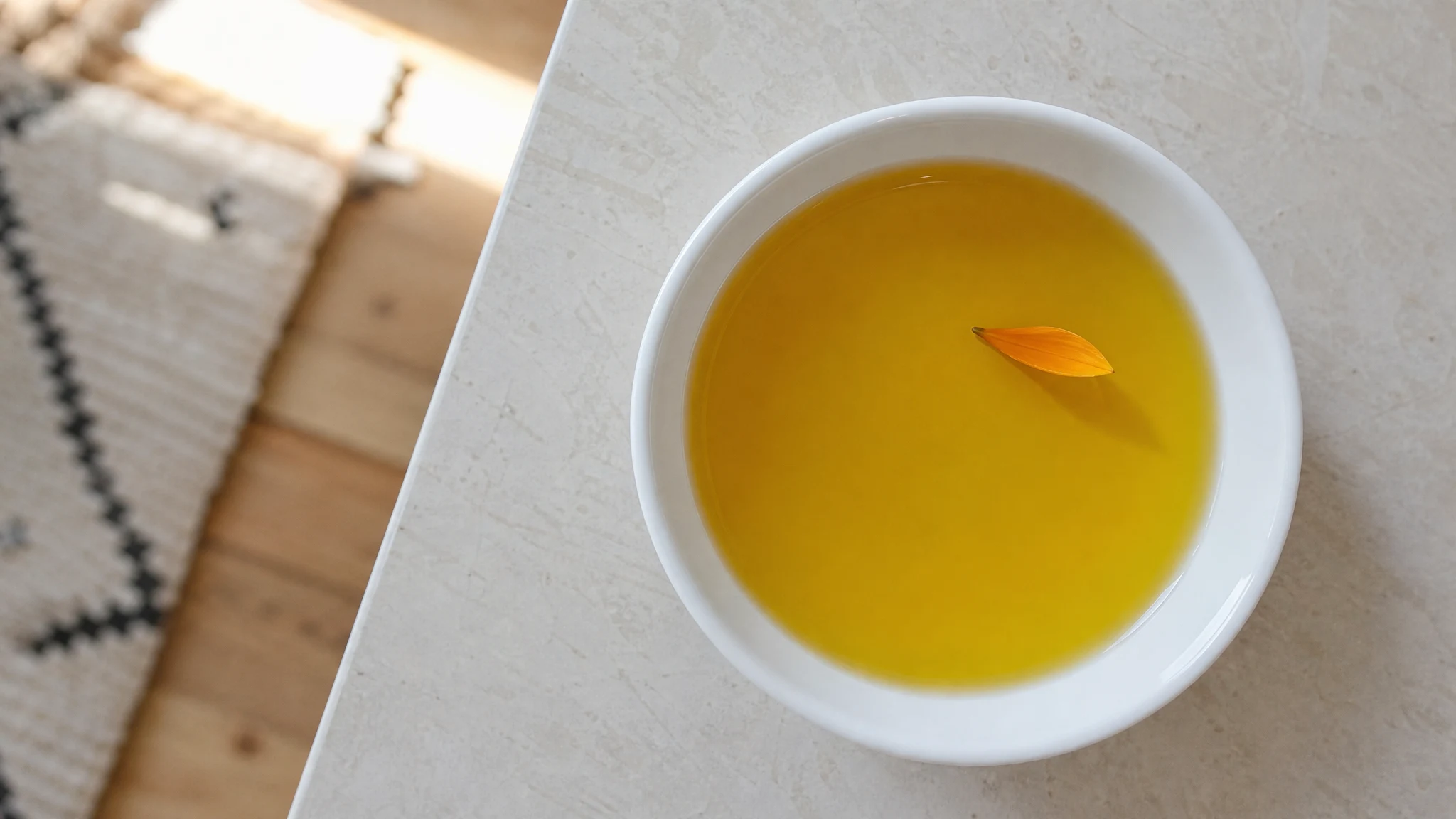
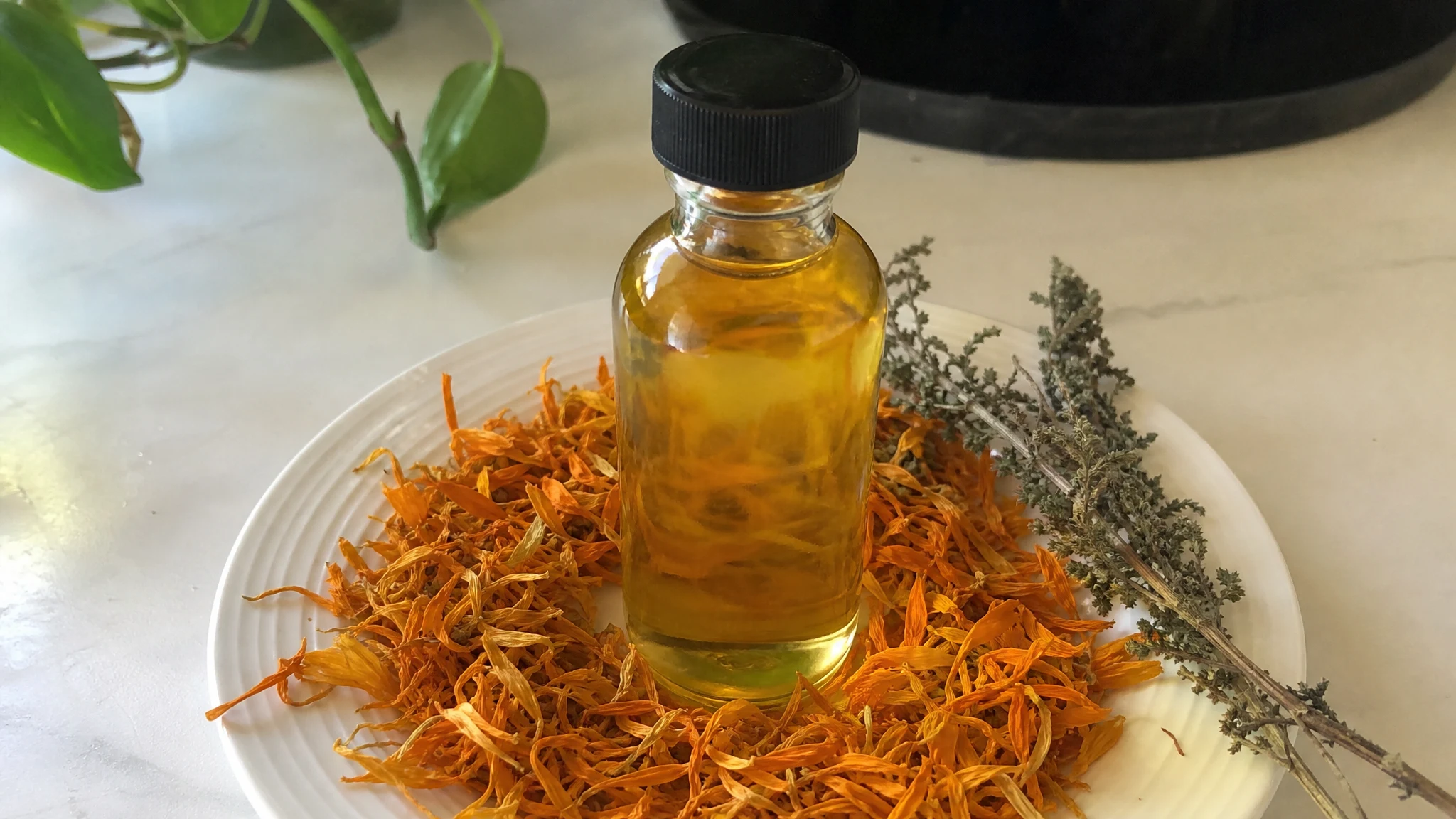
It is also fine to simply enjoy the oil as a small pleasure. A few drops on your hands in the evening, the faint golden color and the warm, herbal scent of the flowers make for a nice little pause. Not everything in a routine has to be a treatment, and some of the best things are just good to have around.
Calendula oil articles on wounds and sensitive skin
If you came here with a particular condition in mind, our articles on wounds and sensitive skin look at what has been studied and note who to ask. Redness that spreads, warmth, fever, pus or a wound that is getting worse needs professional care, not a home remedy.
We would love calendula oil to be part of your routine. We just want it standing next to your care plan, never in place of it.
Calendula Oil
Nature's Golden Botanical, bottled: small-batch calendula oil in sizes from 0.5 oz to bulk.
From $13.99
Shop Calendula Oil →