Ragweed Allergy and Calendula Oil: What We Know
"I have a ragweed allergy, so I can't use calendula" is repeated everywhere, and it is half right in a way that is easy to misapply. Ragweed and calendula are both daisy-family plants, but hay fever and a skin rash are different immune reactions, and the evidence linking the two for calendula is thin and unquantified. We make calendula oil, so we would like you to have the real picture and make the call with your allergist.

Calendula Oil
Our own small-batch calendula oil, in sizes from 0.5 oz to bulk.
From $13.99
Shop Calendula Oil →Ragweed hay fever versus calendula contact allergy
When people say ragweed allergy, they usually mean hay fever, an IgE-type reaction to proteins in airborne pollen. When calendula is blamed for a rash, the more likely reason is contact allergy, a skin reaction to plant compounds called sesquiterpene lactones, which a dermatology review described as the most important allergens in the Compositae (daisy) family (Compositae dermatitis).
Cross-reactivity within the family is real. Parthenium-allergic patients with no ragweed exposure reacted to ragweed pollen extract in one study (Allergenic cross-reactivity between Parthenium and ragweed pollen allergens). That study did not involve calendula or contact allergy, though, so our reading is that cross-reactivity is plausible without being proven for this pair.
What do sources say about ragweed and calendula?
The closest statement comes from allergy specialists: some people with respiratory allergy to weed pollen may also react to herbal products made from related plants such as chamomile, marigold and purple coneflower (Diagnostic Workup in IgE-Mediated Allergy to Asteraceae Weed Pollen and Herbal Medicine Products in Europe). The wording is "some people," and no frequency is given. A 2025 review reaches the same place, saying extensive cross-reactivity among sesquiterpene lactones has been reported while numerous uncertainties persist (Allergic Potential of Medicinal Plants From the Asteraceae Family).
We found no source giving a rate of calendula reactions among ragweed-allergic people. In an Austrian clinic, about 2% (9 of 443) of patients referred for dermatitis reacted to a marigold patch test, and they were not a ragweed group (The seamy side of natural medicines: contact sensitization to arnica (Arnica montana L.) and marigold (Calendula officinalis L.)). So if anyone quotes a precise percentage, it is not coming from these sources.
Which marigold do plant allergy warnings mean?
Warnings often say "marigold" without saying which one. Tagetes, the garden marigold, is a different plant from Calendula, and the 2025 review rates Tagetes a moderate sensitizer in guinea pig tests while describing calendula as a very weak sensitizer in one laboratory assay. That is not human evidence, but it hints that some marigold cautions may not concern Calendula officinalis at all.
Does a clean pollen test settle calendula allergy?
Ragweed allergy is usually established with pollen tests, which say little about contact allergy. Patch panels are not a guarantee either. Of the 9 marigold reactors in the Austrian series, only 4 also reacted to the Compositae mix. In a Danish series, 28% of Compositae-allergic patients were missed by all three screening agents, which is why the authors recommend testing further extracts based on history (Screening for Compositae contact sensitization with sesquiterpene lactones and Compositae mix 2.5% pet.). An allergist or dermatologist can test with the exact product you plan to use.
Daisy-family caution before using calendula oil
Hay fever only, never a plant rash. The European herbal monograph lists hypersensitivity to Asteraceae plants as a contraindication (European Union herbal monograph on Calendula officinalis L., flos), and it is unclear whether hay fever alone counts. Ask your allergist before buying. If they are comfortable, use the method dermatologists use for leave-on products, the repeated open application test: twice daily on the inner forearm, most often for one to two weeks (Clinical Utilization of Repeated Open Application Test Among American Contact Dermatitis Society Members). Our patch test guide walks through it.
A past reaction to chamomile, arnica or another daisy-family product. We would skip calendula on skin. In a small Danish study, 8 of 12 chamomile-sensitive and 5 of 6 arnica-sensitive patients reacted to products containing those plants, and the authors advise Compositae-allergic people to avoid topical Compositae products (Cosmetics and herbal remedies with Compositae plant extracts - are they tolerated by Compositae-allergic patients?). Calendula was not tested there, so this is reasoning from a neighbor.
Eczema as well. A meta-analysis found a positive association between atopic dermatitis and sensitization to Compositae mix (Association Between Atopic Dermatitis and Contact Sensitization: An Updated Systematic Review and Meta-Analysis), so check with your dermatologist first.
Trying calendula oil with an allergist's approval
Some people with hay fever have no trouble with plant products on their skin, and some do. If your allergist says it is reasonable to try, go slowly and keep it boring. Use a single new product, apply a very small amount on the inner forearm, and leave the area alone otherwise. Note the time, look at the spot again the next morning, and again a day or two later, since some skin reactions are slow to appear.
Keep the bottle handy, too, along with its lot number. If you do have a reaction, being able to tell your clinician exactly what you used and when makes their job much easier.
Reading botanical names if you are daisy-family allergic
One practical habit is worth building if you are allergic to anything in the daisy family: read labels for botanical names, not only common ones. Plants like calendula, chamomile and arnica show up in lots of creams, teas and balms, sometimes under Latin names that are easy to skim past. A few extra seconds at the shelf can save you a week of itchy skin.
Calendula oil ingredients and no allergy claim
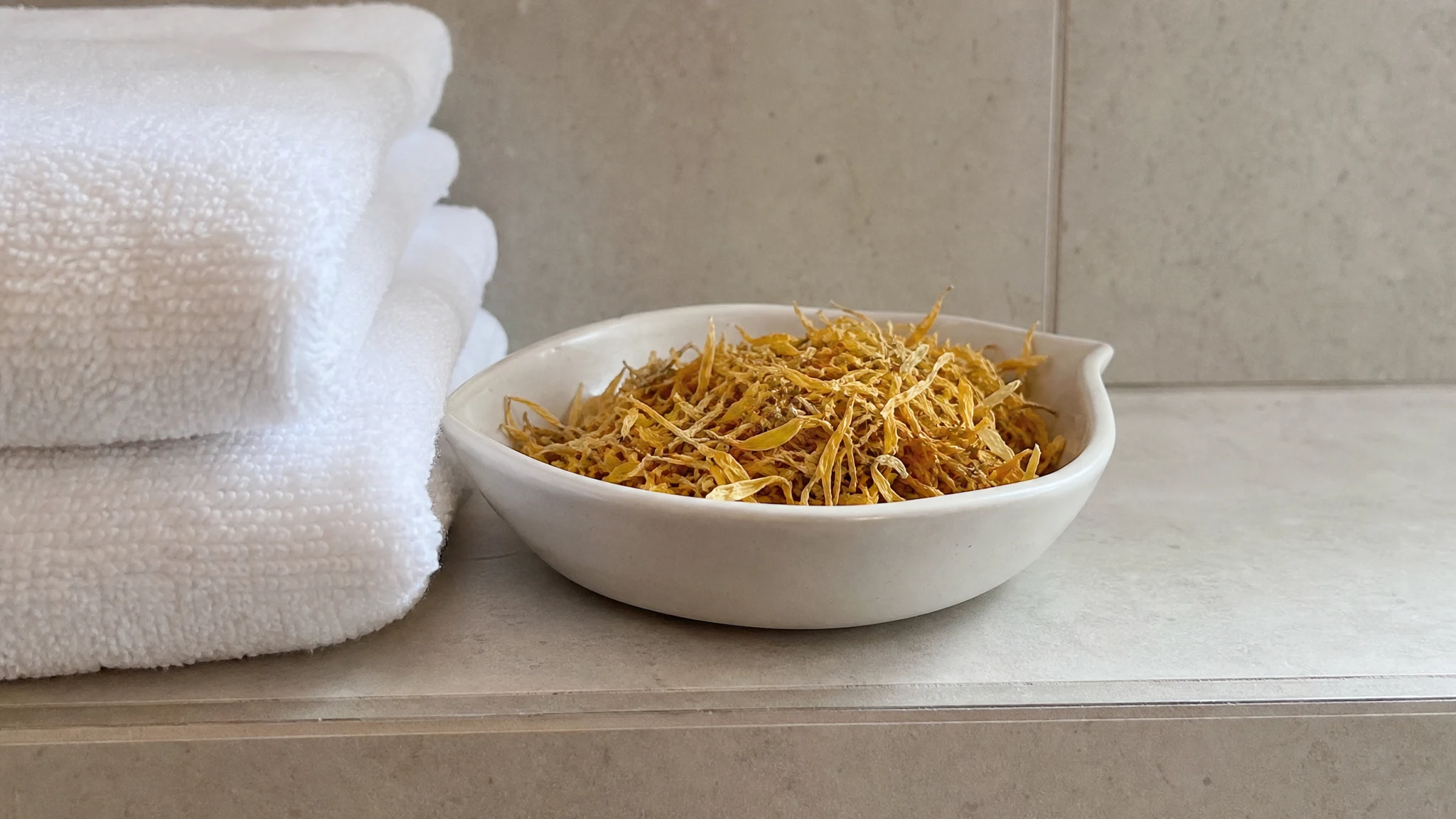
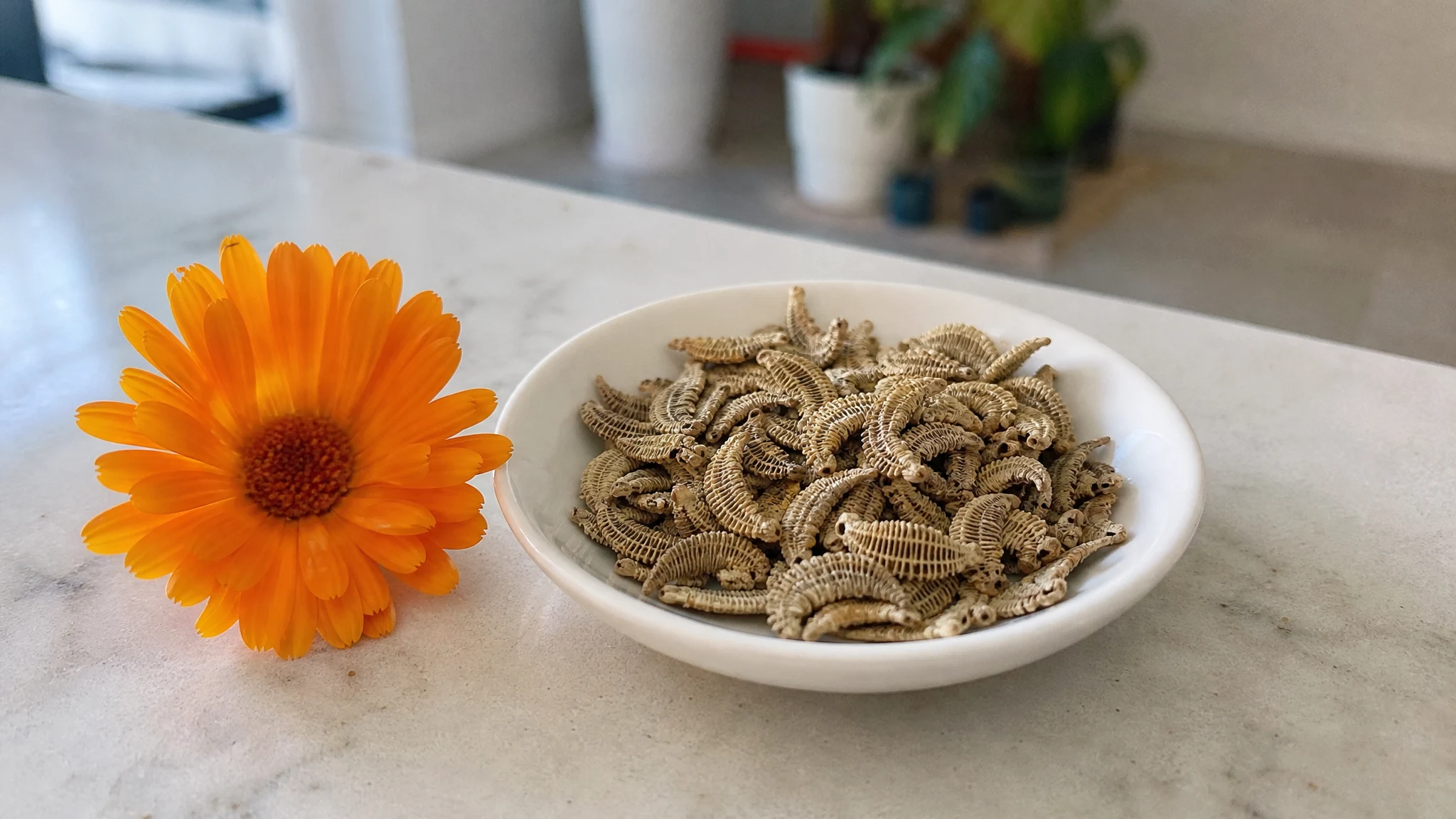
Our calendula oil is made from flowers whose petals we separate by hand from sound, whole-dried flower heads. We make no claim that it is low in allergens or suitable for people with ragweed allergy. Calendula belongs to the daisy, chrysanthemum and ragweed family, so we say patch test first and skip it if you react. If you do react, stop, see a dermatologist, and email the lot number to [email protected] so we can send the batch documentation to your clinician. Our article on safety and allergies and our guide to sensitive skin go further.
Calendula Oil
Nature's Golden Botanical, bottled: small-batch calendula oil in sizes from 0.5 oz to bulk.
From $13.99
Shop Calendula Oil →Sources & Further Reading
- Gordon LA, "Compositae dermatitis." Australas J Dermatol, 1999. PubMed
- Sriramarao P, Rao PV, "Allergenic cross-reactivity between Parthenium and ragweed pollen allergens." Int Arch Allergy Immunol, 1993. PubMed
- Preda M et al., "Diagnostic Workup in IgE-Mediated Allergy to Asteraceae Weed Pollen and Herbal Medicine Products in Europe." Medicina (Kaunas), 2024. PubMed
- Kljucevsek and Kreft, "Allergic Potential of Medicinal Plants From the Asteraceae Family." Health Sci Rep, 2025. PubMed
- Reider N et al., "The seamy side of natural medicines: contact sensitization to arnica (Arnica montana L.) and marigold (Calendula officinalis L.)." Contact Dermatitis, 2001. PubMed
- Paulsen E, Andersen KE, "Screening for Compositae contact sensitization with sesquiterpene lactones and Compositae mix 2.5% pet." Contact Dermatitis, 2019. PubMed
- Brown et al., "Clinical Utilization of Repeated Open Application Test Among American Contact Dermatitis Society Members." Dermatitis, 2015. PubMed
- Paulsen E et al., "Cosmetics and herbal remedies with Compositae plant extracts - are they tolerated by Compositae-allergic patients?" Contact Dermatitis, 2008. PubMed
- Jensen et al., "Association Between Atopic Dermatitis and Contact Sensitization: An Updated Systematic Review and Meta-Analysis." Contact Dermatitis, 2026. PubMed
- European Medicines Agency, "European Union herbal monograph on Calendula officinalis L., flos" (EMA/HMPC/437450/2017). ema.europa.eu