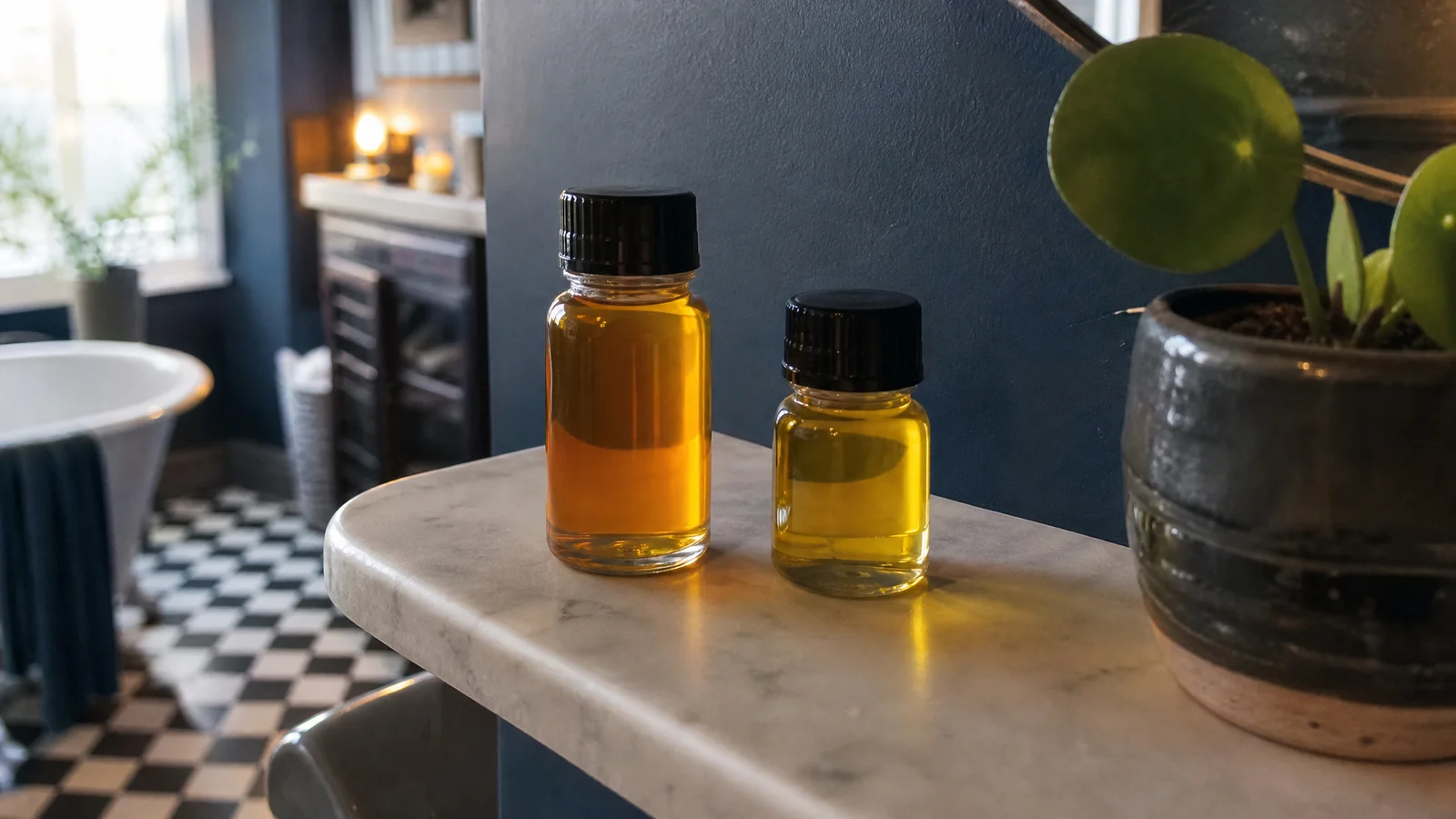
Calendula Oil vs Jojoba: Ready Infusion or Base Oil?
Ask which is better, calendula oil or jojoba oil, and the honest answer is that you are comparing a recipe with an ingredient. Jojoba is a base oil. Our calendula oil is a finished infusion that already has a base oil in it. Once you see that, the choice mostly makes itself.

Calendula Oil
Our own small-batch calendula oil, in sizes from 0.5 oz to bulk.
From $13.99
Shop Calendula Oil →What is actually in jojoba and calendula oil?
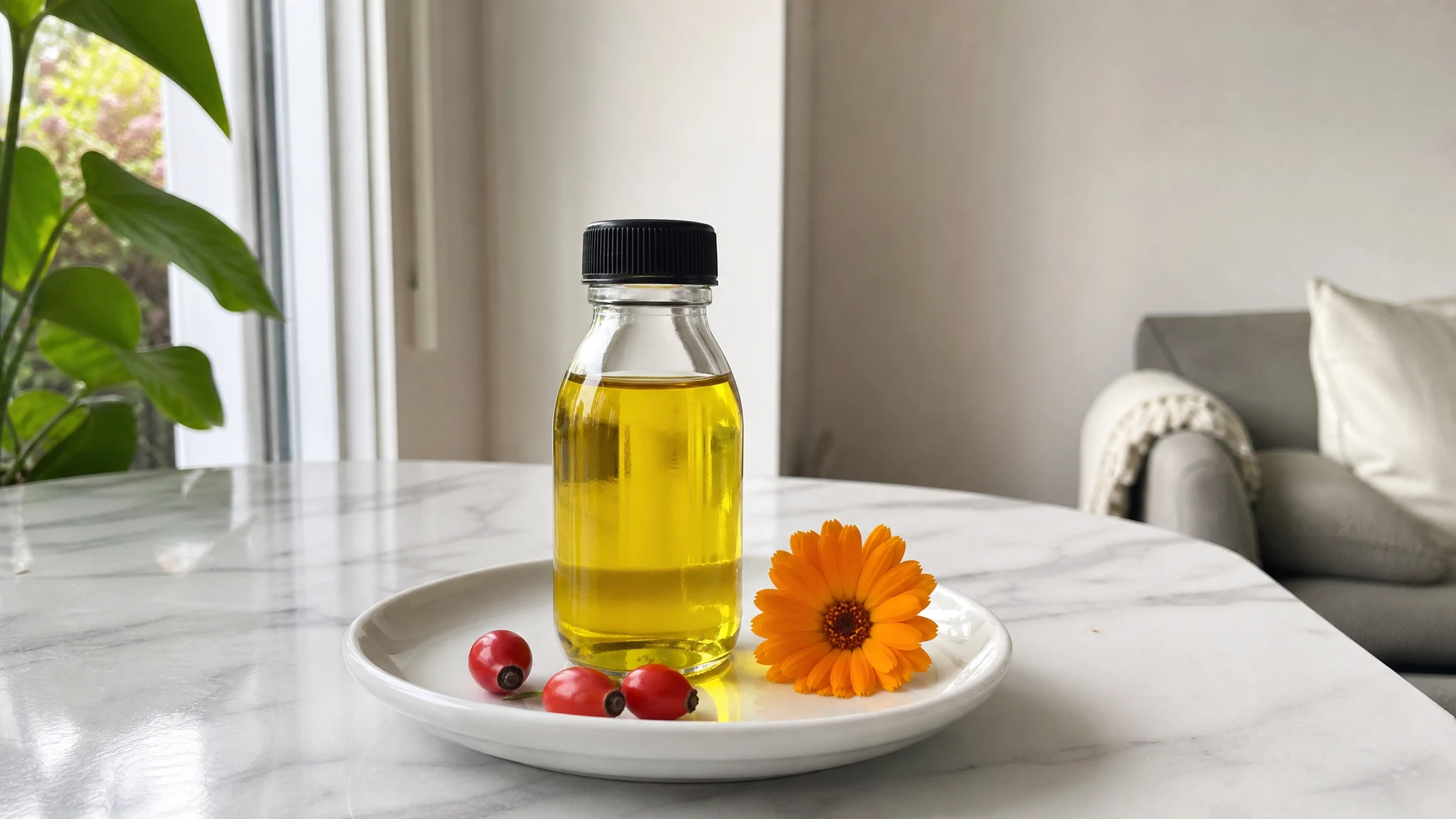
A carrier oil is the base that other things are diluted in, and jojoba is a well-loved one. Chemically it is unusual: reviews describe it as a liquid wax rather than a typical plant oil, which is part of why it feels so silky and why it behaves differently on the shelf.
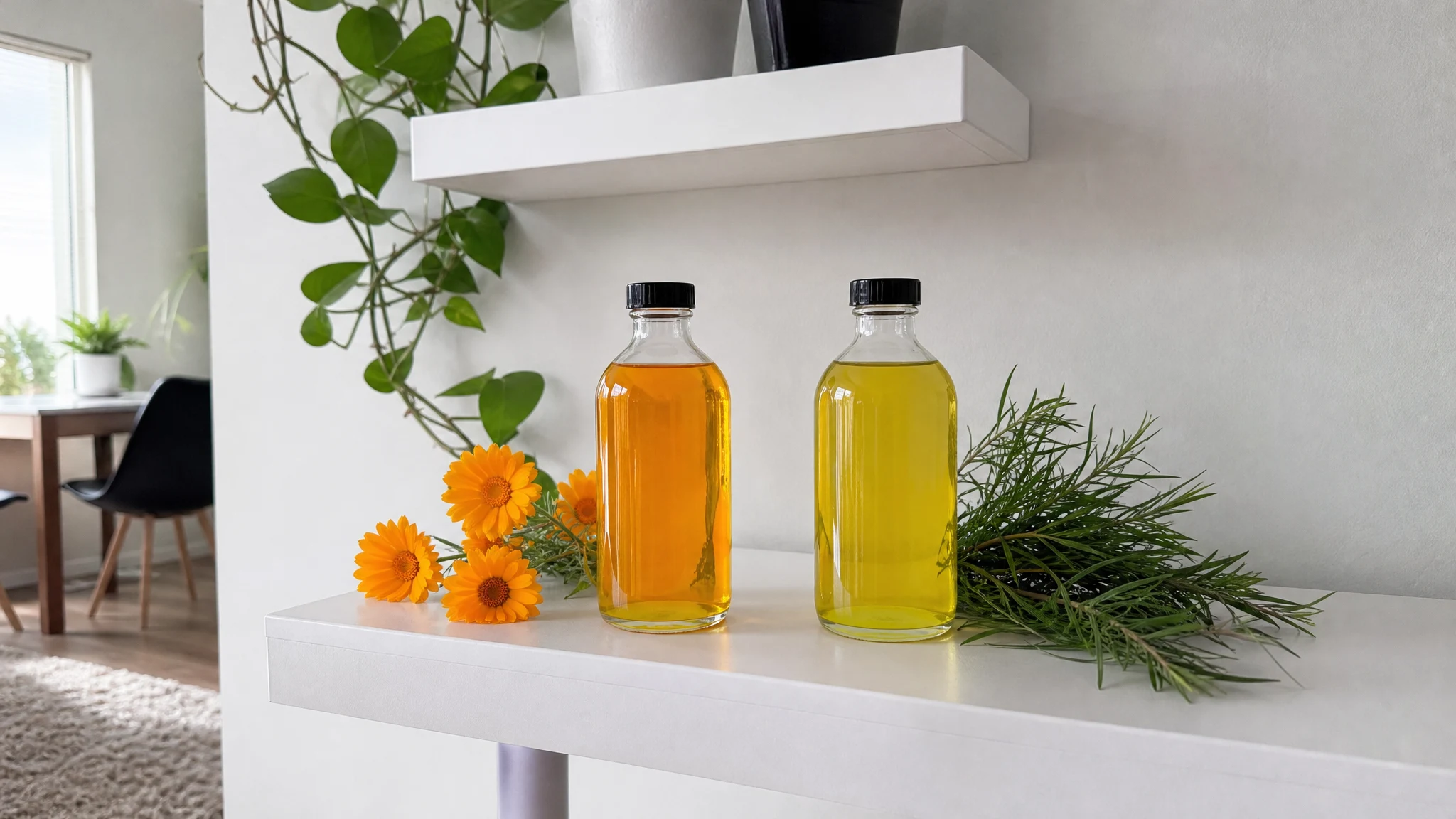
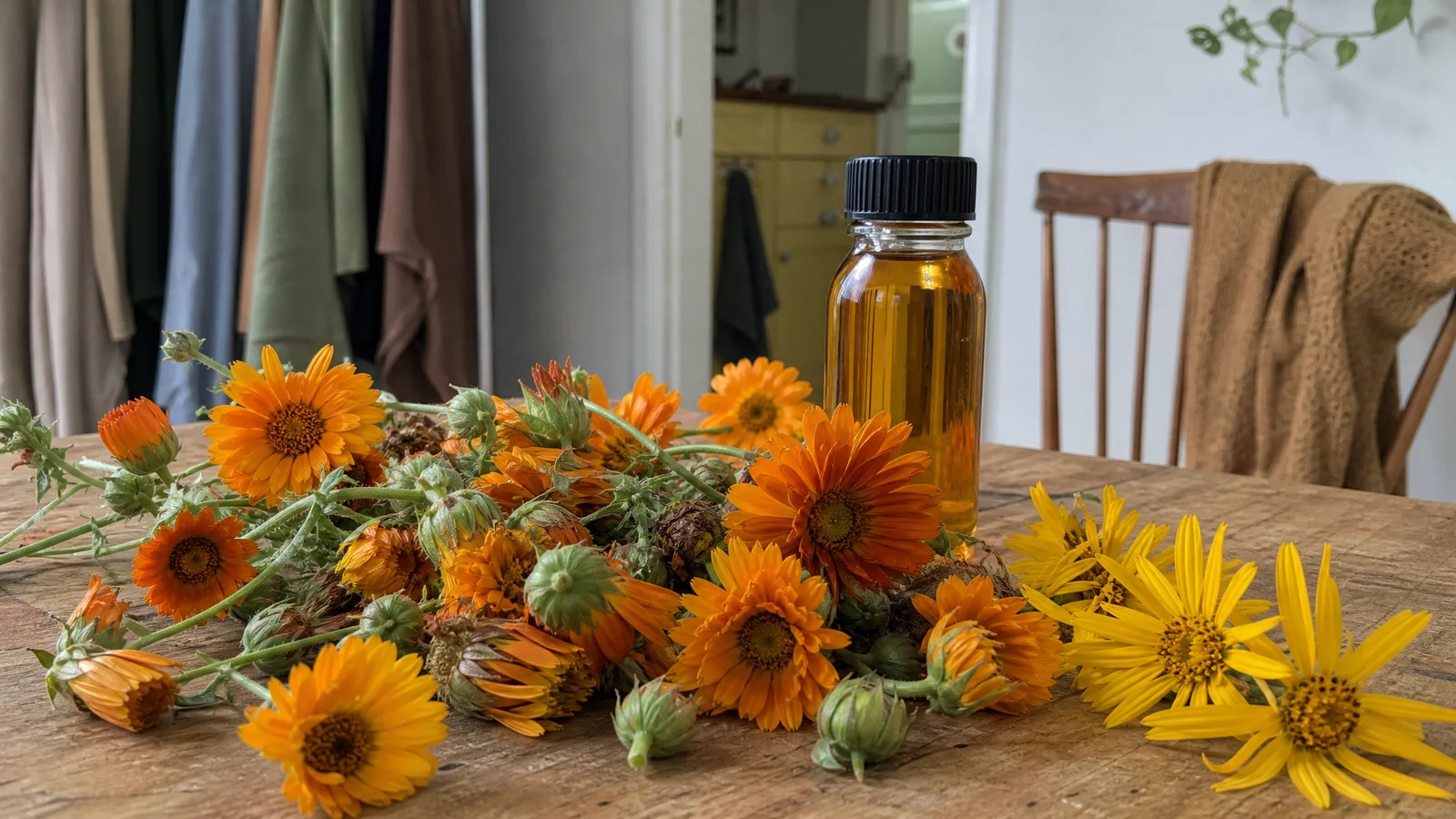
Our oil is built in two stages. We extract calendula on its own, nothing else in that extraction, and then bring the extract into a carrier oil. The carrier is listed on the batch paperwork; email the lot number to [email protected] and we will tell you which one is in your bottle. The European herbal monograph on calendula flowers defines its oil preparation the same way, as an extract in a fatty vegetable oil, and it does not name jojoba.
Jojoba as a plain base oil for blending
Then buy jojoba, and enjoy it. If you are blending your own face oil, a massage oil or a recipe and the plan is to add fragrance or other ingredients, a neutral base is the right tool, and we would not try to talk you out of it.
There is also a good practical reason people reach for jojoba. In a 2026 laboratory comparison of rosehip, sunflower, olive and jojoba oils under accelerated heating, jojoba held out longest before oxidizing, and the authors linked the ranking to how much polyunsaturated fat each oil contains. It is a hot-and-fast lab test, so read it as a direction and not as a number of months on your shelf, but it points the same way as jojoba's reputation for keeping well.
Adding calendula oil to a jojoba blend
This is where calendula oil comes in, and where a small trap sits. A few drops of our oil into a jojoba blend give you jojoba with some calendula oil in it. That is a lovely thing to make, but it is not the same as a calendula infusion made directly in jojoba, and the two would not feel or behave identically. The carrier shapes the finished oil, so a recipe that works with one base should not be assumed to transfer neatly to another.
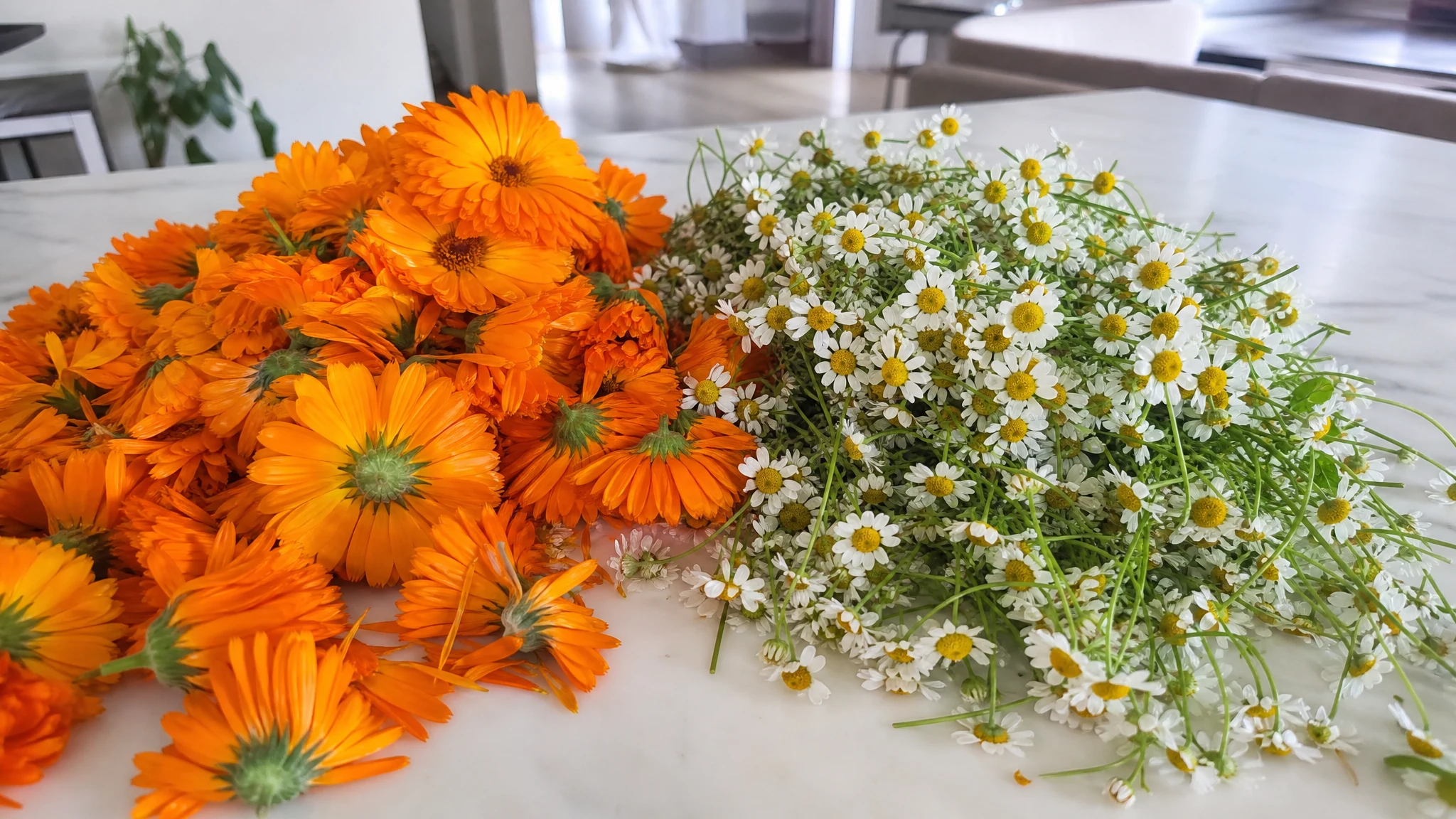
What we can speak to is how our own oil starts. We buy dried flowers grown organically on family farms, dried naturally by traditional methods, and we separate the petals by hand from sound, whole-dried flower heads rather than broken florets. Then we do the infusion ourselves, from dried flower to sealed bottle. Nothing is added afterward: no preservatives, no added tocopherol, no stabilizers. Each bottle is dated and lot-numbered, and each batch is tested by independent third-party labs, so what you are buying is documented.
Jojoba and calendula infusion: how each feels
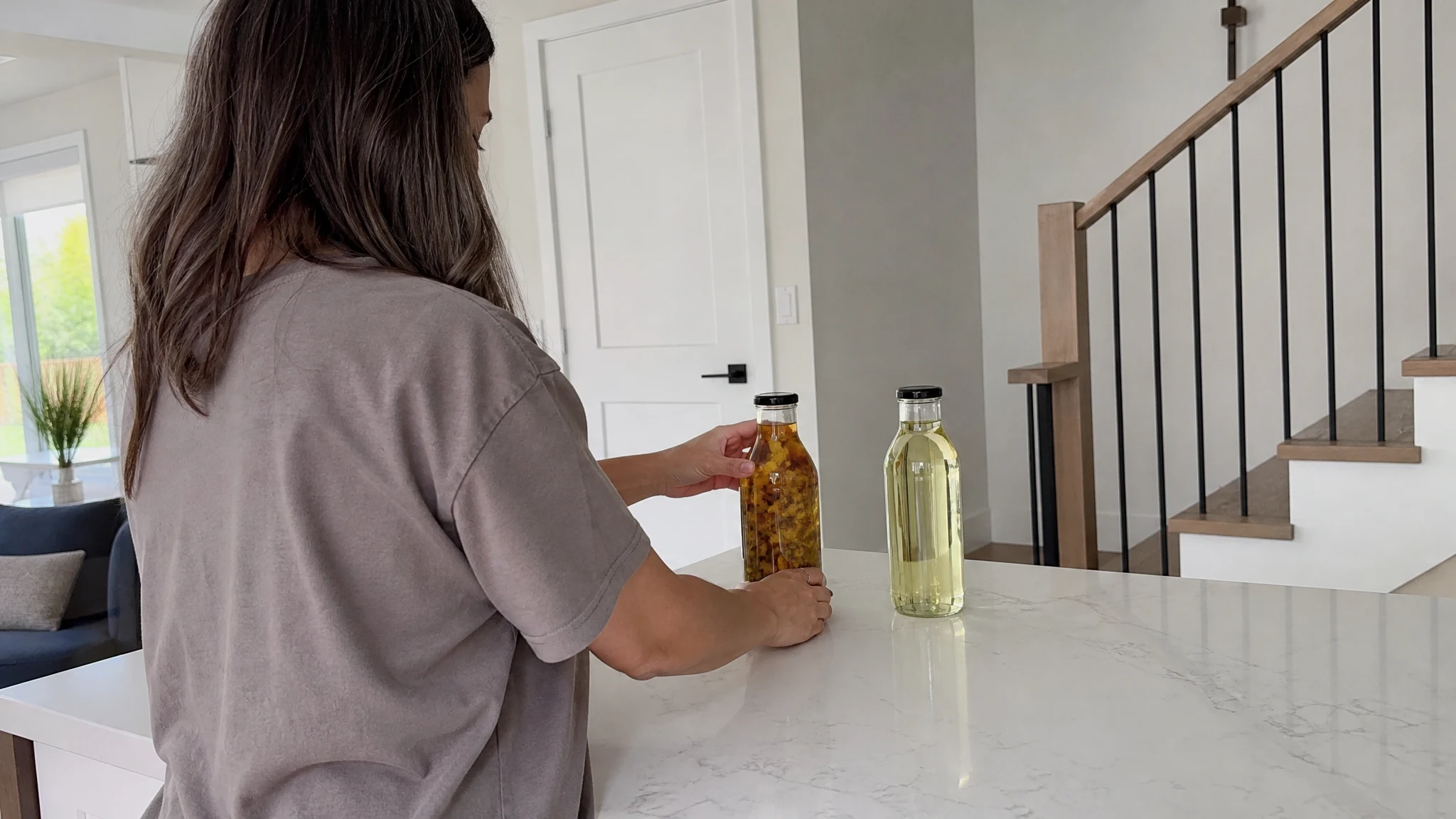
Jojoba is famous for its silky, almost dry slip, and many people love how quickly it seems to disappear. A calendula infusion feels like whatever carrier it was made in, with a golden color on top. If you want to see for yourself, put one drop of each on opposite wrists and pay attention for a minute or two. Which one glides? Which one lingers? There is no right answer, only the one you enjoy.
We suggest doing this test on a quiet evening instead of rushing it in the morning. Skin and oil get along best when nobody is hurrying.
Does daisy-family allergy apply to calendula oil?
Calendula is a daisy-family plant (Asteraceae). The European monograph lists hypersensitivity to that family as a contraindication and notes that skin sensitization has been reported. In an Austrian clinic series of 443 patients referred for dermatitis, 9 reacted to a marigold patch test, which is a selected group and not a rate for the general population, but a good reason to check your own skin first. If you react to ragweed, chamomile or daisies, ask an allergist or dermatologist before adding calendula. Jojoba comes from a plant outside that family, so the daisy-family warning is a calendula matter and not a jojoba one. Our patch test guide explains a careful way to test.
How do you blend calendula oil with jojoba first time?
Begin with a small amount and write down what you did. A note on the jar with the date and the proportions saves a lot of head-scratching later, and it lets you repeat the combination you like or fix the one you do not. Keep the jar tightly closed and out of the light. If you are curious about adding our oil to a jojoba blend, remember that the sizes start small, at 0.5 oz and 1 oz, so you can try a blend without committing to a large bottle.
Jojoba base or calendula infusion: choosing for your recipe
Need a plain base for your own recipe: choose jojoba. Want calendula in the mix: choose a calendula oil, and ask any supplier, us included, about the carrier, the plant part and what was tested. Making your own infusion at home: choose the carrier first, because it sets the character of what you end up with, and our home infusion guide walks through it. Either way, our storage guide will help you keep oils fresh, and if breakouts are on your mind, our comedogenicity article explains why a rating on a raw oil does not predict how a finished product behaves.
The two are better as partners than as rivals, and which one you reach for first depends on whether you are starting from a base or from the flower.
Calendula Oil
Nature's Golden Botanical, bottled: small-batch calendula oil in sizes from 0.5 oz to bulk.
From $13.99
Shop Calendula Oil →Sources & Further Reading
- A Comprehensive Review of Plant-Based Cosmetic Oils (Virgin Coconut Oil, Olive Oil, Argan Oil, and Jojoba Oil): Chemical and Biological Properties and Their Cosmeceutical Applications (Abdalla et al., ACS Omega, 2024).
- Oxidative Stability and Kinetics of Oxidation of Rosehip, Sunflower, Olive and Jojoba Oils (Fagoaga et al., Antioxidants, 2026).
- European Union herbal monograph on Calendula officinalis L., flos (EMA/HMPC/437450/2017, 2018).
- The seamy side of natural medicines: contact sensitization to arnica (Arnica montana L.) and marigold (Calendula officinalis L.) (Reider et al., Contact Dermatitis, 2001).