Tea Tree vs Calendula Oil: A Concentrate and an Infusion
Tea tree oil comes with a safety conversation attached, and calendula oil mostly does not. That is not because one is good and the other bad. It is because tea tree is a concentrated essential oil, designed to be diluted, and the calendula oil we make is a gentle infusion that was never concentrated to begin with.

Calendula Oil
Our own small-batch calendula oil, in sizes from 0.5 oz to bulk.
From $13.99
Shop Calendula Oil →What is tea tree oil versus calendula oil?
Tea tree oil is the essential oil of Melaleuca alternifolia, distilled from the leaves. A well-known review describes it as sold both as a neat oil and as an ingredient in a wide range of products. It has been used for roughly a century in Australia, and shoppers tend to know it for its sharp, clean, medicinal aroma.
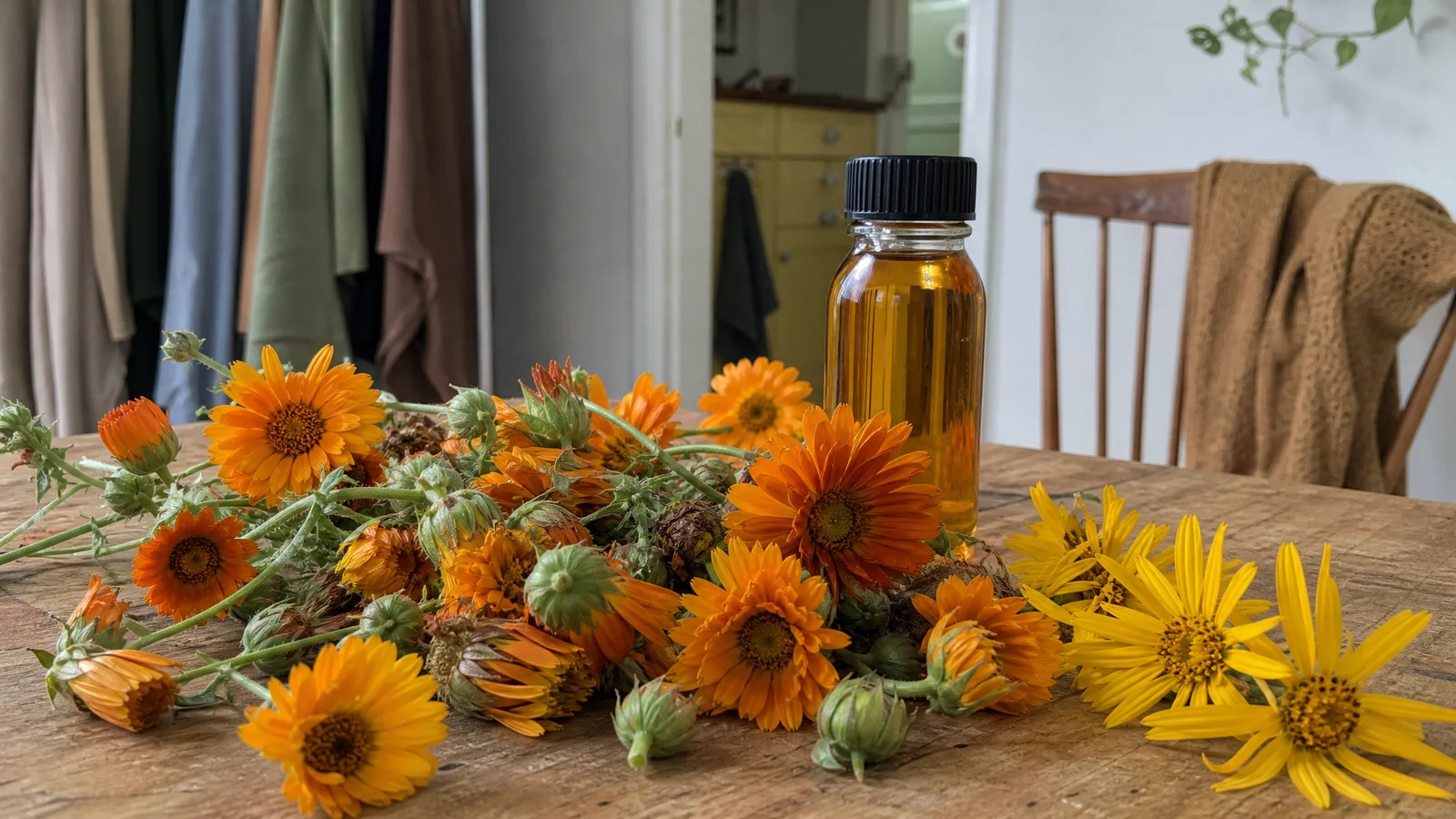
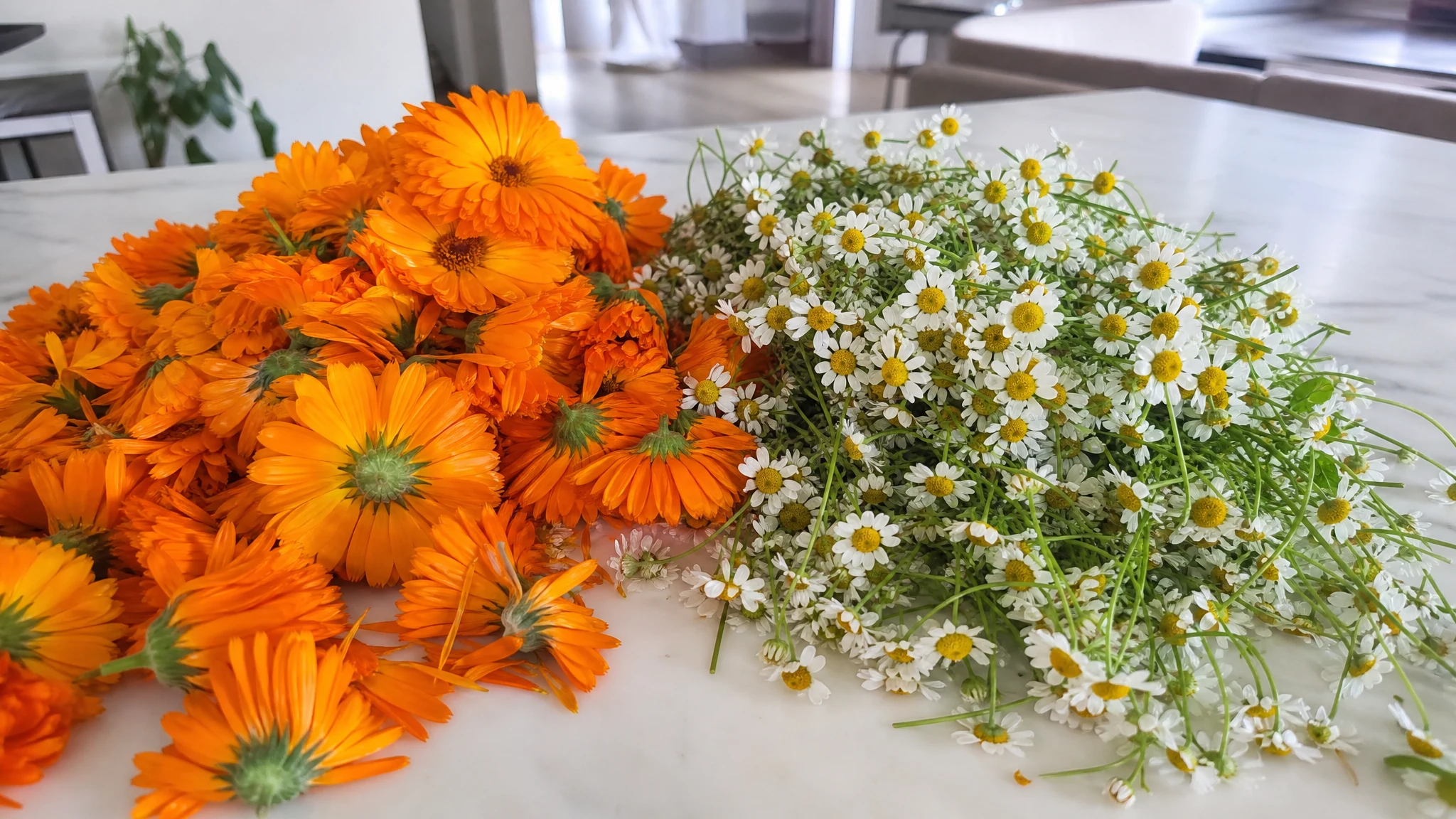
Ours is a different thing entirely. We extract calendula flowers on their own, then bring that extract into a carrier oil to make the finished oil. Nothing else goes into the extraction and nothing is added afterward: no preservatives, no tocopherol, no stabilizers. It is not an essential oil, which is why the dilution rules written for essential oils do not apply to it in the same way. Our guide to infused oils and essential oils explains the distinction in more depth.
Respecting tea tree oil as a concentrate
What makes tea tree worth understanding is how the authorities talk about it. A toxicity review concluded that adverse reactions can be minimized by avoiding ingestion, using only diluted oil on skin and using oil that has been stored correctly, since tea tree oil is toxic if swallowed in higher doses and allergic reactions may come from oxidation products that form with exposure to light and air. A contact-allergy review adds that, of all essential oils, tea tree has caused the most published allergic reactions, that fresh oil is a weak to moderate sensitizer, and that oxidation increases its potency. Most reactions came from applying the undiluted oil.
The practical reading is straightforward and not alarming: treat tea tree like the concentrate it is. Dilute it, buy it fresh, store it tightly capped and away from light and heat, and keep it out of the reach of children. If you share your home with pets, ask your veterinarian before using any essential oil around them.
Daisy-family allergy: calendula's own caution
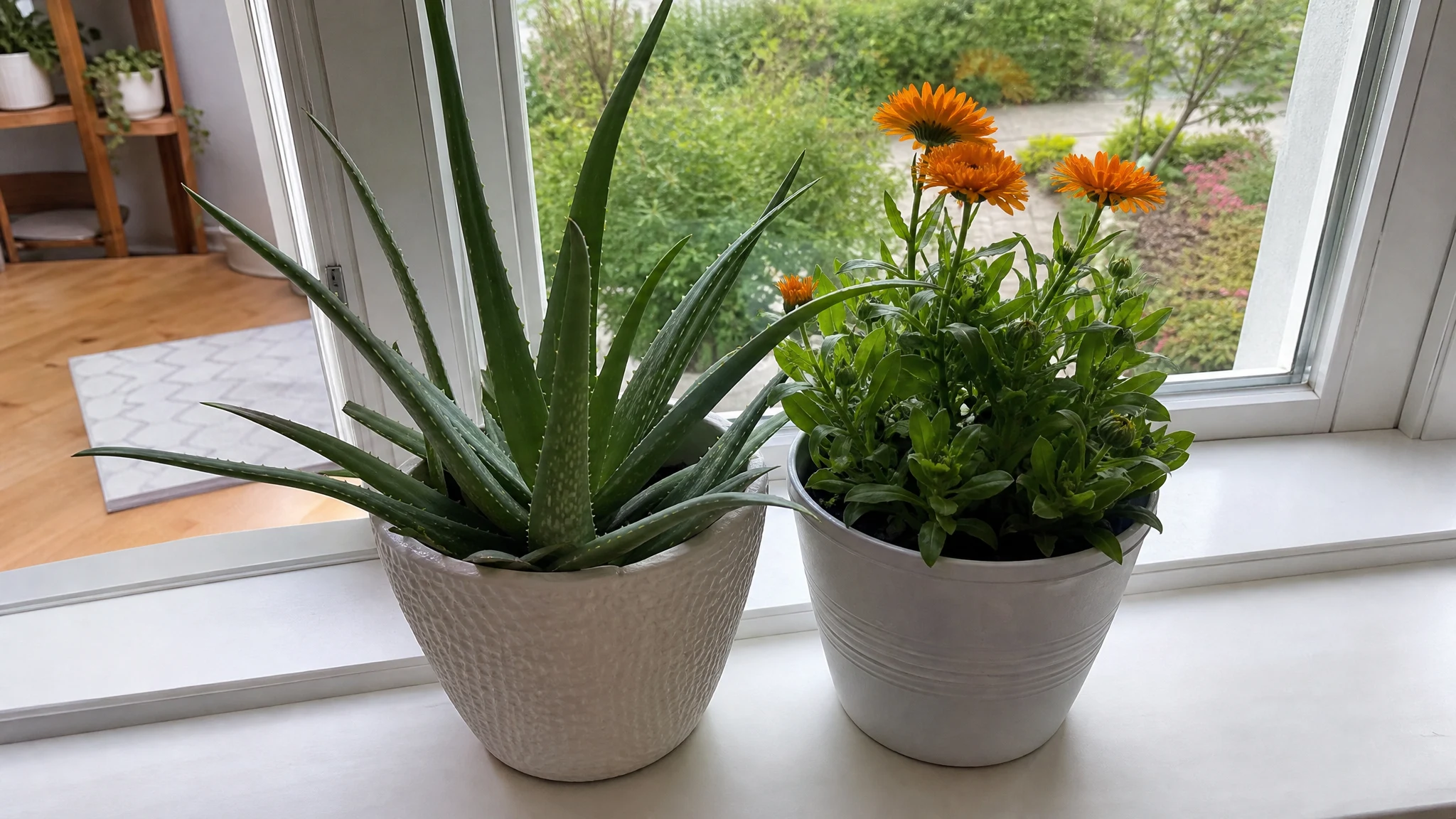
Calendula is a daisy-family (Asteraceae) plant. The European herbal monograph lists hypersensitivity to that family as a contraindication and notes that skin sensitization has been reported. In an Austrian clinic series of 443 patients with dermatitis, 9 reacted to a marigold patch test. That is a selected group and not a rate for the general public, but it is a good reason to patch test before using calendula widely. If you know you react to ragweed, chamomile or daisies, ask an allergist or dermatologist first. The monograph also does not recommend skin use under age 6, and says safety in pregnancy and breastfeeding has not been established.
Both products can sensitize someone, and neither is free of allergy risk. They simply have different risk groups, which is why we suggest testing one product at a time. Our patch test walkthrough takes you through it.
How do tea tree and calendula oil smell and look?
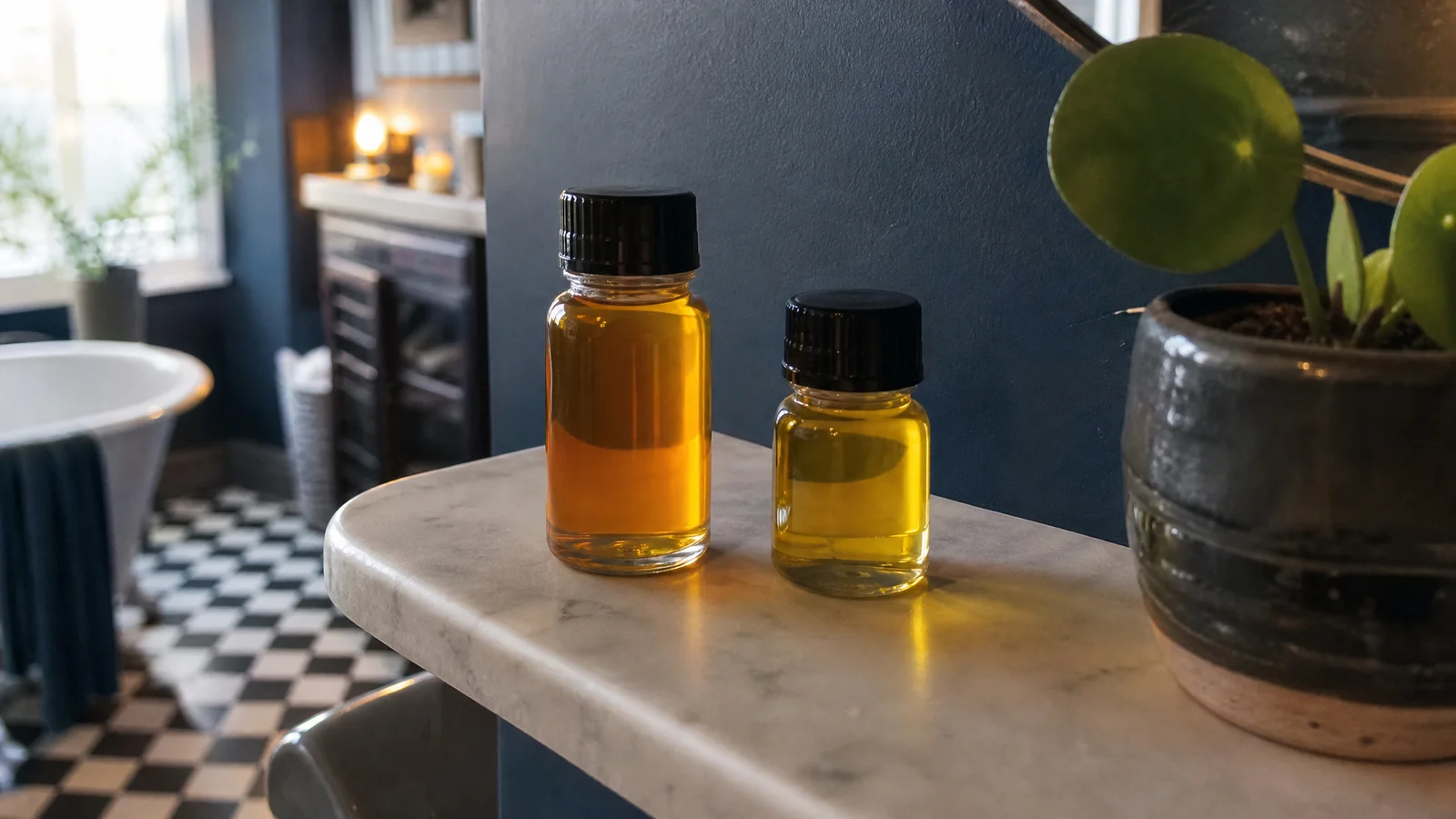
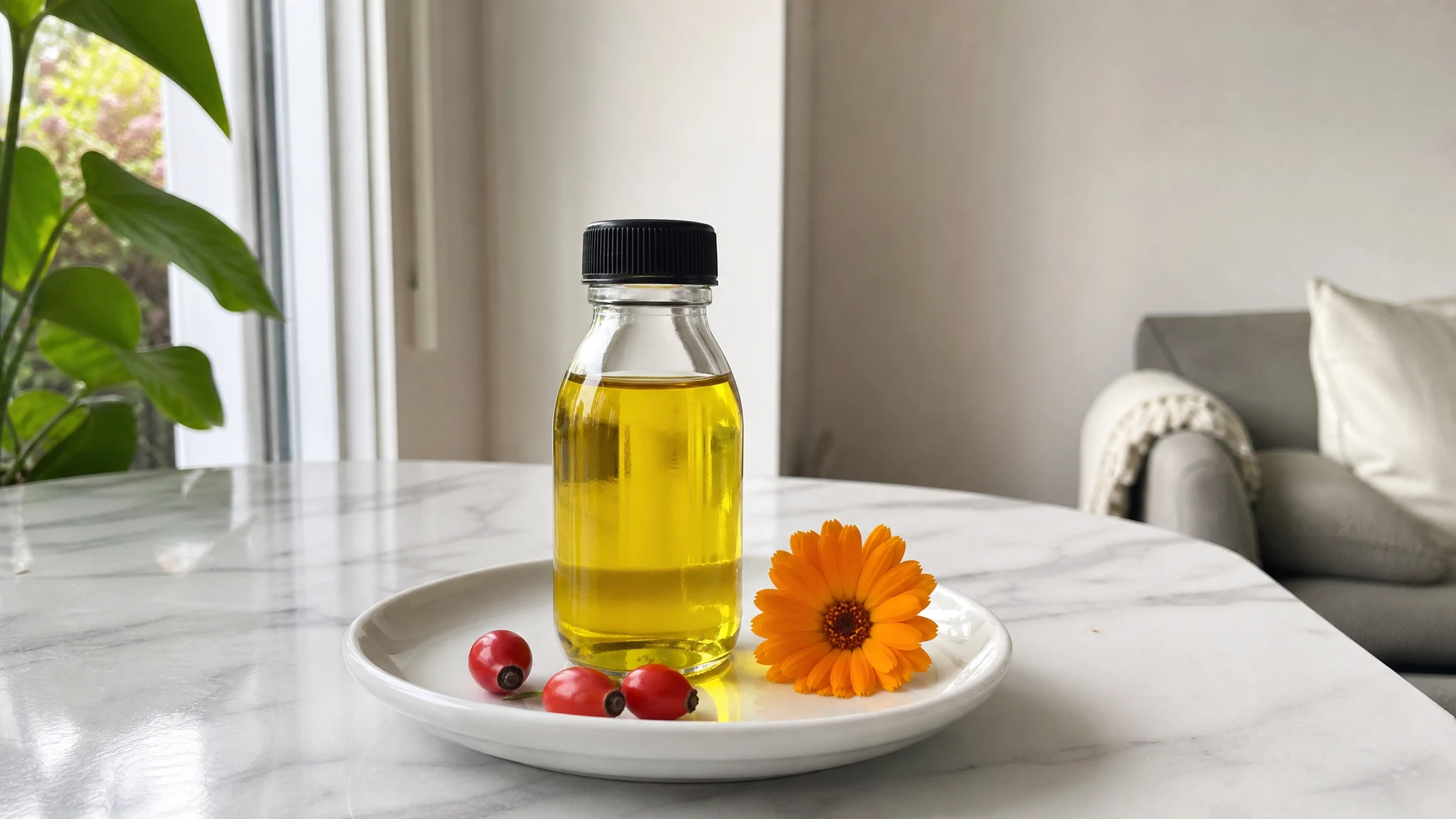
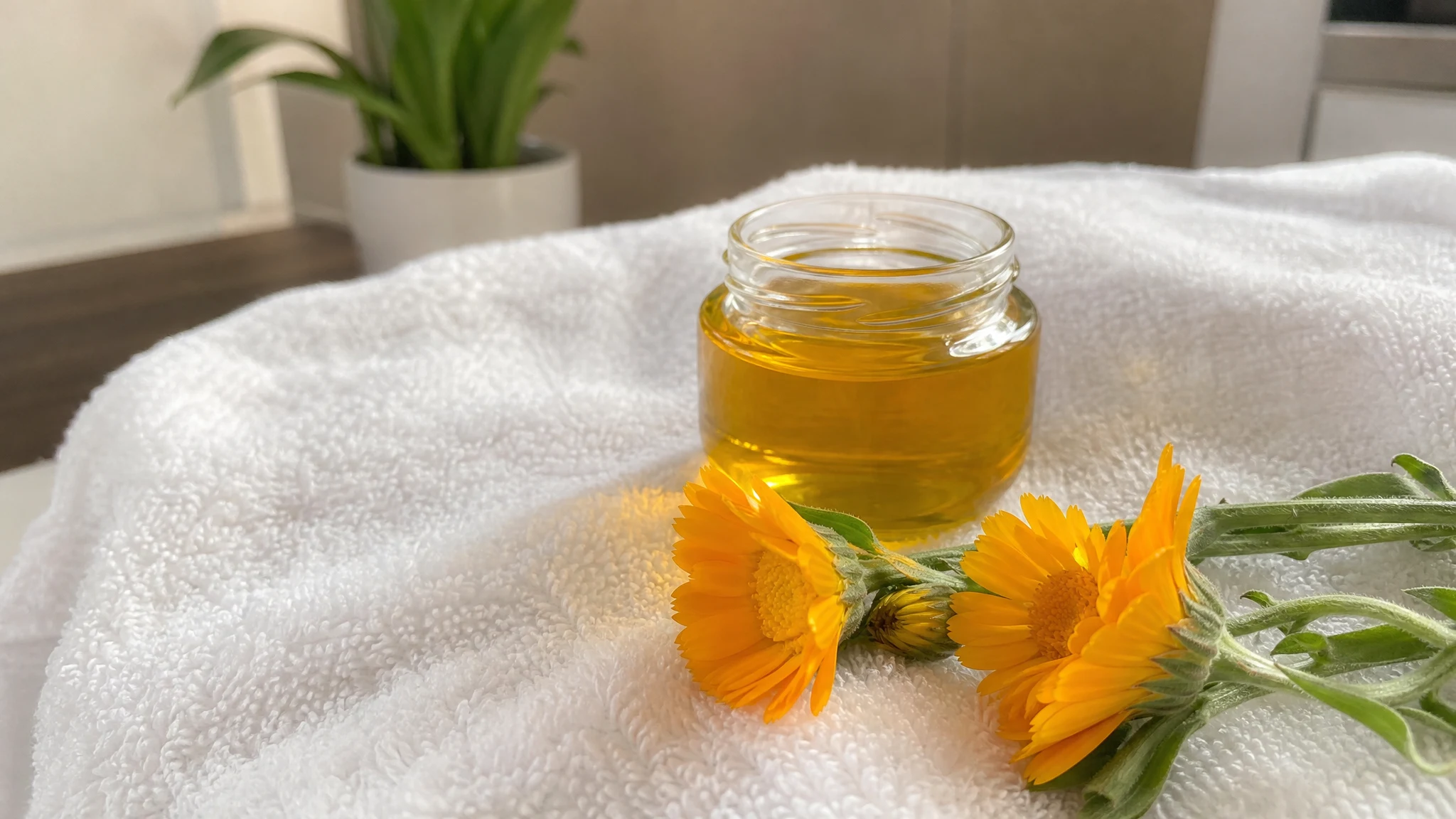
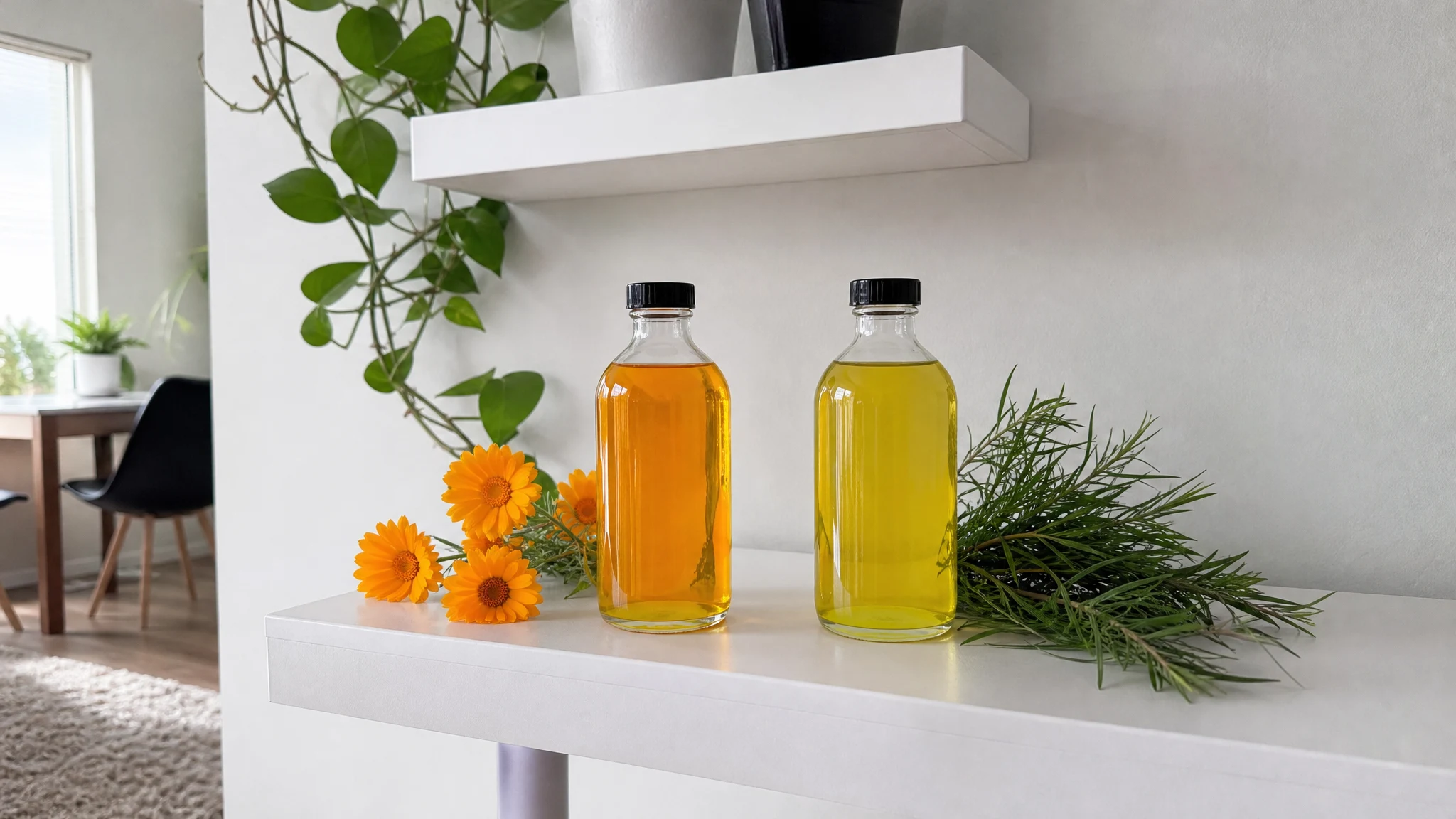
Put the two bottles side by side and the contrast is striking. Tea tree oil is thin and nearly clear, with a sharp, clean, camphor-like scent that you notice the moment the cap comes off. Calendula oil is golden and mellow, with a soft herbal note that you smell only when you lean in, and because most of the bottle is carrier oil, it feels like a plain plant oil on the fingers.
They are used differently in practice. Tea tree is measured by the drop and always mixed into something else. Calendula oil is the something else: you can pour a few drops into your palm and use it as it comes. Knowing which one you are holding makes the rest of the decisions easier.
Is mixing tea tree into calendula oil wise?
A carrier oil is a normal way to dilute an essential oil, so it is natural to wonder about adding tea tree to calendula oil. Our advice is to hold back until you know how your skin handles each on its own. Two possible sensitizers in one bottle means that if you react, you will not know which caused it. Our essential oil blending guide goes through the thinking, and for any essential oil you should check a current aromatherapy-safety or IFRA source for the right level for your own use.
Oxidation and batch records for tea tree oil
When was it bottled, how is it stored, and is there batch documentation? Those questions apply to tea tree because of oxidation, and to calendula oil because the carrier and handling are such a large part of the bottle. Ours is bottled in dated, lot-numbered glass, each batch is tested by independent third-party labs, and the documentation, including the carrier, is available when you email the lot number to [email protected].
Choosing between a concentrate and an infusion
If you want a distinctive aroma and are happy to dilute and store it carefully, tea tree is a classic. If you want a plain infused oil with a warm botanical origin and nothing added, that is the oil we make. Neither stands in for medical care: for blemishes that persist or are painful, our acne article explains what is known about calendula, and a dermatologist is the person to see.
In short, tea tree asks you to bring respect for a concentrate, and calendula asks you to bring a patch test. Both are easy habits to build.
Calendula Oil
Nature's Golden Botanical, bottled: small-batch calendula oil in sizes from 0.5 oz to bulk.
From $13.99
Shop Calendula Oil →Sources & Further Reading
- Melaleuca alternifolia (Tea Tree) oil: a review of antimicrobial and other medicinal properties (Carson et al., Clinical Microbiology Reviews, 2006).
- A review of the toxicity of Melaleuca alternifolia (tea tree) oil (Hammer et al., Food and Chemical Toxicology, 2006).
- Tea tree oil: contact allergy and chemical composition (de Groot and Schmidt, Contact Dermatitis, 2016).
- European Union herbal monograph on Calendula officinalis L., flos (EMA/HMPC/437450/2017, 2018).
- The seamy side of natural medicines: contact sensitization to arnica (Arnica montana L.) and marigold (Calendula officinalis L.) (Reider et al., Contact Dermatitis, 2001).