Rosehip vs Calendula Oil: Seeds, Petals and Freshness
Rosehip oil and calendula oil keep turning up in the same conversations about face oils, and it is easy to see why: both have a warm color, both are botanical, and both are sold in small bottles. But one comes from a fruit's seeds and the other from a flower, and that single fact changes how each one behaves in the bottle and on your shelf.

Calendula Oil
Our own small-batch calendula oil, in sizes from 0.5 oz to bulk.
From $13.99
Shop Calendula Oil →Rosehip seed oil versus calendula flower infusion
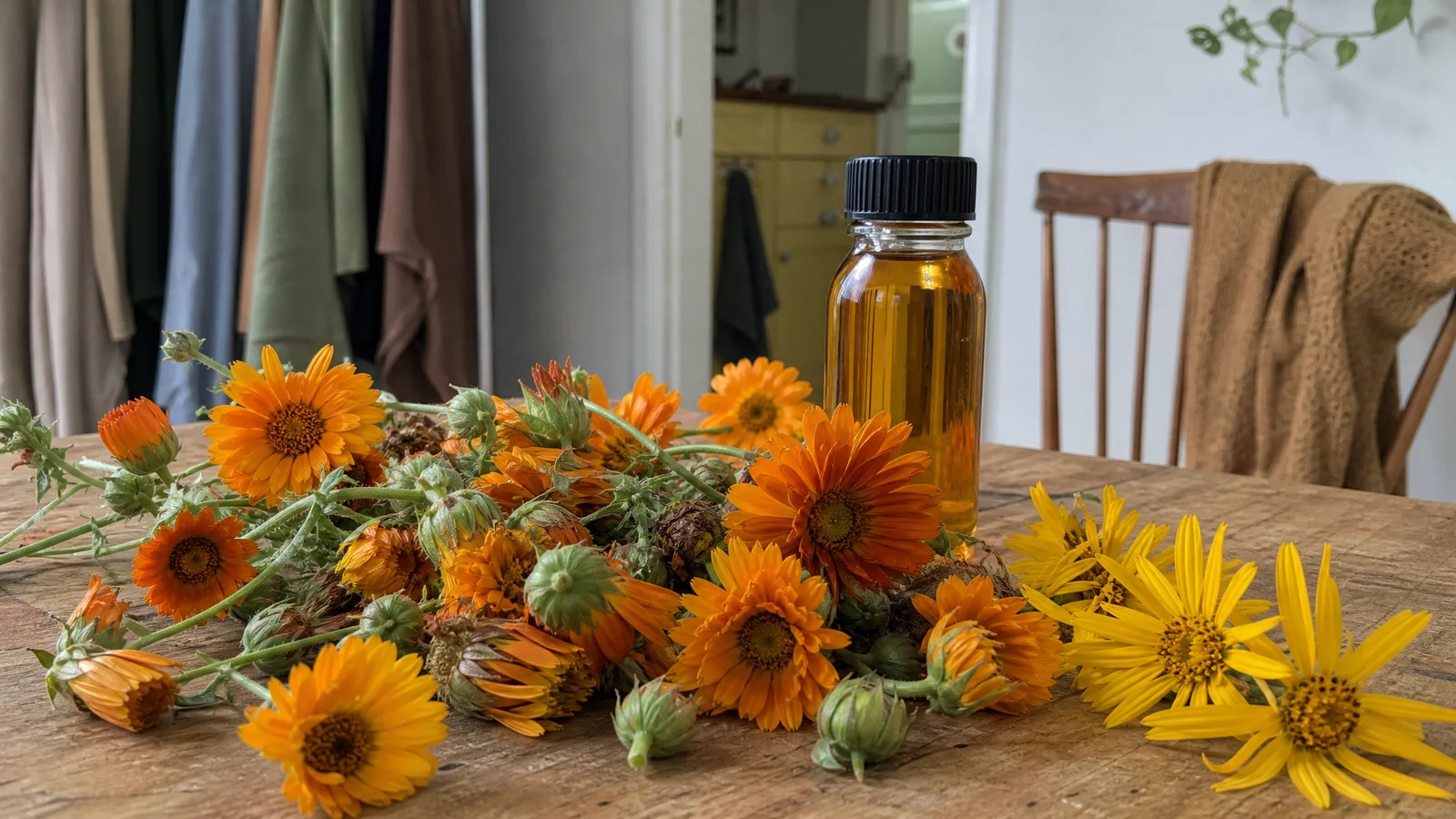
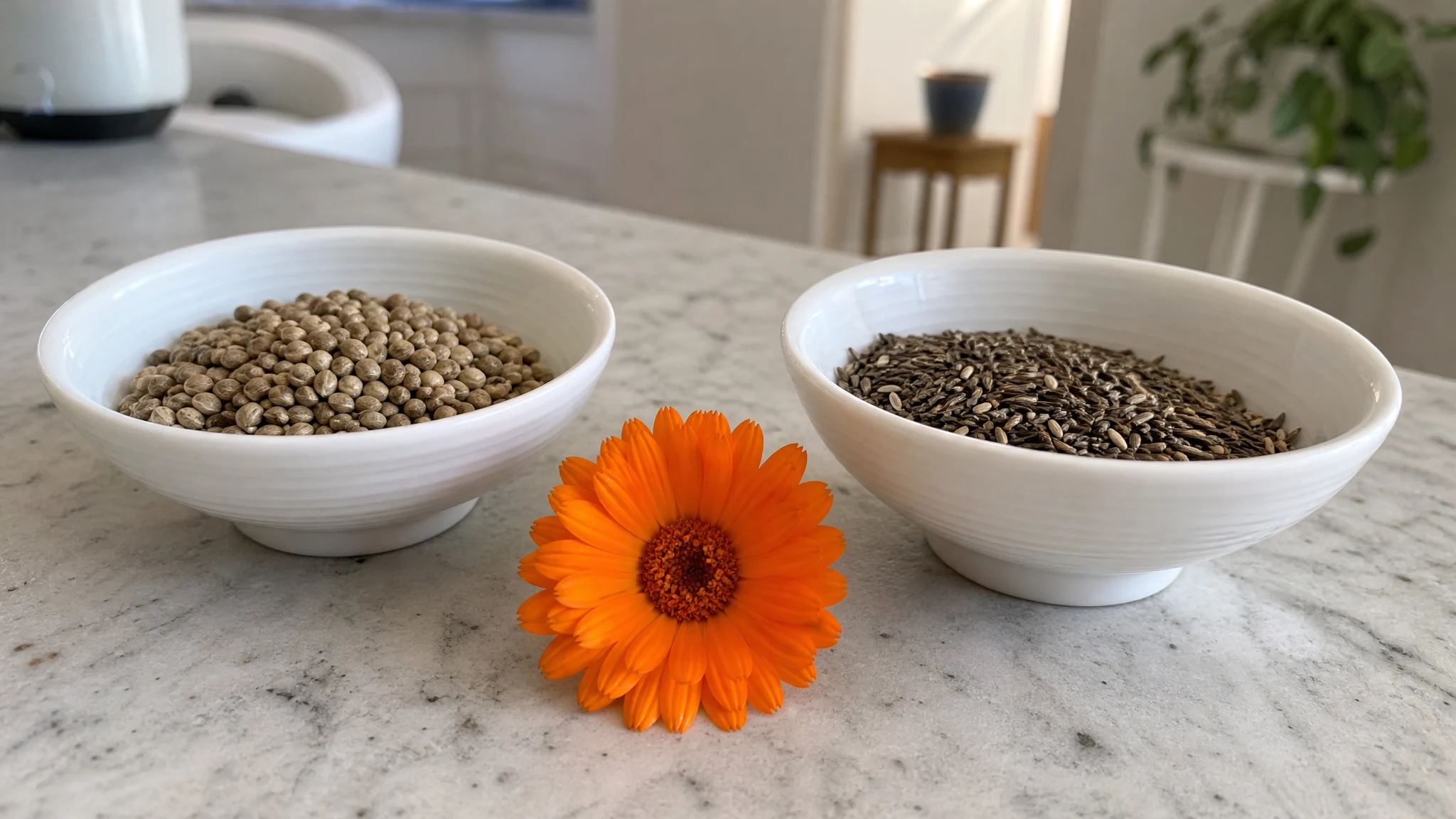
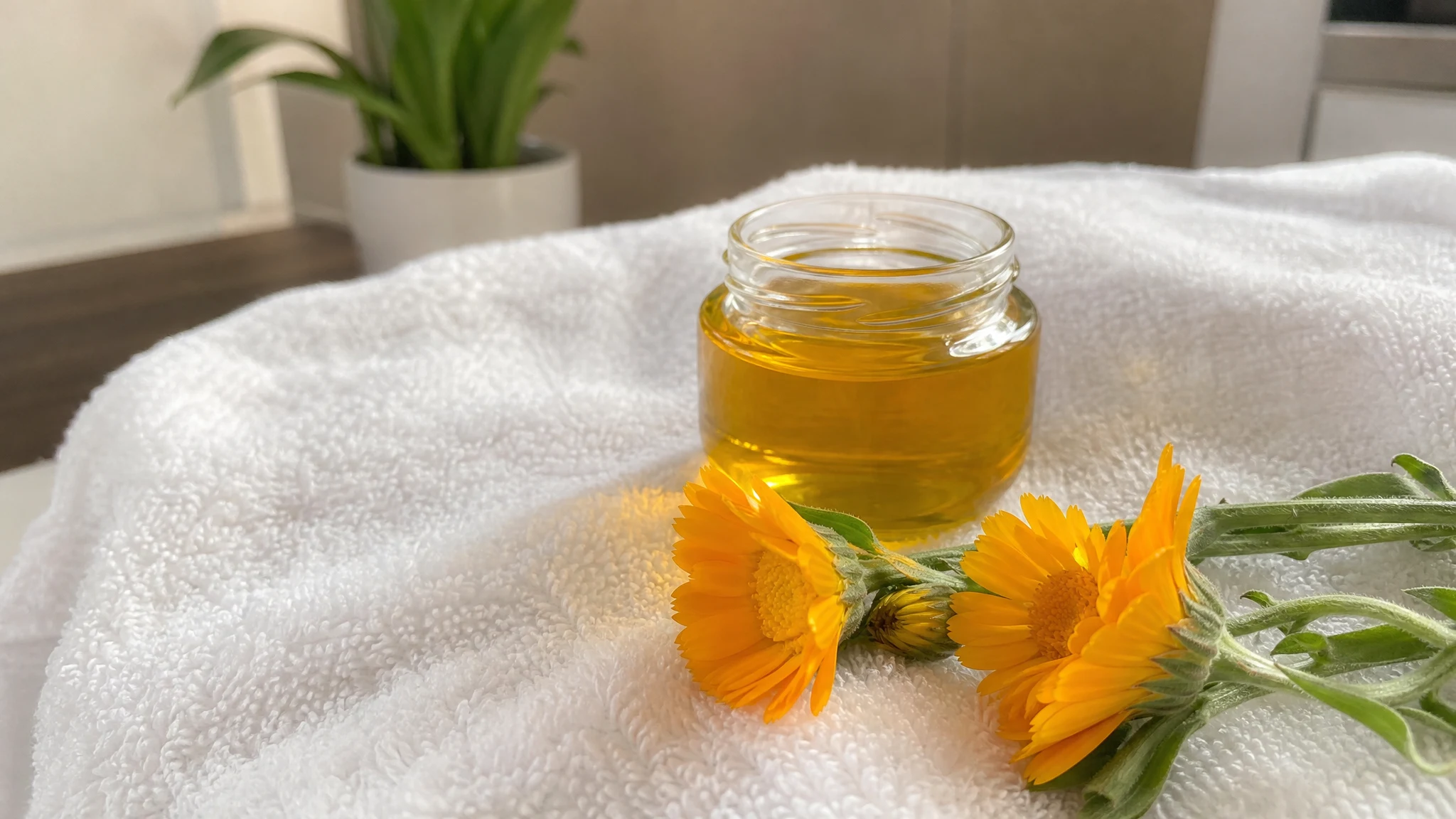
Rosehip oil is a seed oil, pressed from the seeds of the rose fruit. What it is made of depends on those seeds. Our calendula oil is a flower infusion: we extract calendula on its own, nothing else in the extraction, and bring that extract into a carrier oil. Most of the bottle by weight is that carrier, which is listed on the batch paperwork, and the golden color comes from the flower.
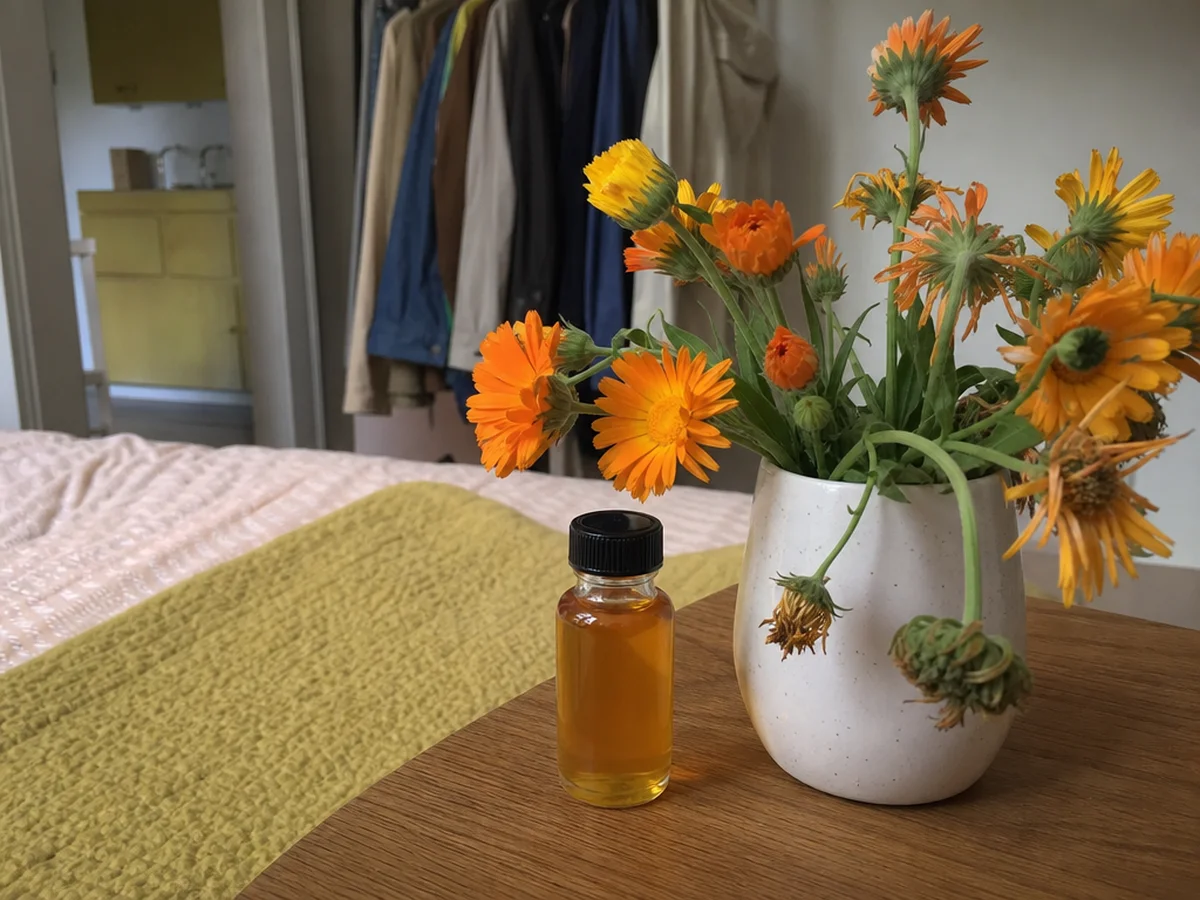
Nothing is added to ours after that. No preservatives, no added tocopherol, no stabilizers. Bottles are dated and lot-numbered in glass, and each batch is tested by independent third-party labs, with documentation on request when you email the lot number to [email protected].
Why do rosehip oils differ so much?
Rosehip oil is rich in polyunsaturated fatty acids, which are the fats that give an oil its light feel and also its sensitivity to air. Seven commercial rosehip oils analyzed in 2025 split into two chemical groups, one dominated by omega-6 fatty acids and one by omega-3. In plain terms: two bottles labeled rosehip can be genuinely different oils. The authors went as far as proposing routine screening to catch oxidation and counterfeiting.
That connects to freshness. A review of vegetable oil oxidation explains that light and heat speed up the process, and a 2026 laboratory comparison of four oils found rosehip had the shortest induction time before oxidizing, behind sunflower, olive and jojoba, a ranking the authors tied to polyunsaturated fat content. It was an accelerated heating test, so read it for direction and not as a countdown for your own bottle. Reasoning from it, a rosehip bottle suits a small size, a dark cool cupboard, a tight cap and a quick sniff before use.
The same caution applies to ours in principle: any oil can oxidize, and we add no antioxidant, so we encourage small batches of anything you blend, cool storage and attention to the date on the bottle. Our storage guide has the details.
Rosehip red-orange versus calendula gold color
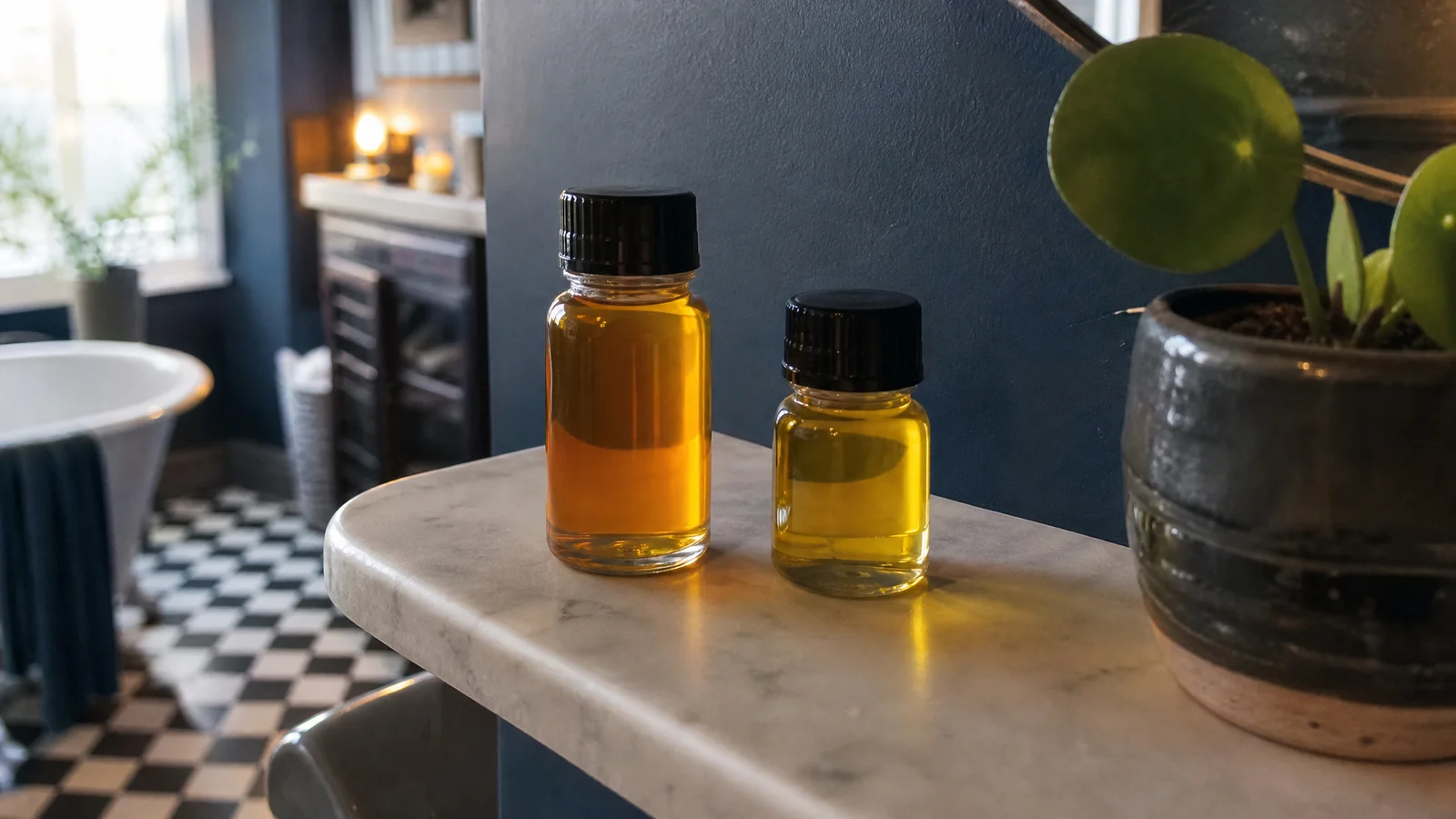
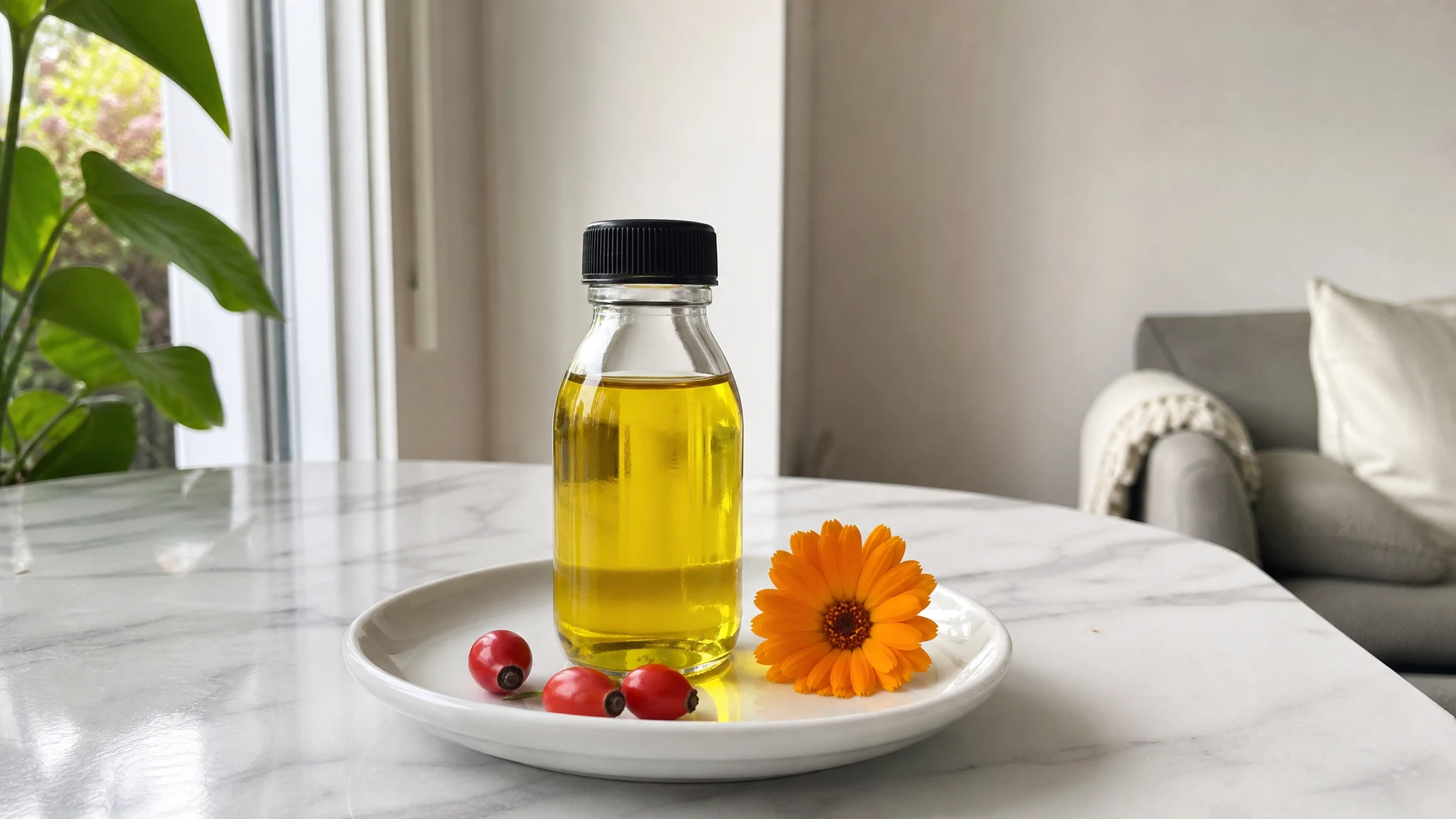
Set the two bottles on a windowsill (briefly, just for the photo) and the difference is obvious. Rosehip tends to be a deep orange-red, while ours is warm gold from the flowers. A fun test is to put a drop of each on a white tissue and compare how the color spreads. It is a small thing, but color can tell you a lot about what you are holding, and it is a nice way to get to know an oil.
Then put them away again. Both belong in a dark, cool cupboard, not on a sunny sill.
Can calendula oil and rosehip oil work together?
Rosehip does not have to compete with calendula. If you make your own infusions at home, the oil you steep petals in is a real choice, and rosehip is one that people try. We cannot say how a rosehip-based version would compare with ours, so treat it as an experiment of your own and read our home infusion guide before you start. Keep in mind the freshness point above, since a polyunsaturated carrier means a shorter shelf life for the finished oil.
Small bottle sizes keep botanical oils fresher
If we have one recommendation for anyone who loves botanical oils, it is this: buy small. A smaller bottle gets used while it is still at its best, and it lets you try more oils without waste. For ours, that means the 0.5 oz or 1 oz size for everyday use, with larger sizes saved for people who go through an oil quickly. Write the opening date on the label and put the cap on every time.
What should you check on an opened oil bottle?
Any oil, ours included, deserves a quick check before you use it. Look at the color, give the bottle a gentle sniff, and rub a drop between your fingers. If something seems different from when you first opened it, trust that feeling and start a new bottle. It is a thirty-second habit, and it makes every oil on your shelf more pleasant to use.
Matching rosehip or calendula oil to your needs
If you love a light seed oil and will finish the bottle quickly, rosehip is a good pick, and you can find it at any natural-products shop. If you want calendula in an oil, that is our whole focus: flowers dried naturally, petals separated by hand from sound, whole-dried heads, then infused in-house.
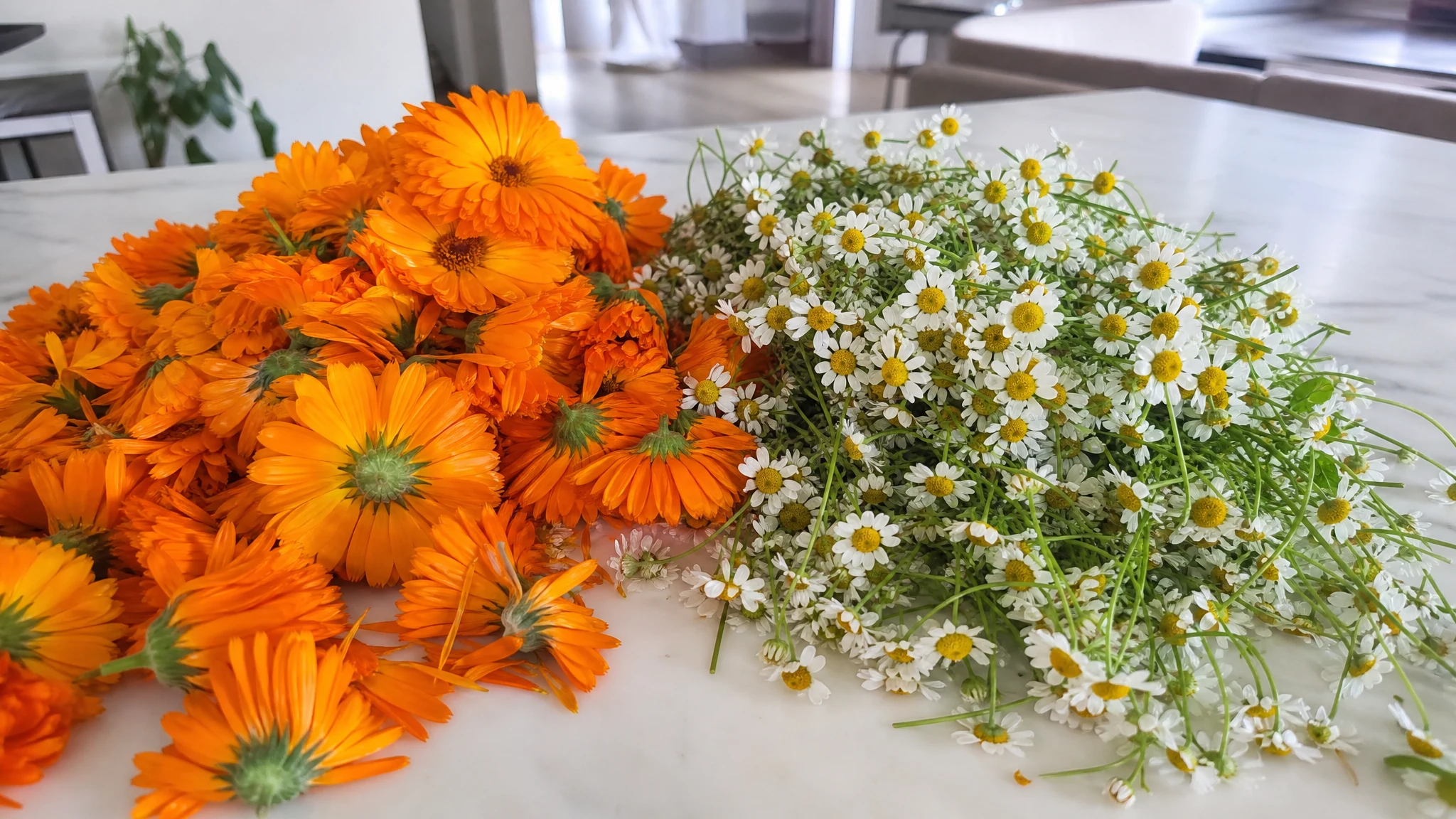
Because calendula is a daisy-family (Asteraceae) plant, patch test it before wider use, and skip it if you have a history of reacting to ragweed, chamomile or daisies. Our patch test walkthrough explains the steps. If you try both oils, introduce them a week or so apart. That is our own practical reasoning and not a published protocol, but it means you will know which one a reaction came from.
And if breakouts are the reason you are comparing face oils, our comedogenicity article explains why a comedogenic rating on a raw oil does not tell you how a finished product will behave on your skin. A dermatologist is the right person for persistent skin concerns.
Two good oils, two different jobs: choose the seed when you want a seed oil, and the flower when the flower is the point.
Calendula Oil
Nature's Golden Botanical, bottled: small-batch calendula oil in sizes from 0.5 oz to bulk.
From $13.99
Shop Calendula Oil →Sources & Further Reading
- Characterization of Bulgarian Rosehip Oil by GC-MS, UV-VIS Spectroscopy, Colorimetry, FTIR Spectroscopy, and 3D Excitation-Emission Fluorescence Spectra (Nikolova et al., Molecules, 2025).
- Vegetable oil oxidation: Mechanisms, impacts on quality, and approaches to enhance shelf life (Gharby et al., Food Chemistry X, 2025).
- Oxidative Stability and Kinetics of Oxidation of Rosehip, Sunflower, Olive and Jojoba Oils (Fagoaga et al., Antioxidants, 2026).
- A re-evaluation of the comedogenicity concept (Draelos and DiNardo, Journal of the American Academy of Dermatology, 2006).