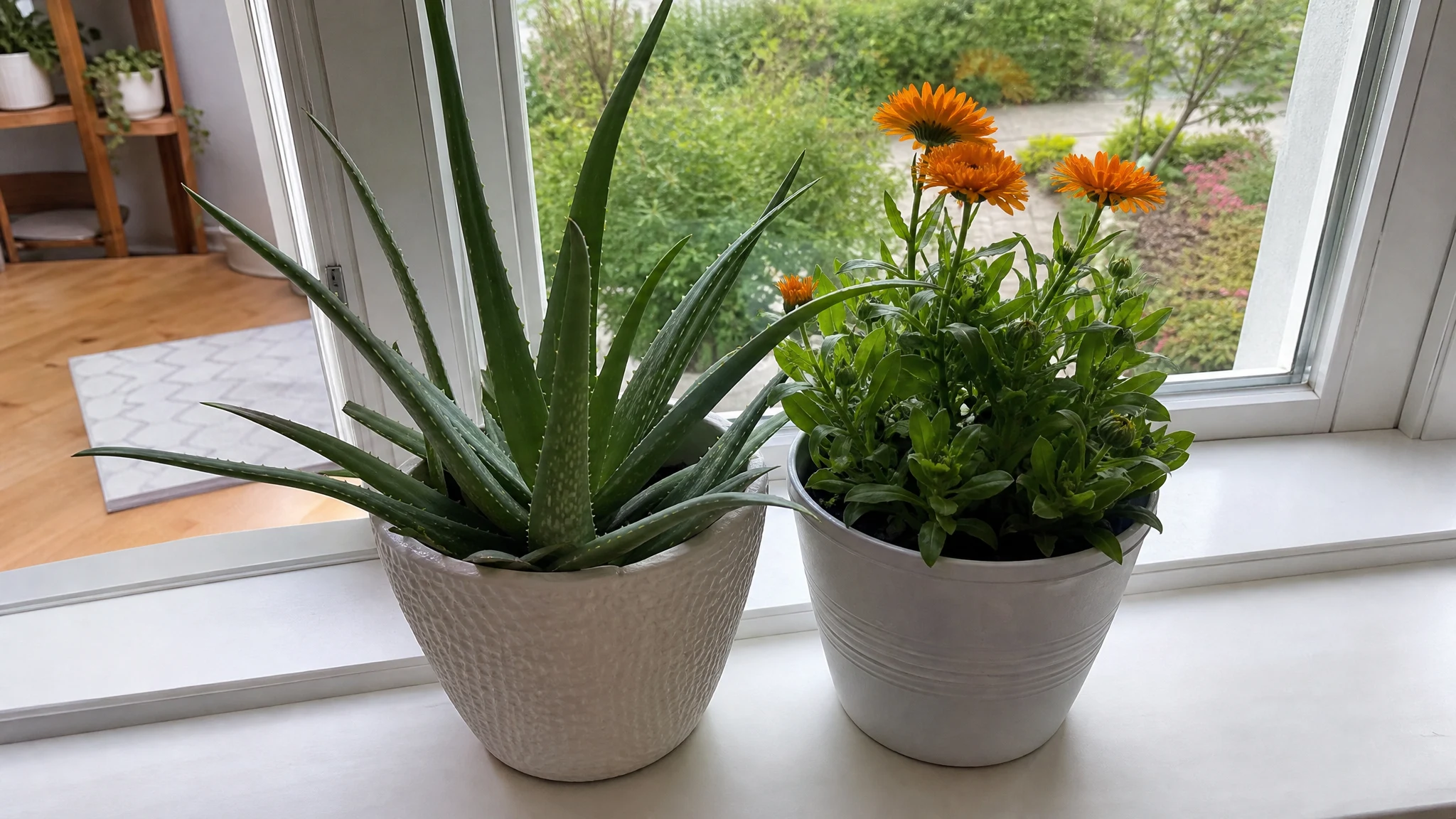
Aloe vs Calendula Oil: Which to Use After Sun?
You have spent a little too long outside, your shoulders are pink and warm, and the question is what to reach for. We make calendula oil, and we will tell you plainly: for skin that is hot and freshly sunburned, aloe vera gel has the better track record. Our oil has its moment later, when the heat has passed and skin feels dry. Knowing which one belongs at which stage is the whole trick.

Calendula Oil
Our own small-batch calendula oil, in sizes from 0.5 oz to bulk.
From $13.99
Shop Calendula Oil →Dermatologist advice for sunburn: cool baths and moisturizer
The American Academy of Dermatology's advice for a sunburn is refreshingly simple: cool baths or showers, gentle patting dry, and a moisturizer containing aloe vera or soy applied while skin is still damp. For blisters, it recommends leaving them alone and protecting them with petroleum jelly. Neither calendula nor any other oil appears on that list, and that tells you where mainstream guidance currently stands.
Does aloe vera gel really help UVB-reddened skin?
Aloe's reputation is a little bigger than its evidence, but it does have human studies behind it. In a randomized, double-blind trial, 40 volunteers had small patches of skin exposed to measured UVB light. A 97.5% aloe vera gel significantly reduced the redness after 48 hours, performing better than 1% hydrocortisone mixed into a plain gel, though not as well as 1% hydrocortisone cream. A smaller Thai study with 20 volunteers used a 70% aloe cream and saw no benefit over placebo, and it also found the cream gave no protection from burning or tanning.
Putting those side by side, a sensible reading is that the product matters: a high-concentration gel and a 70% cream are not the same thing. Either way, aloe is something to soothe the skin afterward and not a way to prevent a burn.
Does calendula oil have a place after sun?
The European herbal medicines committee lists calendula flower for the traditional, symptomatic relief of minor skin inflammation such as sunburn, and it makes that listing on the basis of long-standing use, not clinical trials. We think that is worth saying honestly, because a traditional-use listing is a lower bar than the trials aloe has. We are also not aware of a trial of calendula oil on sunburned skin.
An oil is also a different kind of product from a gel. Aloe gel is water-based and light; calendula oil is a rich oil with no water in it. Reasoning from what oils do (not from a calendula study), a rich oil is a comfortable choice once skin has stopped feeling hot and has started to feel tight or dry, applied to intact skin. A tidy sequence is aloe or a fragrance-free moisturizer while skin is warm and damp, then an oil afterward for dryness, and not both layered on a fresh burn.
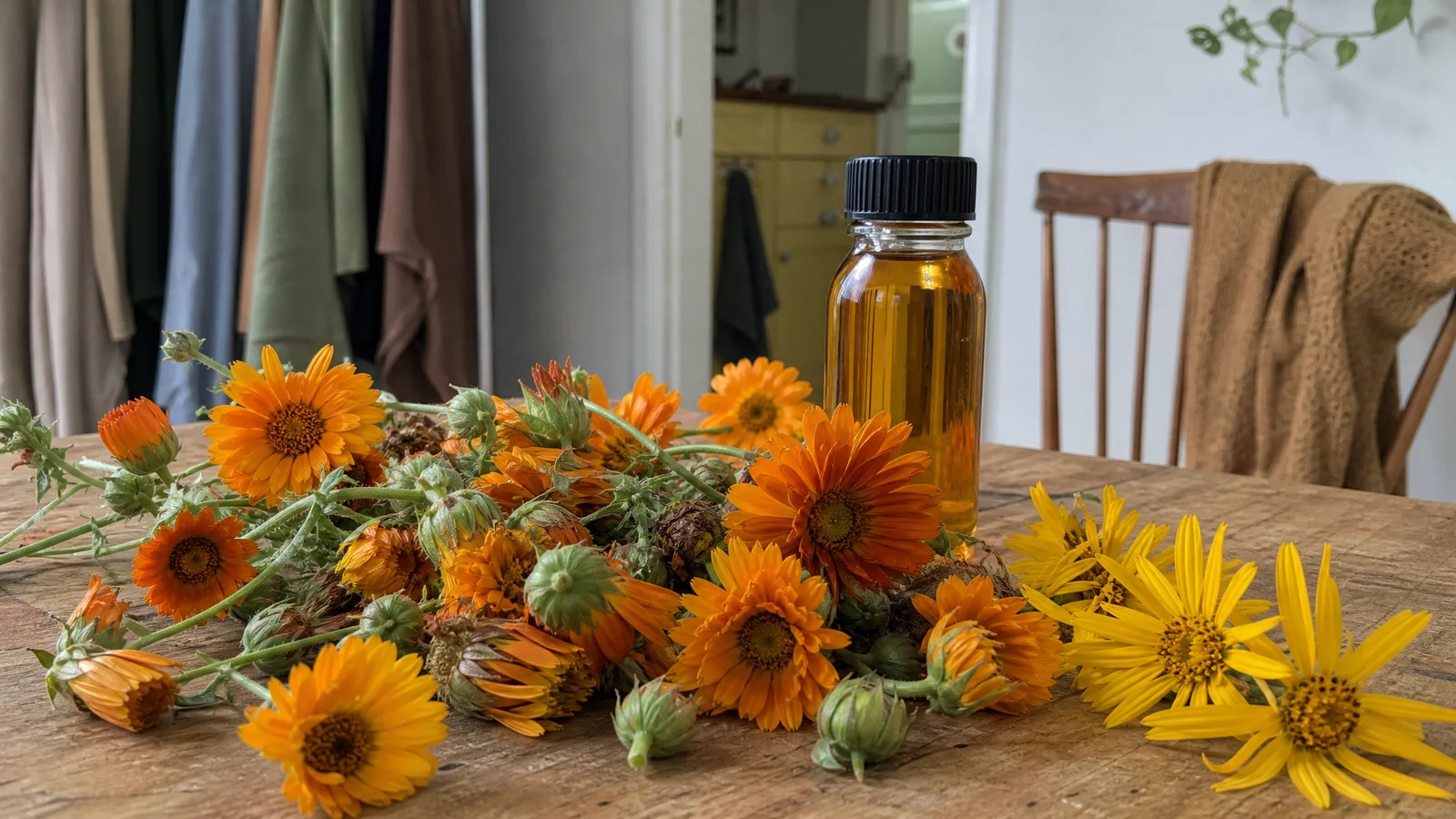
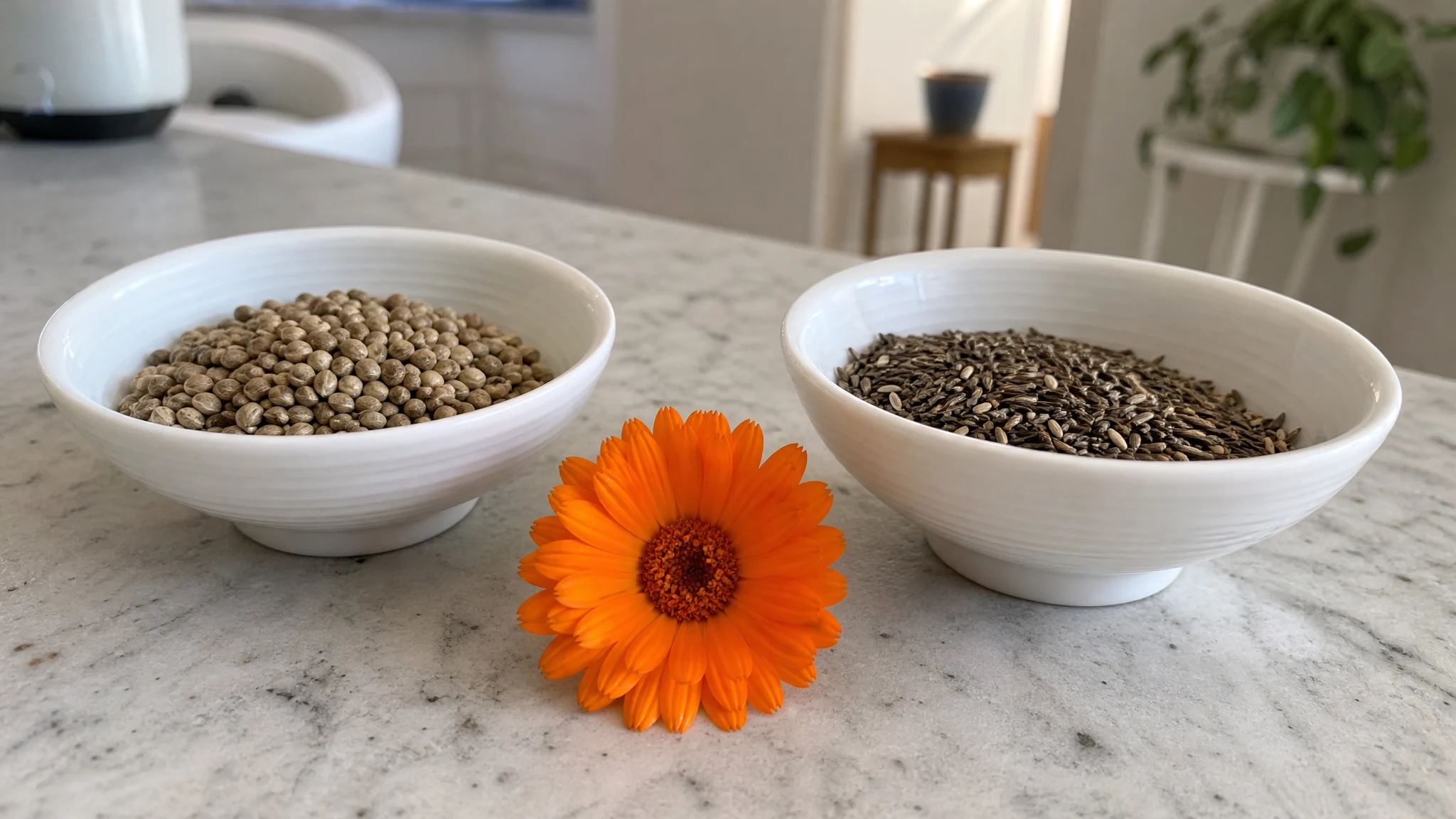
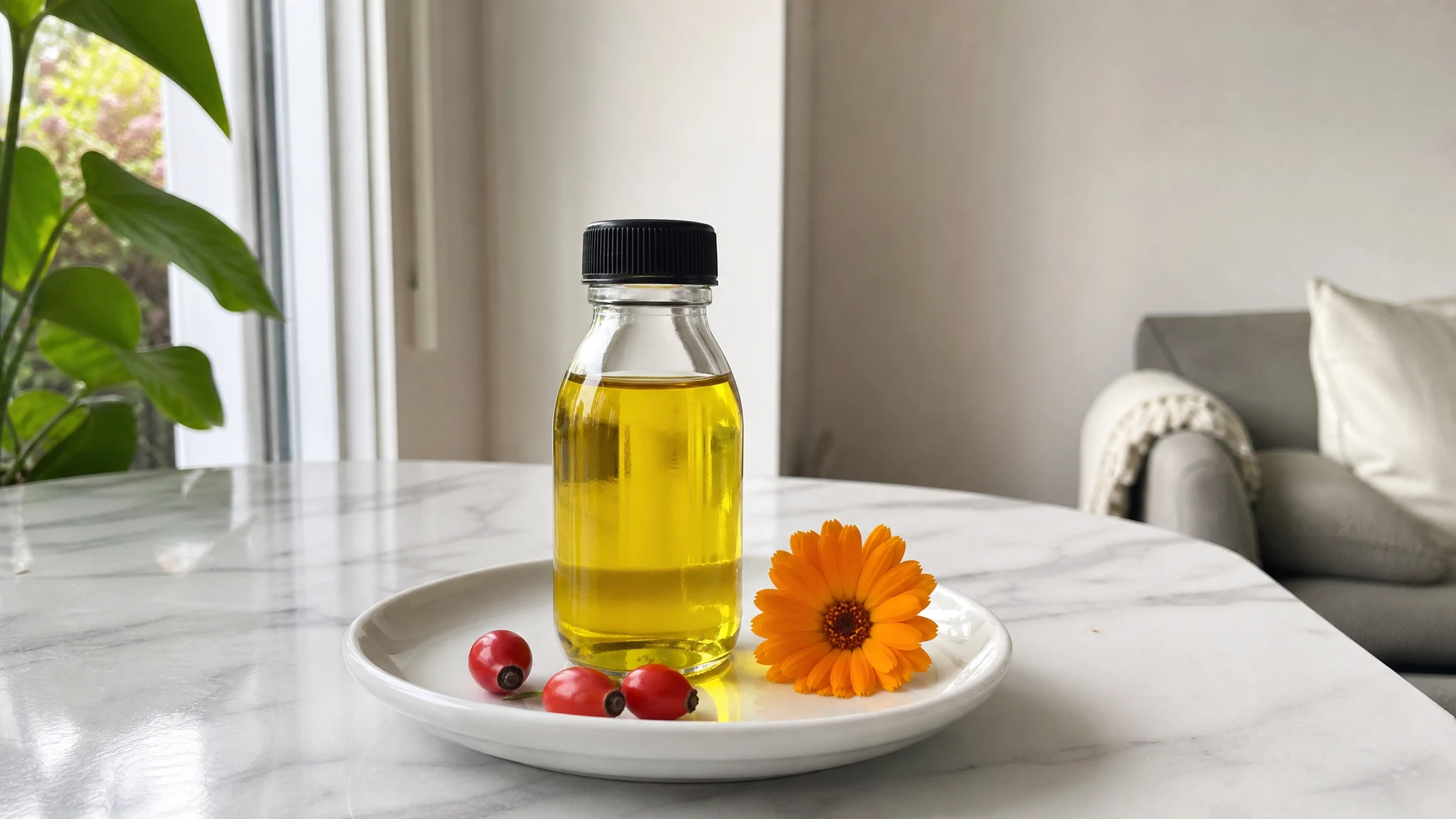
That is where our oil comes in. It is calendula extract brought into a carrier oil, with nothing added: no synthetic preservatives, no added tocopherol, no stabilizers. The carrier is named on the batch paperwork, which comes by emailing the lot number to [email protected].
Texture of aloe gel versus calendula oil
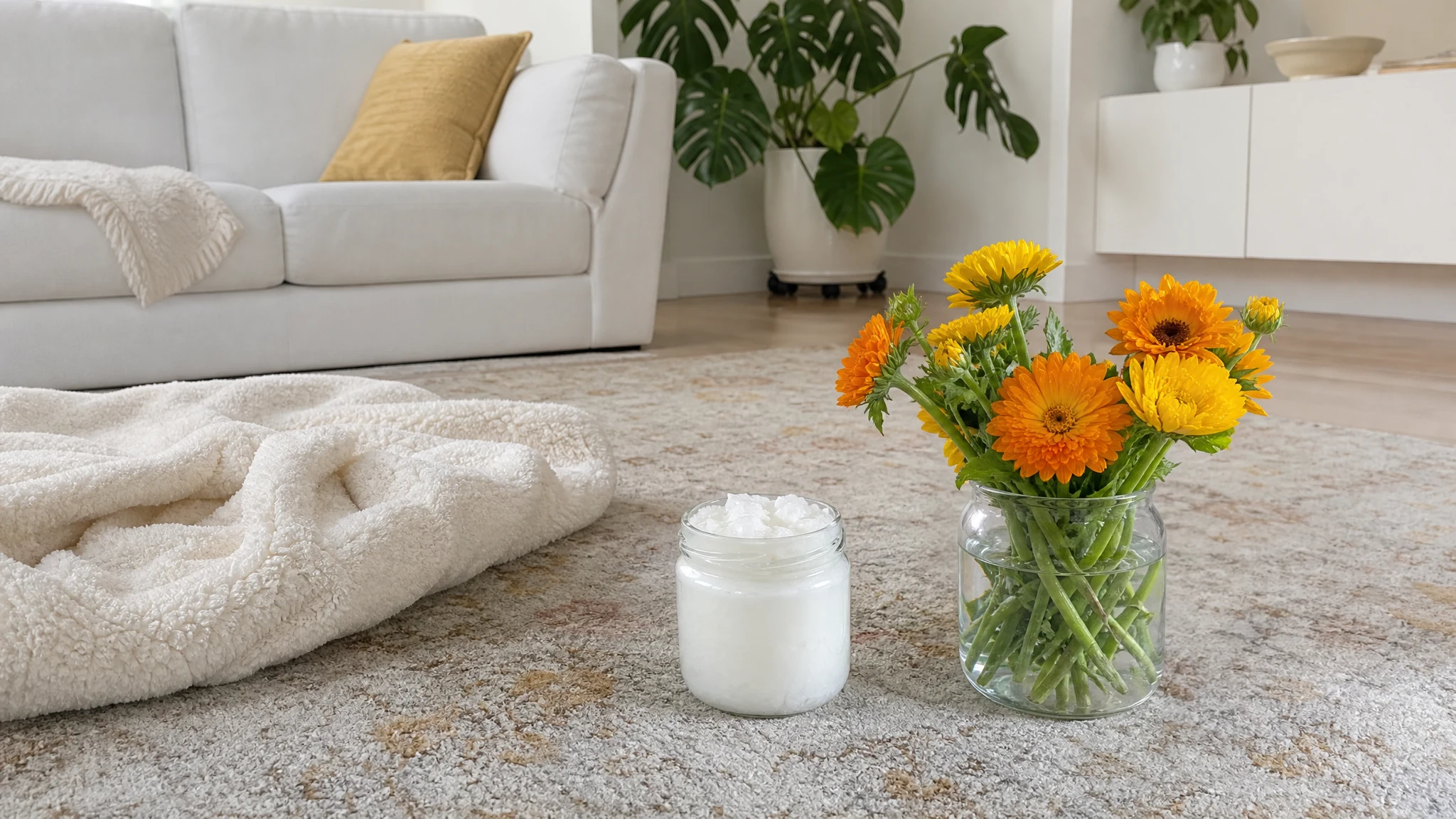
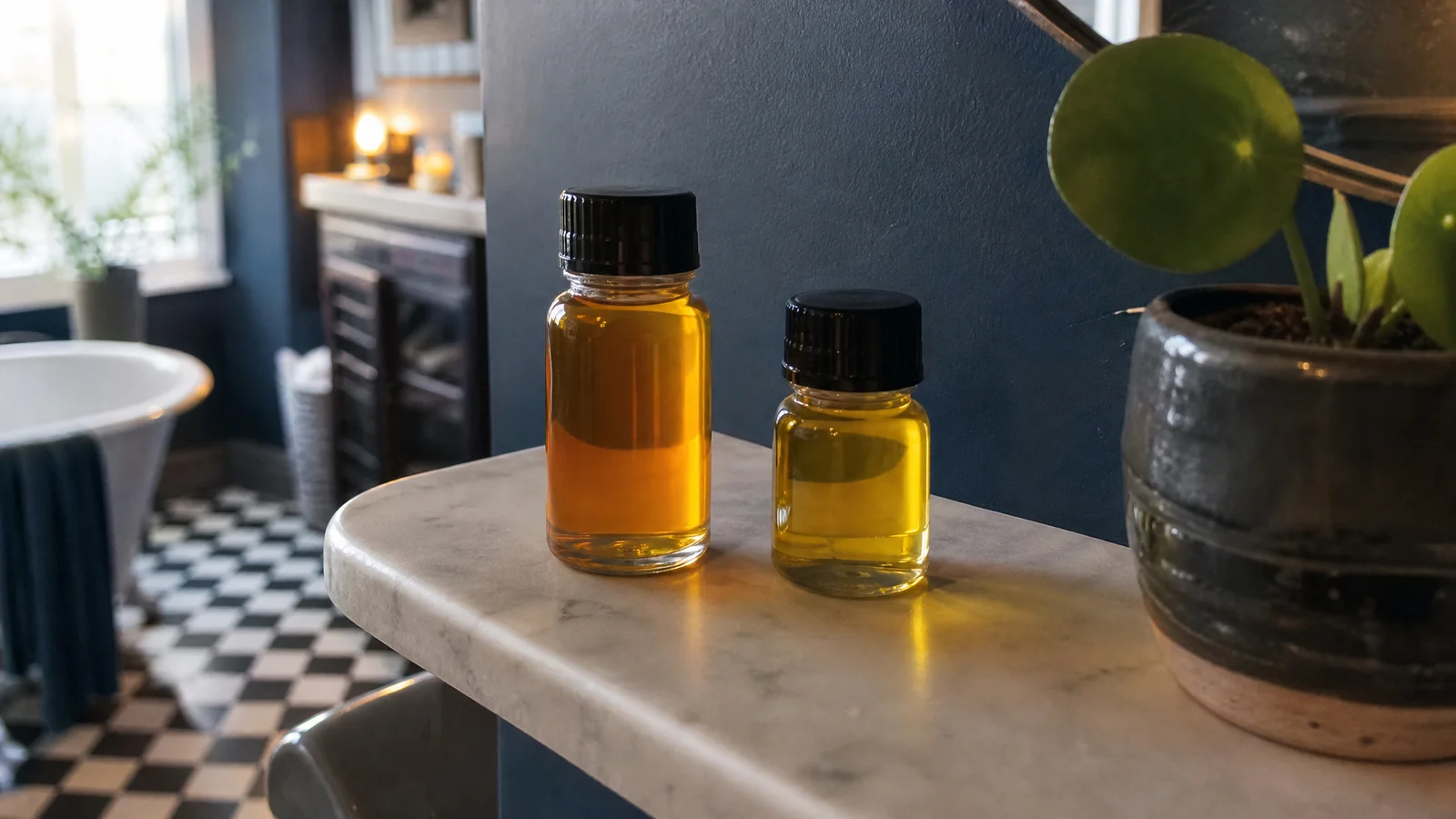
Hold the two in your mind as textures. Aloe gel is cool, watery and light, and it disappears almost as soon as you spread it. Calendula oil is the opposite: golden, slow and a little rich, leaving a soft film that stays on the surface. That difference tells you a lot about when to reach for each. A cool gel suits the first hot hours, and a gentle oil suits the later, drier days.
Whichever you use, apply it with clean hands, in a thin layer, and look at your skin the next day. If anything looks angrier than it did, stop and go back to the basics.
Daisy-family allergy cautions for calendula oil
- Daisy-family allergy. Calendula is in the same family as ragweed and chamomile, and the EU monograph lists hypersensitivity to that family as a contraindication. In one Austrian patch-test series of 443 dermatology patients, about 2% reacted to marigold. On a sunburn, a reaction is hard to tell apart from the burn itself, so test a small unburned area first. Our patch test article shows how.
- Know when it is more than a home-care situation. The AAD lists high fever, chills, nausea, pus or swelling as signs a sunburn needs medical attention. Neither aloe nor calendula changes that.
- Young children, pregnancy and breastfeeding. The EU monograph does not recommend skin use of calendula under age 6, or during pregnancy and lactation, because data are limited. A pediatrician, OB/GYN or midwife is the right person to ask.
Should you keep both aloe and oil at home?
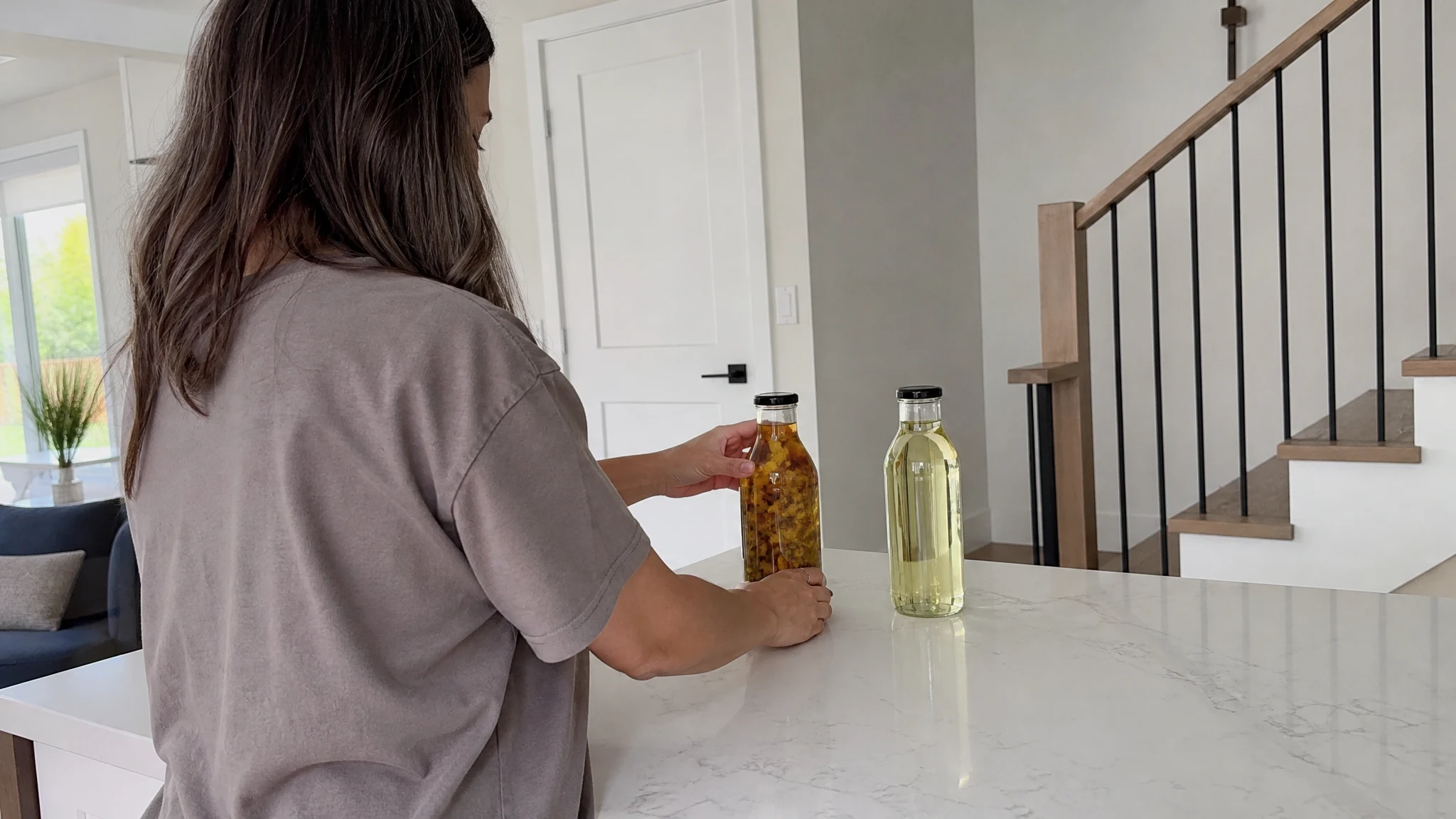
We think the best summer cabinet holds a bottle of each. Keep the gel cool, even in the fridge if you like it extra cold, and keep the oil in a cool, dark cupboard with the cap on. They do different jobs, and neither one has to be asked to do the other's work.
Trying one after-sun product at a time
Whichever product you start with, resist the urge to try several at once. Put one thing on, wait, and notice how your skin feels an hour later. Keep towels and sheets in mind too: oil can mark pale fabric, so a dark towel over the pillow or a few minutes of air-drying before you dress saves some laundry. And if your skin simply feels too tender for anything, that is a fine answer. Cool water and patience are always an option.
Related after-sun and summer skin guides
Our after-sun article looks at what the calendula research does and does not include, and our summer skin article shows where an oil fits into a warm-weather routine. Think of aloe as the cool drink after the beach, and calendula oil as the soft robe at the end of the day.
Calendula Oil
Nature's Golden Botanical, bottled: small-batch calendula oil in sizes from 0.5 oz to bulk.
From $13.99
Shop Calendula Oil →Sources & Further Reading
- How to treat a sunburn (American Academy of Dermatology)
- Investigation of the anti-inflammatory potential of Aloe vera gel (97.5%) in the ultraviolet erythema test (Reuter et al., Skin Pharmacol Physiol, 2008)
- Efficacy of aloe vera cream in prevention and treatment of sunburn and suntan (Puvabanditsin and Vongtongsri, J Med Assoc Thai, 2005)
- European Union herbal monograph on Calendula officinalis L., flos (EMA/HMPC, 2018)
- The seamy side of natural medicines: contact sensitization to arnica (Arnica montana L.) and marigold (Calendula officinalis L.) (Reider et al., Contact Dermatitis, 2001)