Calendula Oil vs Arnica: Which Herb for Which Job?
Calendula and arnica both have sunny yellow-orange flowers, both turn up in balms and oils, and both get lumped together as "herbal healers." Look closely and they have quite different jobs. Arnica's traditional reputation is for bruises and sore muscles; ours, calendula oil, is a skin-comfort oil. The kindest thing we can say to a customer with a bruise or a sprain is that our calendula oil is not the product for it.

Calendula Oil
Our own small-batch calendula oil, in sizes from 0.5 oz to bulk.
From $13.99
Shop Calendula Oil →Arnica and calendula: matching each herb to its job
The EU herbal medicines committee, which writes monographs for traditional plant medicines, lists arnica flower for "the relief of bruises, sprains and localised muscular pain," on the basis of long-standing use. Its calendula monograph points elsewhere, to minor skin inflammation and small wounds. Those are different territories, so it makes sense that the two plants do not substitute for each other.
It is worth being honest that arnica's trial record is mixed. A rater-blinded trial of laser-induced bruises found a 20% arnica ointment improved bruising more than white petrolatum, though not more than a 5% vitamin K cream. A double-blind study of 19 patients after laser treatment found no significant difference between arnica gel and a plain vehicle. For hand osteoarthritis, a Cochrane review found moderate evidence from one trial of 174 people that arnica gel gave similar benefit to ibuprofen gel. Joint pain, though, is a question for a physician before any topical.
The takeaway is that arnica has a traditional role and some encouraging trials, but not a settled one. A bruise that is large, very painful, appears without a cause or keeps growing deserves a clinician's attention.
What forms did arnica trials actually test?
Notice what those arnica trials tested: an ointment, a gel, a cream. The arnica preparations listed in the EU monograph are tinctures and liquid extracts, used in dressings or mixed into a semi-solid base. A bottle of arnica "oil," meaning flowers infused in a carrier, is a different preparation, and it cannot borrow results from a gel. Calendula has a tidy parallel here: its monograph lists a 1:10 extract in a fatty vegetable oil such as olive oil among its traditional preparations, which is the nearest regulatory match to an infused oil like ours. Even so, most calendula studies used creams and ointments, often with other ingredients, and we would not stretch them over an oil.
What is calendula oil for?
When skin is dry, rough or simply in need of a gentle, rich oil, that is where calendula oil fits. It is an everyday cosmetic oil: calendula extract brought into a carrier, with no synthetic preservatives, tocopherol or stabilizers added. Our dry skin article shows how to use it in a routine. If your skin condition is persistent, or there is a wound or a rash, a dermatologist or physician is the right first call. The carrier is named on the batch paperwork; email the lot number to [email protected] to see it.
Reading a plant label before choosing
Herbal shelves can be confusing, and plant names on a label do a lot of heavy lifting. Before you pick up either bottle, check three things: the botanical name, which part of the plant was used, and whether you are holding an oil, a gel, a cream or a tincture. "Arnica" could mean any of those, and so could "calendula". Once you know what is actually in your hand, the comparison gets much easier.
Our own label is simple: calendula flowers, extracted and brought into a carrier oil, and nothing else added. We think a short, plain list is a kindness to the person reading it.
Calendula officinalis and arnica: telling the flowers apart
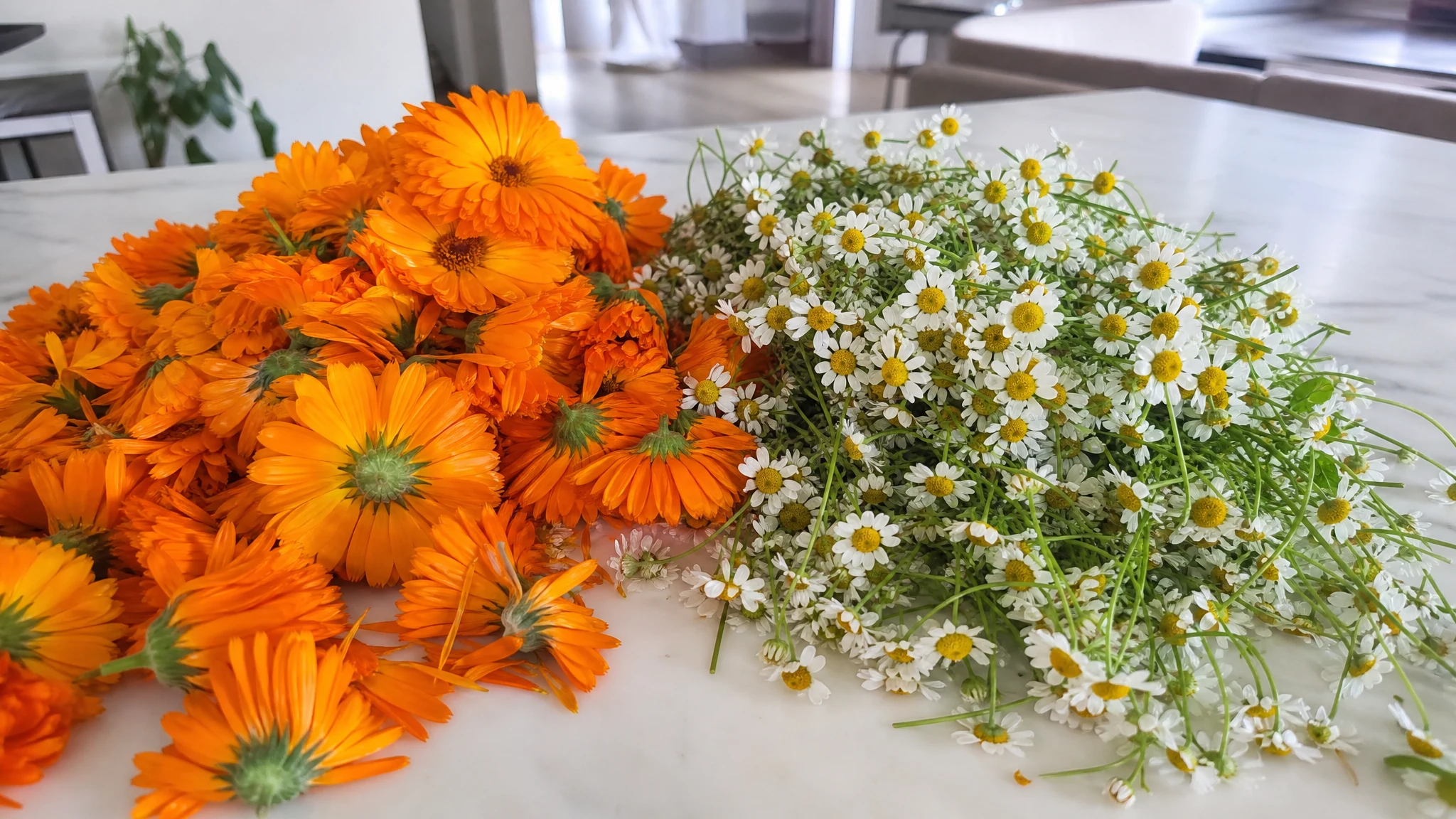
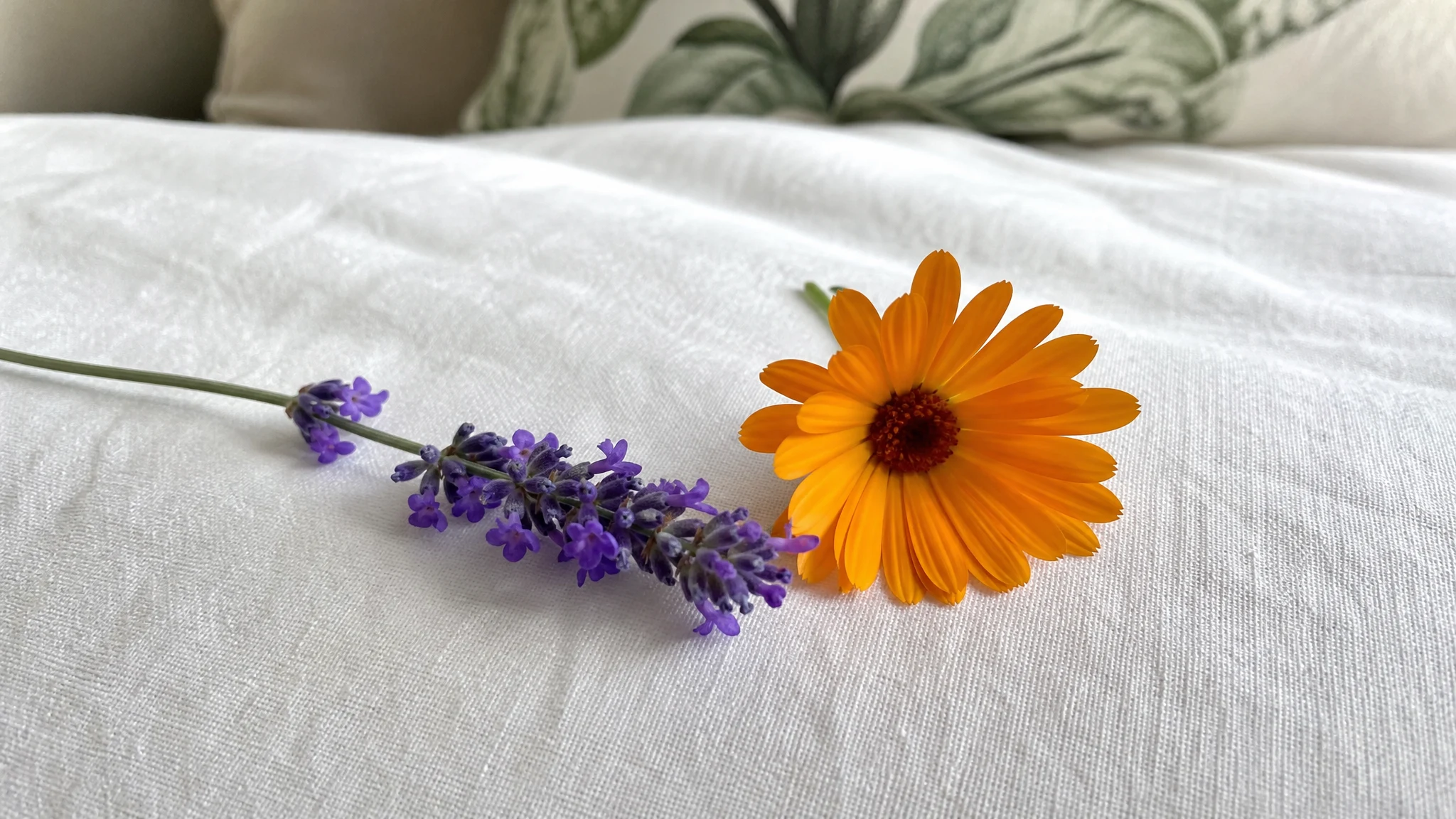
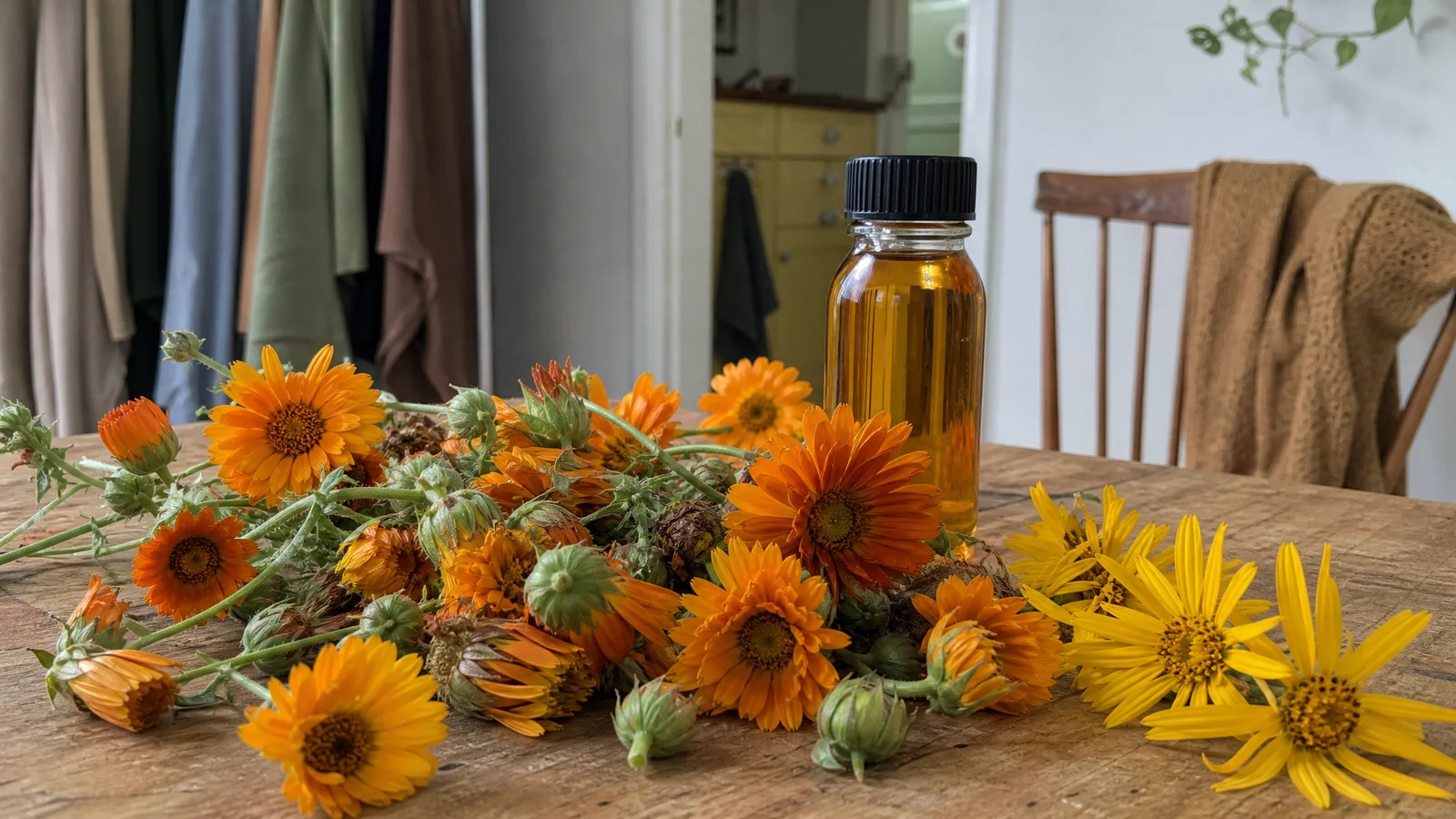
It is easy to mix the two up because the flowers look alike at a glance. Calendula petals are a deep orange-gold and arrive in layers, like a small sun. When we talk about our oil, that is the flower we mean, and the golden color of the bottle comes from those petals. If a label does not say which plant it contains, ask. Plant names on shelves can be surprisingly loose.
Do both herbs share daisy-family allergy cautions?
Both plants belong to the daisy family, and both EU monographs list hypersensitivity to that family as a contraindication. In a clinic study of 443 patients patch-tested for contact allergy, 5 (about 1.1%) reacted to arnica and 9 (about 2%) to marigold. Clinic patients are not the general public, so those percentages are not an everyday risk, but the practical rule holds: if chamomile, ragweed, chrysanthemums or daisies have bothered you, check with an allergist before using either one. Our ragweed article explains the connection and our patch test guide shows how to try a small area first.
Safety limits are similar too. Neither monograph recommends use during pregnancy without more data, arnica is not established for children under 12, calendula for children under 6, and arnica should not go on broken skin. For pets, a veterinarian is the one to ask.
Storing herbal products with dated labels
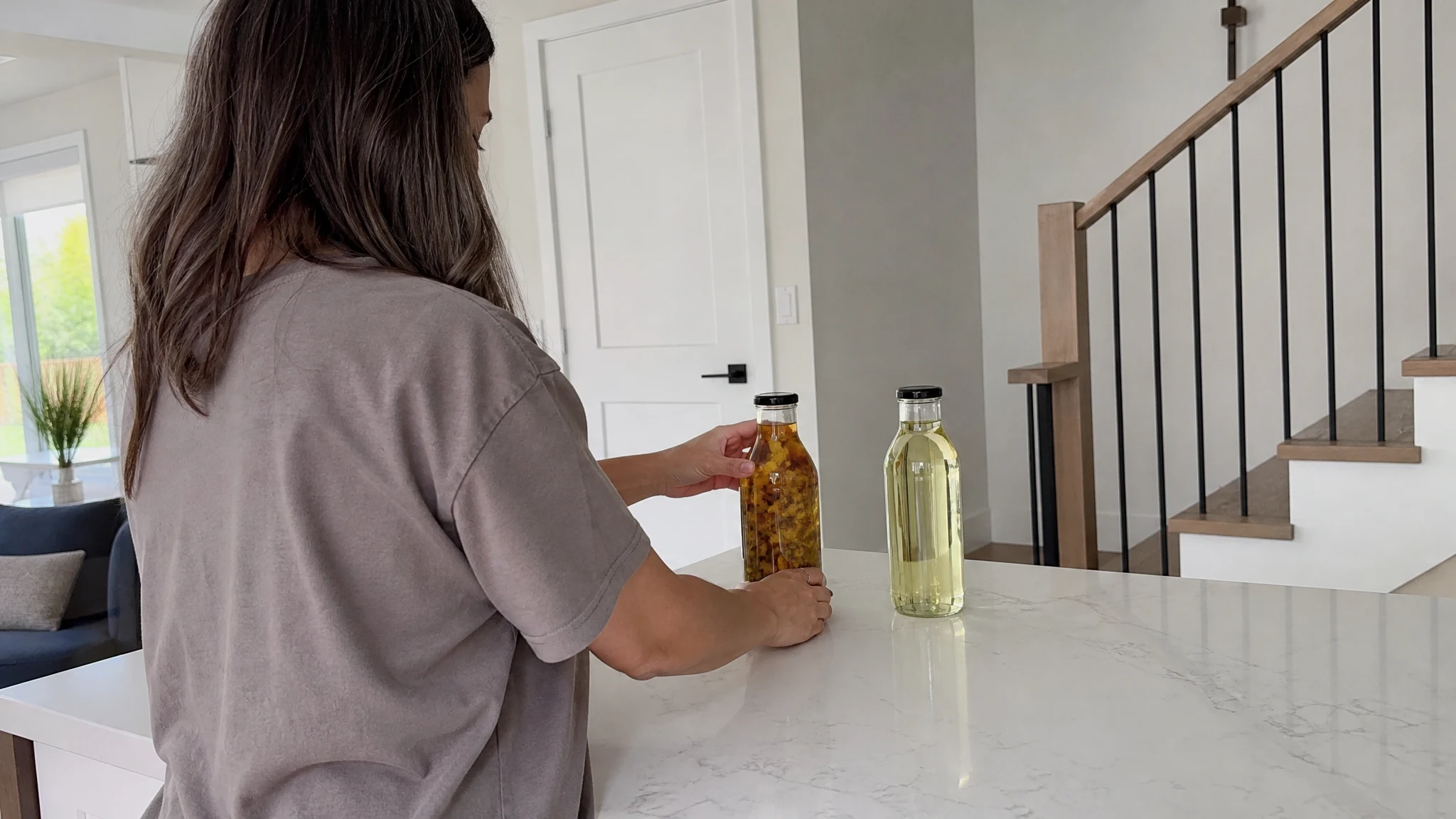
If you like having a few plant-based products around, we suggest keeping each in its own place with its own date written on the cap, and learning what each is for before you need it. Nothing is worse than standing in the bathroom at night, trying to remember which bottle was which. A strip of tape and a marker solve most of that.
So the sorting is simple: arnica for its traditional bruise-and-muscle role under the monograph's cautions, calendula oil for everyday skin comfort. Reaching for the right plant is half the pleasure of keeping a small herbal shelf.
Calendula Oil
Nature's Golden Botanical, bottled: small-batch calendula oil in sizes from 0.5 oz to bulk.
From $13.99
Shop Calendula Oil →Sources & Further Reading
- Community herbal monograph on Arnica montana L., flos (EMA/HMPC, 2014)
- European Union herbal monograph on Calendula officinalis L., flos (EMA/HMPC, 2018)
- Accelerated resolution of laser-induced bruising with topical 20% arnica: a rater-blinded randomized controlled trial (Leu et al., Br J Dermatol, 2010)
- Effects of topical arnica gel on post-laser treatment bruises (Alonso et al., Dermatol Surg, 2002)
- Topical herbal therapies for treating osteoarthritis (Cameron and Chrubasik, Cochrane Database Syst Rev, 2013)
- The seamy side of natural medicines: contact sensitization to arnica (Arnica montana L.) and marigold (Calendula officinalis L.) (Reider et al., Contact Dermatitis, 2001)