Calendula Oil After a Day in the Sun: What Comes First
After a long day outside, the skin tells you about it: warm, tight, a little pink. The order in which you do things afterward matters more than any one product, and calendula oil has a real but modest place in that order. It comes near the end.

Calendula Oil
Our own small-batch calendula oil, in sizes from 0.5 oz to bulk.
From $13.99
Shop Calendula Oil →Sunburn first aid: cool baths before any oil
The American Academy of Dermatology's advice for a sunburn is simple and kind. Take cool baths or showers to ease the discomfort, and pat yourself dry gently. While your skin is still damp, apply a moisturizer containing aloe vera or soy. Drink extra water, because a sunburn draws fluid toward the skin's surface. If blisters form, do not pop them; keep them clean and protect them with petroleum jelly. Blisters mean a second-degree burn, and a burn that is large, blistering or making you feel unwell is one to bring to a doctor.
You will notice the AAD names aloe and soy moisturizers in that list, not an infused oil. We sell an oil and we still think that is the right order. In the first hours, when skin is hot and tender, reach for the cooling steps and a gentle moisturizer of that kind.
When does calendula oil make sense after sun?
A few days later, the heat has gone, the tenderness has eased, and the skin is simply dry and tight, perhaps starting to peel. That is ordinary dry skin, and an oil is a lovely thing for it. An oil on intact skin helps slow moisture loss and leaves skin feeling soft and smooth, and a few drops pressed on while skin is still slightly damp is how we would use ours. That is a suggestion, based on how oils work, not a tested aftercare regimen.
Calendula also has a certain heritage here. The European Medicines Agency's herbal committee lists calendula flower preparations as a traditional herbal use for minor skin irritation, with sunburn given as an example, and it is careful to say this rests on long-standing use rather than clinical trials. Its assessment report adds that most calendula skin studies are small, and that it found no evidence of phototoxic activity, which means the plant itself is not known to make skin more sensitive to light. The research behind it is on other kinds of skin, so we think of the oil as a comfortable moisturizer with a long tradition, and we are happy to leave it at that.
Signs sun-dried skin is ready for oil
You will probably know when the oil's moment has arrived. The hot, tender feeling is gone, the skin no longer stings under a shower, and what is left is that tight, slightly rough feeling across shoulders and noses, sometimes with a little flaking at the edges. That is the point to wash gently, pat dry and leave the skin a touch damp before you reach for the bottle.
Use the lightest hand you can. Warm two or three drops between your palms and press them on instead of rubbing, and go slowly over the places that always seem to catch the most sun: the tops of the shoulders, the backs of the hands, the tops of the feet. If an area still feels hot or tender when you touch it, leave it for another day.
Is calendula oil a sunscreen?
Calendula oil is not a sunscreen. The FDA covers sunscreen under its over-the-counter medicine guidance, and we make no sun protection claim for our oil. For the sun itself, the AAD recommends shade, protective clothing, and a broad-spectrum, water-resistant sunscreen of SPF 30 or higher on skin your clothes do not cover. Our SPF article goes into why homemade recipes cannot stand in for that.
If you are curious about homemade after-sun sprays, our after-sun spray article explains why we lean toward simpler preparations.
Storing oil bottles away from beach-bag heat
It is easy to toss everything into the beach bag, and we would not do that with this bottle. Heat is hard on any oil, so we suggest leaving it at home in a cool cupboard, where it will be waiting when you walk through the door. A 0.5 oz or 1 oz glass bottle is plenty for a few evenings of dry-skin care and gets used up before it has time to linger.
Should you check before putting oil on tender skin?
Calendula is in the daisy family, Asteraceae, and the EU monograph lists a known allergy to daisy-family plants as a reason not to use it. It also notes that skin sensitization has been reported. In an Austrian series of 443 people being patch-tested, 9 reacted to marigold, and since those people were already being tested for suspected allergy it is not a figure for everyone. The reason it matters here is that sunburned skin is already red and itchy, so a reaction would be hard to spot. Test a little on unburned skin, like your inner forearm, a few days before you need it, and do not use it on skin that is raw or blistered. Our patch test guide shows an easy way to do this.
The monograph does not recommend skin use for children under 6, and says safety in pregnancy and breastfeeding has not been established, so ask a pediatrician, OB/GYN or midwife first if that applies.
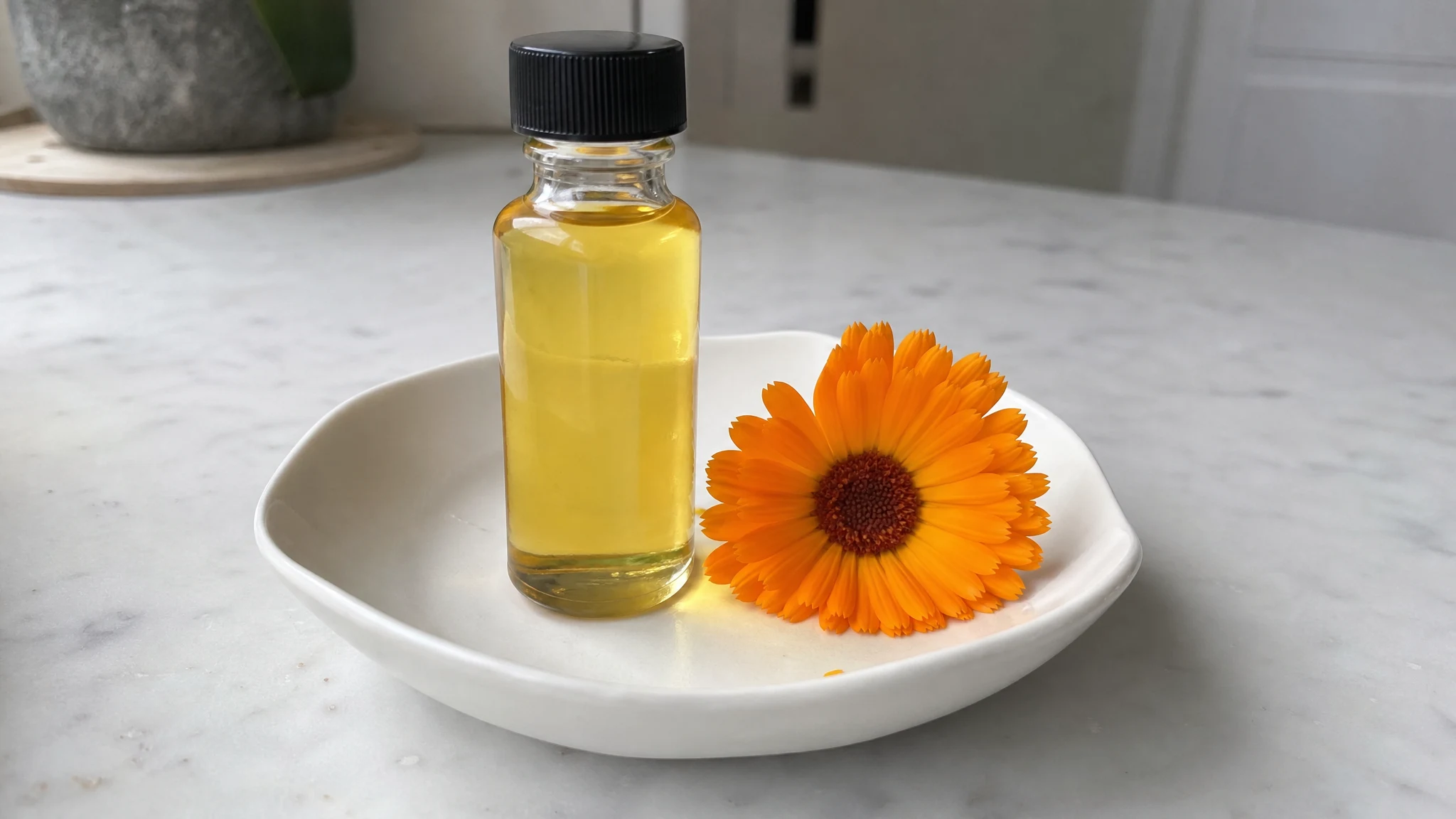
Ingredients in calendula oil: flowers and carrier
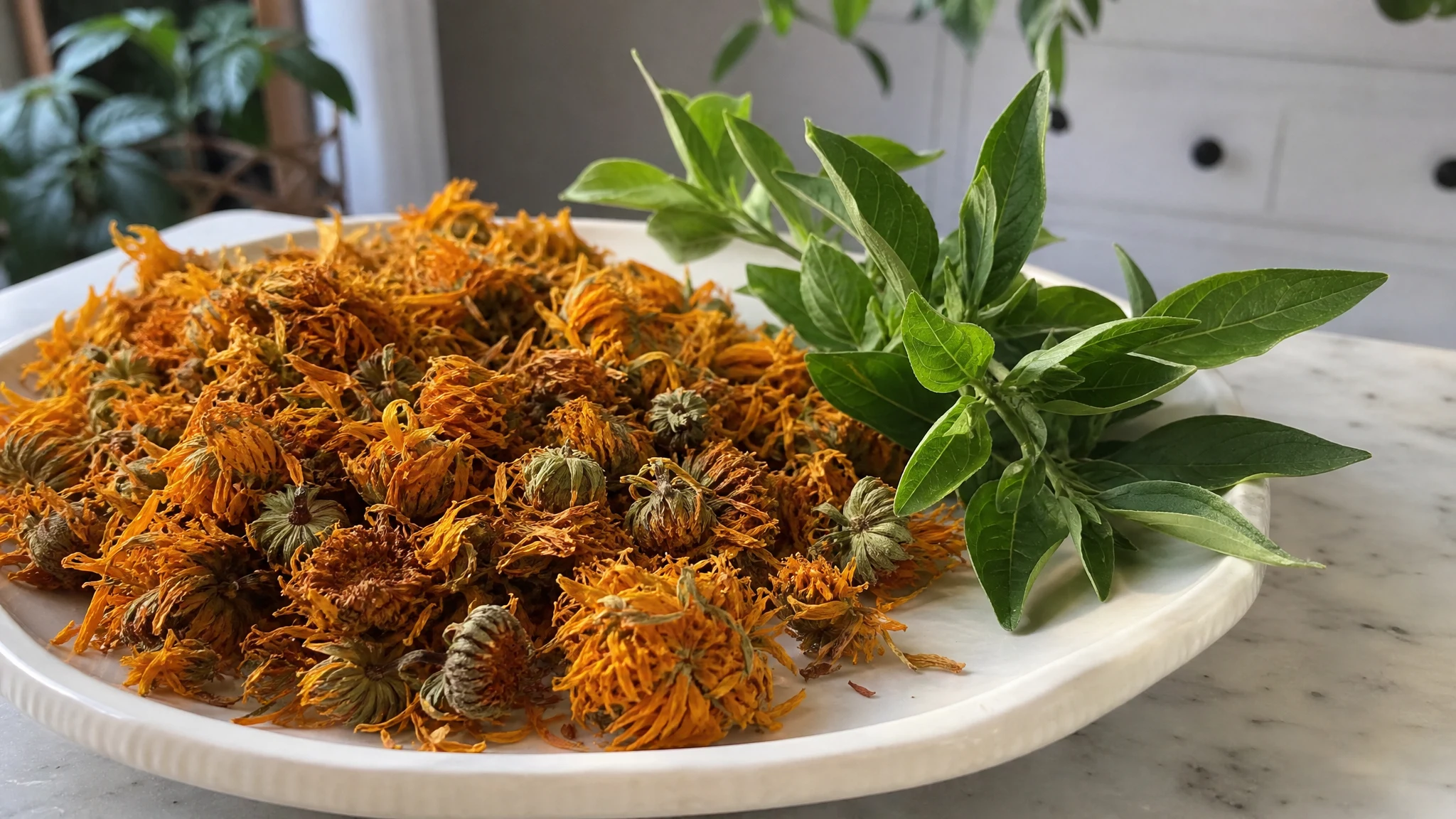
Our oil is made from dried Calendula officinalis flowers, organically grown on family farms. We extract calendula on its own and bring the extract into a carrier oil, adding no preservatives, tocopherol or stabilizers. Bottles are dated and lot-numbered, and the carrier is listed on the batch paperwork, which you can have by emailing us the lot number through the contact page. For a summer routine that puts oil in the right place, our summer article is a good next read.
So the order is: cool down, moisturize with aloe or soy, see a doctor for anything serious, and keep a bottle of calendula oil for the dry, tight days that follow.
Calendula Oil
Nature's Golden Botanical, bottled: small-batch calendula oil in sizes from 0.5 oz to bulk.
From $13.99
Shop Calendula Oil →Sources & Further Reading
- American Academy of Dermatology, "How to treat sunburn." aad.org
- European Medicines Agency, "European Union herbal monograph on Calendula officinalis L., flos" (EMA/HMPC/437450/2017). ema.europa.eu
- European Medicines Agency, "Assessment report on Calendula officinalis L., flos" (EMA/HMPC/603409/2017). ema.europa.eu
- FDA, "Sunscreen: How to Help Protect Your Skin from the Sun." fda.gov
- Reider N et al., 2001. "The seamy side of natural medicines: contact sensitization to arnica (Arnica montana L.) and marigold (Calendula officinalis L.)." Contact Dermatitis. PubMed 11722485