Can You Put Calendula Oil in a Room Spray?
Calendula oil is a wonderful thing to put on skin, and a poor thing to put in a spray bottle. We understand the appeal of a golden, flower-based room mist, but oil and water simply will not stay together, and a spray bottle is mostly water. Here is why we steer calendula oil toward skin, and what we would do for a fresher-smelling room instead.

Calendula Oil
Our own small-batch calendula oil, in sizes from 0.5 oz to bulk.
From $13.99
Shop Calendula Oil →What happens when calendula oil meets a spray bottle?
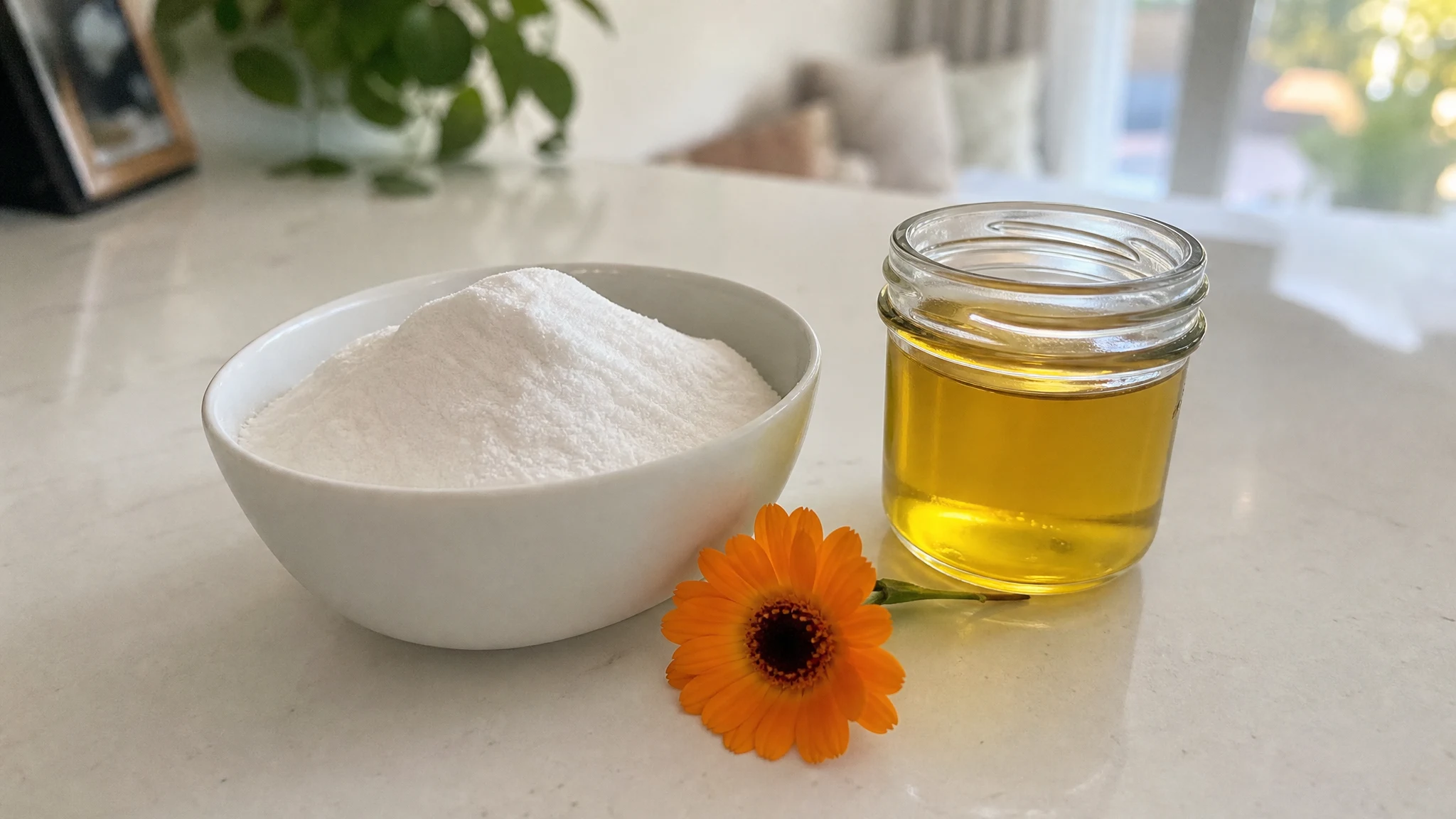
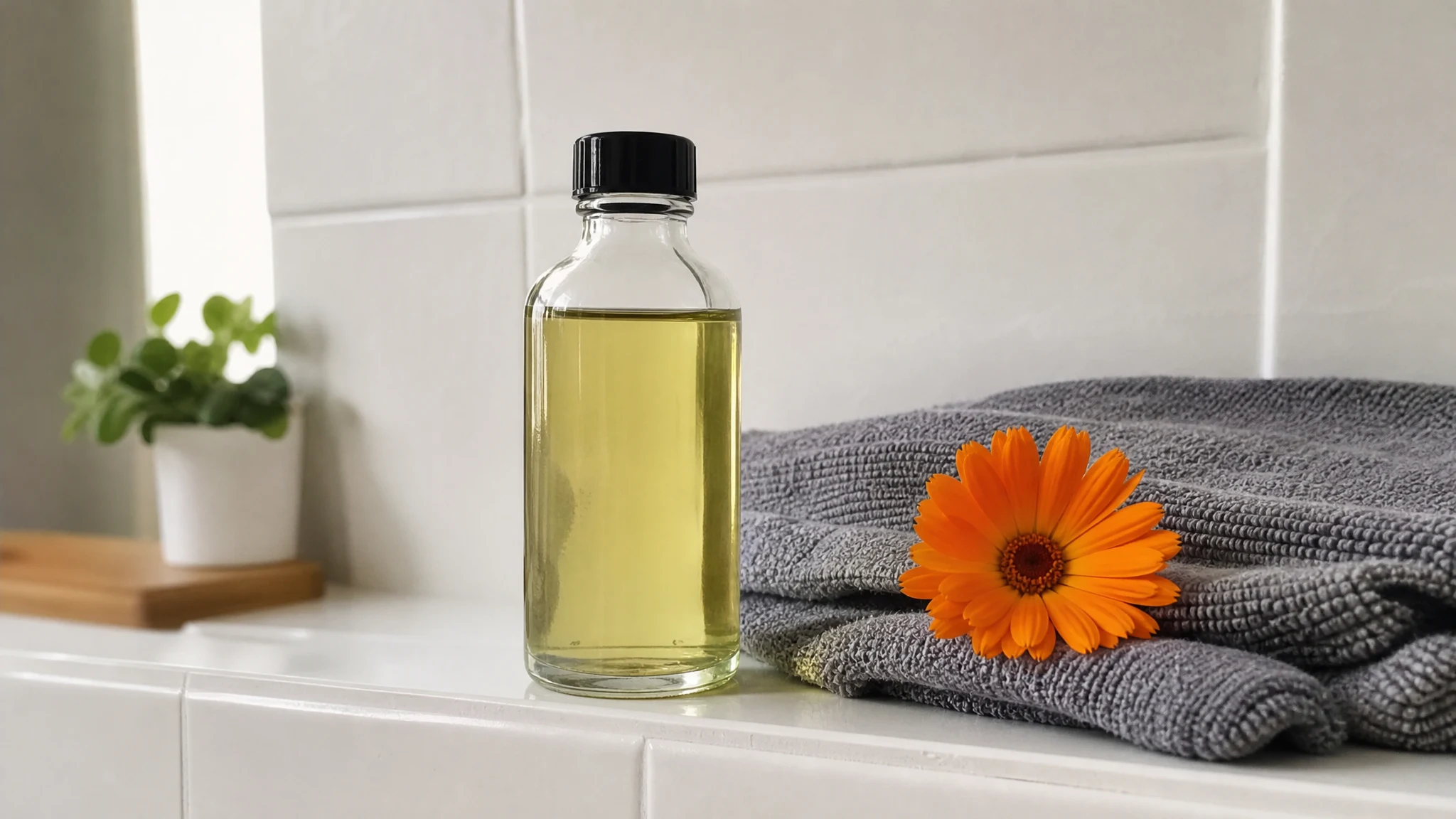
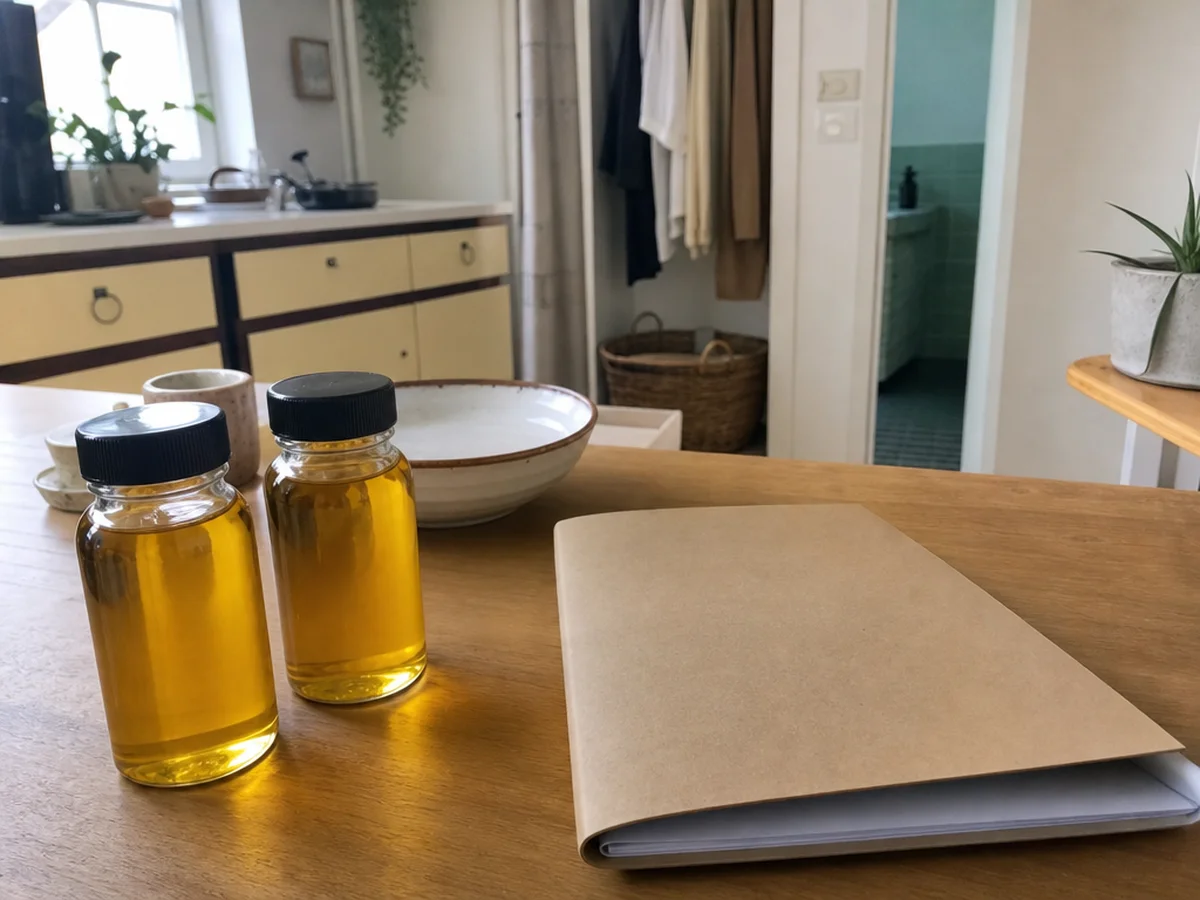
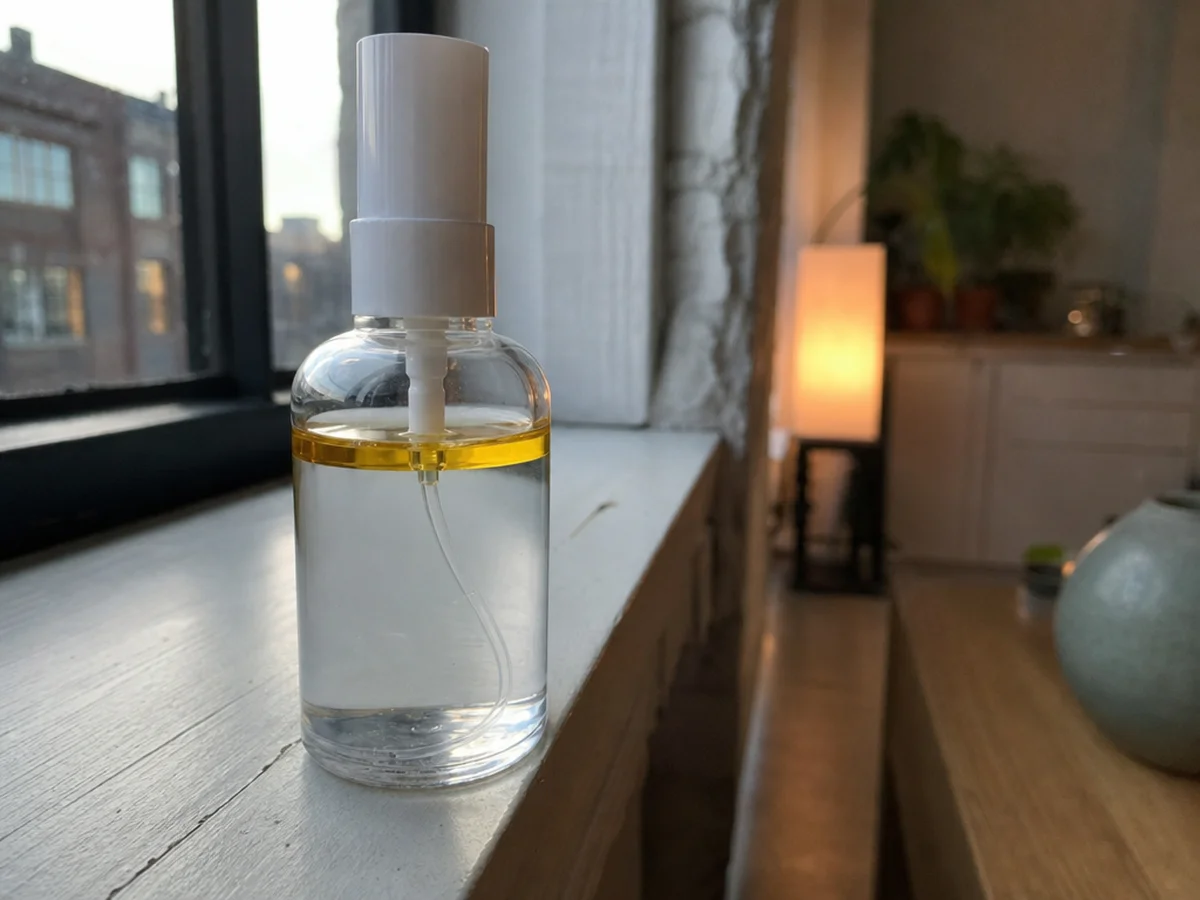
Our oil is an infused oil, with calendula extracted into a carrier. Shake it into water and it looks mixed for a moment, then the oil rises to the top. A spray nozzle draws from the bottom, so the first sprays can be mostly water and the last mostly oil. Oil that lands on a cushion or a wooden table stays there as a slick, and calendula oil carries a golden-orange color, so light fabric deserves a cautious dab first.
Recipes often add an emulsifier or solubilizer to fix this. That is a formulation job with its own ingredients, and we would send you to a cosmetic-supply source for those rather than guess. Whatever you build, the scent of a "calendula" mist would come from the fragrance you add, because the oil itself is mild.
Why do water-based sprays need preservatives?
Our oil has no preservatives, no added tocopherol and no stabilizers, which is perfectly comfortable in an oil. Water is different. FDA lists contaminated water and a weak preservation system among the ways cosmetics become contaminated, and notes that adding water dilutes the preservatives in a product (FDA, Microbiological Safety and Cosmetics). That page is about cosmetics, not room sprays, but water behaves the same way in any bottle. A spray that sits on a shelf for weeks is a spray that needs a proper preservation system, and our oil was never designed to be one.
Ways to improve indoor air beyond air fresheners
The EPA's indoor air guide lists air fresheners among household products that release volatile organic compounds, and says the most effective way to improve indoor air is usually to eliminate individual sources or reduce their emissions, with fresh outdoor air helping to dilute what remains (EPA, Care for Your Air: A Guide to Indoor Air Quality). In practice that points to a simple routine:
- Find the source. Bins, damp towels, shoes and fridge corners are usual suspects.
- Open the windows for a few minutes and run the kitchen and bathroom fans.
- Wash soft furnishings that hold smells.
If you love a scented home, a product made for the purpose, with a label you can read, is the sensible route.
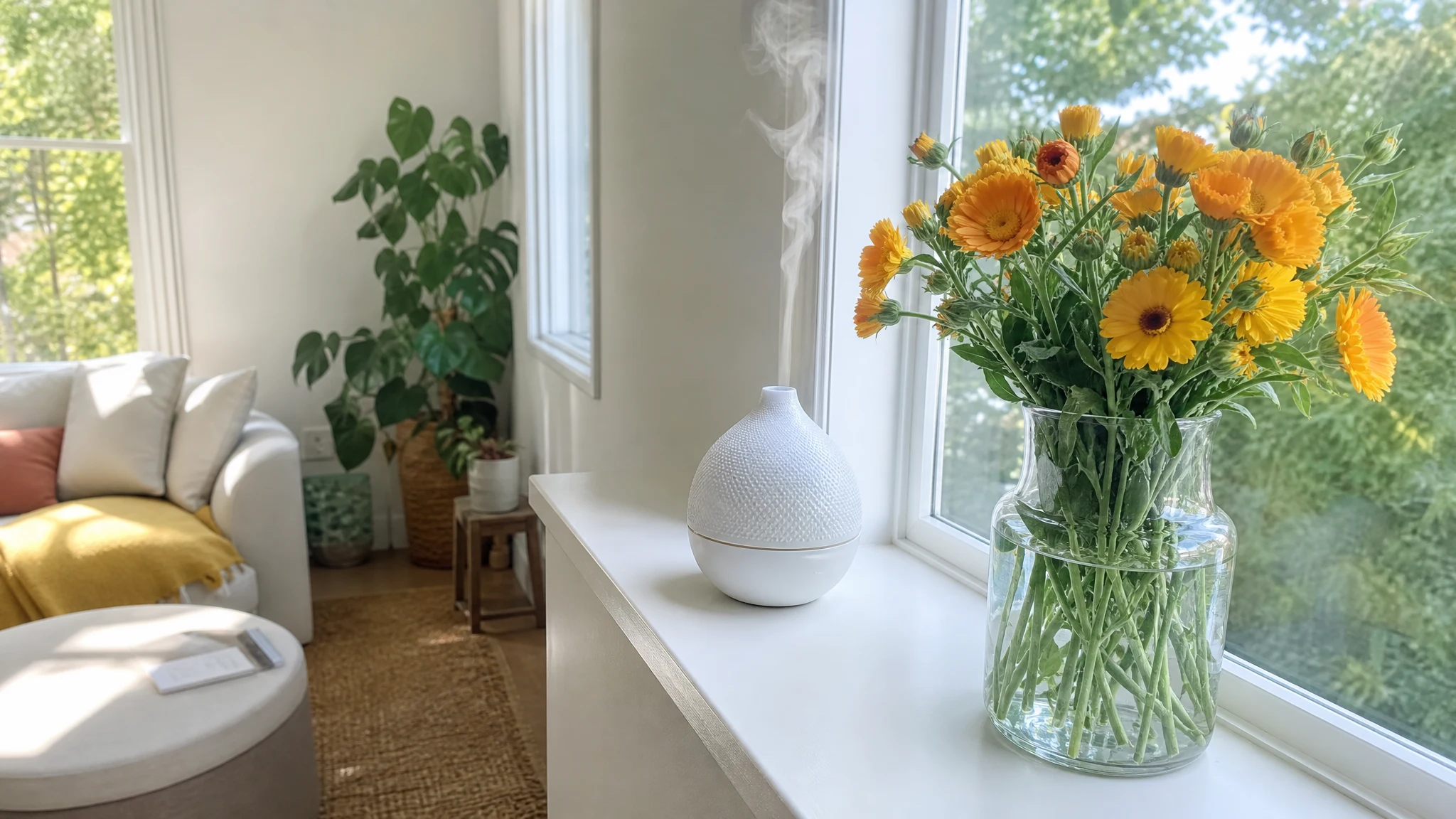
The EPA also suggests that when you do use products that may release pollutants, you ventilate and follow the manufacturer's instructions. That is a good habit with any scented product, and a good reason to choose one with clear directions on the label. A small bowl of dried flowers on a shelf, or simply a clean, airy room, is a gentler way to give a space some character without introducing water or oil to the air.
Gentler ways to freshen a room naturally
If what you love is the feeling of a home that smells welcoming, there are quiet ways to get there. Fresh air is the plainest: open a window while you cook, and again when you finish. A bowl of dried flowers on the hall table adds color and a faint, natural scent. Clean linens, a washed doormat and an emptied bin do more for a room than any mist.
It also helps to keep the kitchen and bathroom dry. Damp is the source of many stale smells, and a towel dried properly in the sun is hard to beat. These are small habits, and none of them needs a bottle with a nozzle.
Pet and allergy cautions for scented sprays
Scents deserve a second thought around animals. Pet Poison Helpline advises that concentrated essential oils should never be applied directly to cats (Essential Oils and Cats | Pet Poison Helpline), and our cat guide covers calendula in more depth. Fragrance components can also trigger sensitivities in some people (FDA, Fragrances in Cosmetics), so keep that in mind if anyone at home is sensitive.
The thread running through all of this is that every ingredient has a home where it works best. Oil is happiest on skin, in a balm or in a roller bottle, and water-based products belong with a preservation system built for them. Matching the ingredient to the job gives you better results with less worry.
What should you do with an oil-and-water spray?
If you have a spray bottle of oil and water on the shelf, there is no need to feel bad about it. Our recommendation is to stop using it, throw out the mixture, and wash the bottle well with hot, soapy water. Wipe up any oil that landed on wood or fabric with a little dish soap and a cloth, and keep the golden-orange tint from setting by acting early. Then keep your bottle of calendula oil for skin.
Calendula oil uses: massage, salve and roller perfume
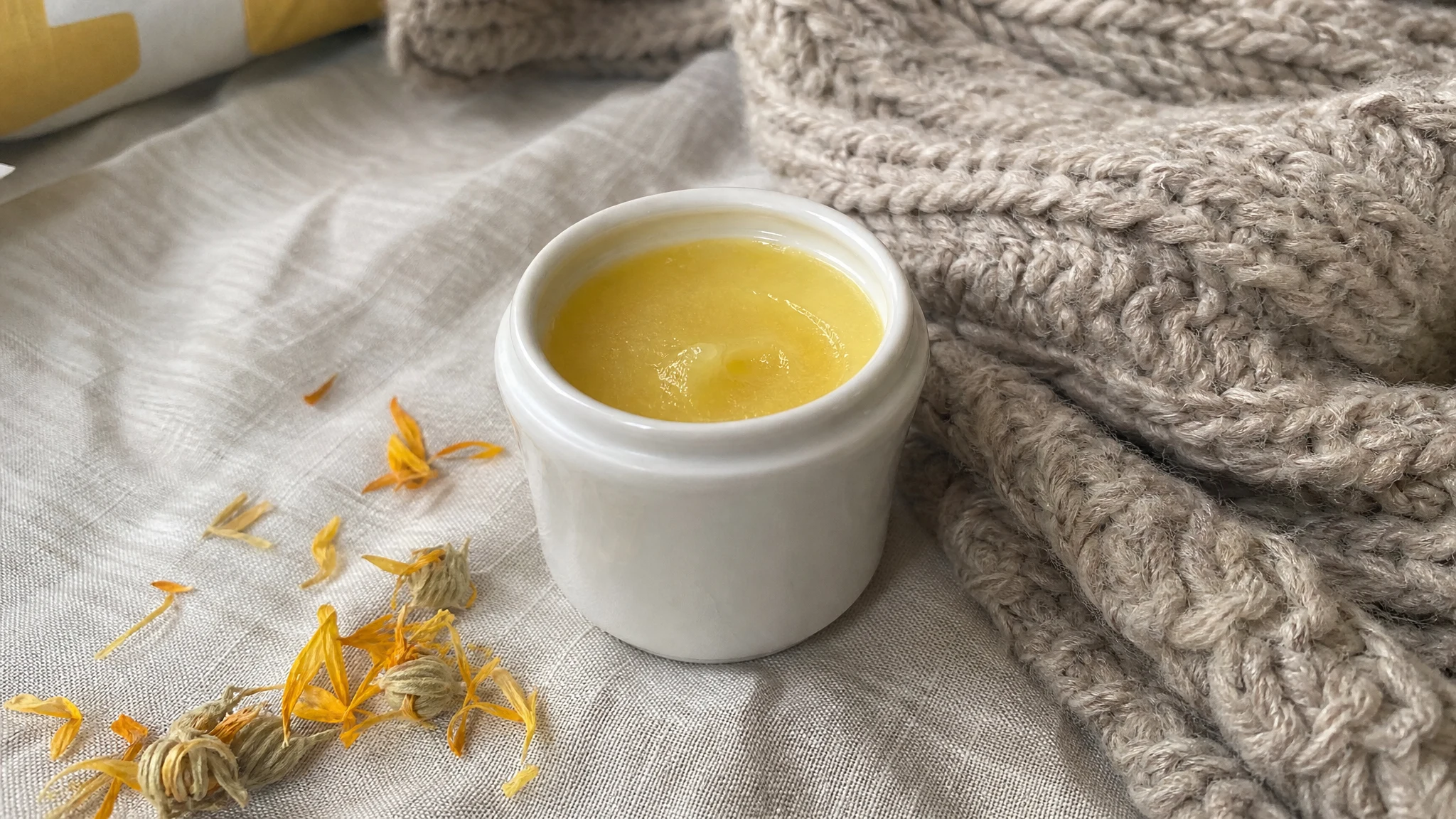
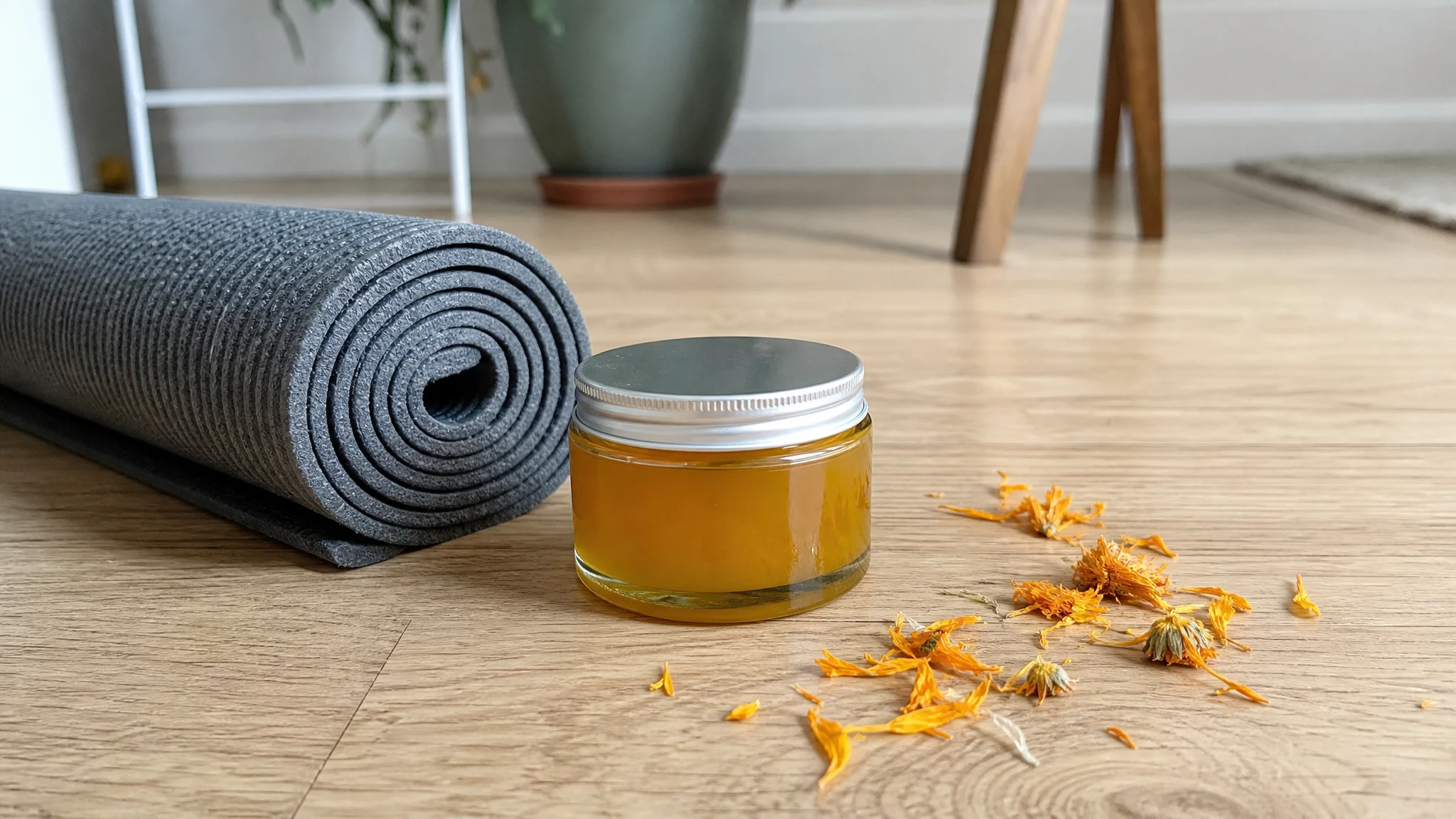
Put it where an oil belongs. It is lovely as a gentle massage oil, in a water-free salve, or as the base of a roller perfume. Calendula is in the daisy family, so patch test before regular use on skin. Our oil is for external cosmetic use, and it does its best work on the skin, not in the air.
Calendula Oil
Nature's Golden Botanical, bottled: small-batch calendula oil in sizes from 0.5 oz to bulk.
From $13.99
Shop Calendula Oil →