Calendula Oil as a Post-Workout Rub: A Realistic Look
After a hard workout, the nicest part of a rub is the rubbing. Slow pressure, warm hands, a smooth glide. A good massage oil makes that easy, and calendula oil is a lovely one to use: gentle in feel, simple in ingredients, and lightly golden. Here is how we would use it, and what the research says about where the benefit comes from.

Calendula Oil
Our own small-batch calendula oil, in sizes from 0.5 oz to bulk.
From $13.99
Shop Calendula Oil →Massage, not the oil, drives post-workout recovery
A 2018 systematic review and meta-analysis pooled 99 studies on ways to recover after exercise. Its conclusion was that massage seems to be the most effective method for reducing delayed onset muscle soreness and perceived fatigue. The review compared techniques, not oils, so the sensible reading is that an oil's job is to let your hands move without dragging on skin. Calendula oil does that job well.
It is tempting to credit the plant's reputation for more. Laboratory work on calendula's faradiol esters, done in mouse-ear swelling tests with isolated compounds, is real but it is not about this use, and nobody has shown how much of those compounds ends up in an infused oil. The EU herbal committee lists calendula for minor skin inflammation and minor wounds on a traditional-use basis, not for muscles. So we sell our oil as a cosmetic oil, and the FDA's aromatherapy page explains why: claims about easing pain or relaxing muscles are what make a product a drug. If you gift or sell rubs, call them massage oils.
Post-workout rub ritual with warmed drops
One of the nicest things about a rub is that it slows you down. After a workout, take a shower, towel off, and give yourself five quiet minutes before you rush to the next thing on your list. Warm a few drops of the oil between your palms and notice the faint, sunny scent of the flowers. Work along the large muscles with slow strokes, using your whole hand rather than your fingertips. If a spot feels tender, ease off and go lighter. The oil is there to make that time pleasant and easy on your hands.
Plain infused calendula oil as a muscle rub
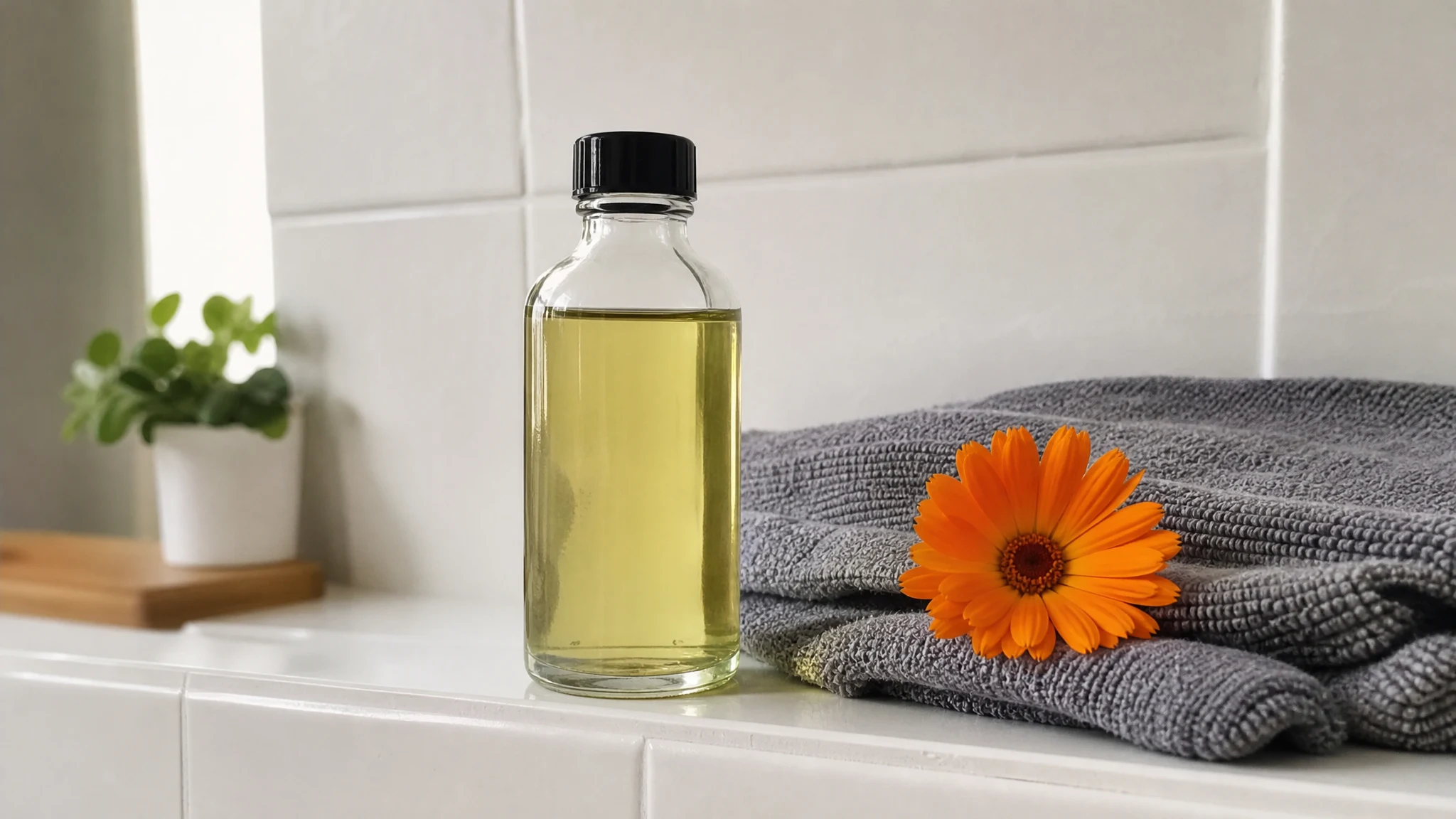
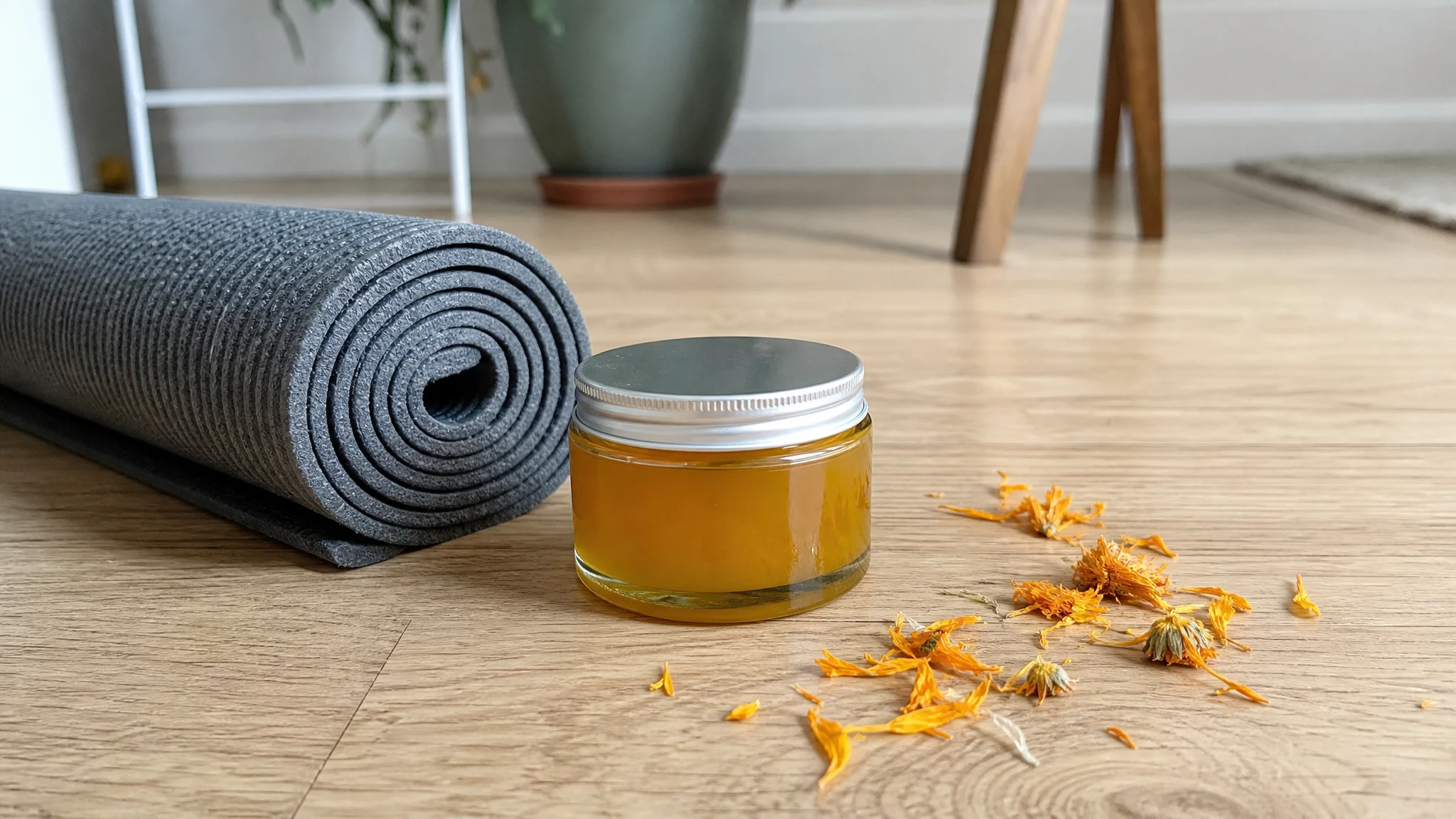
The simplest rub is the infused oil, applied with slow strokes after you have cooled down and showered. There is nothing to melt and nothing to spoil, and just one ingredient to patch test. On large muscle groups an oil gives more glide than a salve and more working time than a cream.
Beeswax salve ratio for a leak-proof gym bag rub
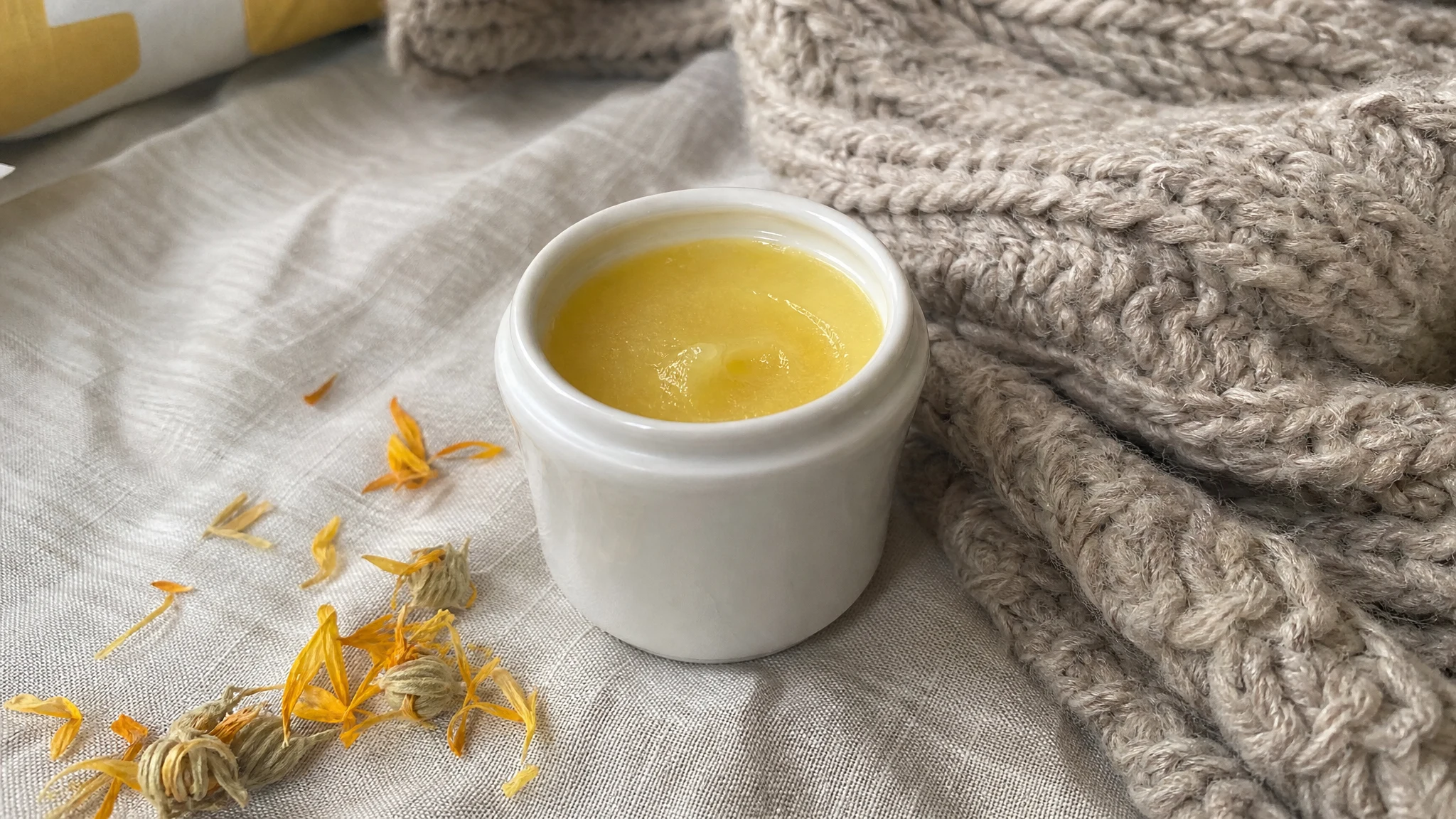
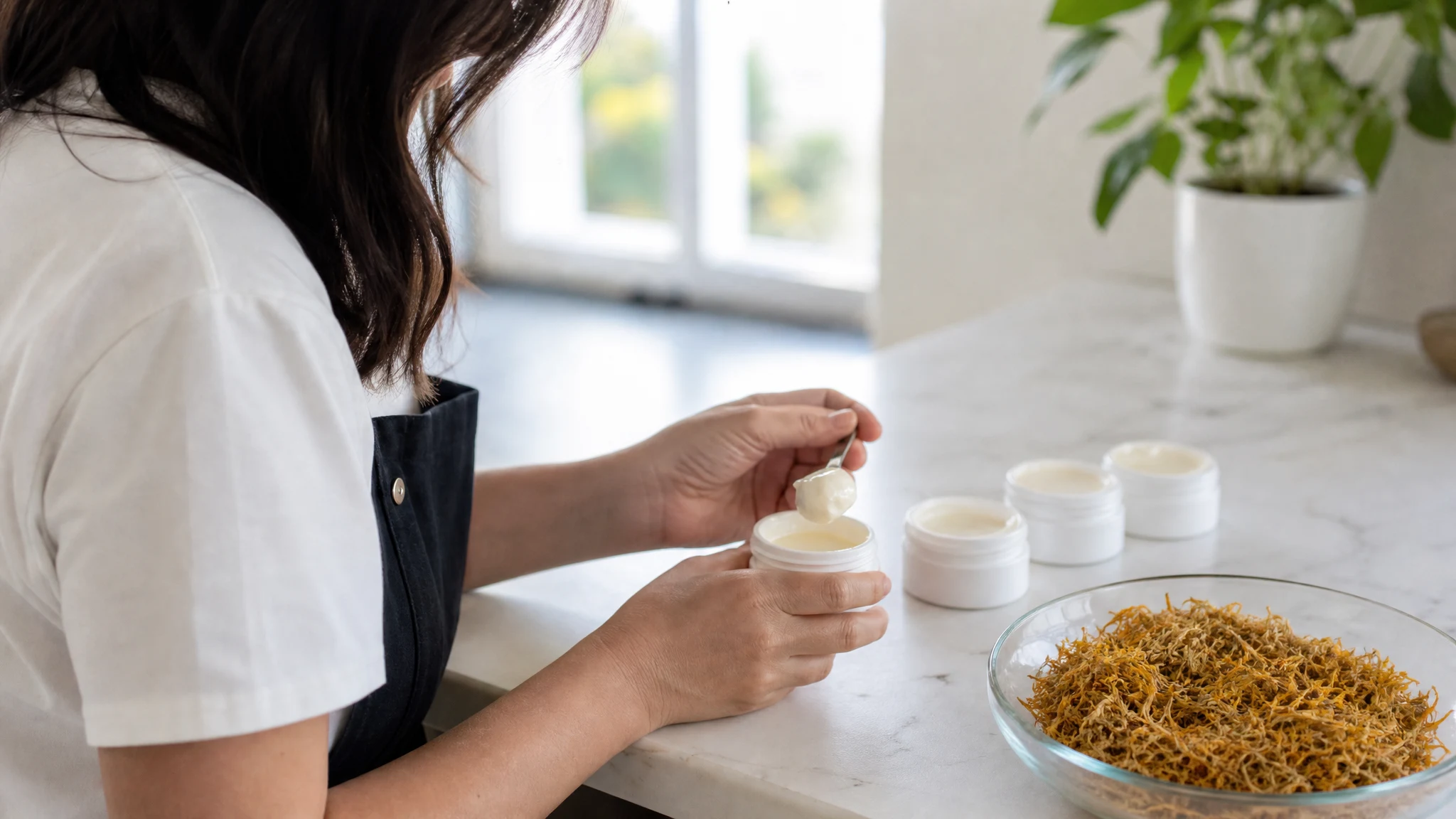
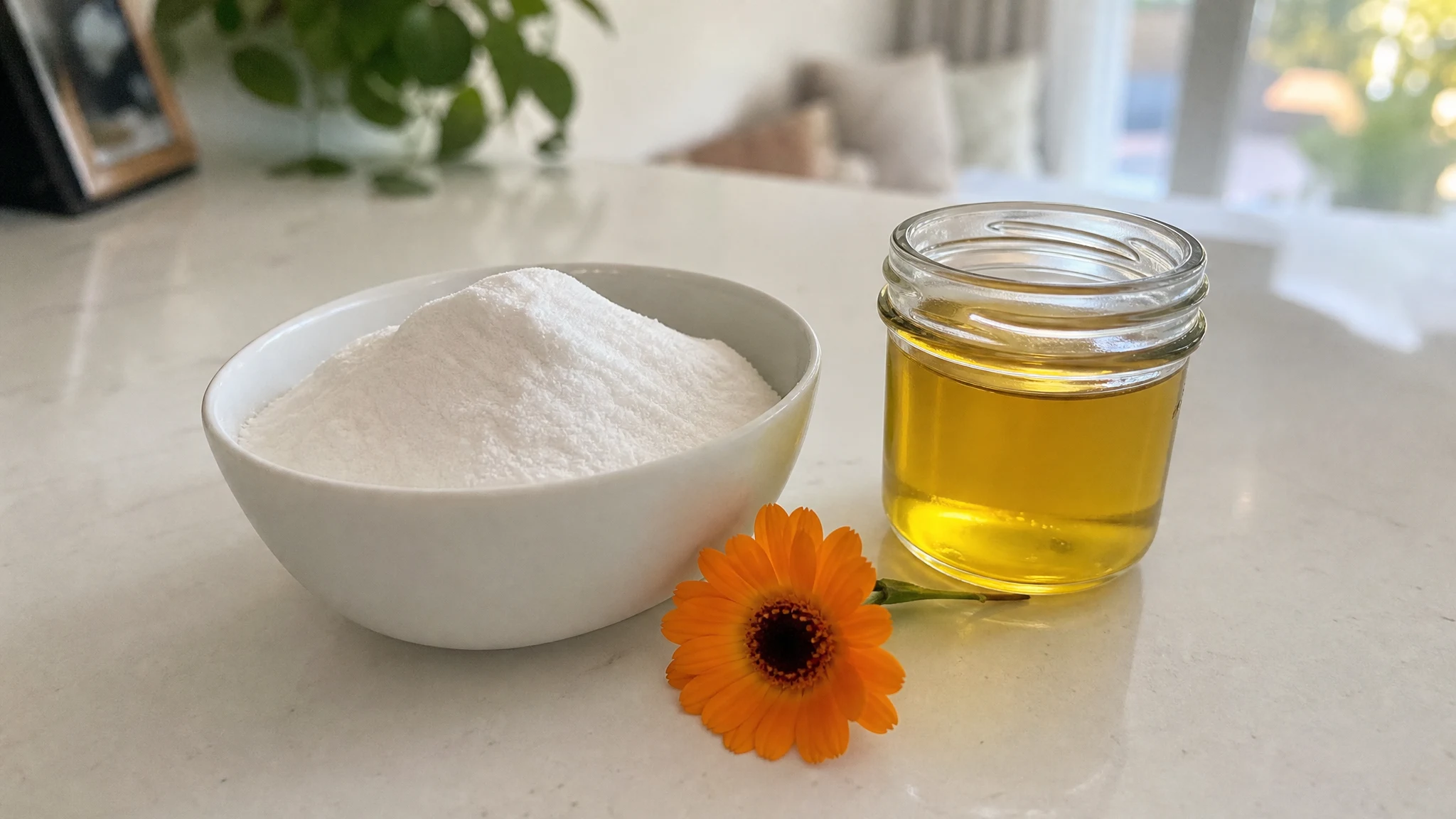
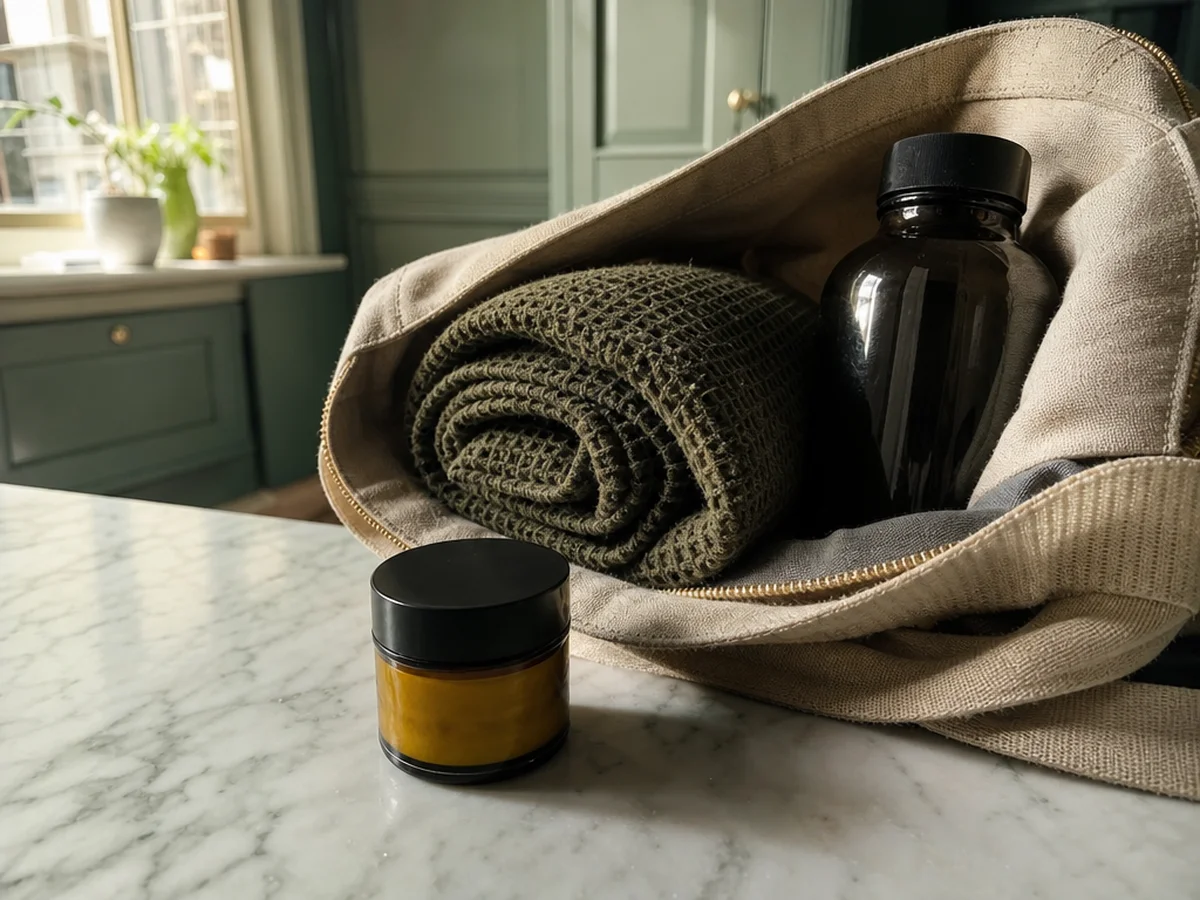
If you want something that will not leak in a bag, a balm is the answer. The usual starting point is about 1 part beeswax to 4 parts infused oil, softer with less wax, firmer with more. Mountain Rose Herbs' salve recipe uses 1 ounce of beeswax to 4 ounces of oil and suggests testing the set on a cold spoon. By weight, that works out to 80 g of oil and 20 g of beeswax for a 100 g batch. Melt both gently in a double boiler, pour into a tin and let it set. Our salve article covers the method in more detail. Keep it oil and wax only, because water-containing products need preservation and a balm of oil and wax does not.
Beeswax and tins are easy to find at a craft shop or natural grocery store.
Should you add peppermint or eucalyptus to a rub?
Most muscle rub recipes add essential oils such as peppermint or eucalyptus. We would leave them out of a first batch, so that if your skin reacts you know which ingredient is responsible. The National Association for Holistic Aromatherapy says most blends fall between 1 and 5 percent. If you add one, start at the bottom of that range and do the arithmetic: 1 percent of a 30 mL bottle is 0.3 mL. If you already use a commercial menthol or salicylate rub, ask a pharmacist before layering anything over it. Keep scented blends away from pets, since Pet Poison Helpline explains cats can absorb essential oils through the skin or swallow them while grooming, and ask a clinician before using them around children or in pregnancy.
If you plan to carry a tin to the gym, label it with the date you made it, and keep it in the shade of your bag rather than the trunk of a warm car. A melted balm still works, it just sets differently once it cools. For a first batch, pour a small amount rather than a full jar, so you can learn what proportions you like before you commit a whole bottle of oil.
Who should skip a calendula muscle rub?
- Daisy-family allergy. Calendula is an Asteraceae plant, and the EU monograph lists hypersensitivity to that family as a contraindication. Patch test first; our patch test article shows how.
- Young children, pregnancy and breastfeeding. The monograph does not recommend skin use under six and says safety in pregnancy and lactation has not been established. A pediatrician or an OB/GYN or midwife can advise.
- Broken, burned or swollen skin. Oil is not the right tool for a sprain's swelling or a wound; see a clinician.
When is muscle soreness a sign of rhabdomyolysis?
Ordinary post-workout stiffness settles in a few days. MedlinePlus describes rhabdomyolysis as muscle breakdown that releases muscle contents into the blood, with symptoms that include dark, red or cola-colored urine, decreased urine output, weakness and muscle aching, and it lists severe exertion among the causes. If you notice those signs after hard exercise, contact a clinician. Sharp pain, a pop, a joint that will not bear weight, or soreness that is lopsided or worsening after several days also deserves a physician or physical therapist, not an oil.

Storing calendula oil away from hot gym bags
Our oil is made from dried organically grown calendula flowers, extracted on their own and brought into a carrier oil, with nothing added. That means no stabilizers, so keep the bottle closed and out of hot gym bags and direct sun. Our storage article has the handling details. The carrier is on the batch paperwork; email the lot number to [email protected] for it. For more on how it compares with the other famous muscle-and-bruise plant, see calendula oil and arnica oil, and for technique, calendula oil in massage.
Make the rub because you enjoy a smooth, simple oil and a few quiet minutes with your own two hands.
Calendula Oil
Nature's Golden Botanical, bottled: small-batch calendula oil in sizes from 0.5 oz to bulk.
From $13.99
Shop Calendula Oil →Sources & Further Reading
- Dupuy O et al., Front Physiol, 2018: An Evidence-Based Approach for Choosing Post-exercise Recovery Techniques to Reduce Markers of Muscle Damage, Soreness, Fatigue, and Inflammation: A Systematic Review With Meta-Analysis
- Zitterl-Eglseer K et al., J Ethnopharmacol, 1997: Anti-oedematous activities of the main triterpendiol esters of marigold (Calendula officinalis L.)
- European Medicines Agency: European Union herbal monograph on Calendula officinalis L., flos
- FDA: Aromatherapy
- Mountain Rose Herbs: How to Make Herbal Salves
- National Association for Holistic Aromatherapy: Safety
- Pet Poison Helpline: Essential Oils and Cats
- MedlinePlus: Rhabdomyolysis