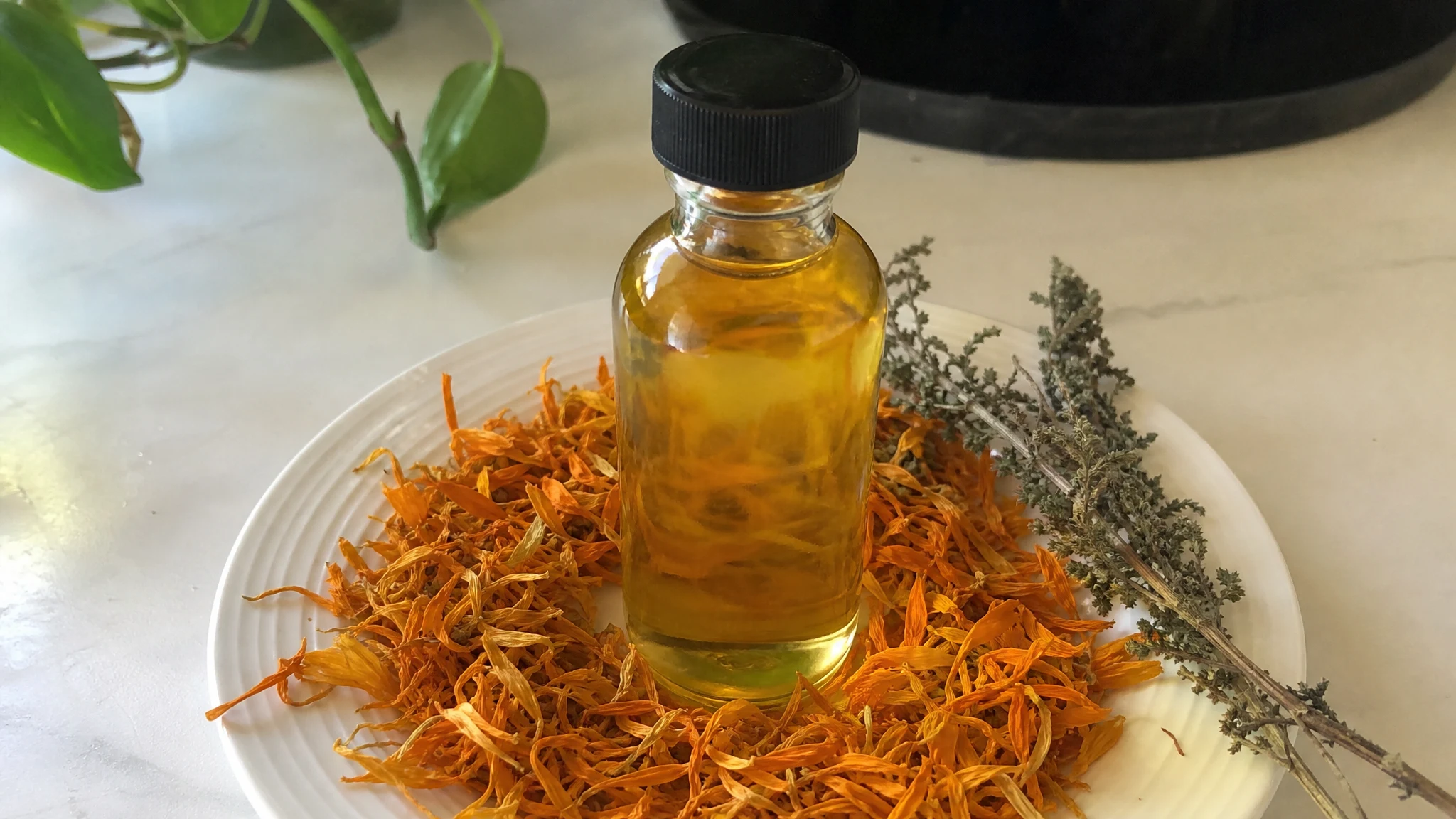
DIY Calendula Oil Roller Perfume: Where to Start
Picture a small amber roller bottle in your bag, filled with something that smells like you chose it on purpose. Calendula oil makes a lovely foundation for that kind of personal perfume, though not for the reason most people expect. It brings the golden oil, the glide and the soft skin feel, and you bring the fragrance.

Calendula Oil
Our own small-batch calendula oil, in sizes from 0.5 oz to bulk.
From $13.99
Shop Calendula Oil →What does calendula oil add to a perfume base?
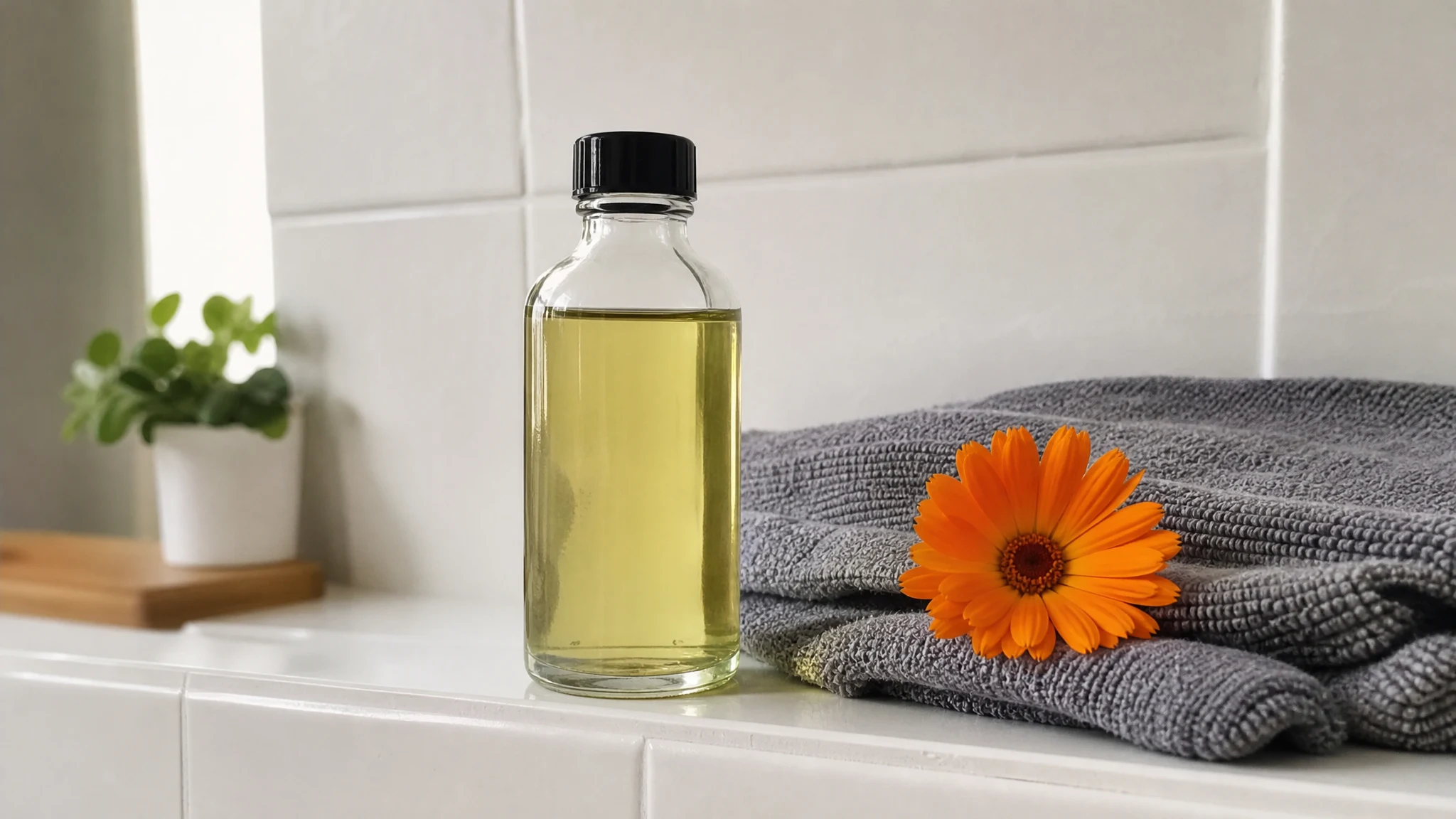
Our calendula oil is an infused oil: we extract calendula flowers on their own, then bring that extract into a carrier oil. Most of what you pour out of the bottle is carrier, which is exactly what a perfume base should be. It spreads easily, it sits gently on the skin, and it carries scent without shouting over it. The aroma of the oil itself is quiet, so whatever essential oils you choose will lead the blend. That is a feature. You are in charge of the character, and the oil keeps it smooth.
If you would like ideas for pairings, our guide to blending calendula oil with essential oils goes through the options, and our Sunmeadow blend shows how simple a two-ingredient scent can be: three parts calendula oil to one part sweet orange.
It helps to think in layers, the way perfumers do. A bright, airy scent tends to greet you first and fade first, a rounder floral or herbal scent settles in behind it, and a warm woody or resinous one lingers longest. With only a few essential oils you can build all three layers, and because an oil perfume stays close to the skin rather than filling a room, it feels personal. Dab it on wrists, behind the ears or at the base of the throat, and reapply when you like.
Mixing an alcohol-free oil roller perfume blend
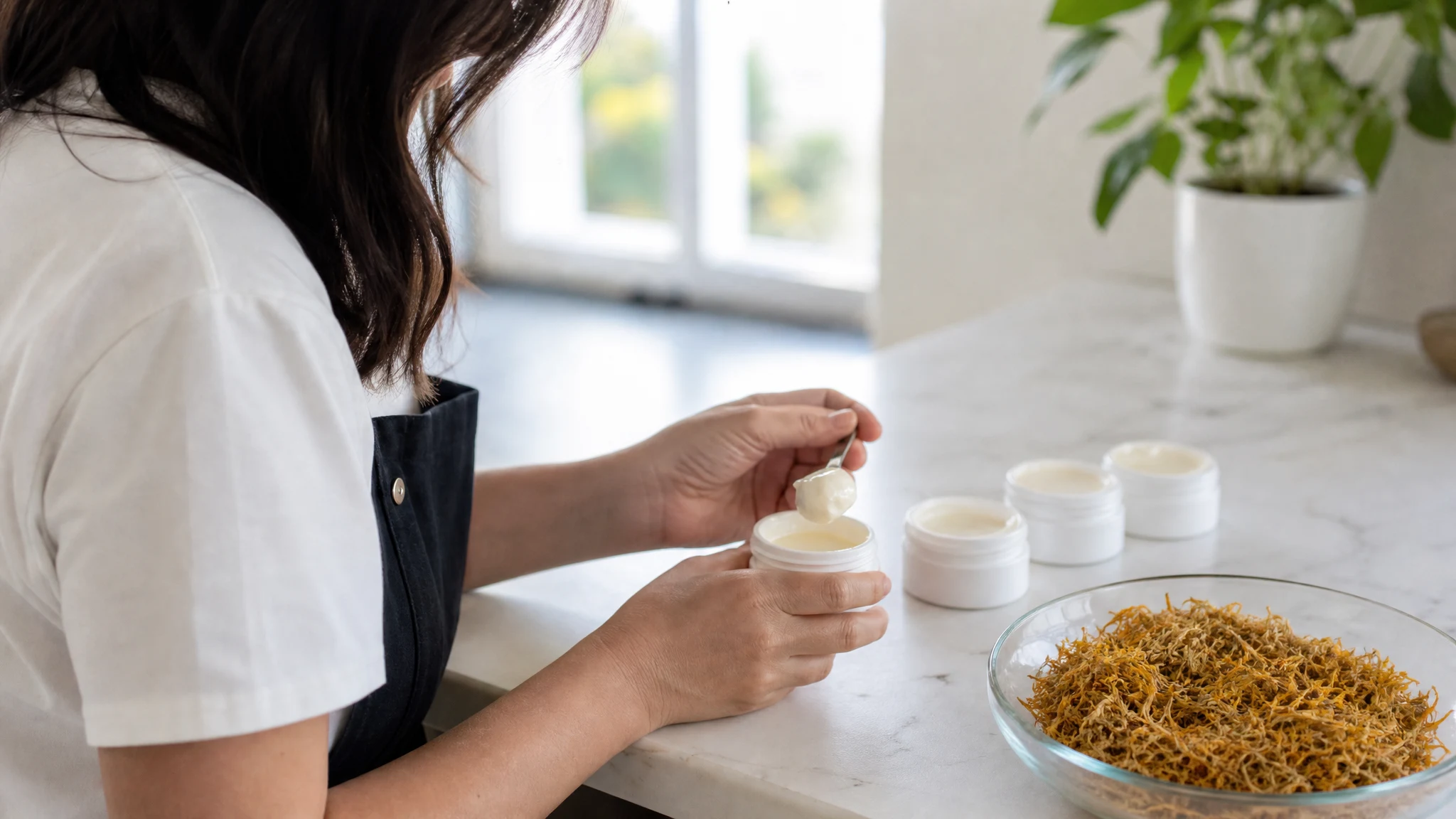
An oil perfume has no alcohol and no water, so the scent sits right against your skin at exactly the strength you mix. That is why we like to go lighter than feels natural at the bench. Start with the smallest amount of essential oil you can still smell, wear it for a day, and add more only if you want it. For specific limits on any essential oil you plan to use, check the current IFRA guidance for that oil rather than relying on a rule of thumb, since fragrance materials differ widely.
A few practical habits make a big difference:
- Use a dark glass roller bottle and make small batches. Light and warmth are not kind to oils, and a perfume lives in a bag. Our own bottles are dated and lot-numbered, so you can always see how old your base is.
- Keep the blend water-free. FDA notes that adding water dilutes the preservatives in a cosmetic and can bring in microbes (FDA, Microbiological Safety and Cosmetics). Our oil contains no preservatives, no added tocopherol and no stabilizers, which suits an all-oil blend, so leave water out of it.
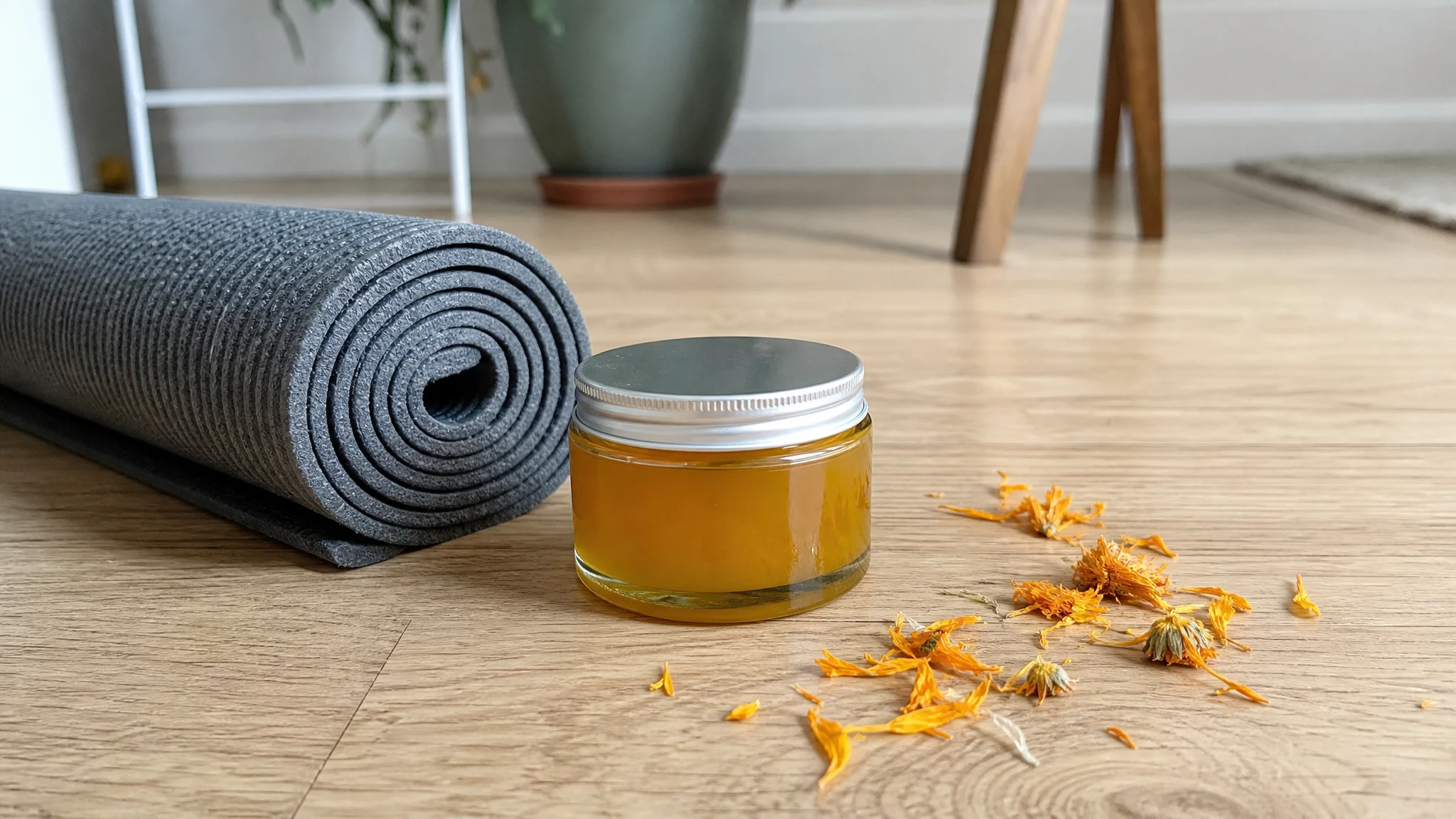
- Test for staining. Calendula oil has a golden-orange color. It is sensible to dab a little on a white cotton cloth before wearing a blend at the collar of a pale shirt.
- Keep other base ingredients on your own shopping list. Empty roller bottles, extra carrier oils and essential oils are best bought from a craft supplier or a pharmacy.
Smelling essential oils one at a time before blending
The scent you pick on a sleepy Saturday is not always the scent you want on a Tuesday afternoon. Our recommendation is to smell your essential oils one at a time first, with a gap of a minute or two between them so your nose can reset. Sniffing the inside of your elbow between oils, or just stepping into fresh air, helps. Then pair two scents you like on a tissue before you commit them to a bottle.
Wear a new blend for a whole day before you decide. A roller perfume changes as the hours pass, and you will notice the opening notes fade and something warmer remain. Some blends you love at first will feel heavy by evening, and others will grow on you. A small bottle makes that experiment cheap.
Roll it on, and then give it a minute before you dress. The oil will settle into your skin, and the scent stays close, meant for you and whoever stands near.
Calendula officinalis, fragrance allergy and skin sensitivity
Plant-derived does not mean problem-free. FDA says some components of fragrance formulas may cause allergic reactions or sensitivities in some people (FDA, Fragrances in Cosmetics). Calendula has its own note: it belongs to the daisy family, and the European herbal monograph lists hypersensitivity to that family among its contraindications (European Union herbal monograph on Calendula officinalis L., flos). So patch test your finished blend on a small area before it becomes a daily habit. Our patch test guide walks through it, and since a perfume goes on every day, give it a few days before you decide.
One more tip: write the date and the blend on the bottle. When you find a combination you love, you will want to make it again, and a little note saves you from guessing next time.
Done this way, a calendula roller perfume is a small, enjoyable project: a golden base, one or two scents you love, and a bottle that is entirely yours.
Calendula Oil
Nature's Golden Botanical, bottled: small-batch calendula oil in sizes from 0.5 oz to bulk.
From $13.99
Shop Calendula Oil →