Calendula Salve Recipe: Just Oil and Beeswax
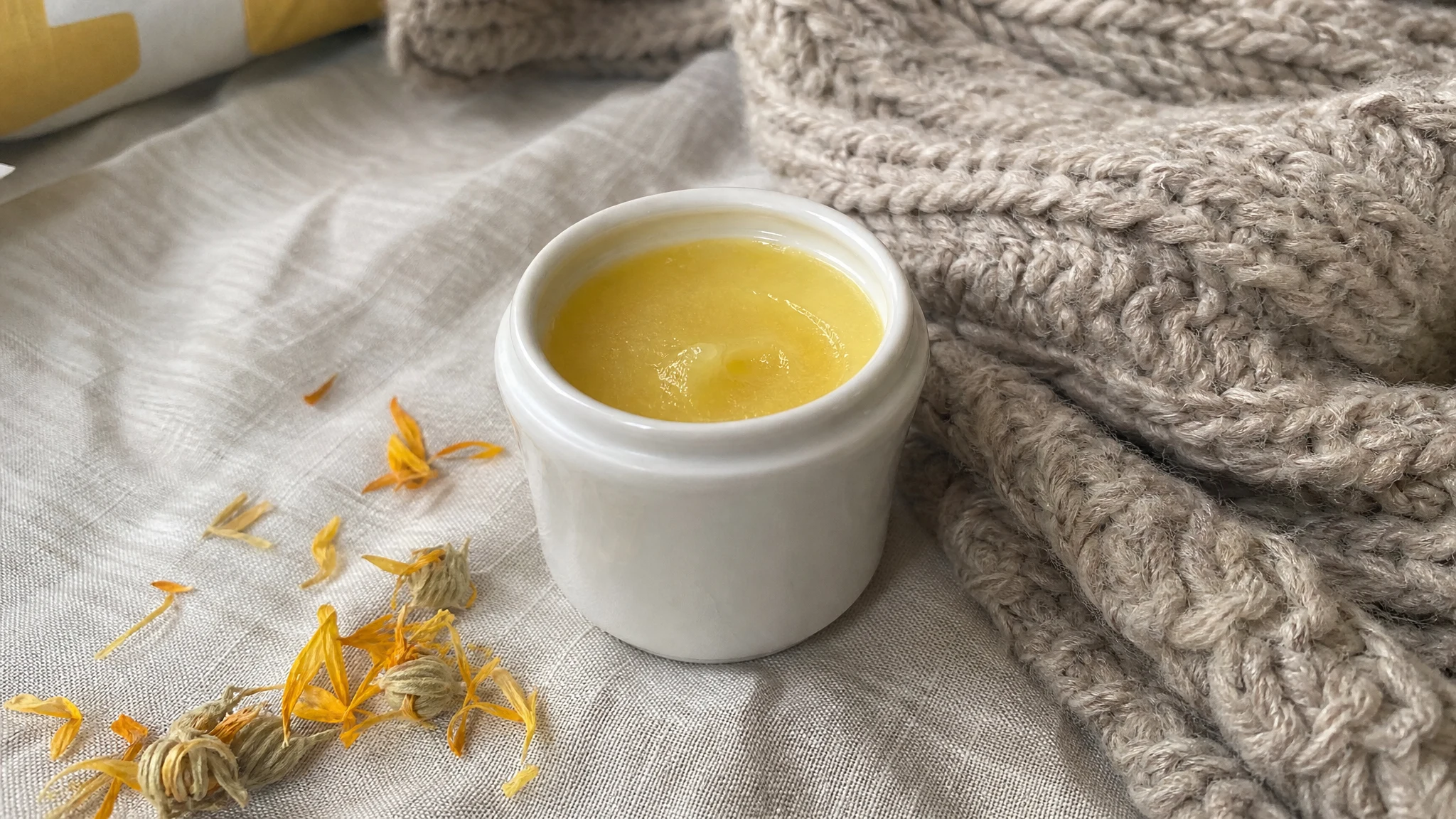
A calendula salve is about as simple as home skincare gets: infused oil, beeswax and a pan. It sets into a soft, glossy balm that slips into a pocket or a bag and glides on dry, rough patches. The craft is in the ratio and in keeping water far away, and once you have those, the rest is a pleasant half hour.

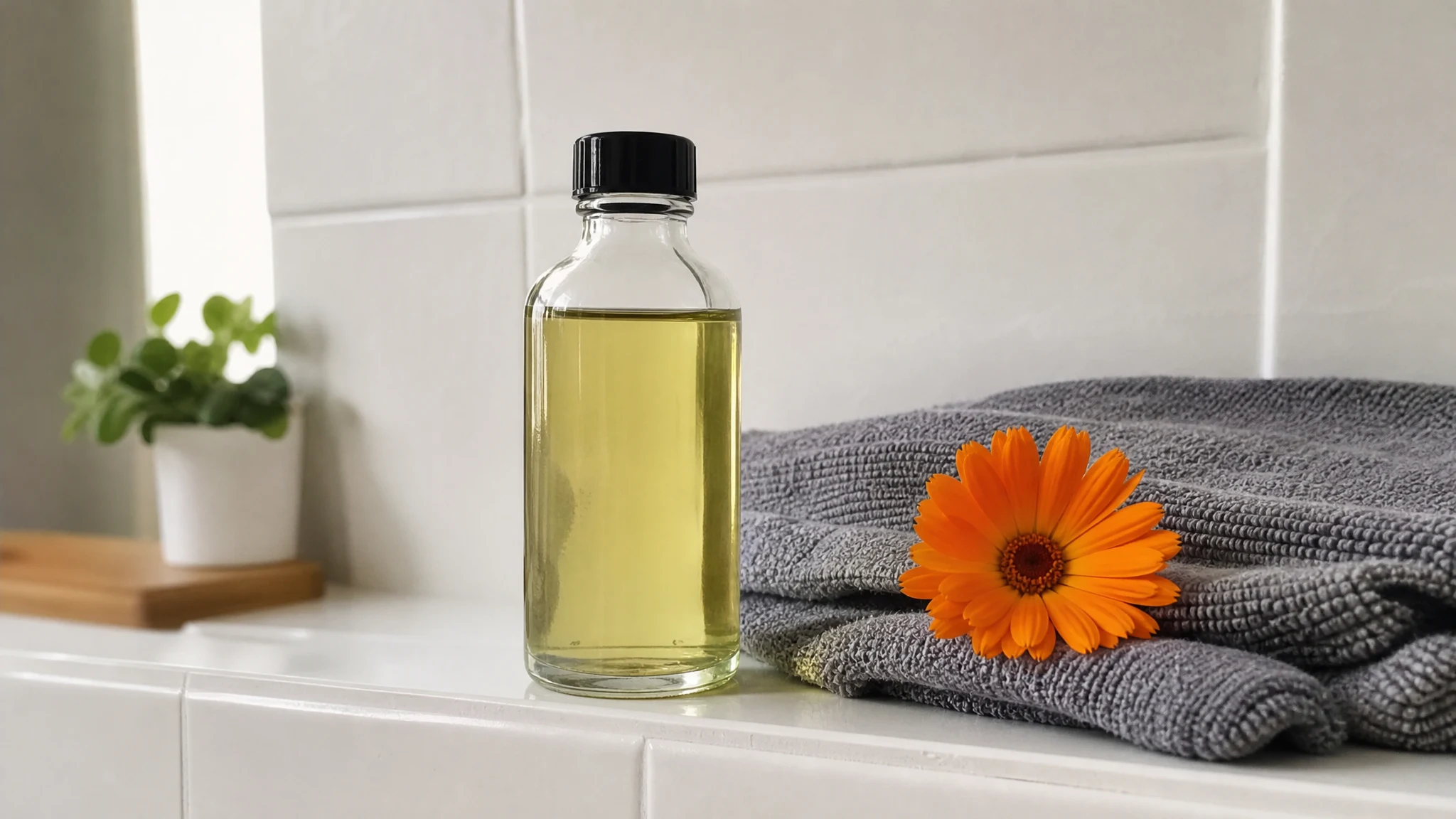
Calendula Oil
Our own small-batch calendula oil, in sizes from 0.5 oz to bulk.
From $13.99
Shop Calendula Oil →Beeswax to infused oil ratio and method
The classic starting point is about 1 part beeswax to 4 parts infused oil. Mountain Rose Herbs' basic salve uses 1 ounce of beeswax to 4 ounces of infused oil and notes you can use less wax for a softer salve and more for a firmer one. Because that page mixes a weight with a volume, we like to weigh both on a kitchen scale. As arithmetic, a 100 g batch is 80 g of calendula oil to 20 g of beeswax.
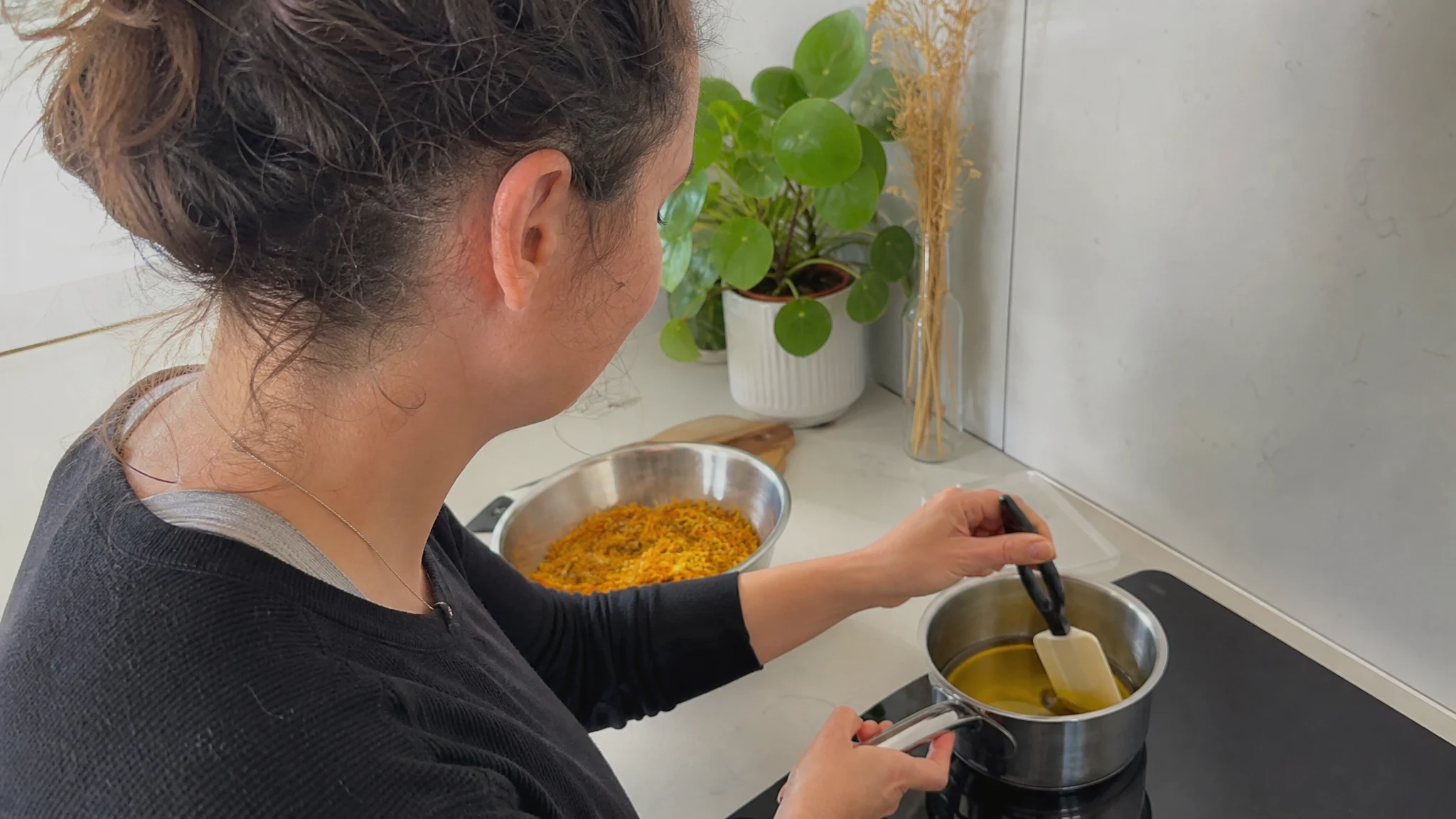
- Warm the beeswax in a double boiler over low heat until it melts, then stir in the calendula oil until the mix is clear. Gentle heat is plenty. Nothing is gained by running it hotter than it takes to melt the wax.
- Test the firmness before you pour. Mountain Rose suggests chilling a spoon in the freezer, dripping a little salve on it and returning it to the freezer for a minute or two. If it is too hard, remelt with a splash more oil; too soft, add a little wax.
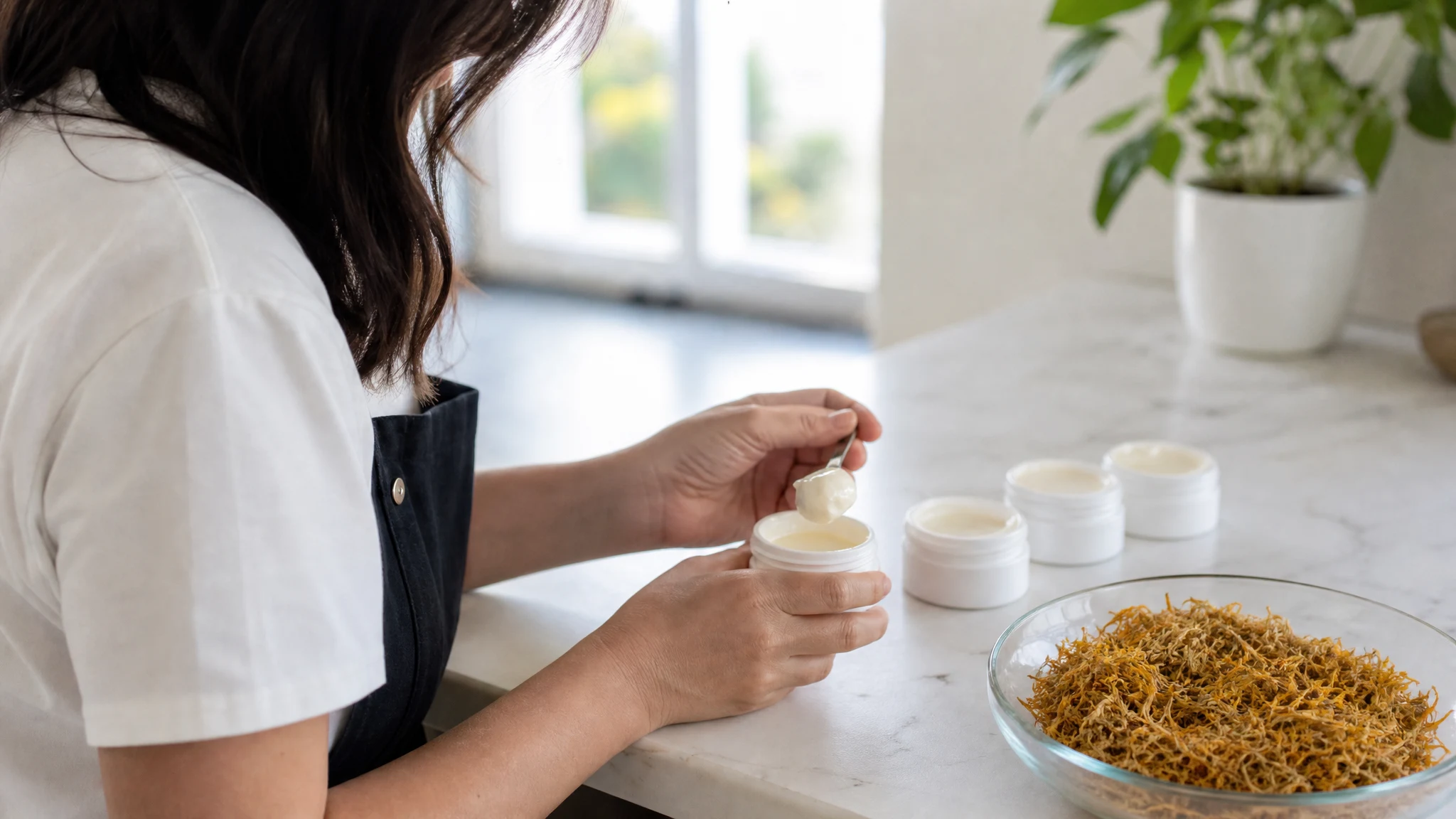
- Pour into clean, dry tins or jars, and let them cool completely before closing. Mountain Rose says to store the finished salve in a cool place for 1 to 3 years.
Beeswax, tins and a double boiler are easy to pick up at a craft shop or a natural grocery store.
Salve making sensory cues: honeyed smell, golden oil
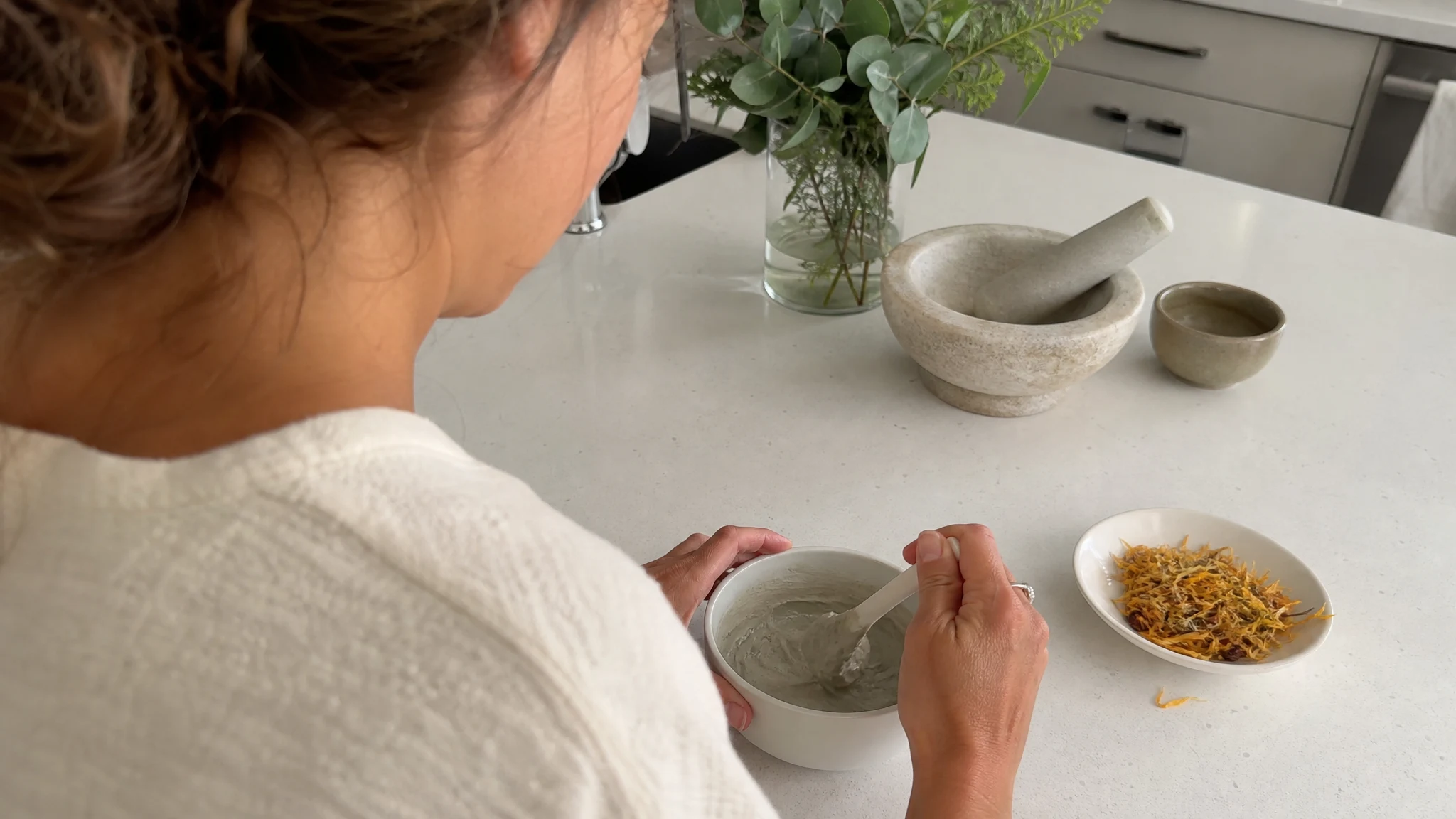
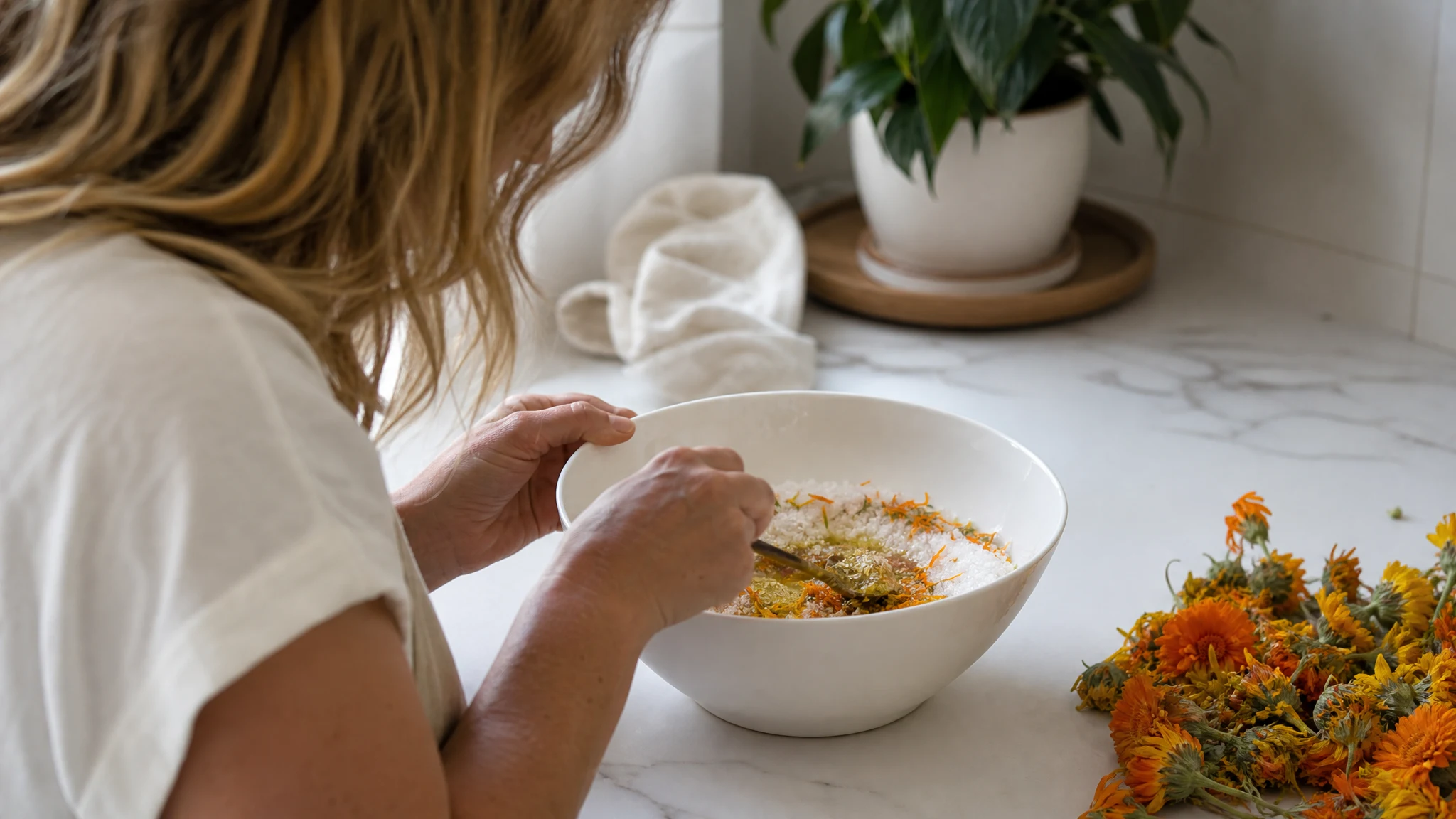
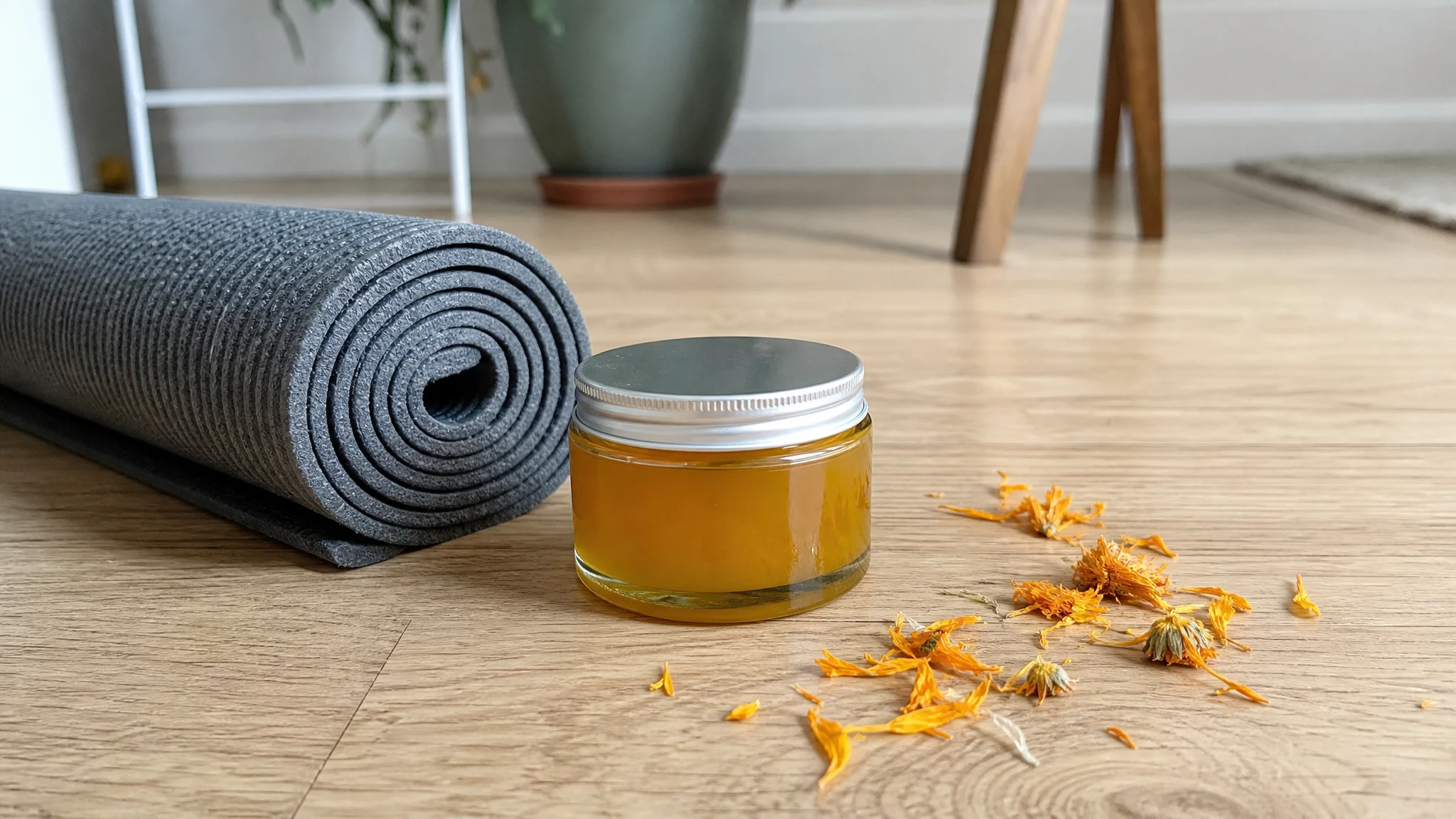
Salvemaking is a gentle, slow sort of cooking. As the beeswax melts, the kitchen takes on a warm, honeyed smell, and you will watch the pale pellets disappear into the pan. When the calendula oil goes in, the mixture turns a clear, deep gold. Set a timer if you wander, because the pan wants low heat and your attention.
Lay out everything before you start: tins, a spoon, a towel for spills. Pour steadily, because the salve sets faster than you expect, and what is left in the pan is hard to scrape. Let the tins sit undisturbed while they cool, and resist the urge to move them. The surface goes from glossy to softly matte, and that is how you know it has set.
Why must salve ingredients stay water-free?
This is the one rule that keeps a salve stable. Oil and wax contain no water, so a salve has no need of a preservative. Add water, aloe gel, a hydrosol or fresh plant juice and that is no longer true. The FDA lists contaminated water and an ineffective preservation system among the ways cosmetics become contaminated, and a 2018 review of cosmetic preservation says cosmetics containing water require preservation, confirmed by challenge testing. So we keep a salve strictly oil and wax, and we use dry fingers or a clean spatula in the tin.
The same thinking explains why dried herbs are preferred when you infuse your own oil. University of Maine Cooperative Extension calls infused oils made from dried herbs the safest home method, because dried herbs lack the moisture bacteria need to grow in oil. Their bulletin is written about culinary oils, so applying it to a salve is our inference, but it is a sound habit.
Using ready-made infused oil in a calendula salve
If you buy a finished infused oil, the infusion step is already done. Ours starts with dried Calendula officinalis flowers, organically grown on family farms and dried naturally with no industrial heat or forced air. We make the oil in-house: calendula is extracted on its own, then brought into a carrier oil. Nothing else goes in, so there is no preservative, tocopherol or stabilizer to sit alongside your beeswax. The carrier is listed on the batch paperwork, which matters if you plan to give a salve to someone with a nut allergy, so email the lot number to [email protected] and we will send it.
For more on handling the oil, see how to store calendula oil, and if breastfeeding is your reason for asking, read the nipple salve guide.
Who should skip a calendula salve?
We think of a salve as a cosmetic balm for dry, rough skin. The EU herbal committee lists calendula flower preparations as traditional herbal medicines for minor skin inflammation and minor wounds, based on long-standing use rather than clinical trials, and advises seeing a doctor or qualified practitioner if symptoms last longer than a week or signs of infection appear. A homemade oil and wax salve is a different thing from those preparations, so for a burn, a deep or bleeding cut, a bite, or skin that is hot, swollen or draining, see a physician.
- Daisy-family allergy. The monograph lists hypersensitivity to Asteraceae plants as a contraindication. Patch test first, and see our patch test guide.
- Young children, pregnancy and breastfeeding. The monograph does not recommend skin use under six, and says safety in pregnancy and lactation has not been established. A pediatrician or an OB/GYN or midwife can guide you.
- Selling your salves. The FDA says making cosmetics at home is not against the law, but the maker is responsible for safety and truthful labeling.
Labeling tins: dates, ratios and allergy notes
Write the date and the ratio on a label for each tin. If you gift one, add a note that it contains beeswax and calendula, so the person can check for allergies. Spoon the salve out with a clean fingertip or a small spatula, and keep the lid on. A tin on your desk and another by the sink is a habit you will probably enjoy.
Can you scent a calendula salve with essential oils?
If you want fragrance, essential oils are the usual choice, and they change the picture. The National Association for Holistic Aromatherapy says most blends sit between 1 and 5 percent dilutions. For a 100 g batch, 1 percent is 1 g, which we would treat as the upper end for a first try. Keep scented salves away from children and pets: Pet Poison Helpline explains that cats can absorb essential oils through the skin or swallow them while grooming. A plain salve is a perfectly good choice, and it lets you see how your skin feels about the calendula itself.
That is the whole recipe: oil, wax, gentle heat, dry tins. The result is a small tin you will find yourself reaching for.
Calendula Oil
Nature's Golden Botanical, bottled: small-batch calendula oil in sizes from 0.5 oz to bulk.
From $13.99
Shop Calendula Oil →Sources & Further Reading
- Mountain Rose Herbs: How to Make Herbal Salves
- FDA: Microbiological Safety and Cosmetics
- FDA: Small Businesses & Homemade Cosmetics: Fact Sheet
- Halla N et al., Molecules, 2018: Cosmetics Preservation: A Review on Present Strategies
- University of Maine Cooperative Extension: Bulletin #4385, Safe Homemade Flavored and Infused Oils
- European Medicines Agency: European Union herbal monograph on Calendula officinalis L., flos
- National Association for Holistic Aromatherapy: Safety
- Pet Poison Helpline: Essential Oils and Cats