Calendula Paw Balm for Dogs: A Two-Ingredient Recipe
Cracked paw pads usually show up after a long hike, a salted sidewalk or a cold snap, and a simple balm is a sensible thing to want on hand. Calendula oil and beeswax make an easy one. What shapes the recipe is that every dog licks its paws, so the real design rule is simple: only put on a paw what you would be fine with your dog swallowing a little of.

Calendula Oil
Our own small-batch calendula oil, in sizes from 0.5 oz to bulk.
From $13.99
Shop Calendula Oil →Common causes of cracked dog paw pads
A veterinarian-written PetMD article lists the everyday causes: wear from concrete or rough trails, heat, cold and de-icing salt, irritants like floor cleaners and yard fertilizer, and sometimes underlying conditions such as allergies or hormone problems. It recommends seeing your vet promptly for bleeding, swelling, limping, behavior changes or heavy licking and chewing at the paws, and also the first time cracks or dryness appear, so that anything serious can be ruled out.
That gives a natural order of operations. If it is the first time, book the visit before you reach for a balm. If the cracks come back every winter or every trail season and your vet knows the history, a protective balm is a reasonable part of the routine. Our job is the flower and the oil; for anything about your dog's health, your vet is the person to ask.
Why skip petroleum jelly and coconut oil on paws?
The same article cautions against several popular paw remedies. Petroleum jelly is not recommended because licking it off can upset a dog's stomach, and coconut oil is discouraged for cracked paws because swallowing it can cause stomach upset or pancreatitis, and it can also cause an allergic reaction. Many recipes online lean on coconut oil, shea butter, vitamin E and essential oils. We leave all of those out.
Essential oils deserve a special mention. Because a paw is effectively an oral route, we keep fragrance out of this balm entirely, and we would not add any essential oil, even to a recipe borrowed from a human salve.
As for calendula itself, the ASPCA lists Calendula officinalis, pot marigold, as non-toxic to dogs and cats. That describes the plant, not an oil, and any plant material can upset a stomach if eaten in quantity, so we treat it as one more reason to use a thin layer.
Two-ingredient calendula paw balm with beeswax
With the extras gone, only calendula oil and beeswax remain. Herbal-supply retailer Mountain Rose Herbs shares a classic salve ratio of 1 ounce of beeswax to 4 ounces of infused oil, with less wax for a softer balm and more for a firmer one. They mix weight (wax) and volume (oil), so treat the ratio as a starting point, and make a small test batch before a big one.
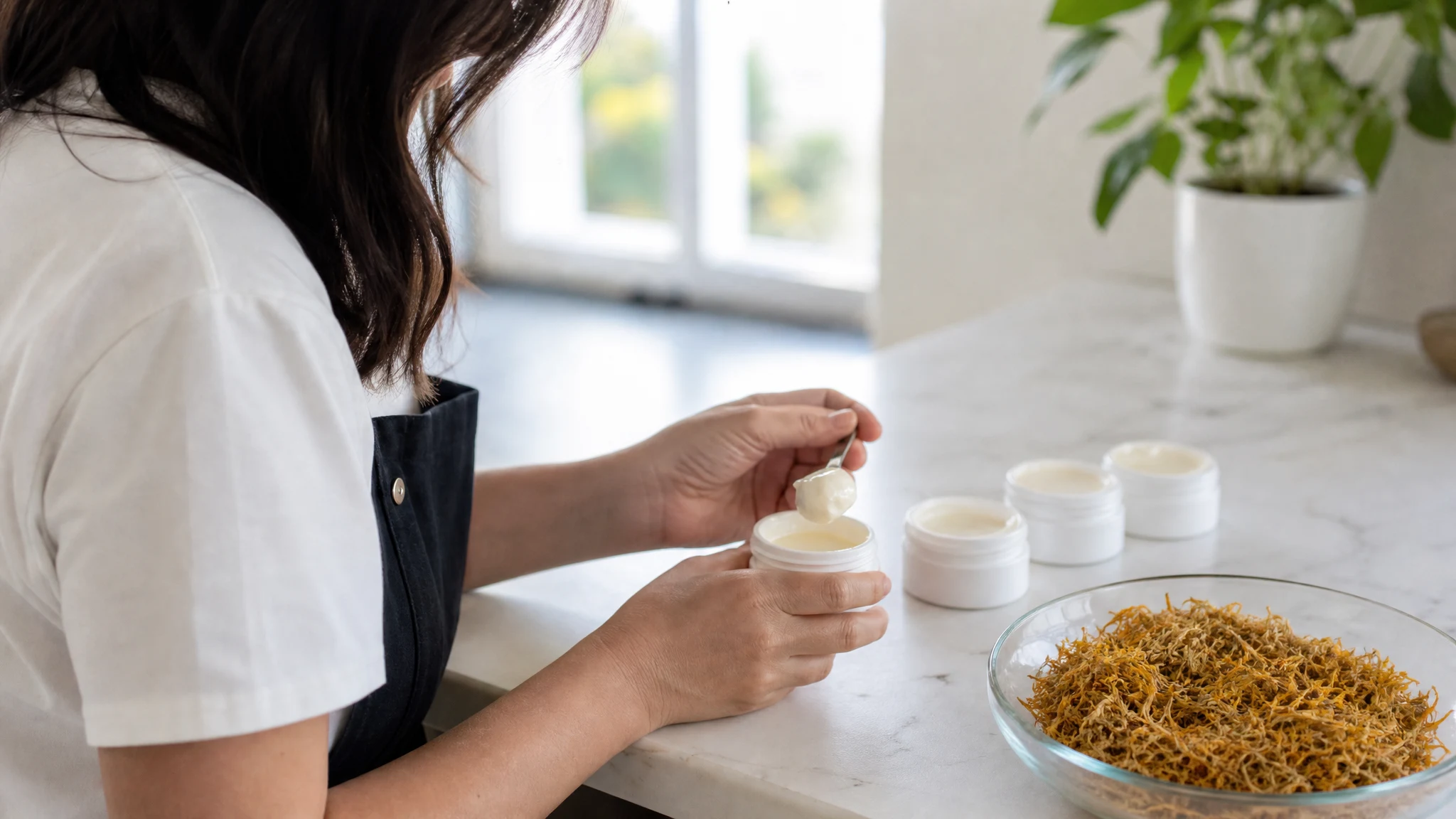
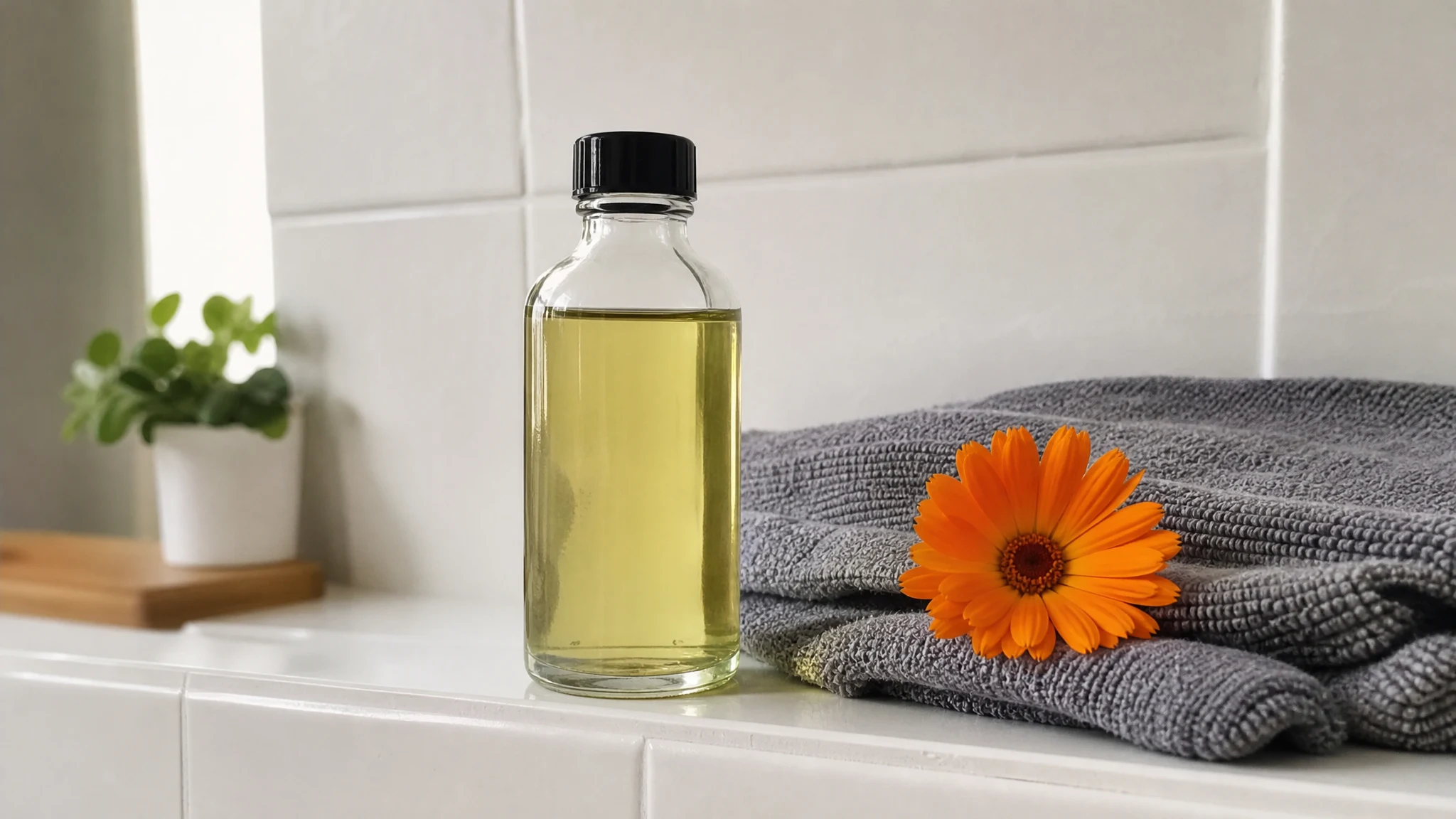
- Measure about 4 oz of calendula oil and 1 oz of beeswax. Our 4 oz bottle covers the oil; halve everything for a trial batch. Beeswax is a craft or health-store item.
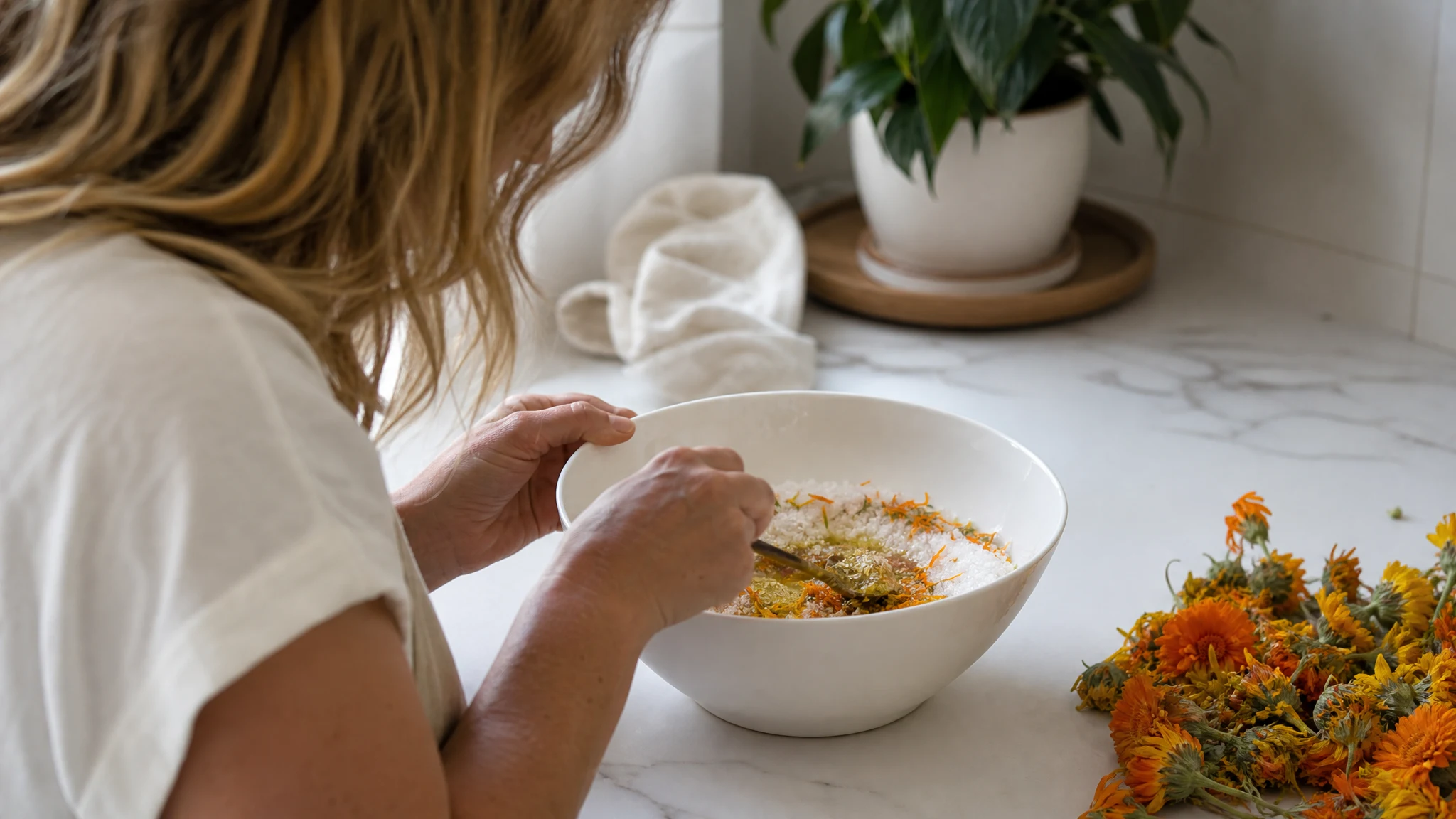
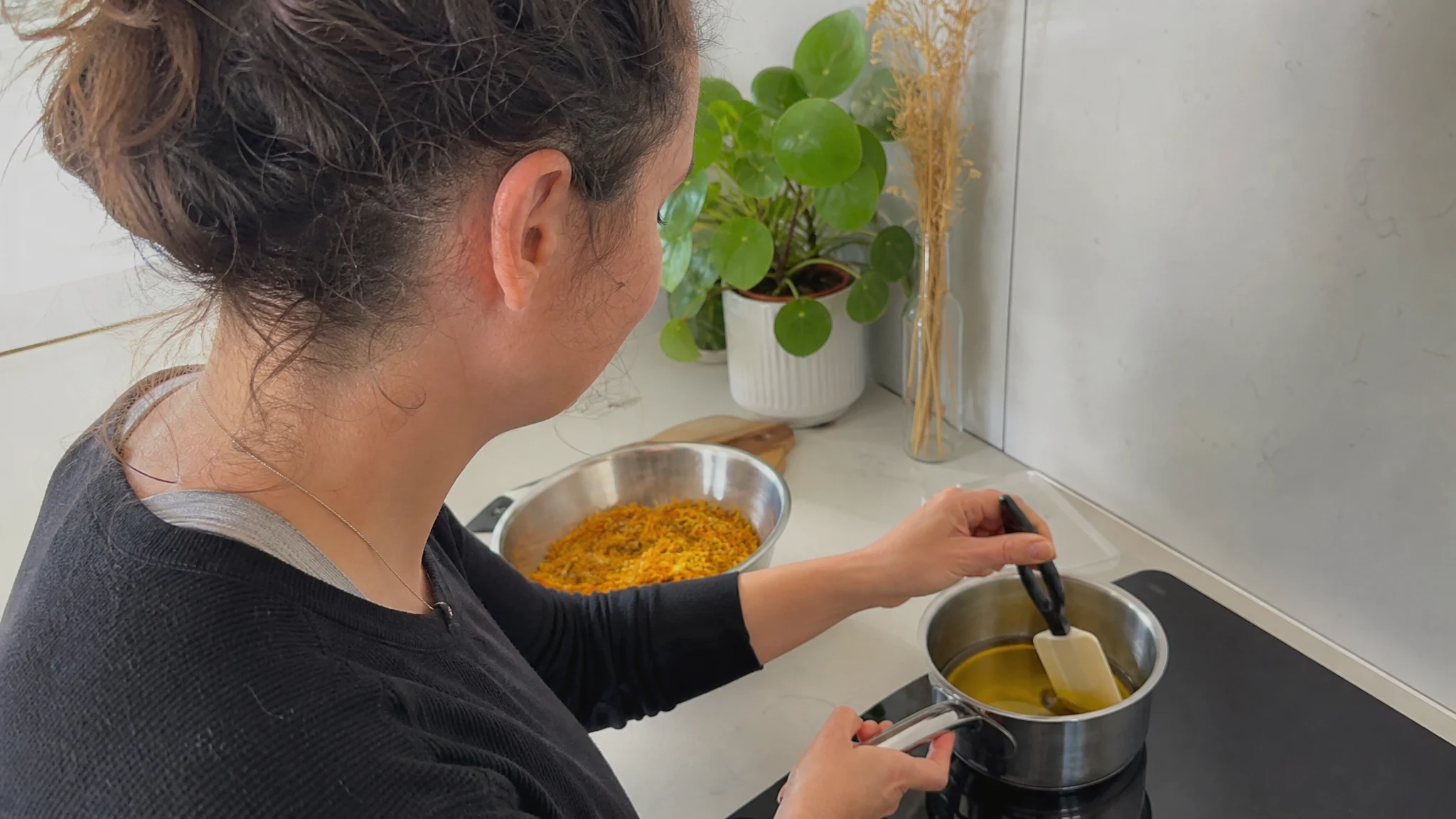
- Melt the beeswax in a heat-safe bowl over a pan of barely simmering water, stir in the oil, then remove from the heat. Keep water out of the mixture.
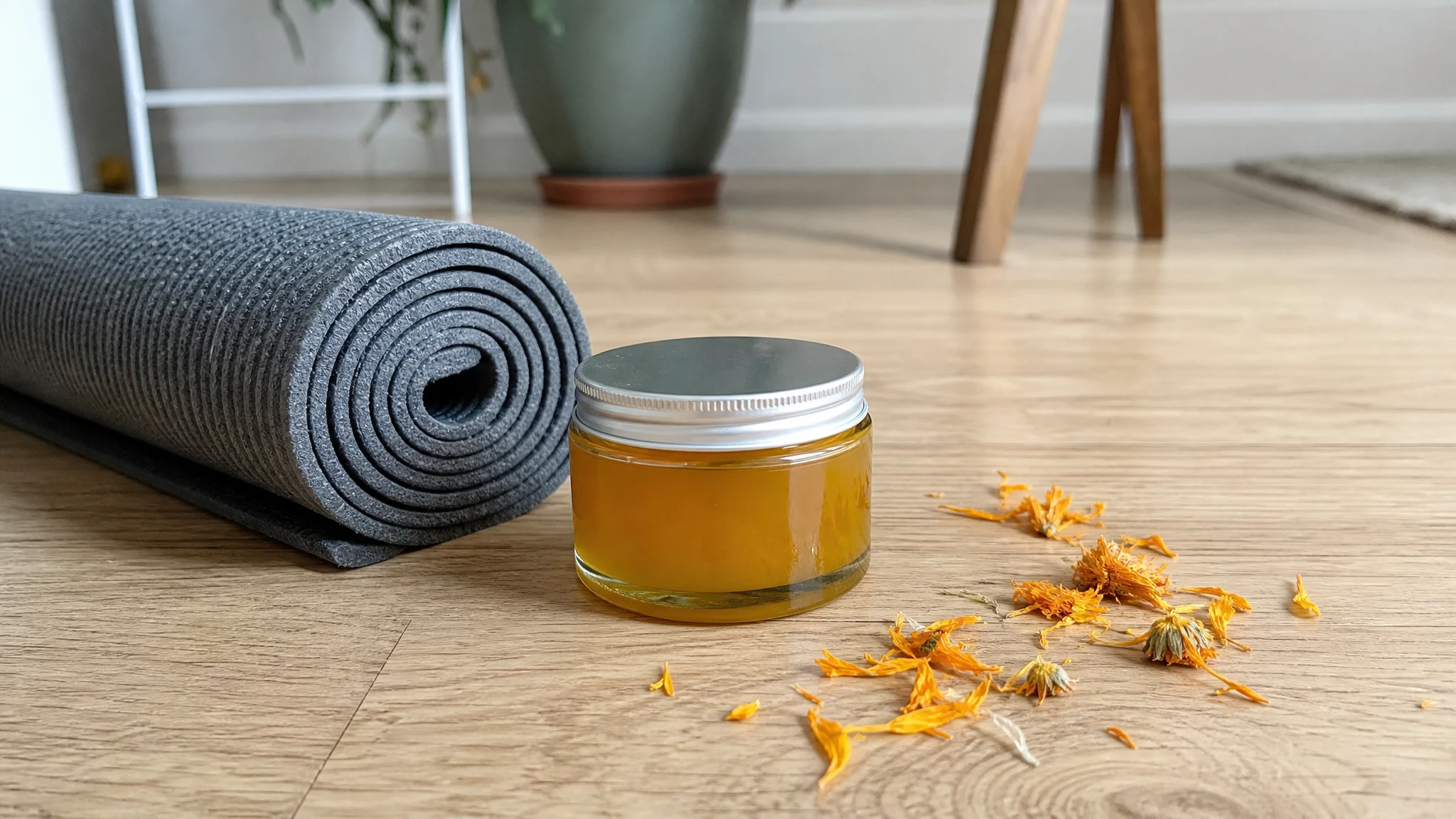
- Pour into a clean, dry tin or push-up tube, let it set, then cap and label it with the date.
Our oil is a finished infused oil with nothing added, so there is no infusing step. Its carrier oil is named on the batch paperwork, which is worth reading if you want to double-check with your vet; email the lot number to [email protected] and we will point you to it.
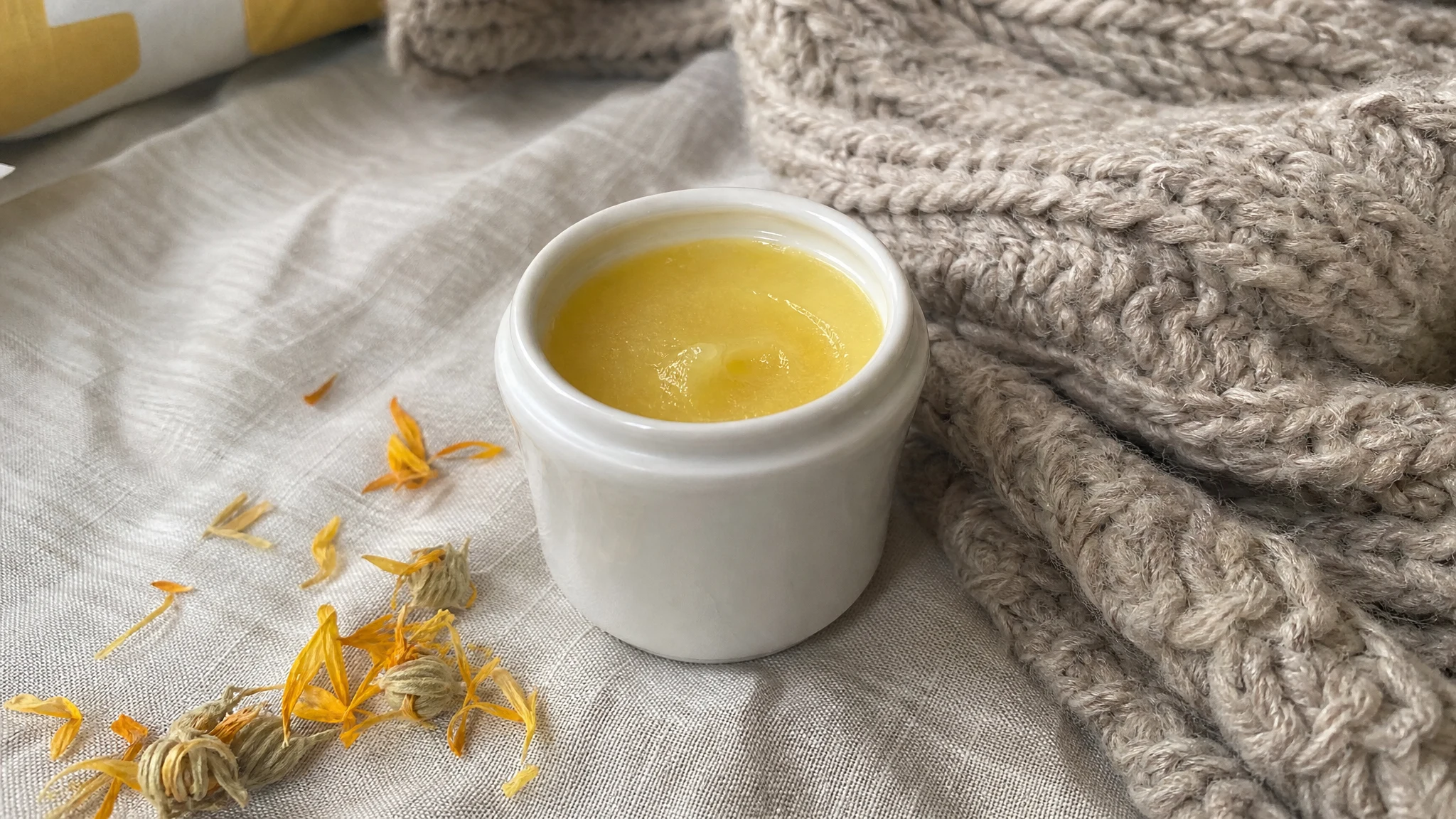
Before you pour, think about the tin. A shallow, wide-mouth one is easy to scoop from, and a push-up tube keeps hands clean. You will see the mixture go from clear gold to a soft, creamy opaque as it sets. If it looks greasy after a day, you probably want a touch more wax next time, and if it is too stiff to spread, a little more oil.
Patch test a calendula balm before dog paw use
Patch test first. Calendula is in the daisy family, and the European herbal monograph lists hypersensitivity to plants of that family as a contraindication in people. We found no veterinary source on how common a calendula reaction is in dogs, so go cautiously: a small amount on one paw, then watch for redness, swelling or extra licking, and stop if any of those appear.
Use a thin layer on clean paws, working between the toes and across each pad. Then give your dog something to do for a few minutes. PetMD notes that vets sometimes send dogs home with a recovery cone to stop licking at medicated products, and that waterproof booties can protect vulnerable pads. Scoop the balm with a clean spatula instead of a finger that has been on the floor.
It helps to make this part of a calm routine. Many dogs dislike having their feet touched, so start by simply holding a paw for a few seconds and rewarding your dog, then add the balm once they are comfortable. A quiet spot, a favorite chew and a slow hand turn this into something your dog tolerates and may even look forward to.
Keep the tin in a spot your dog cannot reach, because a tin of anything that smells like wax and oil can look like a snack. Wipe the pads gently with a clean damp cloth after muddy walks, let them dry, and only then add a thin coat.
For more on calendula around animals, our pet safety overview covers the wider picture, and the cracked heels guide shows how a similar balm works for human feet. Our patch test page explains the testing step in more detail.
A balm is a nice finishing touch to paw care. With a quick vet check first and a thin layer on clean paws, it can be a gentle part of the routine.
Calendula Oil
Nature's Golden Botanical, bottled: small-batch calendula oil in sizes from 0.5 oz to bulk.
From $13.99
Shop Calendula Oil →Sources & Further Reading
- Cracked Dog Paws? Common Causes and How to Care for Your Pup’s Cracked and Dry Paws, PetMD
- Toxic and Non-toxic Plants: Pot Marigold, ASPCA
- How to Make Herbal Salves, Mountain Rose Herbs
- European Union herbal monograph on Calendula officinalis L., flos, European Medicines Agency