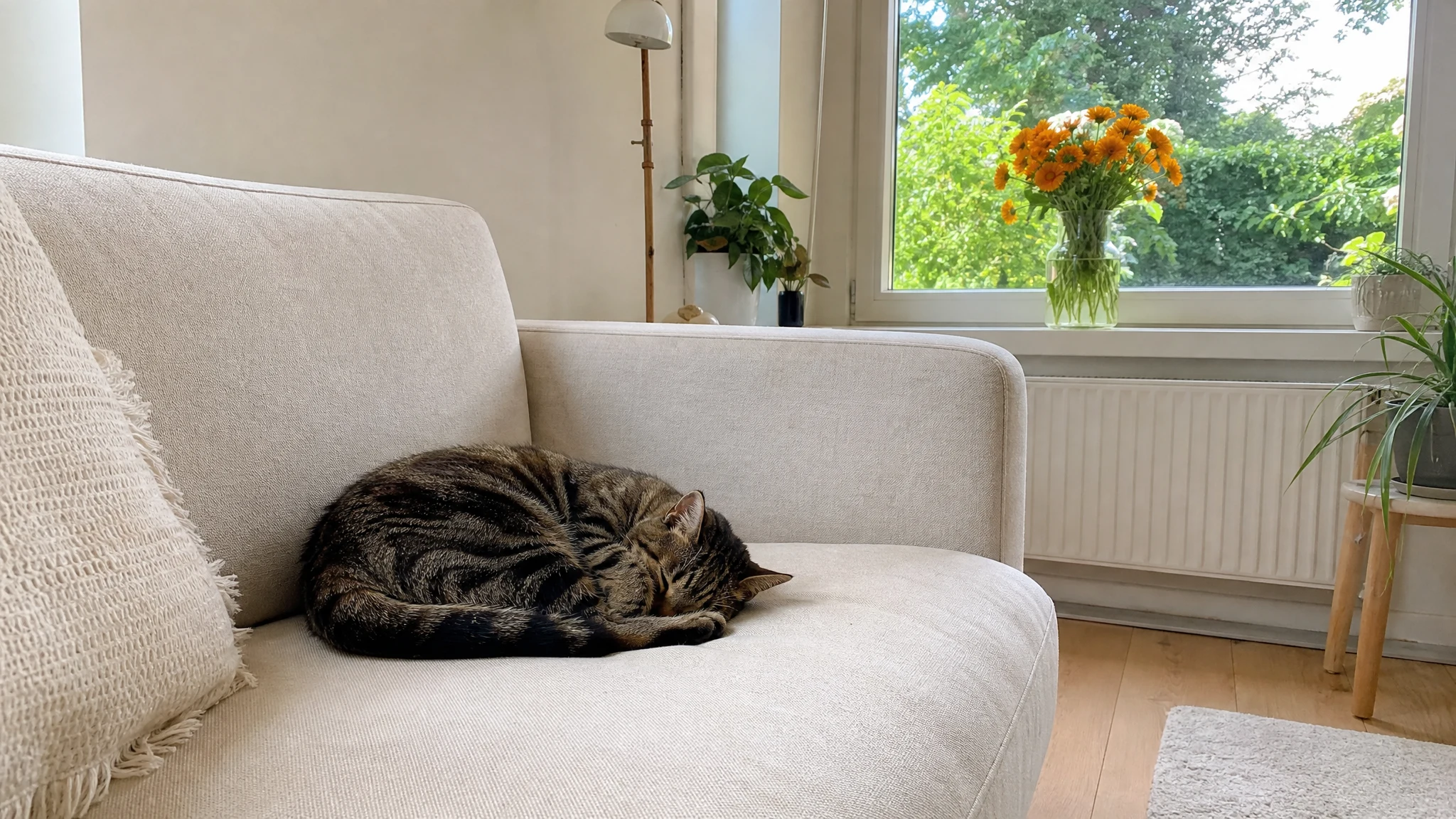
Is Calendula Oil Safe for Cats? Talk to Your Vet
There is some good news at the start of this question: the calendula plant is on the safe side of the ledger for cats. The ASPCA's plant database lists pot marigold, Calendula officinalis, as non-toxic to both dogs and cats. For anyone with an oil in the cupboard, though, a plant list and a bottle of oil on a cat are two different questions, and cats have a habit that makes the second one interesting.

Calendula Oil
Our own small-batch calendula oil, in sizes from 0.5 oz to bulk.
From $13.99
Shop Calendula Oil →Cat skin care belongs with your vet
We could write a long list of cat care tips, but that would be pretending to knowledge we do not have. We make a calendula oil, we know the flower, and we know how it is dried and made into oil. For everything about a cat's skin, coat and health, your vet is the better guide. What we can offer is a clear description of what is in our bottle and an honest willingness to share the batch paperwork if your vet asks for it.
Pot marigold toxicity ratings for cats and dogs
The ASPCA entry for pot marigold reads "Non-Toxic to Dogs, Non-Toxic to Cats." Pet Poison Helpline agrees that pot marigold is considered non-toxic when eaten, and it separates it from the French and African marigolds (Tagetes), which can mildly irritate the stomach, with sap that may irritate skin (Pet Poison Helpline, Marigold). That genus difference is worth remembering, because "marigold" on a label does not say which plant is inside.
Both pages describe the plant. Neither one is about an oil, a salve or a blend, and neither is a study of calendula on cat skin. We make a calendula oil for people, we have no veterinarians on staff, and we have no animal data on our oil, so we would not tell you it is a good idea for a cat.
How does grooming change oil exposure for cats?
The veterinary toxicologist who wrote Pet Poison Helpline's page on essential oils and cats explains that an oil on a cat can be absorbed through the skin or swallowed when the cat grooms itself (Pet Poison Helpline, Essential Oils and Cats). That page is about essential oils, not infused oils, so it is not a verdict on calendula. What it gives us is the mechanism. Reasoning from it, anything on a cat's coat is likely to end up in the cat, which means three things get swallowed rather than one: the calendula, the carrier oil, and anything else in the bottle. For cats the whole ingredient list is the safety question.
Because the ratings cover the plant and not an oil used on skin, the useful move is to hand your vet the specifics rather than the word "calendula": the product name, the full ingredient list, and how your cat would come into contact with it.
Cat-proofing storage for calendula oil bottles
Anyone who lives with a cat knows that a bottle on a shelf is a puzzle waiting to be solved. Cats nose at caps, bat things off counters and investigate spills. That makes storage a bigger part of the story than it is in most homes. Keep your calendula oil capped, put it in a cabinet or drawer instead of on an open surface, and wipe up any drip at once. If you have been handling the oil, wash your hands before you stroke your cat, because a quick lick of a hand is enough to pick up whatever is on it.
What should you screen before calendula touches a cat?
- Is it a calendula infusion or an essential oil product? If the label lists essential oils, citrus, lavender, tea tree or "fragrance," stop and ask a vet. Our article on infused oil versus essential oil explains why the two are different materials.
- Is it calendula or a Tagetes marigold? The two are rated differently, as above.
- What is the carrier? For our oil, the batch paperwork names it. Email the lot number from the bottle to [email protected] and we will send it, which is the detail a vet will want.
- What is the skin doing? A sore, scab or patch that a cat keeps licking is a reason to call a vet before shopping.
It also helps to know your cat's habits. Some cats groom constantly, some barely at all, and some will follow you around the bathroom while you put things away. Your vet can use that kind of detail, and so can you when you decide where to keep your own bottles.
Ingredients and batch testing behind calendula-infused oil
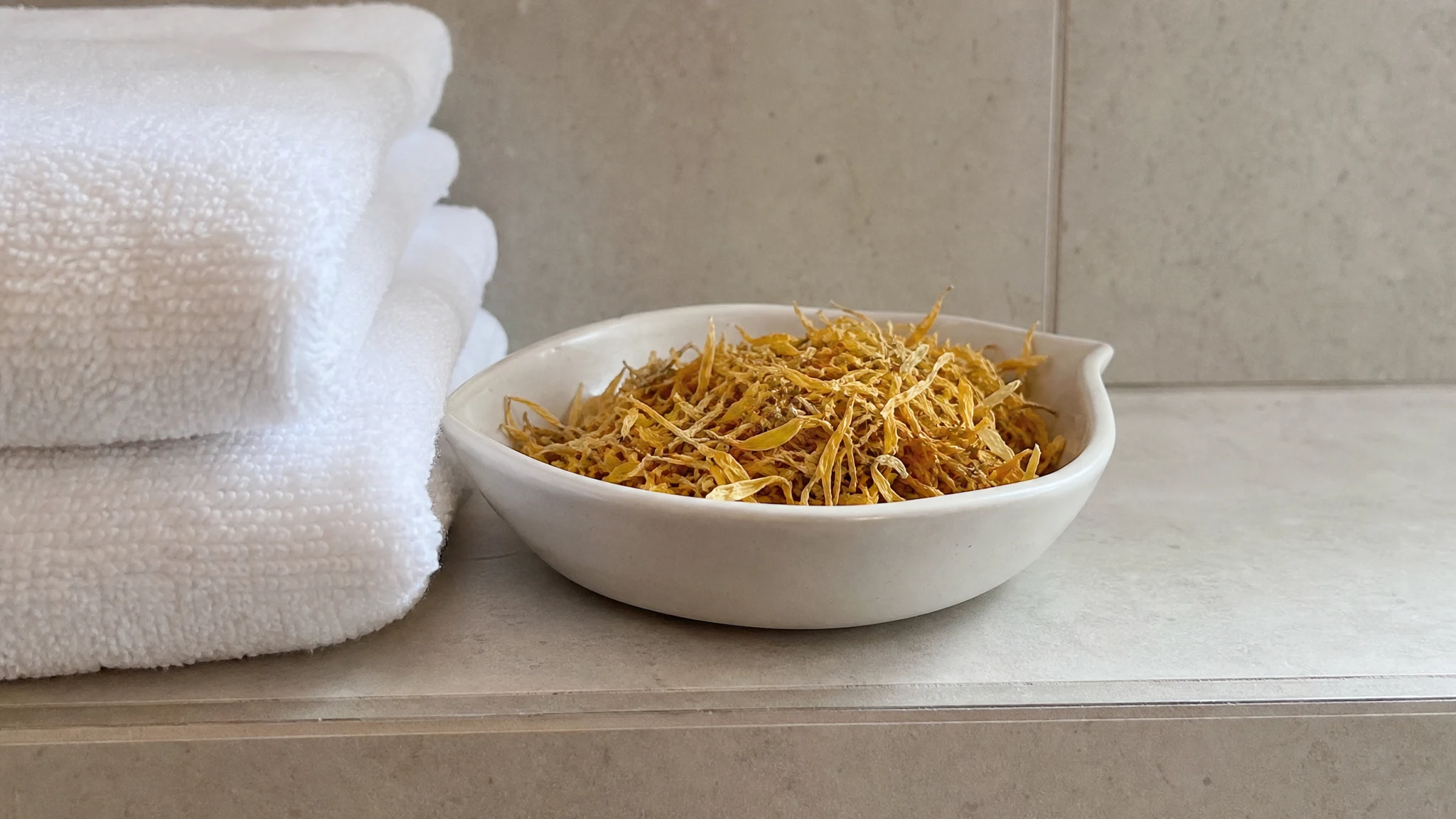
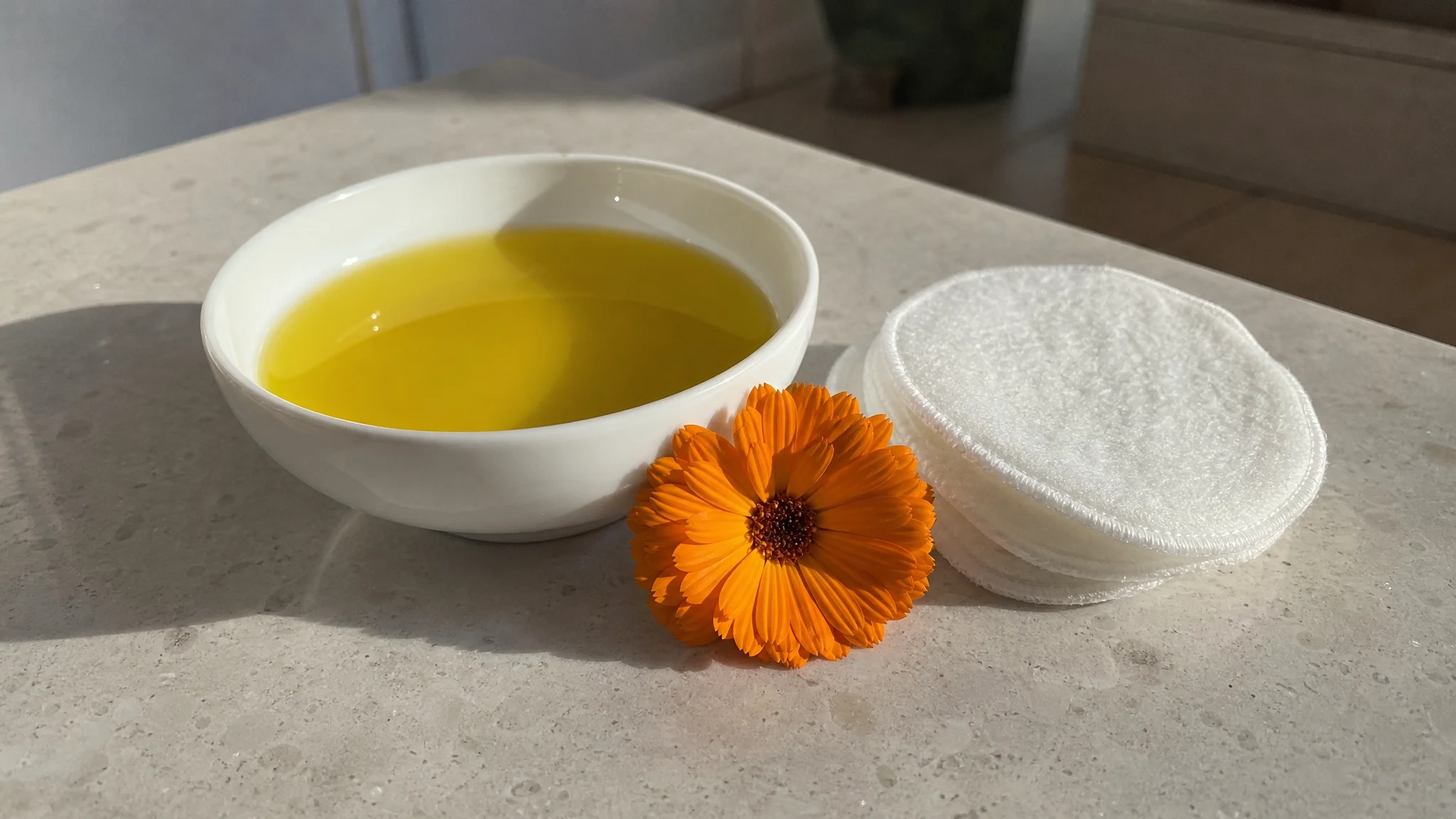
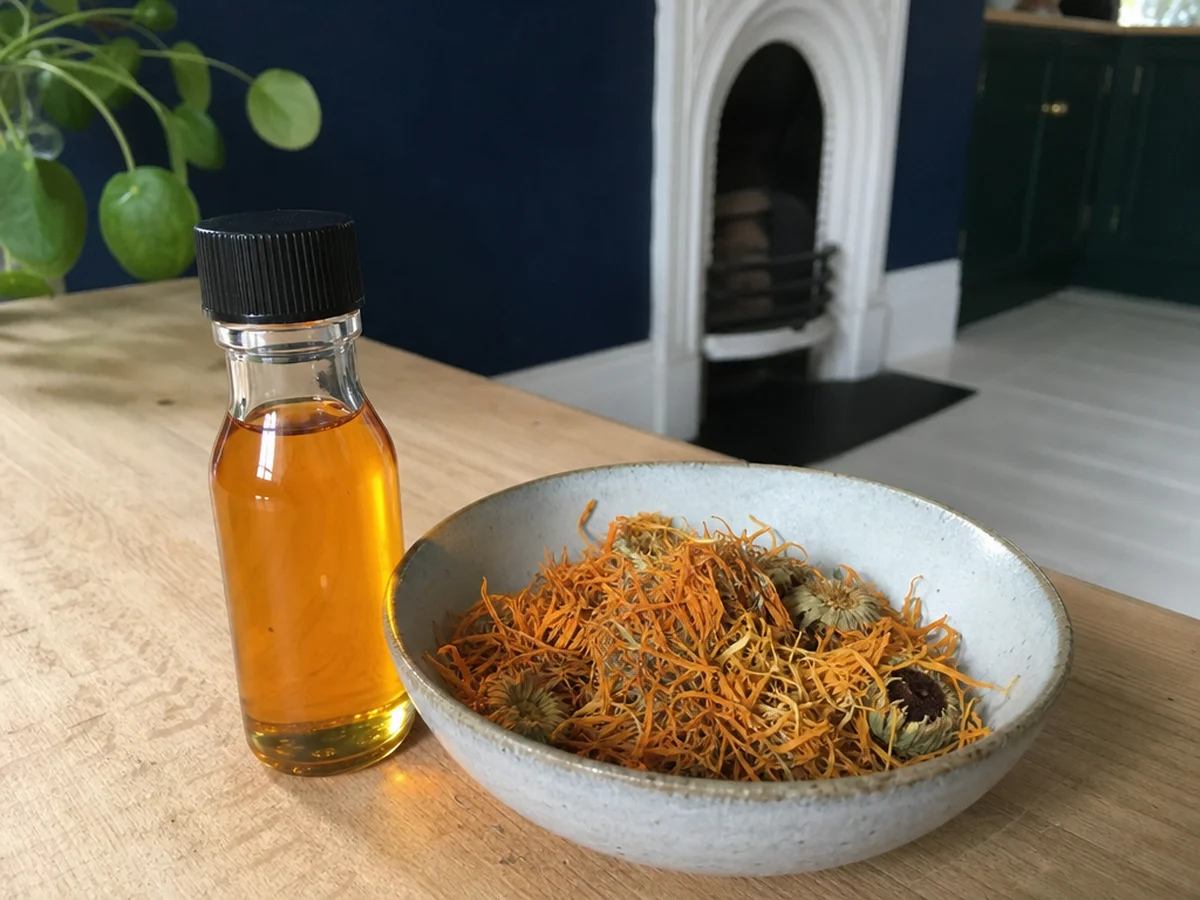
Here is what we can speak to. We buy dried, organically grown flowers, extract calendula on its own and bring the extract into a carrier oil, with no synthetic preservatives, tocopherol or stabilizers added. Each batch goes through independent third-party testing, and the bottles are dated and lot-numbered. That makes for a short ingredient story, which is easy to check, and it is the right thing to bring to a vet. It is a cosmetic oil for human skin, not a pet formulation.
If your vet suggests a calendula product for your cat, ask which product, what carrier and how much, and follow that instruction rather than ours. Bring the bottle, since a lot number and a carrier name let the vet look up exactly what your cat was exposed to. For dogs and horses the questions differ a little, and we go through them in our pets article. People with plant allergies have their own checklist, covered in our calendula and ragweed allergy piece.
So the plant is a friendly one, and the cat's own grooming habits are what turn a simple yes into a conversation with the vet.
Calendula Oil
Nature's Golden Botanical, bottled: small-batch calendula oil in sizes from 0.5 oz to bulk.
From $13.99
Shop Calendula Oil →Sources & Further Reading
- ASPCA. Toxic and Non-toxic Plants: Pot Marigold. aspca.org
- Pet Poison Helpline. Marigold Is Toxic To Dogs. petpoisonhelpline.com
- Pet Poison Helpline. Essential Oils and Cats. petpoisonhelpline.com