Is Calendula Oil Safe for Intimate Areas?
"pH-balanced" is one of those phrases that sounds scientific and gets attached to everything. It is worth a closer look when it shows up next to an oil, because pH is a property of water, and our calendula oil contains none. That one fact clears up most of the confusion about intimate washes, and about where an oil does and does not belong.

Calendula Oil
Our own small-batch calendula oil, in sizes from 0.5 oz to bulk.
From $13.99
Shop Calendula Oil →Why does an all-oil product have no pH?
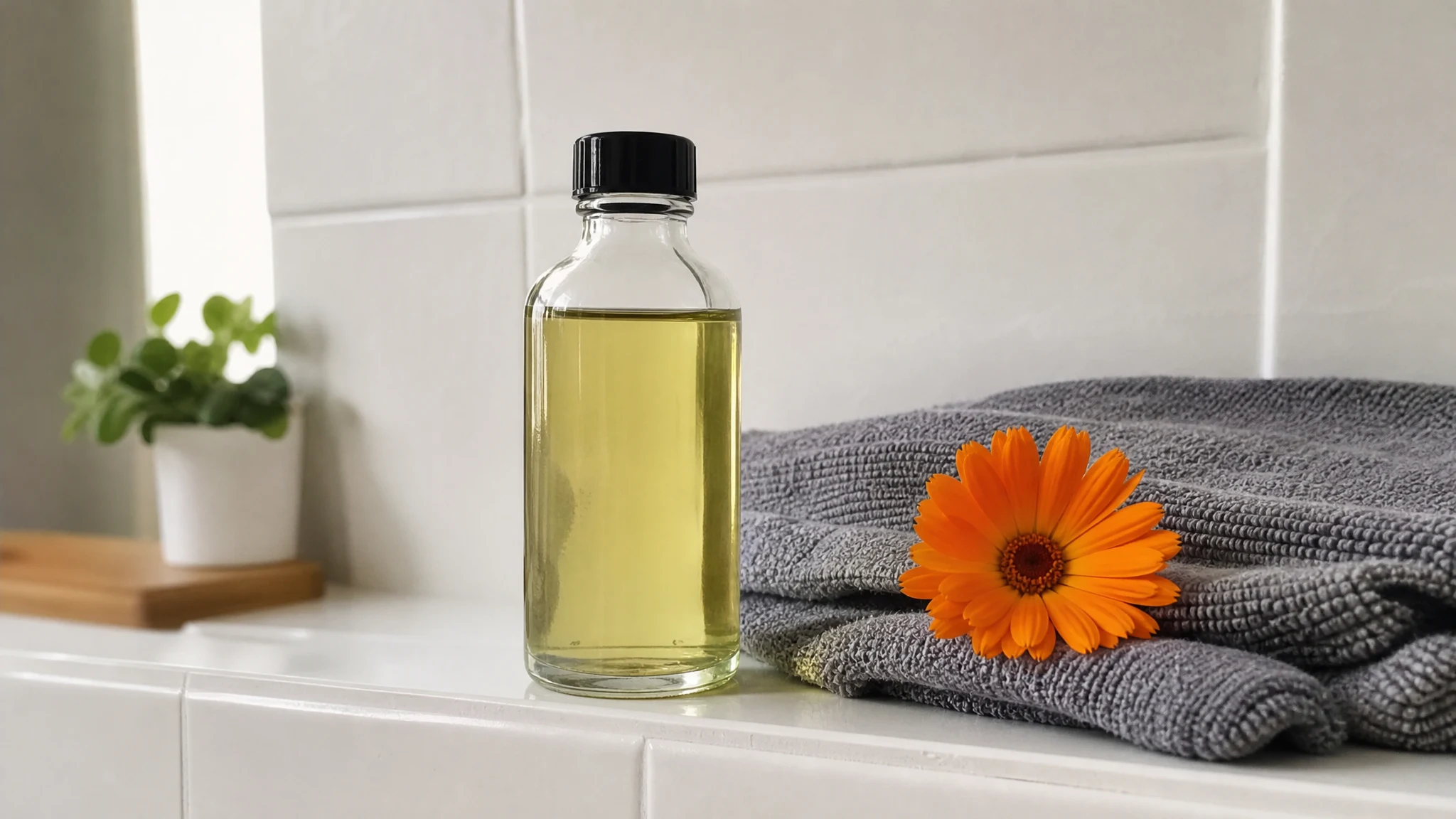
pH measures acidity in a water-based system. A trade reference for cosmetic formulators puts it simply: an all-oil formulation contains no water, so it has no pH, and adjusting pH does not apply to it. We make an infused oil, so we do not quote a pH for it, and when a recipe calls an oil mix "pH-balanced," the phrase either means nothing or refers to some water-based ingredient added alongside it.
The pH numbers that do matter belong to skin and to washes. A study of 330 people found natural skin surface pH averages below 5, about 4.7, and that washing with soap and tap water raises it for a time. A 2025 review of vulvar hygiene gives conventional soap a pH of about 8.5 to 11 and syndet cleansers (synthetic detergent bars and washes) about 5.5 to 7, and notes that repeated washing with conventional soap alters skin proteins and lipids and increases water loss. It concludes that syndet-based products appear the most appropriate for vulvar care. That review summarizes practice and says nothing about calendula, but it points in a useful direction: what a wash is made of, and how often you use it, matters more than any herbal extra.
Why buy a wash instead of blending one?
A wash is mostly water, and cosmetics containing water require preservation against microbial contamination, verified for example by challenge testing. FDA notes that cosmetics are not required to be sterile but that microbial contamination can pose a health hazard, and it names water and raw materials among the ways contamination happens. An unpreserved, water-based product applied to sensitive tissue is the combination to avoid, and mixing in a few drops of oil does not change that. This is why we do not offer a mix-it-yourself formula, and why we encourage you to choose a wash from a maker with testing behind it.
Calendula oil limits for intimate areas
Calendula oil is lovely on dry skin of the body, the hands, the feet and elsewhere. Our oil is an infused oil made from organically grown Calendula officinalis flowers, with nothing added, intended for external use on skin. For intimate areas, we do not recommend it. We found no study that tested calendula oil on vulvar or vaginal tissue, so we make no claim about comfort or benefit there, and we think the sensible next step for any concern is a gynecologist or midwife.
A few firm limits are worth stating:
- Nothing internal. Do not put oil, a wash or any home mix inside the vagina or on mucous membranes.
- Broken or inflamed skin. Ask a clinician before putting anything on it.
- Plant allergy. The European herbal monograph for calendula lists hypersensitivity to plants of the Asteraceae family as a contraindication, and in one Austrian clinic series of 443 patients with contact dermatitis, about 2% reacted to marigold. Those were patients already under investigation, so it is not a general rate, but it is a reason to patch test and to stop at the first sign of a reaction. Our patch test guide shows how.
- Itching, odor or discharge. These deserve a clinician's attention, and no cosmetic product replaces that.
Body areas where calendula oil suits dry skin
If you like the ritual of a body oil, there is plenty of skin that suits it. Think of the arms and legs after a bath, the elbows, the hands at night, or the feet before you pull on socks. Put two or three drops in your palms, warm them for a moment, and press the oil into skin that is still a little damp. It spreads easily, so a small amount goes a long way.
Give the oil a minute to settle before you dress. Calendula oil has a golden-orange tint, and it is sensible to let it sink in before it meets pale fabrics. A towel on the bed or the chair is a handy precaution too.
Reading wash labels: fragrance-free and pH claims
If you are shopping for a wash, the label is your friend. Look for a short ingredient list and the word fragrance-free, and be skeptical of promises such as "pH-balanced" that do not say what they were measured against. A maker who explains their product plainly deserves your attention, and you can ask your pharmacist or clinician which wash they suggest.
Gentle washing habits for the outer intimate area
The evidence we found points to modest habits. Wash the outer area with plain water or a gentle, fragrance-free cleanser, avoid harsh soaps, and keep things simple. Leave the rest of the body to the oil: after a bath, a few drops on slightly damp skin elsewhere leave it feeling soft and smooth. For pregnancy and postpartum questions, our pregnancy guide goes through what the sources say, and the face use guide covers a different part of the body.
We would rather be clear than clever here: oil is for oiling, washes are for washing, and your clinician is the best guide for anything between.
Keeping each product to its proper job is a small habit, and it makes everyday care simpler.
Calendula Oil
Nature's Golden Botanical, bottled: small-batch calendula oil in sizes from 0.5 oz to bulk.
From $13.99
Shop Calendula Oil →Sources & Further Reading
- pH Adjustment in Formulations, My Skin Recipes
- Natural skin surface pH is on average below 5, which is beneficial for its resident flora, Int J Cosmet Sci, 2006
- Vulvar Care: Reviewing Concepts in Daily Hygiene, Healthcare, 2025
- Cosmetics Preservation: A Review on Present Strategies, Molecules, 2018
- Small Businesses & Homemade Cosmetics: Fact Sheet, FDA
- The seamy side of natural medicines: contact sensitization to arnica (Arnica montana L.) and marigold (Calendula officinalis L.), Contact Dermatitis, 2001
- European Union herbal monograph on Calendula officinalis L., flos, European Medicines Agency