Calendula Sugar Scrub: A 2-Ingredient Recipe
A sugar scrub is about the simplest thing you can make in a bathroom: a scoop of sugar, a splash of oil, two minutes. The part worth slowing down for is the oil. Sugar does the exfoliating, but the oil is what lets those crystals glide over the skin instead of dragging across it, and that is where calendula oil earns its place in the jar.

Calendula Oil
Our own small-batch calendula oil, in sizes from 0.5 oz to bulk.
From $13.99
Shop Calendula Oil →Where do sugar scrubs belong on the body?
Think of a scrub as a tool for the tougher parts of you: elbows, knees, heels, the outsides of the arms. Skin there is thicker and handles a little friction well. If you are also working on rough feet, our cracked heels guide pairs nicely with a weekly scrub.
The face is a different story. The American Academy of Dermatology tells people with acne not to scrub, because scrubbing can irritate skin and make breakouts flare, and its everyday face-washing advice is to use only your fingertips and resist the urge to scrub. Those pages are about washing rather than sugar scrubs, so we read them as a general direction: facial skin prefers a light hand. That is why we keep this recipe for the body.
It also makes sense to wait on skin that is freshly shaved, sunburned or already feeling raw. A scrub is a bit of friction by design, and skin in that state is better left alone for a few days.
Mixing sugar and calendula oil, step by step
There are only two ingredients, so the method matters more than a measurement:
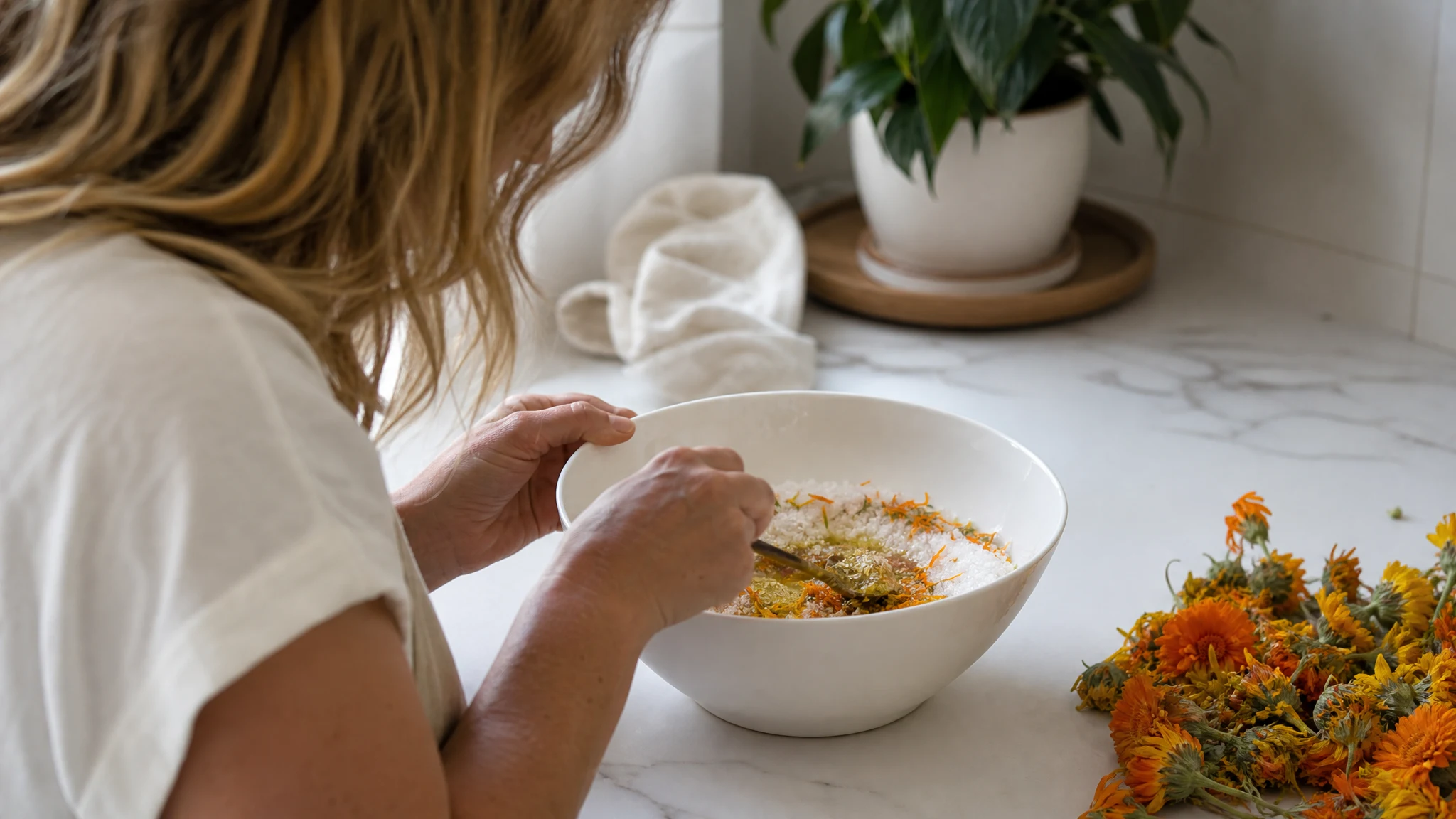
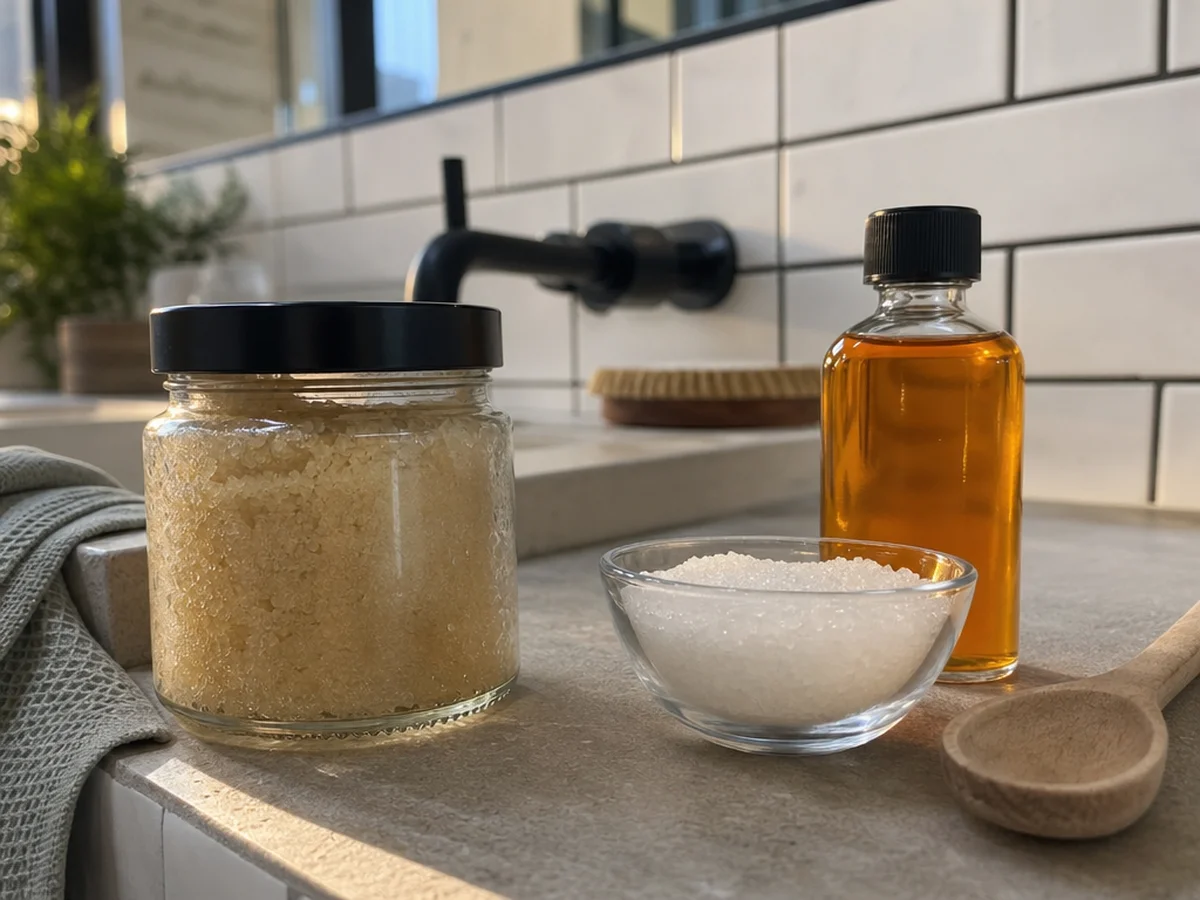
- Spoon dry sugar into a clean, dry jar or bowl. Fine sugar is gentler; coarser sugar feels more vigorous.
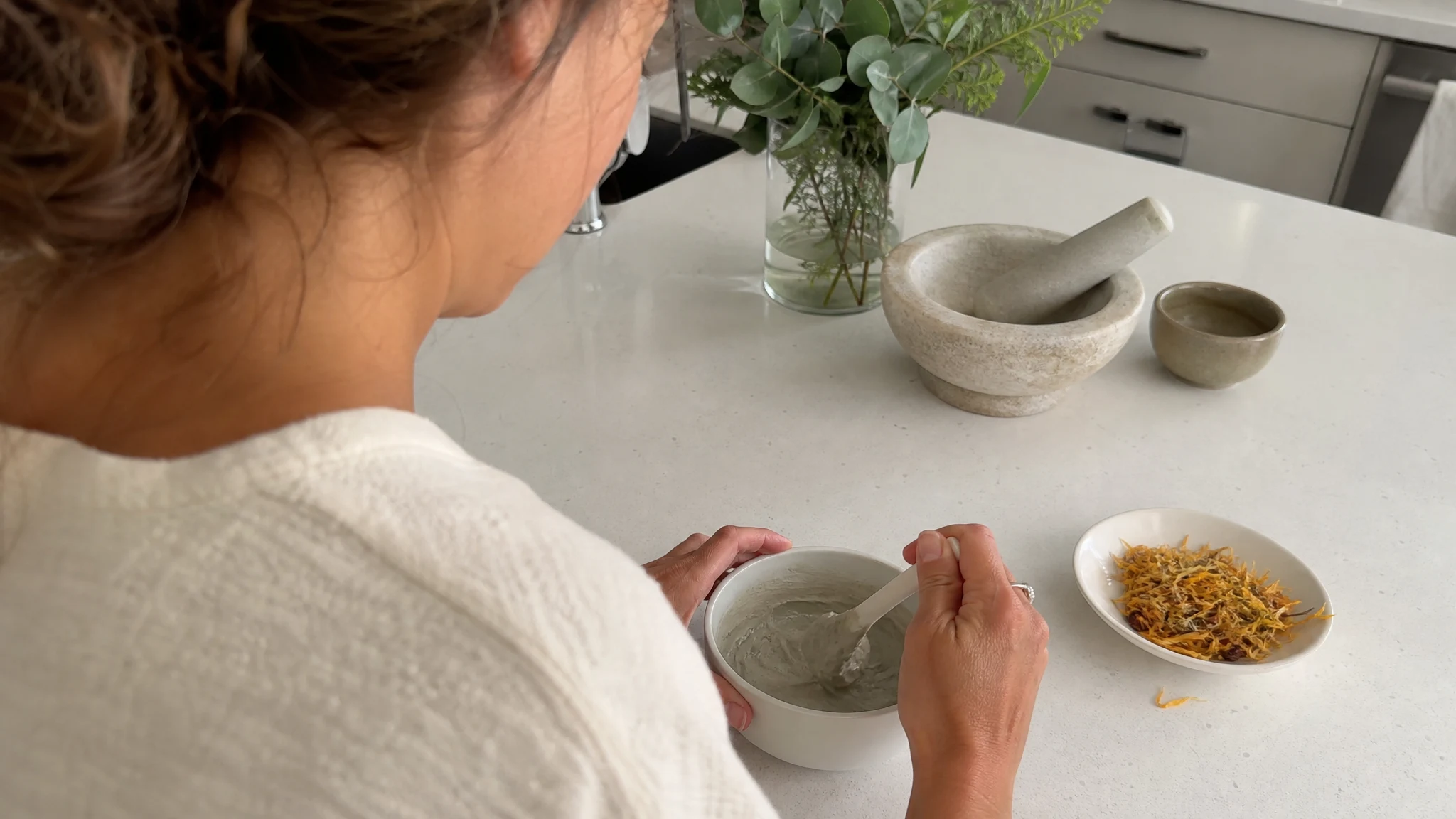
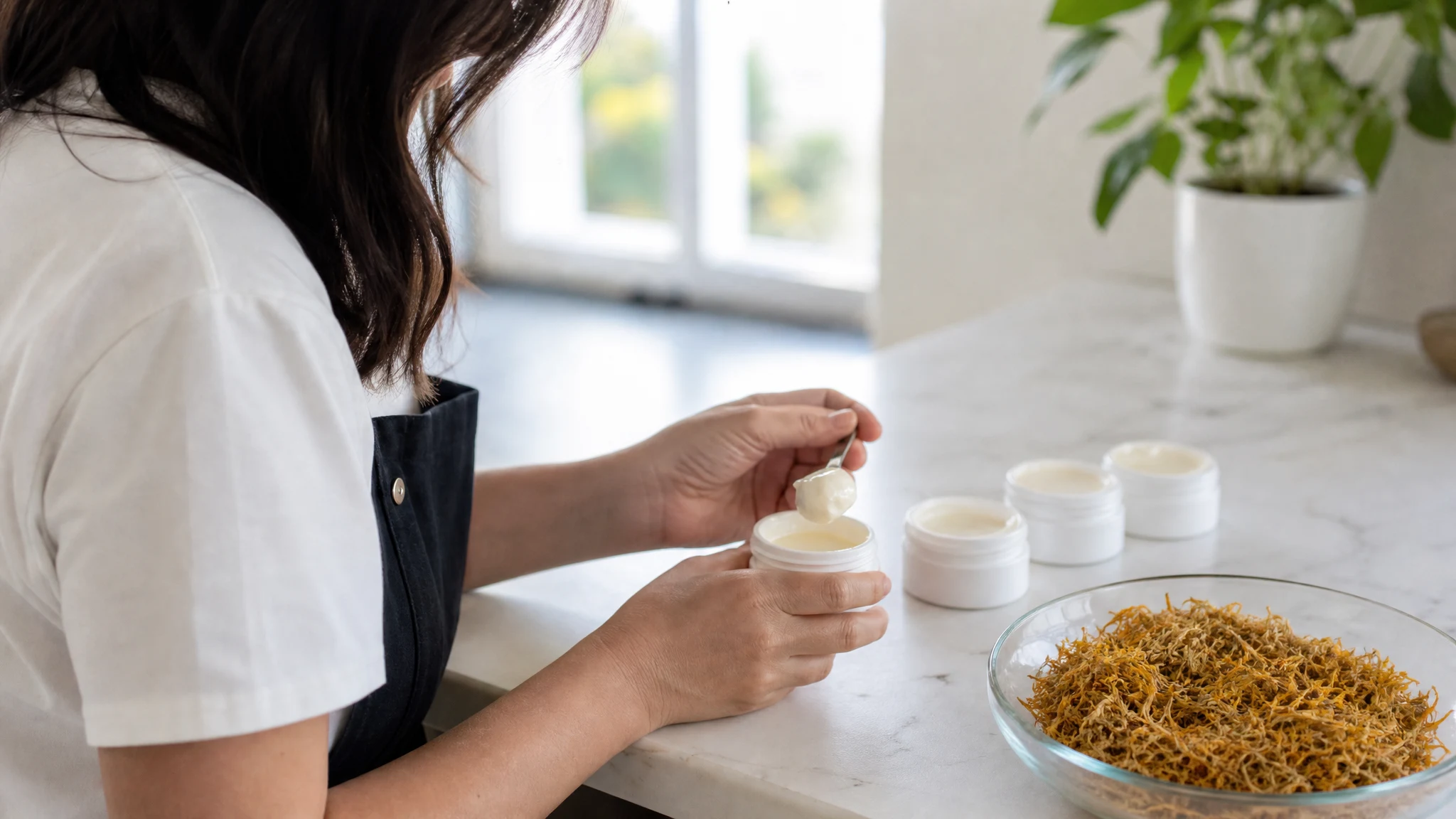
- Stir in our calendula oil a little at a time. Stop when the sugar looks like damp sand and a pinch holds together when you press it.
- Jot down roughly how much of each you used, so the next batch comes out the same.
We give no fixed ratio because it depends entirely on your sugar and on how oily you like the finish. Add more oil for a slippery, silky scrub, less for a drier, grittier one. Our oil is a finished infused oil with nothing else added, so there is no extra step: it goes straight in. The sugar can come from any grocery shelf.
Fine, coarse or brown sugar: which to choose?
The sugar you pick changes the whole feel. Fine white or caster sugar gives a soft, almost silky scrub that is kind to your arms. Coarser granulated or raw sugar feels more vigorous and suits heels and elbows. Brown sugar is softer and slightly damp, so we would keep it for small batches you plan to use right away. Check what you have in the kitchen cupboard, and mix a tiny test spoonful before committing a full jar.
When you press a pinch between your fingers, you should feel sugar crystals gliding on oil, not dry grit and not a puddle. If it feels dry, add a few drops more oil. If it looks like it is sitting in a pool, stir in a little more sugar.
Keeping a shower scrub jar dry
Sugar and oil together contain no water, which keeps this recipe wonderfully simple. A scrub usually lives in the shower, though, the wettest room in the house, FDA's guidance on microbiological safety names consumer habits such as dipping fingers into a product among the ways cosmetics get contaminated, so a few habits go a long way. Reasoning from that, we would scoop with a dry spoon, keep the jar out of the spray, close the lid right away and make small batches you will use up. Please do not stir in water, juice, honey or fresh fruit for a scrub you plan to keep; any of those turns it into a water-containing product, and that is a different project altogether. If the jar gets wet, or something smells off, start a fresh one.
Scrub technique: slow circles on damp skin
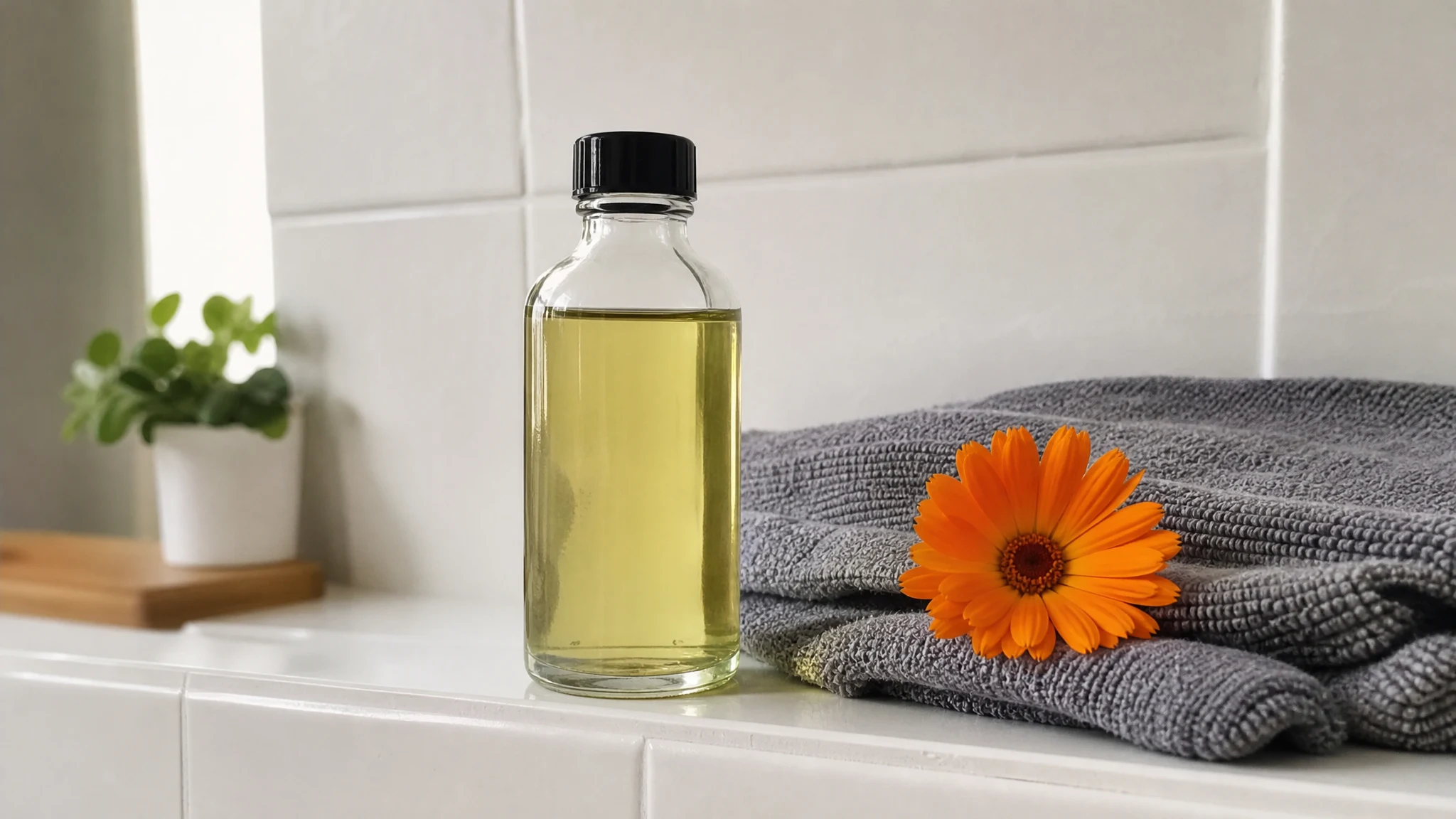
This is a nice thing to give yourself time for. Run the shower warm, step in, and use the scrub on damp skin in slow circles, pressing lightly. Let the golden color of the oil catch your eye as it spreads. Spend a little longer on the elbows and knees, rinse, and step out slowly onto your mat. If you want to give a jar as a gift, a small clean glass jar with a lid and a handwritten date on the label looks lovely, and it tells the person to use it up in good time.
Moisturizing after a calendula oil scrub
An oil-based scrub leaves a pleasant film behind, and for many people that means no separate moisturizer straight away. Dermatologists advise applying moisturizer while skin is still damp after a bath or shower, so the sequence is easy: scrub, rinse, pat dry gently and see how your skin feels.
One practical thing: oil also lands on the tub floor. A rubber mat and a good rinse make it a non-issue, and it is a good habit to step out carefully.
Calendula belongs to the daisy family, so if you have reacted to daisies, chrysanthemums or ragweed in the past, do a small patch test first with our patch test walkthrough. Our oil is for external use on skin, and the safety overview covers the rest.
It is a small ritual, and a golden one: a jar of sugar and sunny oil by the sink, ready for the rough spots that need a little attention.
Calendula Oil
Nature's Golden Botanical, bottled: small-batch calendula oil in sizes from 0.5 oz to bulk.
From $13.99
Shop Calendula Oil →Sources & Further Reading
- 10 skin care habits that can worsen acne, American Academy of Dermatology
- Face washing 101, American Academy of Dermatology
- Dermatologists' top tips for relieving dry skin, American Academy of Dermatology
- Microbiological Safety and Cosmetics, FDA