How to Get Calendula Oil Out of Clothes and Sheets
A faint golden shadow on the pillowcase, a damp patch on the sleeve of a favourite tee: oils like to travel. Calendula oil is an oil, and it behaves like one on fabric. The good news is that fresh oil marks respond well to a calm, step-by-step approach, and most of it uses things already under your sink.

Calendula Oil
Our own small-batch calendula oil, in sizes from 0.5 oz to bulk.
From $13.99
Shop Calendula Oil →Calendula oil stain versus carotenoid color on fabric
Two things can be on the cloth. The first is plain oil, which leaves a darker, slightly translucent patch that does not dry out the way water does. The second is colour. Calendula petals get their yellow to orange shades from carotenoids, the pigments that colour many plants (Isolation of Bioactive Compounds (Carotenoids, Tocopherols, and Tocotrienols) from Calendula Officinalis L., and Their Interaction with Proteins and Oils in Nanoemulsion Formulation). Reasoning from that, a golden infused oil can leave a faint tint behind as well as a grease mark, so on pale fabric it is worth treating the spot promptly and checking it again once the cloth has dried.
Step-by-step blotting and washing for oil stains
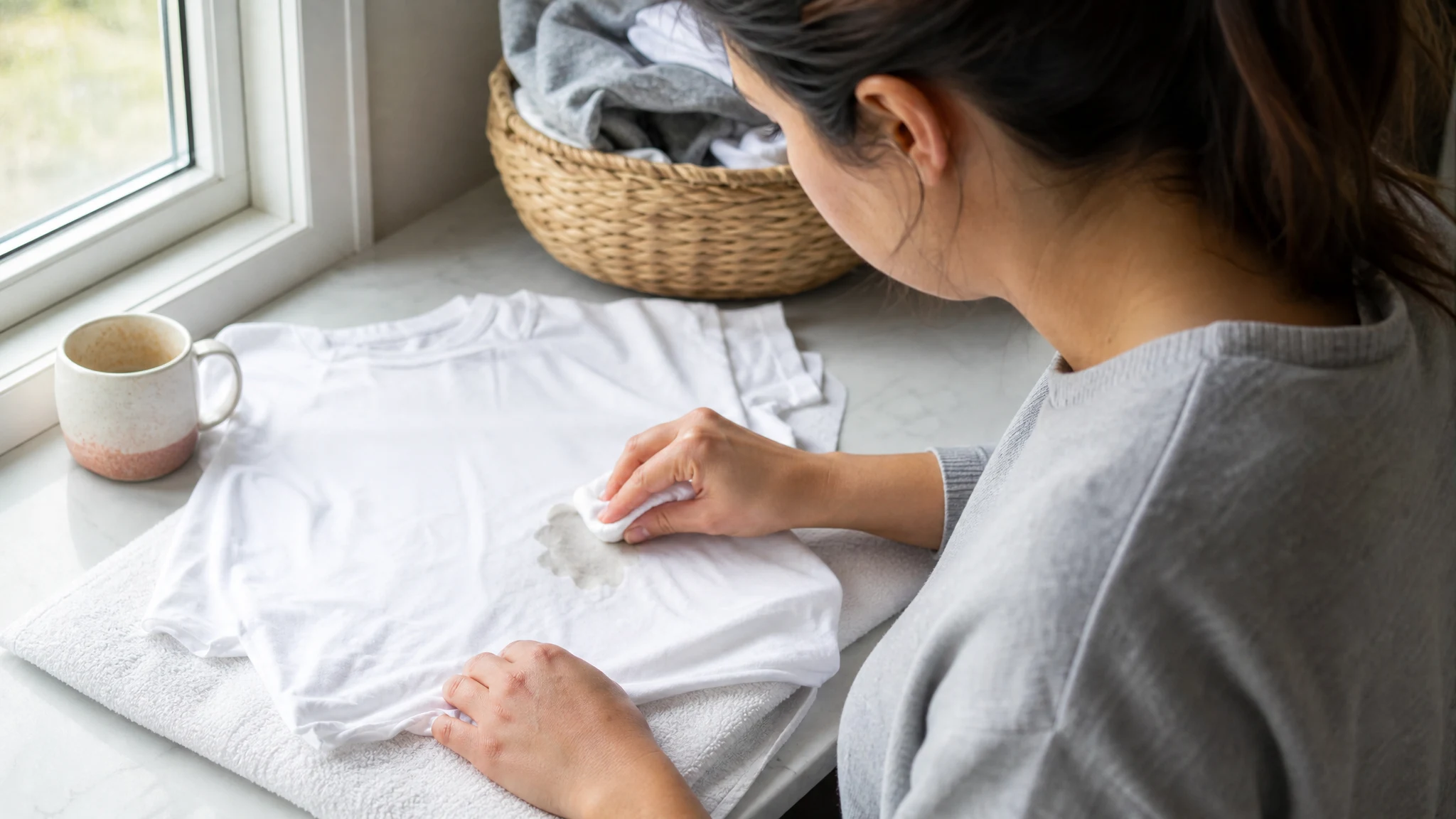
- Blot, do not rub. Press a clean paper towel or cloth onto the spot to lift the free oil. Rubbing spreads it into a wider mark.
- Put something absorbent underneath. The University of Georgia textile extension guidance for vegetable oil begins with clean absorbent material under the stain. On a sheet or a pillowcase, fold a towel behind the spot, so treatment moves the oil out of the fabric and into the towel rather than through to the other side (Remove Stains From Oil).
- Dust a little cornstarch or baking soda over the spot. Leave it for 15 to 30 minutes, then brush it off. This is common household practice for oil rather than extension advice, and it is a gentle way to take up what the towel missed.
- Work in a drop of liquid dish detergent. Dish soap is designed to cut cooking oil, so it is a reasonable choice for a plant oil. Rub it into the dampened spot with a soft brush or your fingertip. The same UGA page uses a commercial cleaner on a pad that is kept damp and changed as it picks up stain; a pre-wash stain remover from the laundry aisle follows the same idea.
- Wash as the care label allows. Use the warmest water the label permits and a full dose of detergent.
- Check before the dryer. Hold the dry or damp spot up to the light. If a shadow remains, repeat the treatment. Dryer heat can set whatever is still in the fibre, which is why we would rather see you air-dry once and look again.
When should you call a professional cleaner?
The UGA guidance gives two cautions that apply to every fabric: read the care label before trying any stain removal method, and pretest each cleaning agent on an inconspicuous area to check colourfastness. Take that seriously with delicate cloth. Silk, wool, velvet, leather, and anything marked dry clean only is best left to a dry cleaner. Tell them it is a plant oil and about how long ago it happened. For an upholstered leather chair or sofa, UGA describes applying a Fuller's earth paste, letting it dry and brushing it off, which is a job you can also hand over if the piece matters to you (Remove Stains From Oil-Based Foods).
Old stains that have been through the dryer are harder. They sometimes lift with a second round of detergent and a soak, but if the garment is precious, a dry cleaner is the better call than another machine cycle.
Preventing calendula oil stains on clothes and sheets
- Use less than you think. A thin layer is plenty, and our face routine is built around small amounts.
- Give it time. Let it sink in for ten minutes before you pull on pale clothes, especially if you layer it as in the winter layering guide.
- Protect the bed. For a massage, lay an old towel or a dark sheet down first.
- Keep the cap on tight. Most spills come from a bottle that tips in a bag or a drawer.
An oil mark is a nuisance, not a catastrophe. Catch it early, blot gently, and the cloth will most likely come back to normal.
Calendula Oil
Nature's Golden Botanical, bottled: small-batch calendula oil in sizes from 0.5 oz to bulk.
From $13.99
Shop Calendula Oil →Sources & Further Reading
- Remove Stains From Oil (University of Georgia Extension, Textiles)
- Remove Stains From Oil-Based Foods (University of Georgia Extension, Textiles)
- Isolation of Bioactive Compounds (Carotenoids, Tocopherols, and Tocotrienols) from Calendula Officinalis L., and Their Interaction with Proteins and Oils in Nanoemulsion Formulation (Molecules, 2024)