Calendula Oil and Rosacea: A Careful Guide
Reactive, easily flushed skin is a hard thing to shop for, and a bottle that says "calming" on it tempts almost everyone. Our advice if you have rosacea is to let your dermatologist set the plan first and treat any new oil, ours included, as an optional extra that comes second. Here is why, and how we would approach it if your dermatologist is happy for you to try.

Calendula Oil
Our own small-batch calendula oil, in sizes from 0.5 oz to bulk.
From $13.99
Shop Calendula Oil →Rosacea diagnosis: why a clinician confirms it
The American Academy of Dermatology says a dermatologist identifies rosacea by examining your skin and eyes, and that treatment combines trigger avoidance, gentle skin care and sun protection with medication or procedures where needed (Rosacea: Diagnosis and treatment). It describes rosacea as something to control rather than cure, and says topical treatments usually take two to three months to show a noticeable difference. A routine put together without a diagnosis may be aimed at the wrong condition, which is a good reason to begin with the professional.
Can skin care products trigger rosacea flares?
The AAD defines a trigger as anything that causes rosacea to flare, and lists some skin and hair care products among the common ones, noting that many products can make a face sting, burn or itch (Triggers could be causing your rosacea flare-ups). Its suggestion is to keep a diary of foods, drinks, personal care products and exposures for a few weeks so a pattern shows. A Spanish study of 200 rosacea patients referred for patch testing found at least one positive result in 46.5% of them, with cosmetics the most frequent source (Contact Allergy in Patients with Rosacea). Those were clinic patients, so it is not a rate for everyone, but it shows why the AAD takes product choice seriously.
AAD rosacea skin care tips in plain terms
The AAD's rosacea skin care tips are refreshingly plain (7 Rosacea skin care tips). Choose non-comedogenic products made for sensitive skin, and steer clear of facial products containing alcohol, camphor, fragrance, glycolic acid, lactic acid, menthol, sodium lauryl sulfate or urea. Wash up to twice a day with a mild cleanser, moisturize daily, avoid rubbing, scrubbing, washcloths, sponges and exfoliators, and use a broad-spectrum, water-resistant sunscreen of SPF 30 or higher.
No botanical oil appears on that list, in either direction. So an oil like ours falls in the "ask your dermatologist" category, and the AAD's own method for a new product is the test we describe next.
Which rosacea habits cost nothing to start?
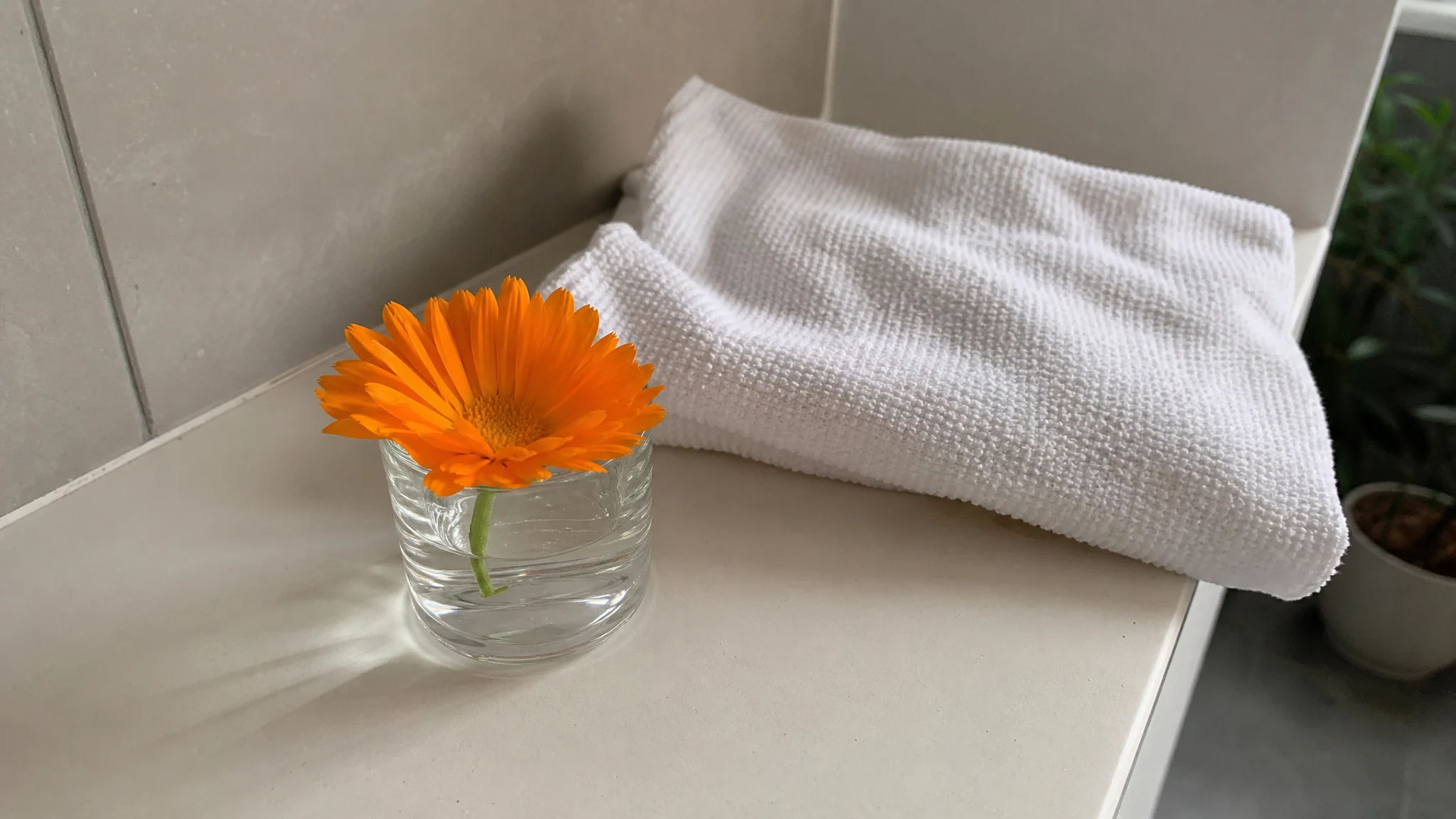
Some of the simplest steps cost nothing. Use lukewarm water rather than hot, pat your face dry instead of rubbing, and keep a soft, clean towel just for your face. When you try something new, do it at home on a quiet evening, not on the morning of an event. Those small choices give your skin the best chance to settle, whatever product you end up using.
Calendula oil for rosacea: when a dermatologist approves
- Patch test the AAD's way. Its rosacea advice is to apply a quarter-sized amount of a new product to the inside of your arm daily for 7 to 10 days and use it only if skin stays clear. That is longer than the one-dab test you see online. Our patch test guide covers the process.
- Know the plant family. Calendula is in the daisy family (Asteraceae). The European herbal monograph lists hypersensitivity to that family as a contraindication and notes skin sensitization has been reported (European Union herbal monograph on Calendula officinalis L., flos). If ragweed, chamomile or chrysanthemums bother you, skip it; our article on ragweed and calendula explains the connection.
- Keep it from the eyes. Eye involvement is common in rosacea, and the Cosmetic Ingredient Review panel found calendula-derived ingredients safe in cosmetics as used but possibly mild ocular irritants (Final report of the Cosmetic Ingredient Review Expert Panel amended safety assessment of Calendula officinalis-derived cosmetic ingredients).
- Change one thing at a time. If a new oil arrives in the same week as a new cleanser, you will not know which one made the difference.
- Stop at the first sting, burn or new redness and contact a healthcare provider, which is the FDA's advice for any cosmetic.
A short routine for reactive skin
With reactive skin, quiet is a virtue. We would keep the morning and evening routine as short as your dermatologist allows, with one gentle cleanser, one moisturizer and any prescribed treatment. If you do get the go-ahead to try an oil, add it on its own, on a day when nothing else is new, and use a small amount.
A diary can help, as the AAD suggests. Write the date, what you used, and how your skin looked that evening. After a couple of weeks, the notes will tell you more than memory can. Be kind to yourself if a product does not work out; the point is to learn, and your dermatologist can help interpret the pattern.
What does calendula oil contain for cosmetic use?
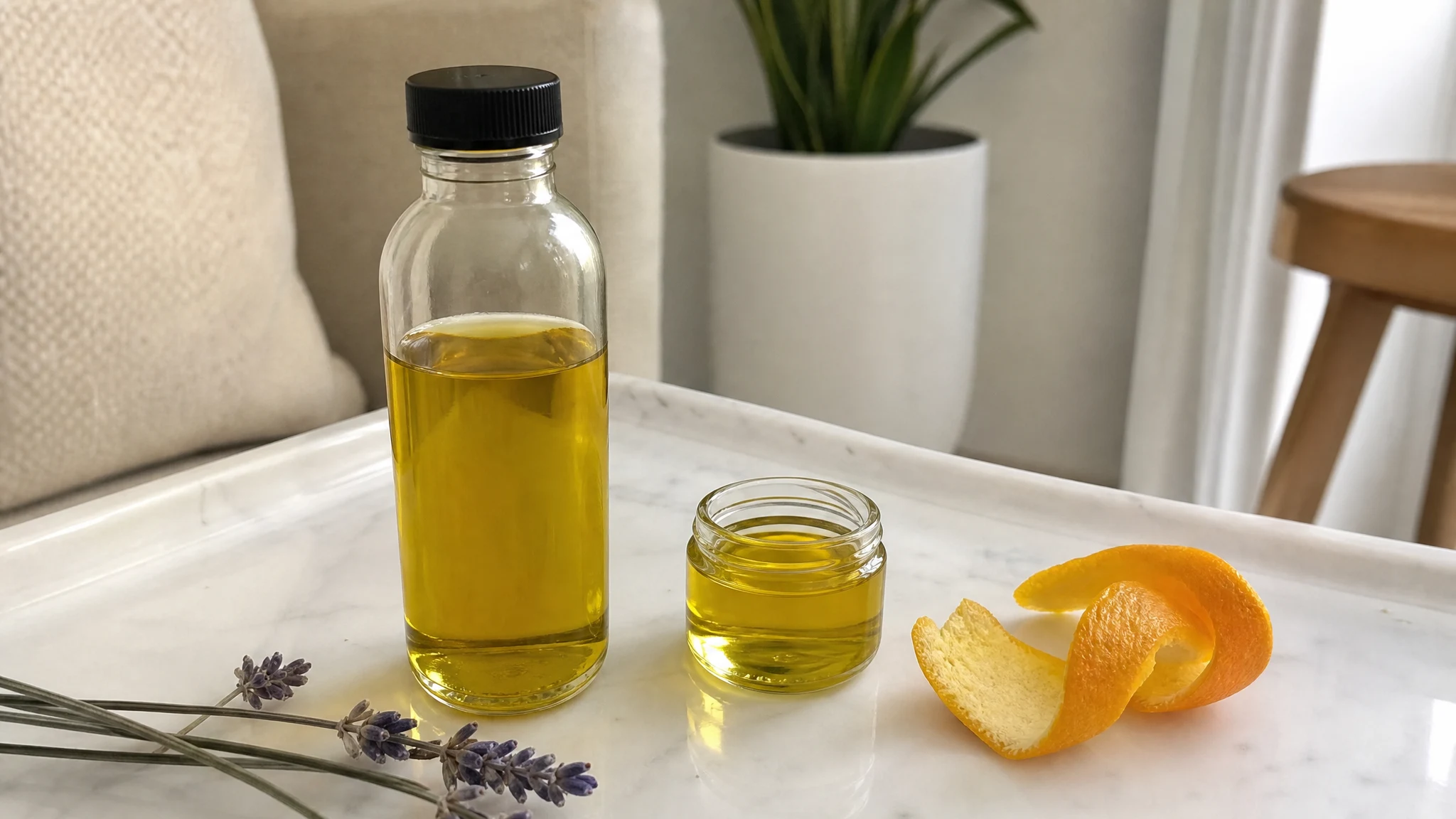
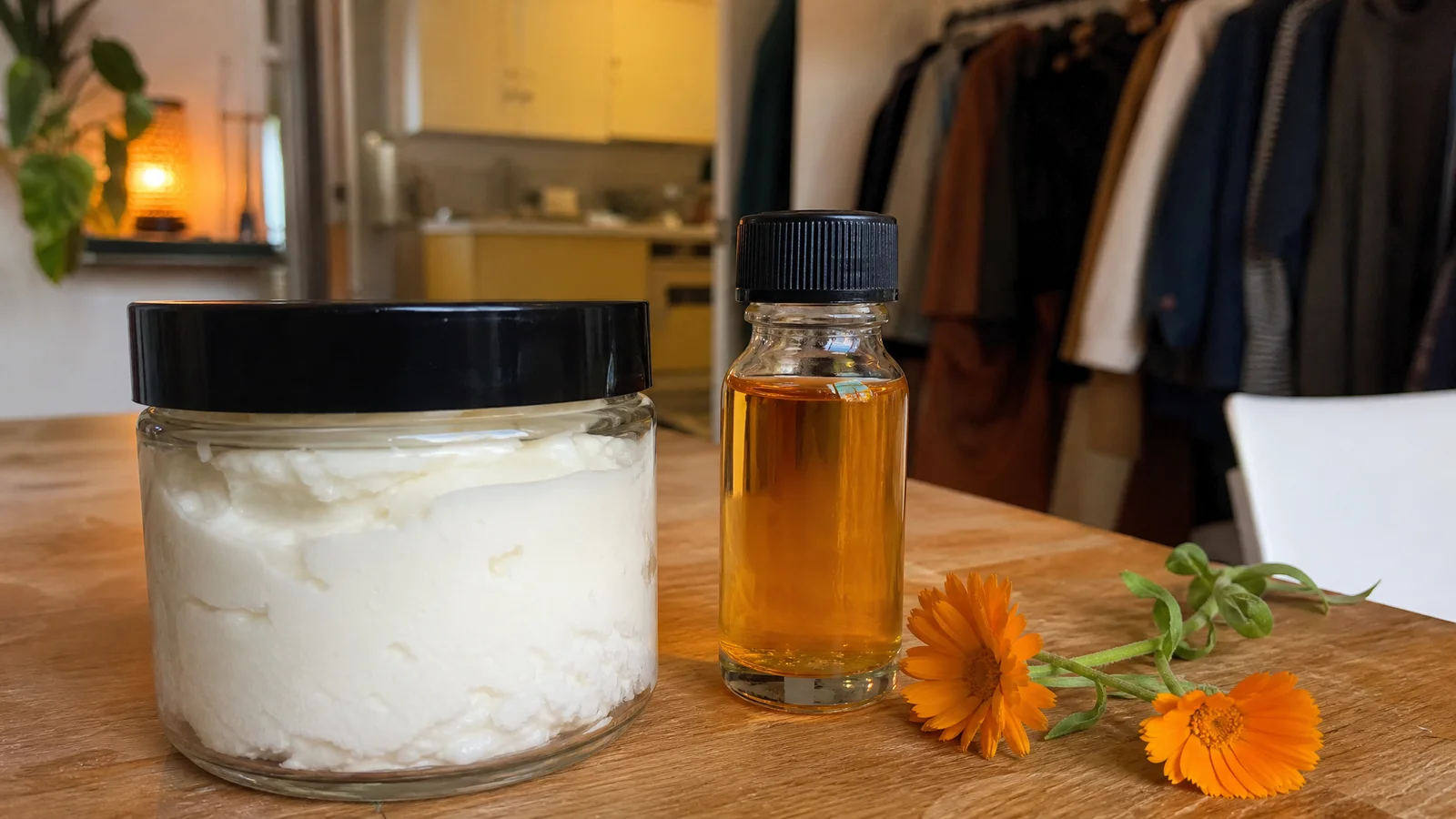
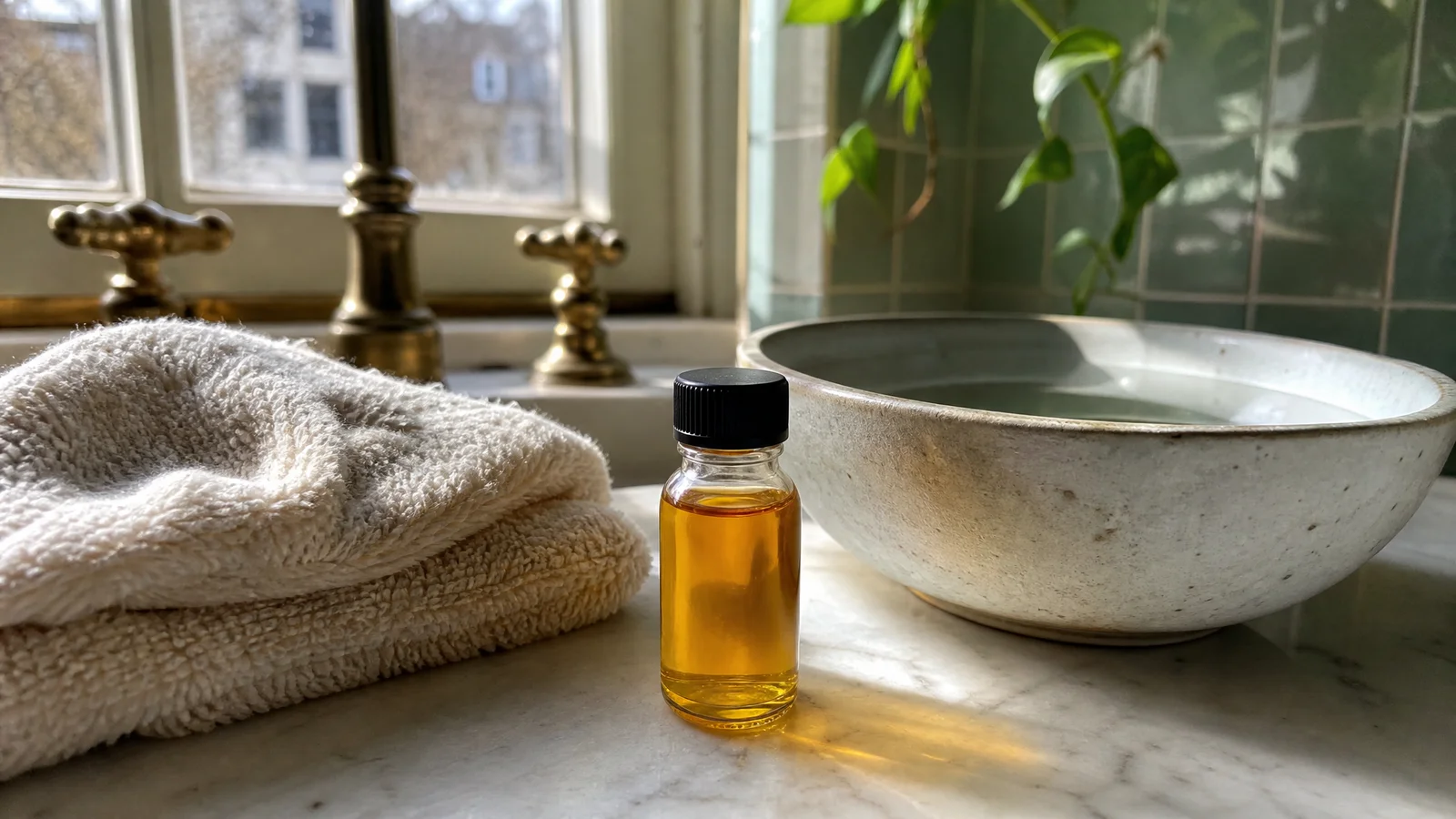
Our calendula oil is a cosmetic oil: calendula flowers, dried naturally, extracted on their own and brought into a carrier oil, with no preservatives, tocopherol or stabilizers. Each batch is tested by independent third-party labs, and we send the batch paperwork when you email the lot number to [email protected], including the carrier oil, which is worth checking against your own sensitivities. We do not sell it for rosacea, and no human study has looked at calendula alone for it.
Words like "calming" and "for sensitive skin" are marketing language rather than test results, so we would rather you lean on a diagnosis, the AAD's basics and a careful patch test. Our sensitive skin article goes through related questions.
Take your time, change one thing at a time, and let the people who know your skin guide the plan.
Calendula Oil
Nature's Golden Botanical, bottled: small-batch calendula oil in sizes from 0.5 oz to bulk.
From $13.99
Shop Calendula Oil →Sources & Further Reading
- American Academy of Dermatology, "Rosacea: Diagnosis and treatment." aad.org
- American Academy of Dermatology, "Triggers could be causing your rosacea flare-ups." aad.org
- American Academy of Dermatology, "7 Rosacea skin care tips." aad.org
- Magdaleno-Tapial J et al., "Contact Allergy in Patients with Rosacea." Actas Dermosifiliogr, 2022. PubMed
- European Medicines Agency, "European Union herbal monograph on Calendula officinalis L., flos" (EMA/HMPC/437450/2017). ema.europa.eu
- Andersen FA et al., "Final report of the Cosmetic Ingredient Review Expert Panel amended safety assessment of Calendula officinalis-derived cosmetic ingredients." Int J Toxicol, 2010. PubMed