Calendula Oil for Joint Massage: What to Expect
There is something comforting about rubbing warm oil into a stiff knee or sore hands at the end of a long day. Calendula oil is lovely for that kind of ritual, because it spreads easily and leaves skin feeling soft and smooth. What we want to be clear about is what that ritual is: a massage with a skin oil, not a joint product. Here is how we think about it, and where the guidance for sore joints actually points.

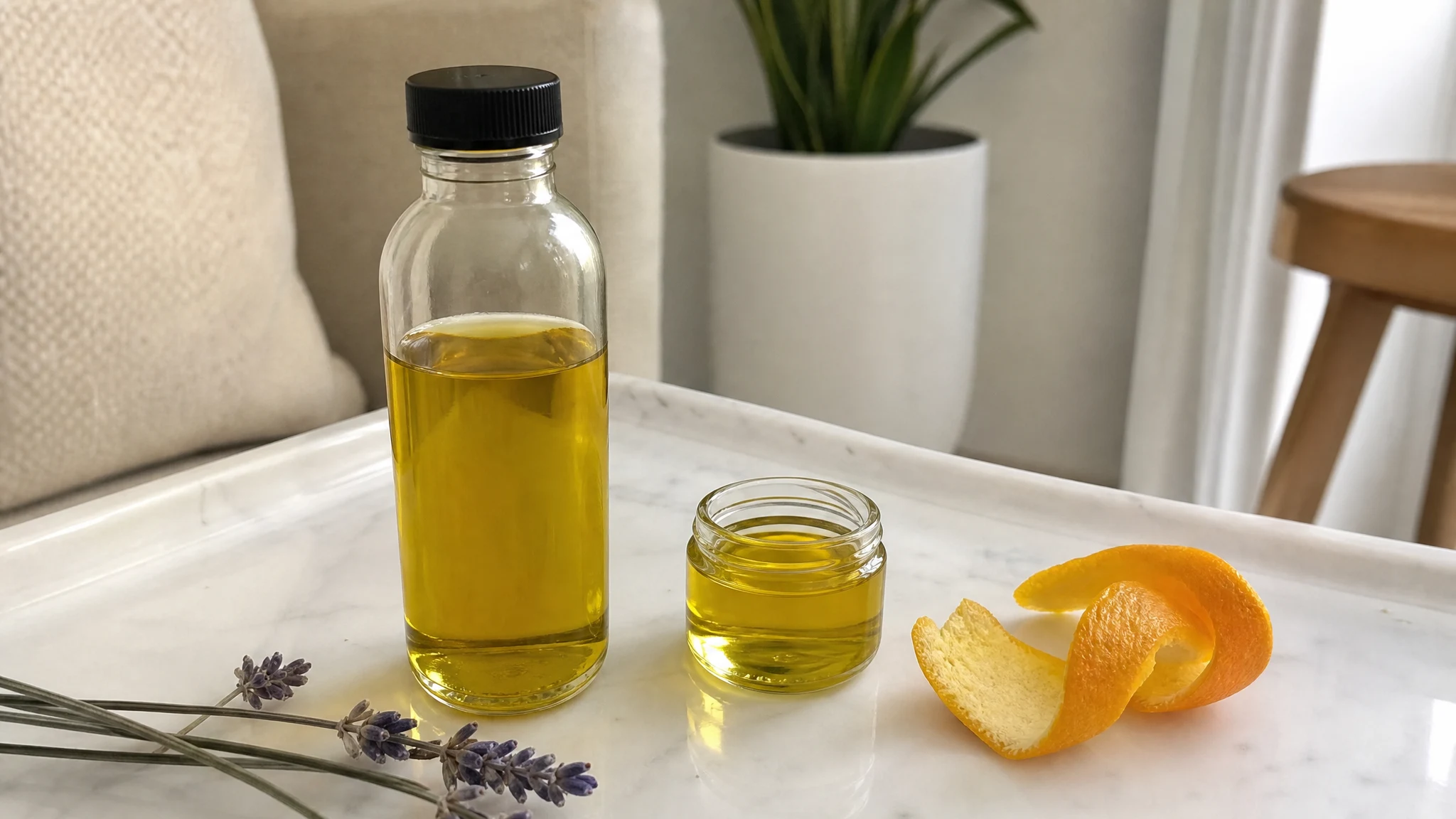
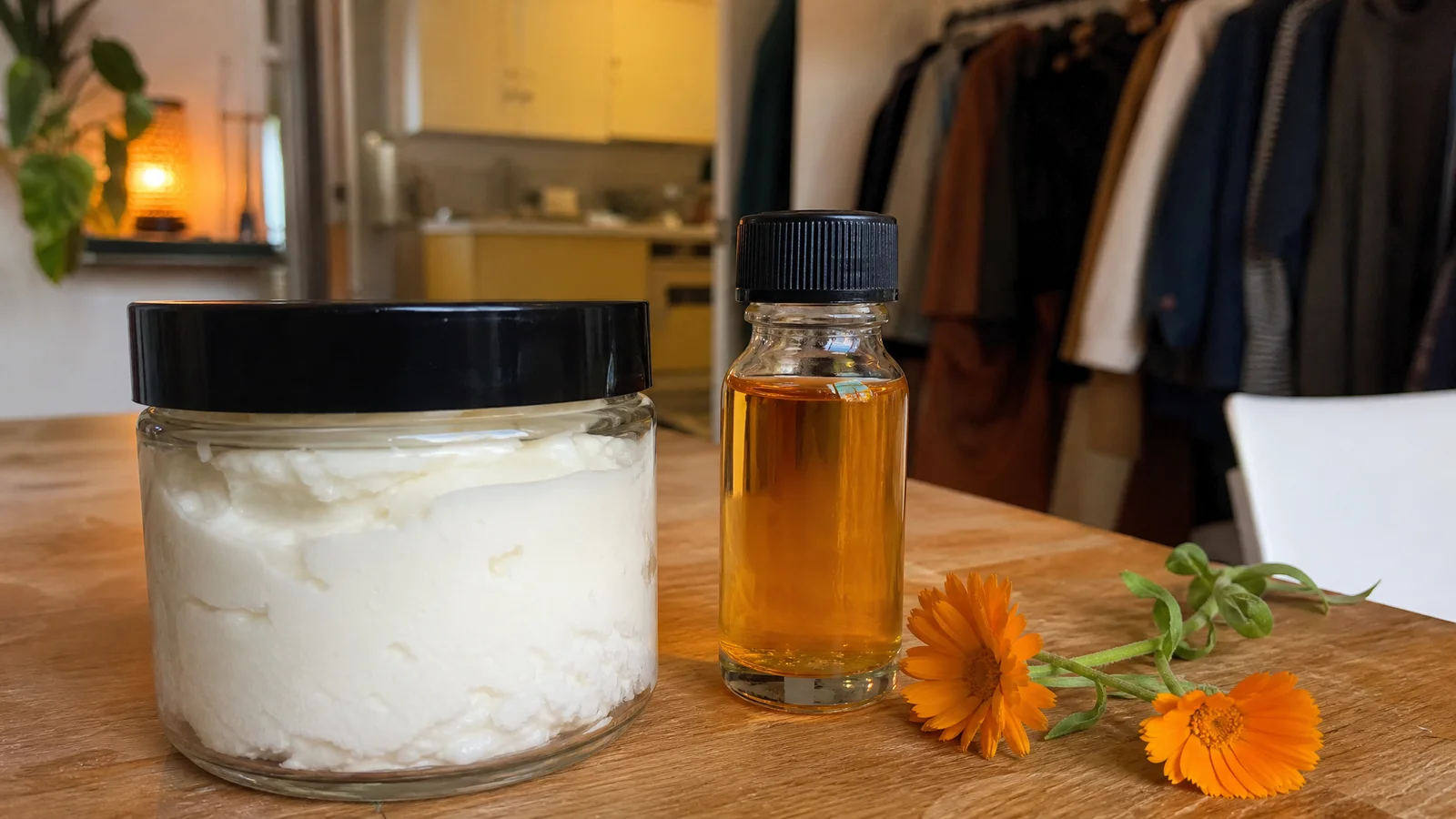
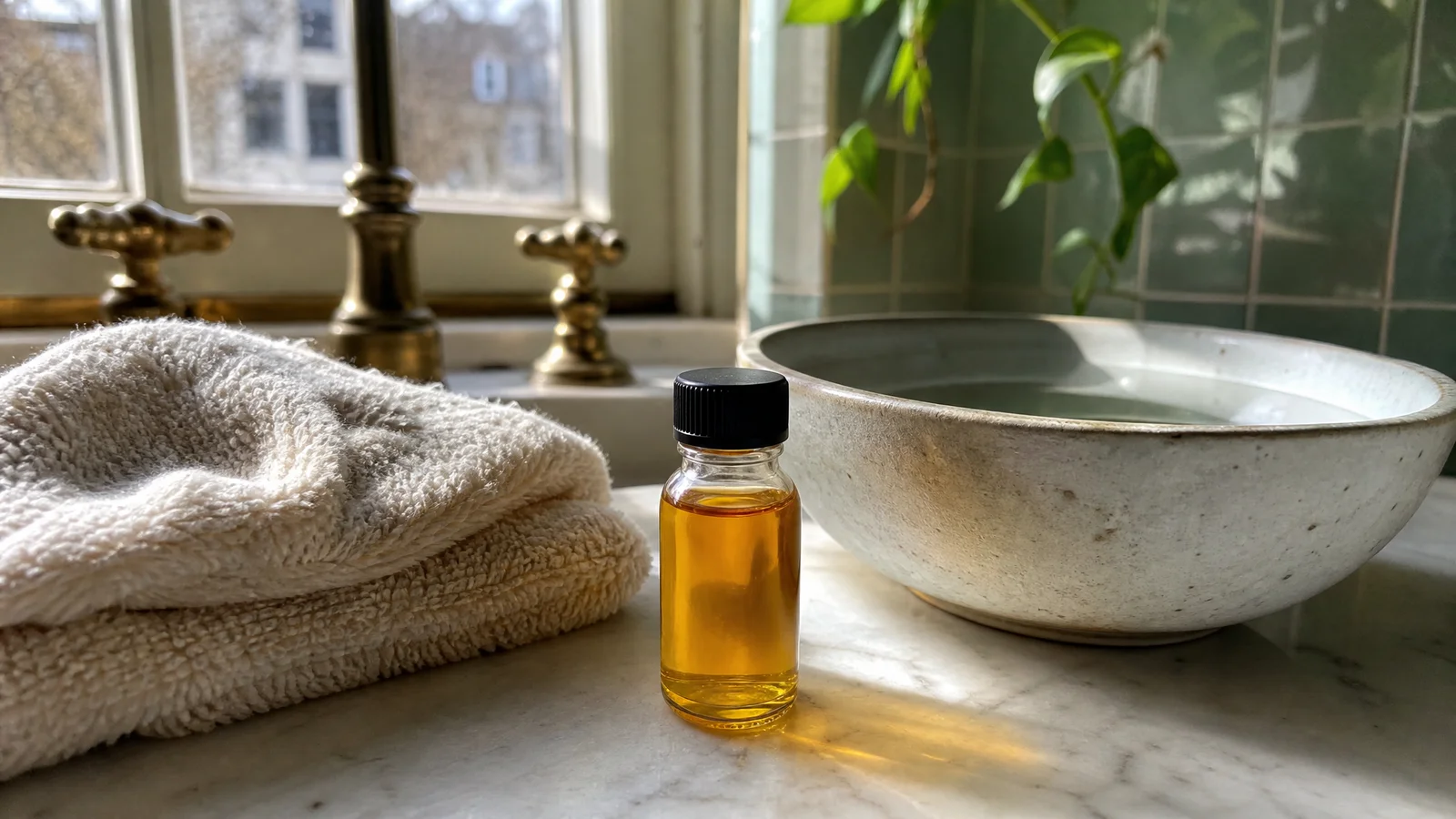
Calendula Oil
Our own small-batch calendula oil, in sizes from 0.5 oz to bulk.
From $13.99
Shop Calendula Oil →What do arthritis guidelines emphasize for joint pain?
For osteoarthritis of the knee, hip and hand, the 2019 American College of Rheumatology and Arthritis Foundation guideline made strong recommendations for exercise, self-management programs, tai chi, and, for people who are overweight, weight loss. For knee osteoarthritis it also strongly recommended topical NSAIDs, and it gave conditional recommendations for topical capsaicin and for thermal modalities such as heat (2019 American College of Rheumatology/Arthritis Foundation Guideline for the Management of Osteoarthritis of the Hand, Hip, and Knee). A botanical oil is not on that list, and we would not suggest swapping a medicine your doctor or pharmacist recommended for one.
That list is also good news in a practical sense. Gentle movement, warmth and self-care are things you can do at home, and massage with a comfortable oil fits naturally around them.
Which plant-based topicals have been studied for osteoarthritis?
A Cochrane review of topical herbal therapies for osteoarthritis pooled seven trials with 785 participants. Arnica gel was compared with ibuprofen gel in people with hand osteoarthritis, with similar results over three weeks, and most of the findings in the review came from a single trial each (Topical herbal therapies for treating osteoarthritis). Calendula was not among the herbs in that review.
The research that does exist on topical calendula is mostly about skin and wounds, often with ointments and extracts rather than infused oils. A systematic review of calendula for wounds found six randomized trials, only one of good quality, and described the support as weak (Calendula officinalis and Wound Healing: A Systematic Review). The EU herbal monograph lists calendula for minor skin concerns on the basis of long-standing use, and joints are not part of it (European Union herbal monograph on Calendula officinalis L., flos). So we describe our oil as what it is, a cosmetic oil for the skin, and we do not promise anything for the joint underneath.
Calendula oil for self-massage alongside a care plan
If you already have a care plan for your joints and simply enjoy a plain oil for self-massage, calendula oil is a pleasant choice. Reasoning from how massage works, the glide lets your hands move easily over the skin, and the warmth and rhythm of the routine are part of the appeal. We are not claiming that the oil itself changes anything in the joint.
A few practical suggestions, ours rather than a clinical protocol:
- Warm a small amount between your palms before it touches the skin.
- Use slow, light-to-moderate strokes over intact skin, and keep away from any area that is red, hot, swollen or broken.
- Skip any spot where an NSAID gel or other medicated topical has been applied, unless your pharmacist says it is fine to layer, so you do not muddle what is doing what.
- Wash your hands afterward and keep the oil away from the eyes.
Our massage article covers technique in more depth, and the post-workout muscle rub is a good companion read.
Warm-oil joint self-massage: seating and pressure
A good self-massage does not need force. Choose a comfortable seat with the joint supported, perhaps a pillow under the knee or your hand resting on a folded towel. Warm a few drops in your palms, and you will notice the oil turn from cool to body temperature in a few seconds. That is your cue to begin.
Let your hands do slow, gentle circles around the joint rather than pressing into it. If anything feels sharp or worse as you go, stop, because that is information worth sharing with your doctor. Many people find the quiet ten minutes at the end of the day is the real reward: a warm towel, a slow pace, and skin that feels soft and smooth afterward.
Keep a small towel handy for your hands. Calendula oil is golden-orange, and it can leave a mark on pale fabric, so we suggest massaging before you dress, not after.
If your hands are the joints you care about, a little oil also makes the routine easy to fit around daily life. Warm a few drops, work gently around the knuckles and the base of the thumb, and stop whenever it feels uncomfortable. A pair of cotton gloves over the top can help you avoid oil on the phone and the steering wheel, and the golden-orange color stays on your hands and not your furniture.
Calendula officinalis skin safety and allergy
Calendula belongs to the daisy family, and the EU monograph lists allergy to that family as a contraindication. In a clinic series of 443 patients with dermatitis, about 2% reacted to a marigold preparation, though that group is not the general public (The seamy side of natural medicines: contact sensitization to arnica (Arnica montana L.) and marigold (Calendula officinalis L.)). Patch test first, using our patch test guide, and stop if your skin reacts.
New or worsening joint pain, swelling, warmth or stiffness that does not settle deserves a visit to your doctor, who can tell you what is going on and which options suit you. We make a cosmetic oil, and the oil is there to make your self-massage feel good while you follow that advice.
Calendula Oil
Nature's Golden Botanical, bottled: small-batch calendula oil in sizes from 0.5 oz to bulk.
From $13.99
Shop Calendula Oil →Sources & Further Reading
- 2019 American College of Rheumatology/Arthritis Foundation Guideline for the Management of Osteoarthritis of the Hand, Hip, and Knee (Kolasinski et al., 2020)
- Topical herbal therapies for treating osteoarthritis (Cameron and Chrubasik, 2013)
- Calendula officinalis and Wound Healing: A Systematic Review (Leach, 2008)
- European Union herbal monograph on Calendula officinalis L., flos (EMA/HMPC/437450/2017)
- The seamy side of natural medicines: contact sensitization to arnica (Arnica montana L.) and marigold (Calendula officinalis L.) (Reider et al., 2001)