Calendula Oil and Face Mist: Why Layering Beats Mixing
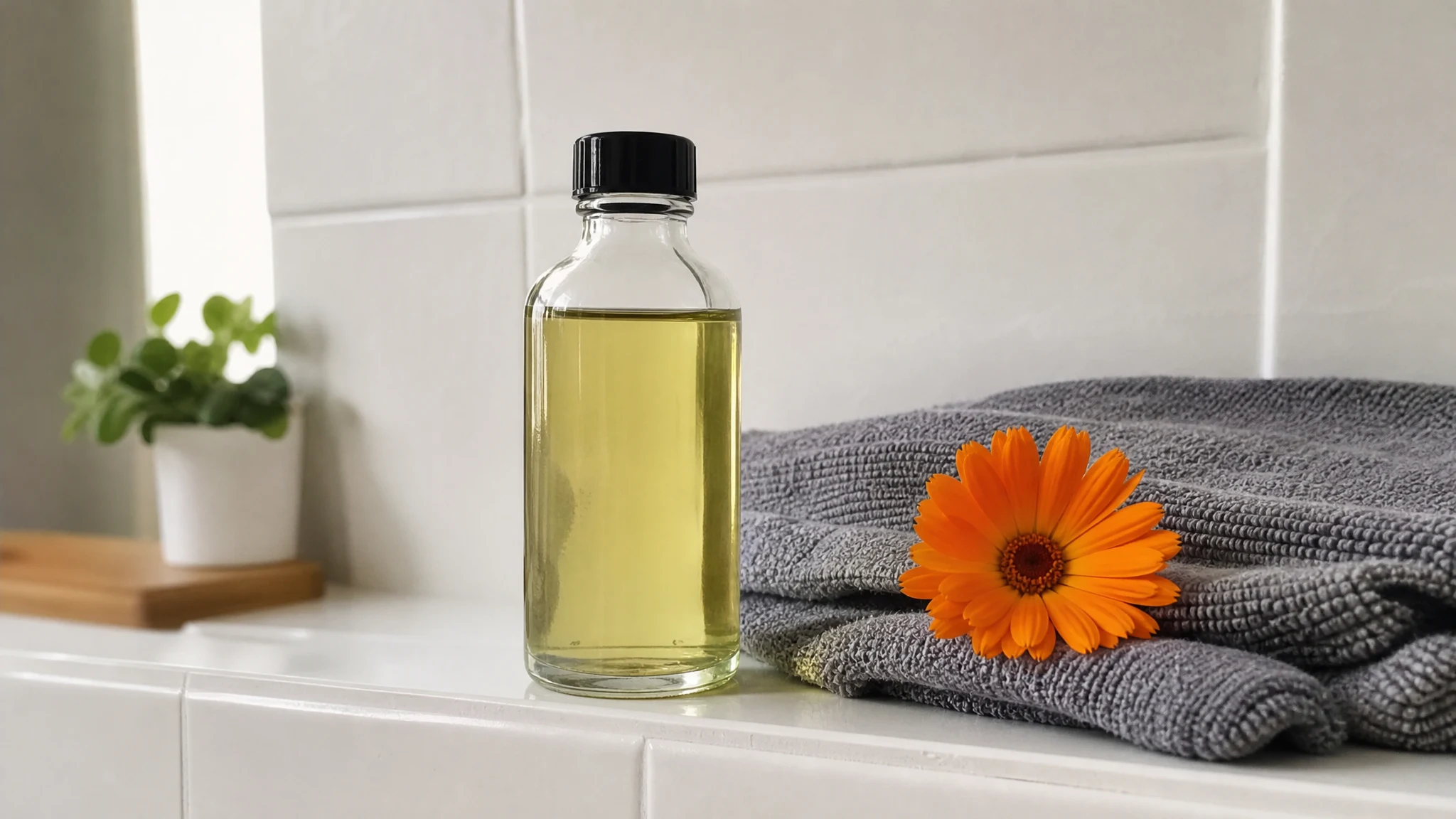
A facial mist in your bag is a lovely idea: one spritz and a tired face feels refreshed. The appeal of adding calendula oil is obvious too. The trouble is that oil and water are different kinds of product, and the best way to enjoy both is to layer them rather than blend them.

Calendula Oil
Our own small-batch calendula oil, in sizes from 0.5 oz to bulk.
From $13.99
Shop Calendula Oil →Why is a homemade oil-and-water mist tricky?
Shake oil into water and the droplets rise again within minutes. That is basic physics, and it is why shop-bought products that combine the two are formulated as emulsions with their own supporting ingredients. A bottle you have to shake before every spritz will deliver uneven amounts of oil, and a face spray often drifts near the eyes.
The bigger reason is the water. A 2018 review of cosmetic preservation states that cosmetics containing water require preservation against microbial contamination, confirmed by methods such as challenge testing. The FDA lists contaminated water and an ineffective preservation system among the ways cosmetics become contaminated, and notes that contaminated products have caused serious infections. Its small-business fact sheet adds that making cosmetics at home is not against the law, that microbial contamination can make a product adulterated, and that the same safety requirements apply to all cosmetics no matter what their source. Distilled water tells you where the water began, not how long a finished spray resists growth.
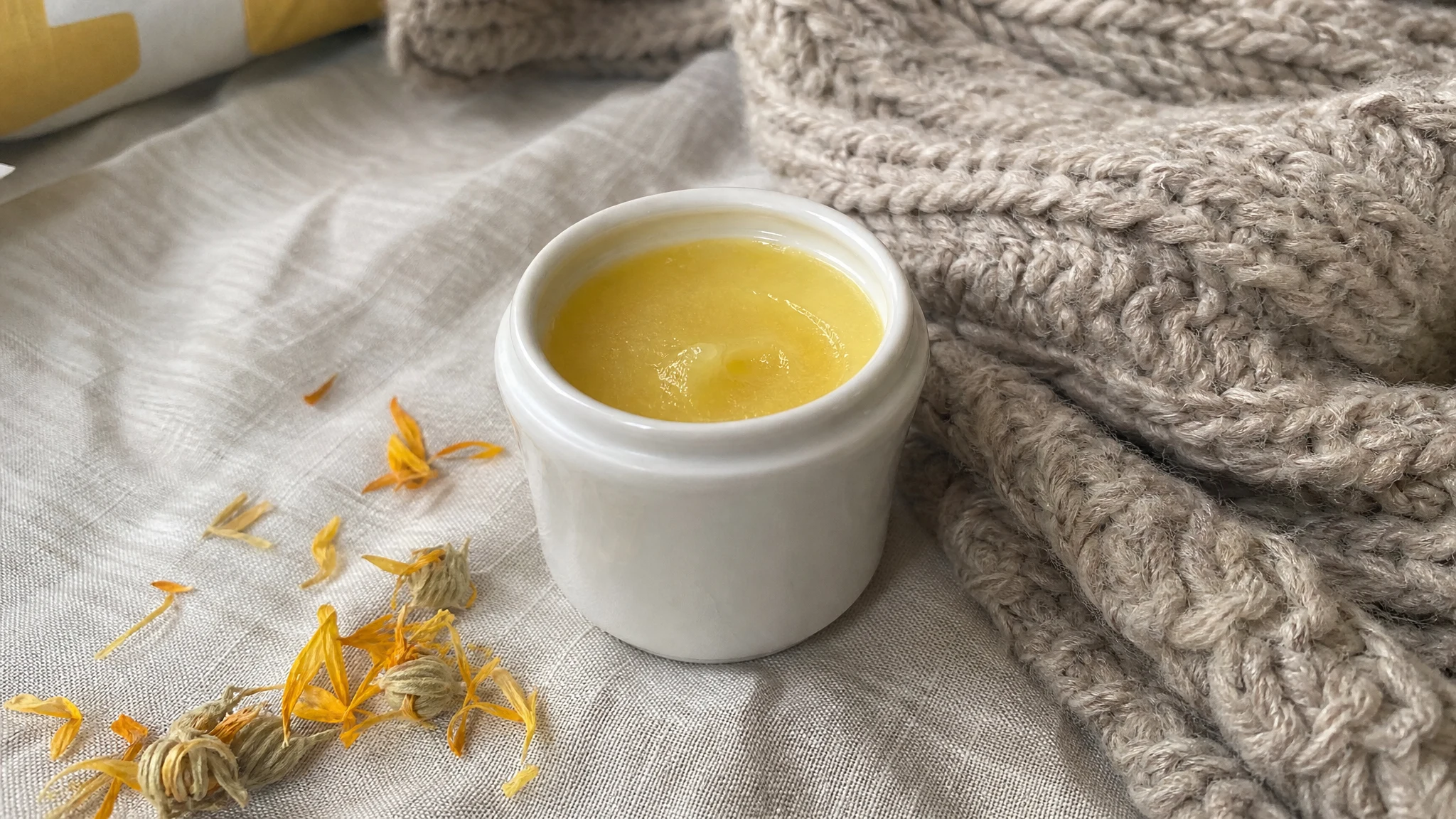
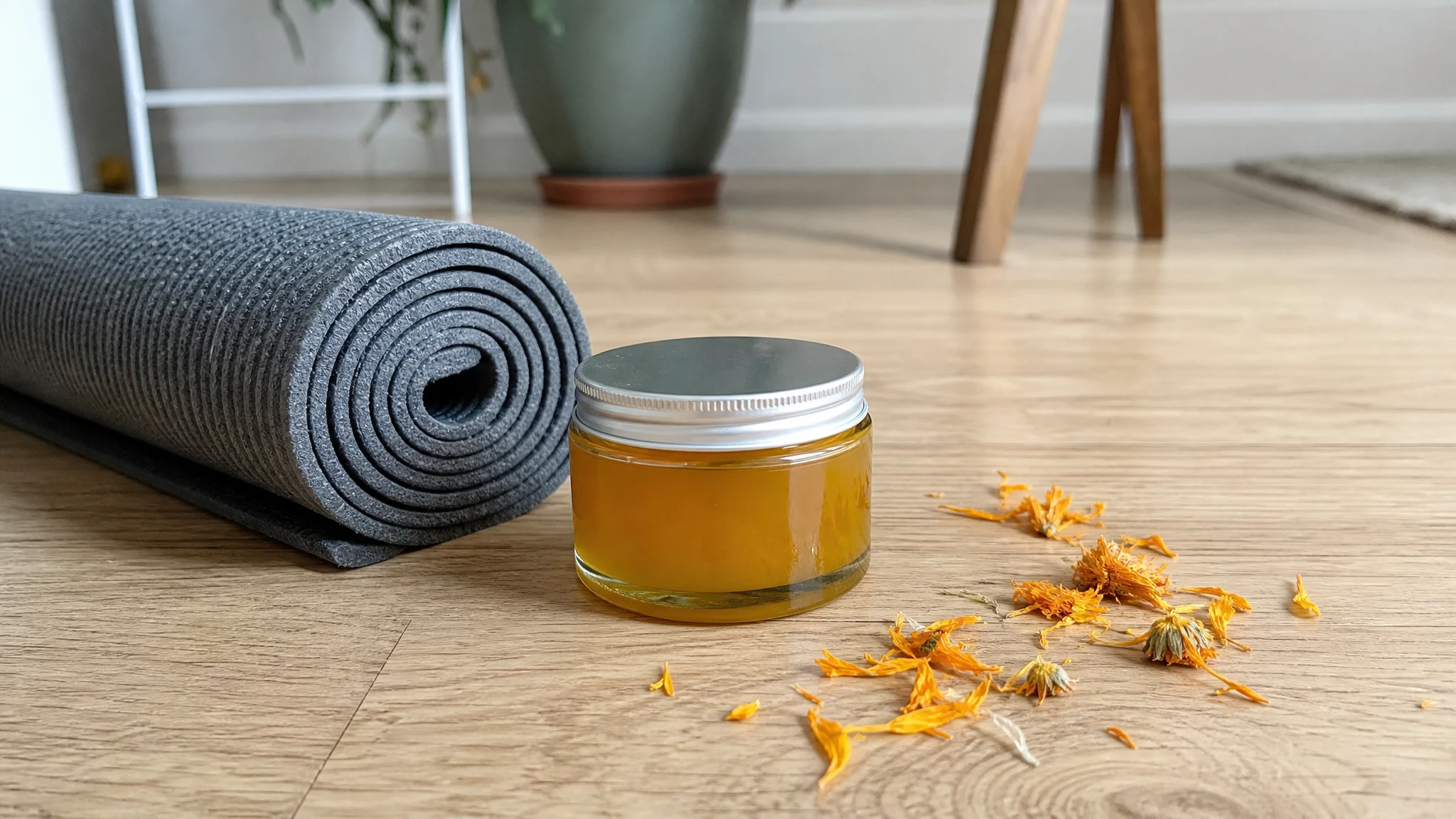
We make an oil with no water and no added preservatives, tocopherol or stabilizers, and that is exactly why it keeps as an oil. Turn it into a mist and those conditions disappear, so we have no keeping time to offer for a water-and-oil spray, and we will not borrow food-safety timelines meant for herbs in oil.
Layering calendula oil over a damp-skin mist
Dermatologists give moisturizing advice that fits this nicely. The American Academy of Dermatology recommends applying moisturizer right after bathing, while skin is still damp, to lock in moisture. For eczema it names fragrance-free creams or ointments, so if you have a diagnosed condition, ask your dermatologist what belongs in your routine. For skin without a diagnosis, a similar idea works with oil:
- Spritz a preserved mist that you have bought, one with an ingredient list you have read, onto clean skin.
- While skin is still damp, press on two or three drops of calendula oil.
- Let it settle before sunscreen or makeup.
That is our own reasoning from the AAD's damp-skin advice, not a tested routine, and it gives you a mist's freshness plus the oil's softness without mixing them. Our face questions guide and routine article go into how many drops and where oil fits in the day. If you simply like the oil on its own, that works too: no water means no preservation question.
Face mist ingredient list: preservatives to expect
If you are shopping for a mist to layer under the oil, read the ingredient list first. A preservative on that list is not a flaw. It is the reason the bottle can sit in your bag for months. Choose a fine spray, hold it at arm's length with your eyes closed, and keep the bottle somewhere cool. If it ever smells off or looks cloudy, replace it.
Calendula oil feel on damp skin: less is needed
You will notice that oil pressed onto damp skin spreads more easily than oil on dry skin, so you need less of it. Press rather than rub, and hold your warm palms against your cheeks for a few seconds afterward. Start with two drops. If your skin feels tacky a minute later, use one drop next time. A little experimenting beats following a rule, and it is satisfying to find the amount that suits your own face.
Does calendula hydration research include mists?
Calendula has made it into hydration research, though in creams rather than mists. In a 2025 double-blind trial in 20 healthy volunteers with chemically irritated skin, hydration was higher on sites treated with an emollient cream containing 1% supercritical CO2 extract of calendula than on sites treated with the cream alone or left untreated. It was a small study of a specific extract in a cream, so we treat it as an interesting direction and not a promise for an infused oil. A mist, for its part, leaves water on your skin for a short while, and that is the fair way to describe what it does.
Calendula officinalis and eye-area caution for mists
A face mist drifts toward the eyes, and the Cosmetic Ingredient Review expert panel noted that calendula-derived ingredients may be mild ocular irritants. With oil, we suggest applying by hand and keeping it clear of the eye area.
Calendula is also in the daisy family, and the European herbal monograph lists hypersensitivity to Asteraceae plants as a contraindication. In one Austrian clinic series, 9 of 443 people with dermatitis (about 2%) reacted to marigold, though those were referred patients rather than the general public. Patch test first, and read our allergy guide if you react to chamomile, chrysanthemum or ragweed. The carrier in our oil is listed on the batch paperwork, so email the lot number to [email protected] if you want it.
A good mist and a few drops of oil, layered in that order, give you the on-the-go feeling without the guesswork.
Calendula Oil
Nature's Golden Botanical, bottled: small-batch calendula oil in sizes from 0.5 oz to bulk.
From $13.99
Shop Calendula Oil →Sources & Further Reading
- Halla N et al., Molecules, 2018: Cosmetics Preservation: A Review on Present Strategies
- FDA: Microbiological Safety and Cosmetics
- FDA: Small Businesses & Homemade Cosmetics: Fact Sheet
- American Academy of Dermatology: Eczema types: Atopic dermatitis skin care
- Crnčević MŠ et al., Acta Pharm, 2025: Double-blind randomised controlled trial of an emollient cream with and without 1 % supercritical CO2 extract of Calendula officinalis in contact dermatitis
- Andersen FA et al., Int J Toxicol, 2010: Final report of the Cosmetic Ingredient Review Expert Panel amended safety assessment of Calendula officinalis-derived cosmetic ingredients
- European Medicines Agency: European Union herbal monograph on Calendula officinalis L., flos
- Reider N et al., Contact Dermatitis, 2001: The seamy side of natural medicines: contact sensitization to arnica (Arnica montana L.) and marigold (Calendula officinalis L.)