Calendula Oil for Varicose Veins? What It Can and Can't Do
A vein is not skin, and that one fact shapes this whole article. A cosmetic oil works on the surface, while a varicose vein or a spider vein lies beneath it, so calendula oil does not change how veins look and we do not claim that it does. What an oil can sensibly do is moisturize the dry, sometimes itchy skin that can sit over a tired leg. Here is how to sort out which situation you are in.

Calendula Oil
Our own small-batch calendula oil, in sizes from 0.5 oz to bulk.
From $13.99
Shop Calendula Oil →Spider veins and thread veins: what are they?
The NHS describes spider or thread veins as small, usually harmless and distinct from varicose veins (Varicose veins - NHS). We know of no study showing that any topical oil changes how they look. If they bother you cosmetically, a dermatologist or vein specialist is the right person to ask.
Moisturizing dry, itchy skin around varicose veins
This is where an oil has a modest, sensible place. The NHS lists dry, scaly or itchy skin among the symptoms of varicose veins and suggests a moisturizing cream or lotion for it (Varicose veins - NHS, treatment page). An oil is one way to moisturize, and that is our reasoning from the NHS advice rather than a calendula finding: any bland emollient meets the same need.
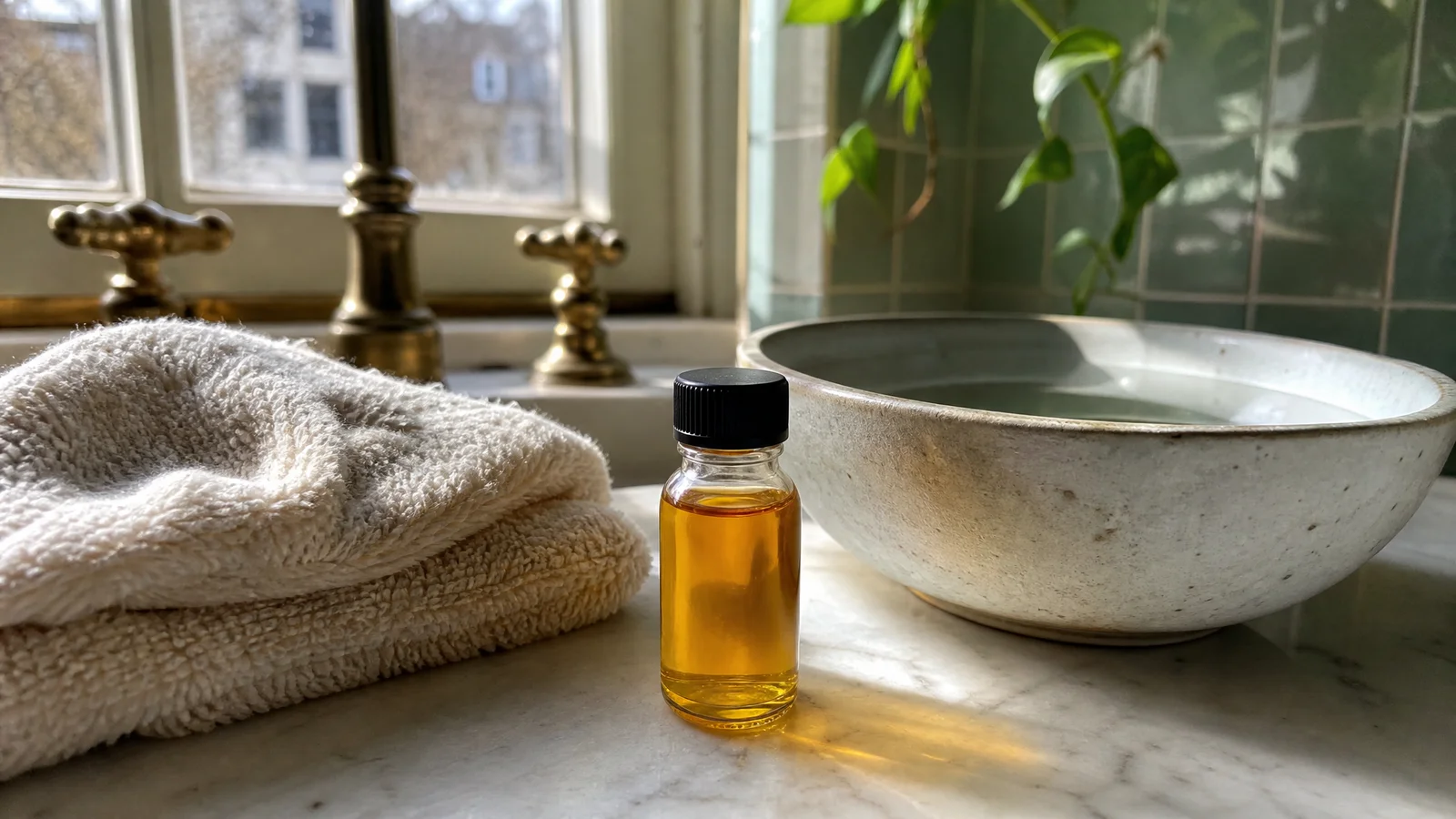
If you reach for ours, it is an infused oil with nothing in it but calendula and a carrier oil, no preservatives, tocopherol or stabilizers, so the ingredient list is short. It leaves a soft film, so it suits a slow, calm moment after washing more than a rush out the door. A few habits help:
- Patch test on another part of the body first. Calendula is a daisy-family (Asteraceae) plant, and the European herbal monograph lists hypersensitivity to that family as a contraindication (European Union herbal monograph on Calendula officinalis L., flos). Our patch test walkthrough has the steps.
- Use intact skin only. Not on an ulcer, a weeping area or a bleeding vein.
- Keep your touch light. Smooth on a few drops, after washing, to slightly damp skin. Avoid pressing hard or kneading over a raised, tender or warm vein.
- Stop at any new rash, burn or itch and contact a healthcare provider, as the FDA advises for any cosmetic (Using Cosmetics Safely).
Evening leg care: slow calendula oil strokes
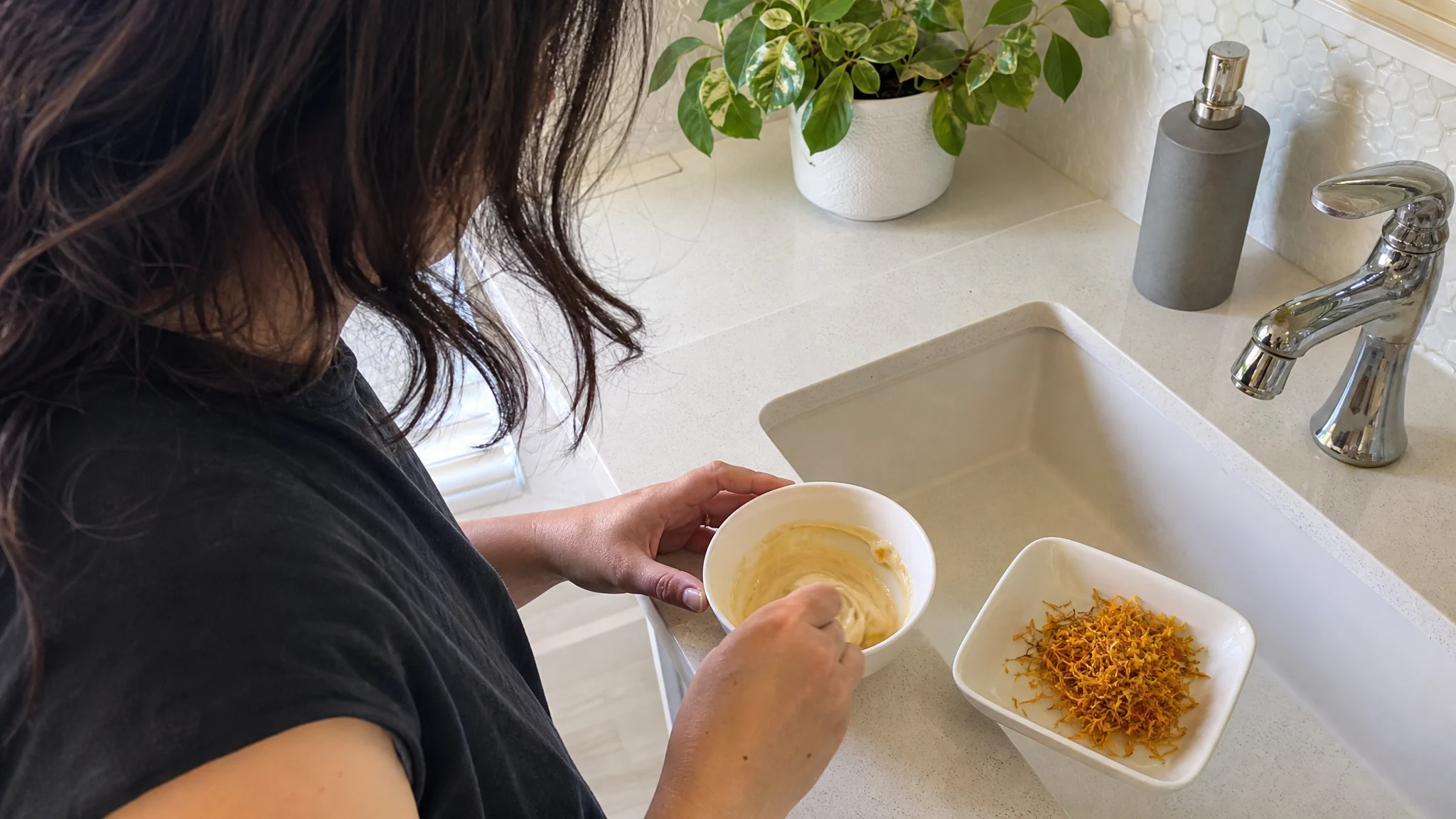
If your legs feel dry after a long day, the best thing about an oil is the pace it asks of you. Sit on the edge of the tub or a chair, with your feet flat. Warm a few drops between your palms and smooth them down the calf with gentle, unhurried strokes, using the lightest pressure you can. Skip the knees and any area that is sore, raised or warm to the touch.
It takes about two minutes, and the main point is simply to give dry skin some softness at the end of the day. A drop or two goes surprisingly far on a calf, so start small. Let the oil settle in before you put on socks, so it does not smear on the fabric.
Which varicose vein complications need medical care?
The NHS lists bleeding, varicose eczema, venous leg ulcers and blood clots as possible complications. It says to see a GP if a leg sore has not healed after two weeks or if the veins are getting worse, and to seek urgent help for a bleeding varicose vein (Varicose veins - NHS). For a possible clot, it describes throbbing pain and swelling in one leg with red, blue or darkened skin, and advises an urgent GP appointment or NHS 111 (DVT (deep vein thrombosis) - NHS). A newly swollen, painful leg should be checked before anything is rubbed into it. Those are jobs for a clinician, never for a cosmetic oil.
Calendula officinalis research on venous leg ulcers
The nearest calendula research concerns venous leg ulcers, which are open wounds, not visible veins. A small Serbian study used a marigold extract ointment (Results of the clinical examination of an ointment with marigold (Calendula officinalis) extract in the treatment of venous leg ulcers), and a later comparison of 57 patients used a calendula extract (Therapeutic effectiveness of a Calendula officinalis extract in venous leg ulcer healing). Both used extracts or ointments under clinical supervision, not an infused oil on intact skin, so they are interesting background rather than guidance for home use. Our article on calendula and wounds explains how to read that research.
Choosing calendula oil for legs: label and glass
Whatever you pick, a short ingredient list is easier to live with. Look for a clear label, a lot number so you can trace the bottle, and a dark or glass container. Ours is dated and lot-numbered, in glass, and has nothing added to the calendula and its carrier. If you have a reaction to a product on your legs, you want as few suspects as possible.
What does NHS self-care for varicose veins list?
The NHS self-care list is short and has no oil in it: regular exercise such as walking, raising your legs when you can, keeping to a healthy weight, and avoiding long spells of standing or sitting with your feet down. Compression stockings and clinic procedures are decided by a doctor after assessment. If you are not sure which situation your legs are in, a GP or vascular specialist can tell you.
Pregnant or breastfeeding readers should note that the monograph says safety in those situations has not been established, so ask your midwife or doctor before using it. And if you have ever reacted to ragweed, chamomile, daisies or chrysanthemums, our ragweed article explains why we would skip calendula. For tired, dry legs that are otherwise healthy, a little golden oil after a bath is a small and pleasant comfort.
Calendula Oil
Nature's Golden Botanical, bottled: small-batch calendula oil in sizes from 0.5 oz to bulk.
From $13.99
Shop Calendula Oil →Sources & Further Reading
- NHS, "Varicose veins - NHS." nhs.uk
- NHS, "Varicose veins - NHS" (treatment page). nhs.uk
- NHS, "DVT (deep vein thrombosis) - NHS." nhs.uk
- Duran V et al., "Results of the clinical examination of an ointment with marigold (Calendula officinalis) extract in the treatment of venous leg ulcers." Int J Tissue React, 2005. PubMed
- Buzzi M et al., "Therapeutic effectiveness of a Calendula officinalis extract in venous leg ulcer healing." J Wound Care, 2016. PubMed
- European Medicines Agency, "European Union herbal monograph on Calendula officinalis L., flos" (EMA/HMPC/437450/2017). ema.europa.eu
- US Food and Drug Administration, "Using Cosmetics Safely." fda.gov