Calendula in K-Beauty Toners vs Calendula Oil
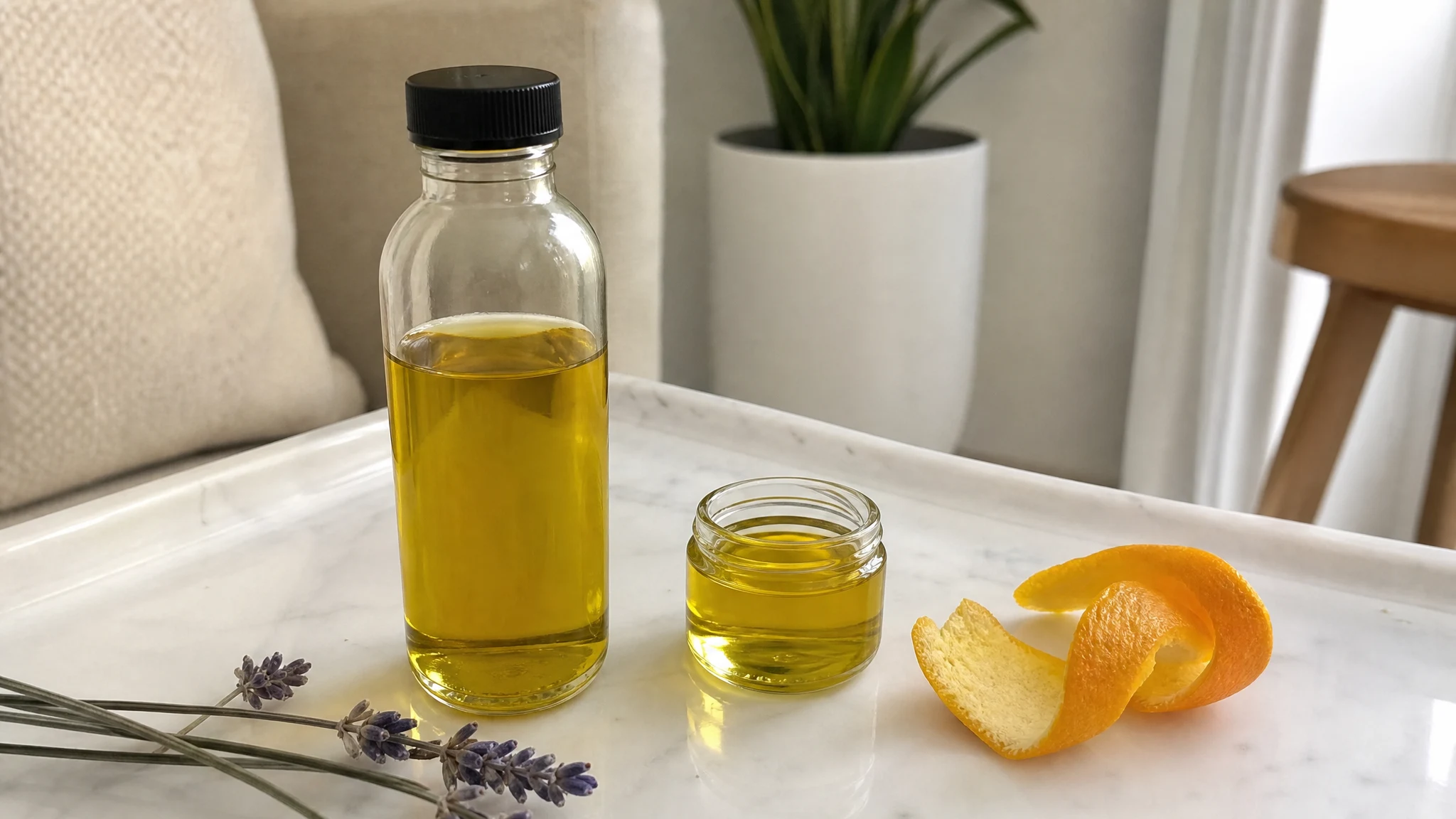
Picture a layered skincare routine, a toner here, an essence there, and a calendula extract on the ingredient list of one of them. Now picture our bottle of golden calendula oil. They share a plant, Calendula officinalis, and the same word on the label, and that is where the resemblance mostly ends. Knowing why makes it much easier to decide which one belongs in your routine.

Calendula Oil
Our own small-batch calendula oil, in sizes from 0.5 oz to bulk.
From $13.99
Shop Calendula Oil →Calendula extract solvents: water, ethanol, CO2 and oil
Calendula flowers can be extracted in different solvents, and the solvent shapes what you end up with. The EU herbal monograph for calendula flowers lists the traditional preparations: liquid extracts in water and ethanol, a stronger tincture in ethanol, a liquid extract in a fatty vegetable oil at 1:10, and extracts in hardened fat or petroleum jelly (EMA/HMPC monograph, 2018). A dermatology encyclopedia entry describes the cosmetic ingredient "Calendula officinalis oil" in the same terms: an extract of the flowers made using a vegetable oil (Altmeyers Enzyklopädie, Calendula officinalis oil (INCI)). So a toner built on a water-based extract and an oil built on an infusion start from the same flower and take different routes.
Reasoning from basic chemistry, water-based and oil-based solvents tend to pick up different parts of a plant, with fat-soluble compounds favoring the oil. We are not aware of a head-to-head analysis of calendula in a toner versus calendula in an oil, so we would not claim either one holds "all" of the flower, and that goes for ours too. Our faradiol article looks at one well-known fat-soluble compound in the petals.
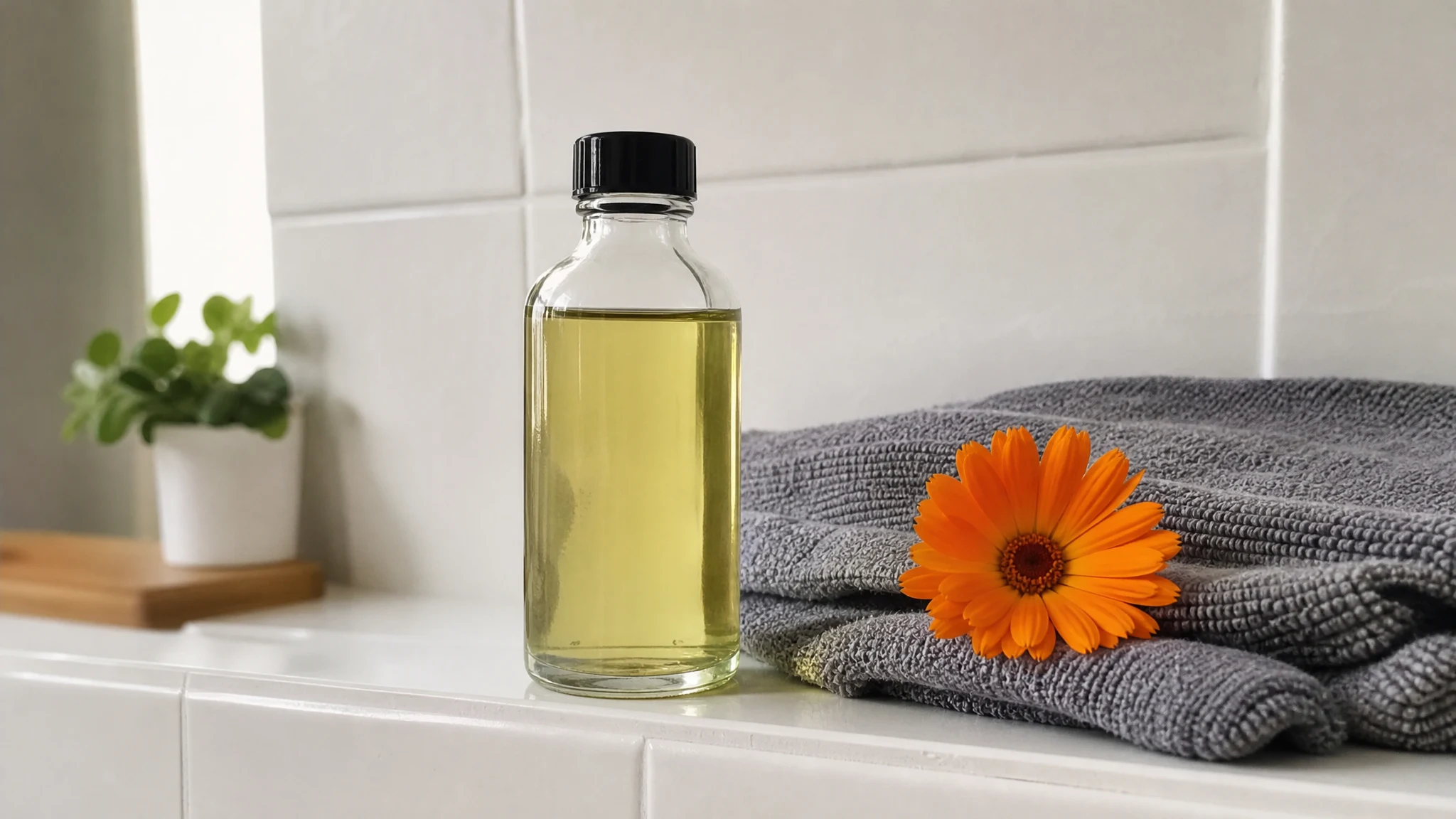
If you love layered routines, you already know the joy of a bathroom shelf full of small bottles, each with its own texture and job. Watery toners feel like a splash of cool, essences are light and slippery, and an oil is the richer, slower step at the end. It is useful to think of calendula oil as a member of the richer end of that line-up, rather than as a substitute for the lighter bottles.
What does research say about calendula in cosmetic creams?
The nearest look at calendula in a modern cosmetic base is a 2025 double-blind trial with 20 healthy volunteers. After the skin was deliberately irritated, forearm sites treated with an emollient cream containing 1% supercritical CO2 calendula extract showed higher hydration on day 4 than untreated sites (p = 0.017) or sites treated with the plain cream (p = 0.035), and lower water loss than untreated skin on day 3. Redness did not differ between sites (Crnčević et al., 2025). It is a small study of a CO2 extract in a cream, so it neither describes a toner nor an infused oil. It does show that how calendula is delivered is part of the story, and that it is worth asking what a label means by "extract."
Where does calendula oil go in a layered routine?
Routines that layer products tend to go from thin and water-based to rich and sealing. By that logic, our oil belongs near the end, after the water-based steps and just before anything heavier. That is our suggestion based on how the products are built, not a study result. A word on pH, since it comes up around layering: pH describes water-based products, so a plain oil does not have one, as we explain in our pH article. If you are curious about the oil as a cleansing step instead, see our guide to oil cleansing, and note that the answer to the comedogenic question depends on the carrier. The carrier for your bottle is on the batch paperwork, which we send when you email the lot number to [email protected].
A few small habits help when you add an oil to an existing routine. Use only a drop or two at a time; the oil spreads further than you expect, and it is easy to use too much. Press it in with your palms instead of rubbing, which lets the layers settle. And add one new product at a time, so that if your skin dislikes something, you know where to look.
Reading calendula product labels for extract and claims
Two questions work on any product. First, what is the extract: water, glycol, CO2 or an oil infusion, and at what strength? Second, what does the label promise? In the United States, FDA considers a product a drug rather than a cosmetic when its claims point to a medical purpose, such as addressing disease or changing how the body functions, whatever the product is called (FDA, Cosmetics & U.S. Law). A label that keeps to cosmetic language, such as softening, moisturizing and a pleasant feel, tells you something good about the seller. Ours is a cosmetic oil, and that is how we describe it.
Calendula officinalis and the daisy family cautions
Calendula belongs to the daisy family, Asteraceae, and the EU monograph lists sensitivity to that family as a contraindication. It also does not recommend skin use under age 6 and says safety in pregnancy and breastfeeding has not been established. A simple, short ingredient list is not automatically gentler for someone who is allergic, so if you react to chamomile, ragweed or chrysanthemum, check with an allergist or dermatologist first, whether the calendula is in a toner or an oil. Our patch test guide covers trying a small area first.
So treat a calendula toner and a calendula oil as two separate decisions, each worth a look at its label, and enjoy the fact that one golden flower can end up in so many bottles.
Calendula Oil
Nature's Golden Botanical, bottled: small-batch calendula oil in sizes from 0.5 oz to bulk.
From $13.99
Shop Calendula Oil →Sources & Further Reading
- European Medicines Agency, HMPC, 2018. European Union herbal monograph on Calendula officinalis L., flos. ema.europa.eu
- Altmeyers Enzyklopädie. Calendula officinalis oil (INCI) - Altmeyers Enzyklopädie - Fachbereich Kosmetologie. altmeyers.org
- Crnčević MŠ et al., 2025. Double-blind randomised controlled trial of an emollient cream with and without 1 % supercritical CO2 extract of Calendula officinalis in contact dermatitis. PubMed 41527980
- U.S. Food and Drug Administration. Cosmetics & U.S. Law. fda.gov